
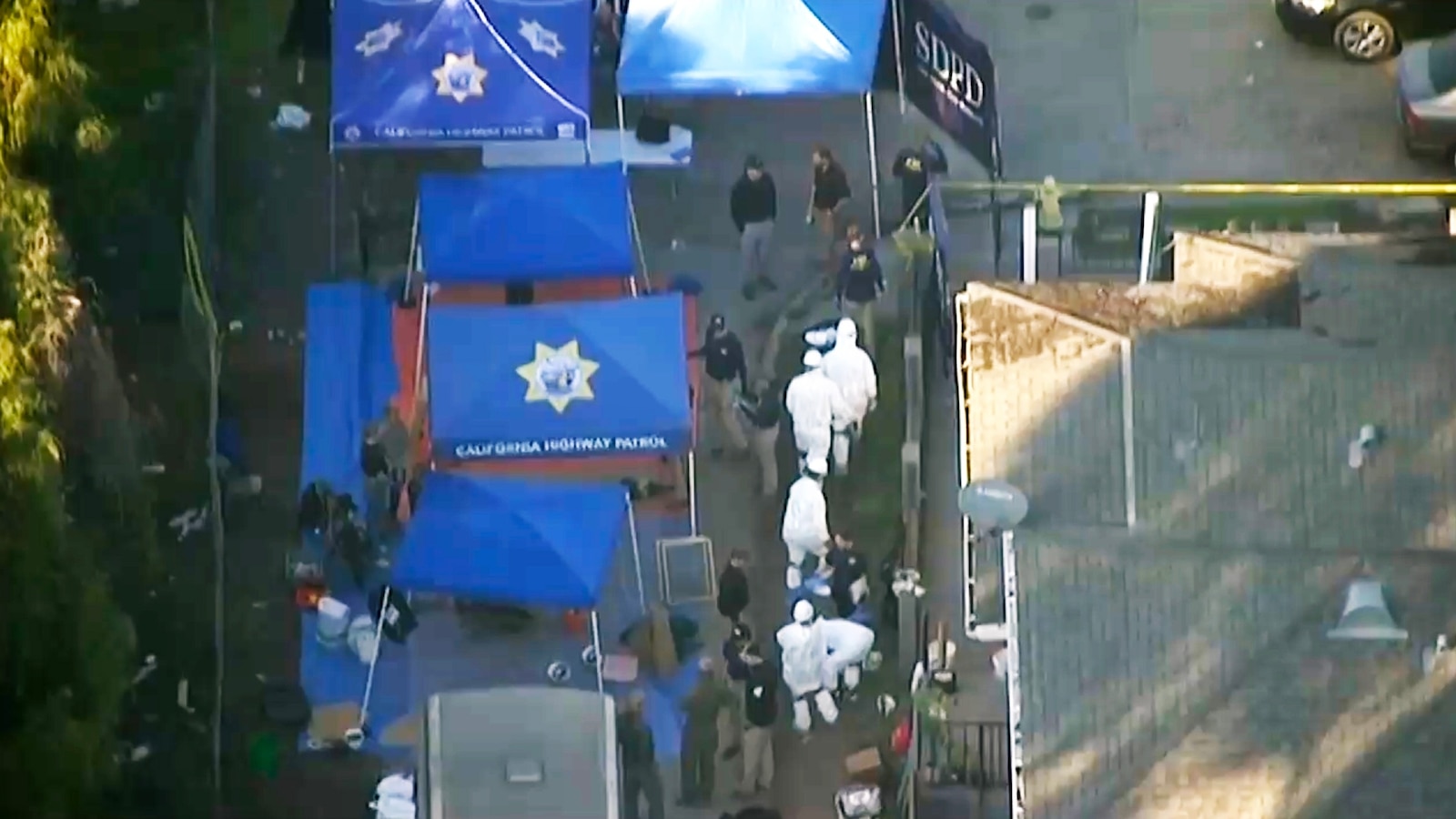
In a quiet Clairemont neighborhood that’s seen its share of suburban secrets, San Diego police uncovered a set of human remains buried in the backyard of a modest single-family home on Wednesday, December 3, 2025—unearthing what authorities now describe as a potential cold case from decades past. The find, prompted by a routine property inspection, has neighbors whispering about foul play and investigators racing to identify the victim amid a surge in public tips and online sleuthing.
The remains—believed to be those of a single adult based on preliminary skeletal analysis—were discovered around 2 p.m. in the rear yard of a 1,200-square-foot ranch-style house on Mount Aladdin Avenue, just blocks from Clairemont High School. San Diego Police Department (SDPD) spokesperson Lt. Amanda Zink called it “a somber and unexpected development,” confirming the bones were wrapped in what appears to be 1980s-era plastic sheeting, suggesting the death occurred 30 to 50 years ago. Forensic teams from the county medical examiner’s office spent over 12 hours excavating the site, using ground-penetrating radar that hinted at no additional burials. As of Friday, December 5, the remains have been transported to the coroner’s lab for DNA extraction and isotopic testing to pinpoint origin and cause of death—preliminary exams show no obvious trauma, but toxicology on preserved tissues could reveal poisoning or other subtle indicators.
This isn’t San Diego’s first brush with backyard horrors; the city’s coastal soil and sprawling suburbs have hidden dark chapters before, from the 2019 discovery of a Jane Doe in La Mesa to the 2023 Ocean Beach cold case revival. But locals tie this to Clairemont’s mid-century boom, when the area exploded with young families and transient renters. Property records show the home changed hands multiple times since its 1958 build, last sold in 2019 to a retired couple now cooperating fully with police. SDPD’s cold case unit, bolstered by a $5 million state grant in 2025, is cross-referencing the find against 200+ unsolved missing persons files from the era, including a 1982 disappearance of a 28-year-old waitress last seen near the 5 Freeway.
Experts are weighing in with cautious optimism for closure. Dr. Sarah Kline, a forensic anthropologist at UC San Diego who consulted on the dig, told local FOX 5 news: “The plastic wrap is a goldmine—polymers from that decade often carry unique chemical signatures, and if we get viable DNA, genetic genealogy could ID this person in weeks, not years.” She noted the rarity of such intact burials in urban yards, estimating only 5% of U.S. homicides from the ’70s-’80s remain undiscovered. On the flip side, SDPD’s homicide Lt. Mark Sanchez warned against speculation: “We’re treating this as suspicious until proven otherwise, but it could be a natural death concealed for personal reasons—grief, shame, or family secrets.”
The community response has been a whirlwind of shock and armchair detective work. On Nextdoor and Reddit’s r/SanDiego, threads like “Clairemont Bones—Who Knew?” have ballooned to 1,500 comments, with residents sharing grainy Polaroids of long-gone neighbors and tips flooding SDPD’s tipline (619-531-2000) at a rate of 50 calls per hour. One X post from @ClairemontChronicle went viral with 8,000 likes: “Dug up a backyard BBQ pit and found history’s worst potluck guest. Prayers for the soul—and the street cred of Mt. Aladdin.” Others, like a Facebook group admin, organized a vigil for Friday night, blending memorial candles with demands for faster forensics amid California’s 15% rise in cold case reopenings this year.
For U.S. readers, this hits on timeless American undercurrents: the fragility of suburban idylls and the tech-fueled quest for justice in an era of podcasts like “Up and Vanished.” Economically, it spotlights San Diego’s booming real estate—median home prices up 8% to $950,000 in 2025—where flips often unearth more than asbestos. Lifestyle-wise, it’s a reminder for coastal dwellers to think twice about that backyard reno, especially with sea-level rise exposing old foundations. Politically, it fuels pushes for expanded genetic databases, echoing bipartisan bills in Congress to fund GEDmatch integrations. Tech plays a starring role too: AI-enhanced imaging from the site’s GPR scans, powered by startups like GroundMetrics, could shave months off ID timelines.
User intent here leans toward resolution and reassurance—folks want victim names, suspect sketches, and safety stats. SDPD urges anyone with ’70s-’90s memories of the block to come forward anonymously; in the meantime, manage unease by joining neighborhood watches via apps like Citizen, which saw a 20% Clairemont spike post-news.
As crews wrap the site with yellow tape fluttering in the December chill, one set of human remains at this San Diego property stands as a silent testament to lives interrupted—and a community’s unyielding drive to set them right.
In summary, this Clairemont cold case, blending forensic promise with neighborhood nerves, could crack wide open by spring 2026, offering echoes of justice in a city forever chasing its sunny shadows. Stay tuned for DNA breakthroughs that might finally name the nameless.
By Mark Smith
Follow and subscribe to us for push notifications to stay updated on the latest crime and community news.
human remains San Diego 2025, Clairemont backyard bones, cold case homicide San Diego, forensic DNA identification, San Diego missing persons 1980s, suburban burial discovery, SDPD cold case unit