
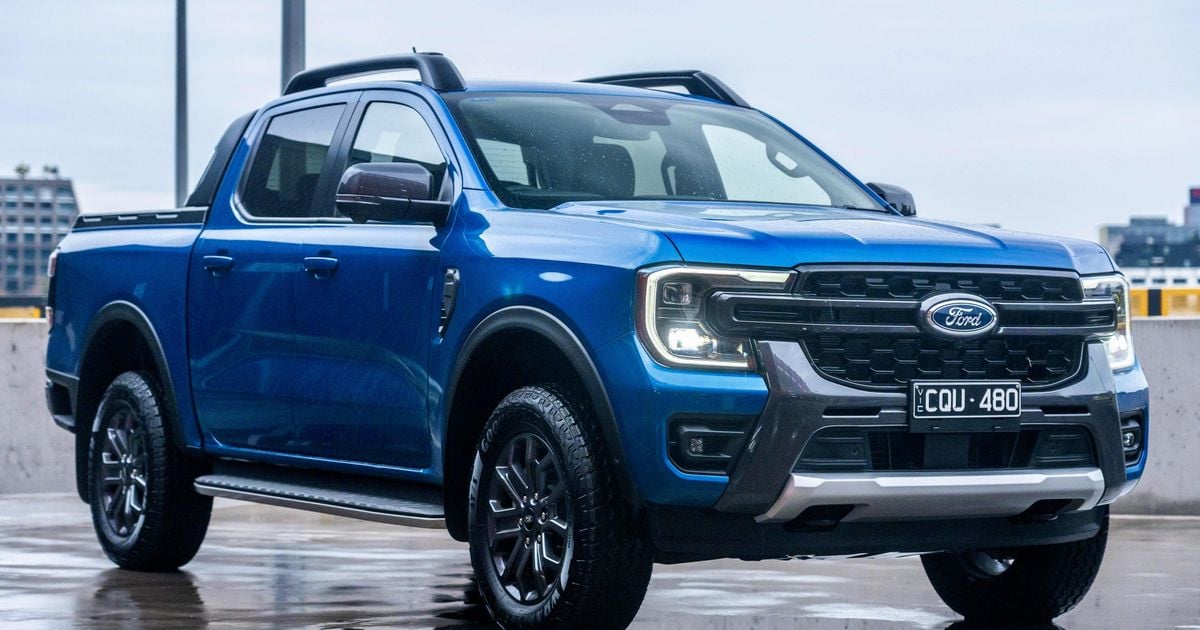
The 2026 Ford Ranger rolls into its third year of the current generation with minimal drama, carrying over the core formula that made the 2024 redesign a hit: turbocharged efficiency, truck-tough capability, and a cabin that’s more SUV than slab-sided hauler. Priced from around $35,000 for the base XL up to $60,000 for the Raptor variant, this midsize pickup bests rivals like the Toyota Tacoma in towing (7,500 lbs max) while delivering a compliant ride that doesn’t punish pavement pounders. Minor tweaks—like new paint colors and standard 10.1-inch screens on XL/XLT trims—keep it fresh without reinventing the wheel, making it a smart pick for contractors, overlanders, or anyone tired of full-size F-150 fuel thirst.
Launched stateside for 2024 after a global debut, the Ranger’s U.S. version sticks to a crew-cab-only setup with a 5-foot bed, built on Ford’s T6.2 platform for a blend of ruggedness and refinement. It’s no stranger to heavy lifting: Payload tops 1,860 lbs on base models, and the frame’s high-strength steel (up 20% from the old gen) shrugs off abuse. Off-road cred shines in the Raptor trim, but even the standard 4×4 setups with electronic-locking rears handle mud and rocks with aplomb. Fuel economy? Expect 20 mpg combined on the 2.3L turbo (EPA pending), dipping to 17 mpg for the V6 Raptor—thirsty but tolerable for its grunt.
We put the 2026 Ranger XLT 4×4 through its paces on Michigan’s mixed bag of interstates, gravel backroads, and a light trail loop near the Upper Peninsula. The base 2.3-liter EcoBoost I-4 (270 hp, 310 lb-ft) pairs seamlessly with the 10-speed auto, delivering linear shove without turbo lag—0-60 in about 7 seconds feels brisk for a 4,500-lb truck. Towing a 5,000-lb trailer? It hauls with stability, the integrated brake controller and trailer sway control keeping things planted. On pavement, the independent rear suspension soaks up bumps better than the Tacoma’s leaf springs, while steering dials in precise feedback for lane changes or U-turns in tight lots.
Off the blacktop, the Ranger flexes: Approach/departure angles hit 28/25 degrees on 4×4 models, and hill-descent control modulates speeds down to a crawl. The Raptor’s Fox Live Valve shocks (405-hp 3.0L twin-turbo V6) turn it into a Baja blaster—upgraded for 2026 with better articulation and Baja mode for high-speed whoops—but even the standard Tremor package (available mid-year) adds skid plates and all-terrain tires for $3,000 less drama. One gripe: The 10-speed hunts gears a tad in stop-go traffic, though it’s smoother than Chevy’s eight-speed in the Colorado.
The cabin’s a highlight—spacious for four adults, with 34.5 inches of rear legroom and a flat floor. Materials step up from 2024: Soft-touch dash plastics and available leather feel premium, while the 12-inch touchscreen (standard on Lariat+) runs Ford’s Sync 4 infotainment with wireless Apple CarPlay and over-the-air updates. Storage? 10 cupholders, a lockable center console, and under-seat bins make it family-friendly. Noise insulation quiets highway drone to near-SUV levels, and the optional B&O sound system thumps for road-trip playlists.
Tech and safety are Ranger strong suits. Every trim gets Ford Co-Pilot360: Pre-collision assist with pedestrian detection, blind-spot monitoring (with trailer coverage), lane-keeping, and adaptive cruise. Higher trims add a 360-camera with off-road views and Pro Trailer Backup Assist for effortless hitching. The digital gauge cluster (12.4 inches on Lariat) projects speeds HUD-style, and BlueCruise hands-free highway driving (subscription after year one) eases commutes.
Trims cater to all: XL ($35K) for fleet basics (cloth seats, 8-inch screen); XLT ($40K) adds alloys and the bigger screen; Lariat ($45K) goes luxury with leather and adaptive dampers; Raptor ($60K) unleashes the V6 beast with 33-inch tires and reinforced frame. Payload drops to 1,411 lbs on Raptor, but who cares when you’re airborne?
Pros: Versatile powertrains, top towing in class, refined ride, loaded tech. Cons: No hybrid yet (rumored for 2027), Raptor’s thirst, and that gear-hunting auto in traffic. Against the Colorado (more payload) or Tacoma (legendary reliability), the Ranger splits the difference—capable without excess.
For U.S. truck lovers, the 2026 Ranger’s a gateway drug: Tow boats to the lake, haul lumber for the deck, or just cruise with better manners than your full-sizer. Economically, it undercuts the F-150 by $10K while matching 80% of its utility, saving on fuel and parking. Lifestyle? It’s the overlander’s dream—roof rails for tents, 110V outlets in the bed—and politically neutral muscle in a diesel-debate world. Tech-forward families dig the zone lighting (puddle lamps for midnight dog walks) and onboard scales for balanced loads.
Future-proofing? Ford teases a Ranger Super Duty for global markets (heavier-duty frame, no U.S. plans), but whispers of a 2.3L hybrid could boost mpg to 25+ by 2027. For now, the 2026 Ranger proves midsize doesn’t mean compromise—it’s Ford’s smart play in a full-size-obsessed world.
By Mark Smith
Follow and subscribe for more truck tests and capability breakdowns—enable push notifications to haul in the latest!
2026 Ford Ranger review, Ford Ranger towing capacity, 2026 Ranger Raptor specs, Ford Ranger vs Tacoma 2026, midsize truck comparison 2026