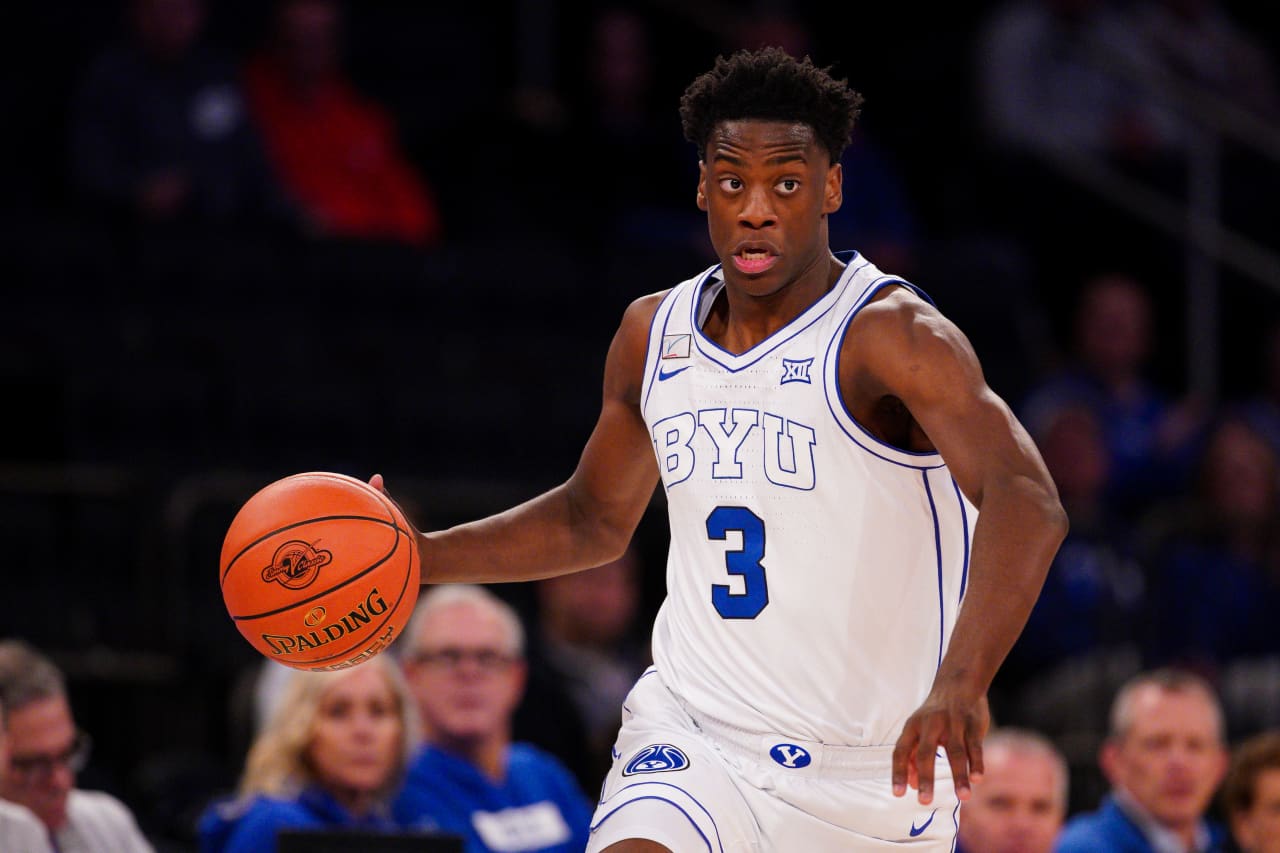
A college basketball player is earning $4.2 million this season — more than many NBA rookies — as the NIL (Name, Image, and Likeness) era continues to shatter records and reshape the landscape of amateur athletics, with the top five earners collectively pulling in over $12 million.
The days of amateurism as a pure ideal are long gone. Three years after the NCAA lifted restrictions on athletes profiting from their fame, the top college basketball players are now earning seven-figure incomes that rival professional salaries. Here are the five highest-paid players for the 2025-2026 season, according to the latest On3 NIL valuation data.
1. Cooper Flagg (Duke) — $4.2 Million
The No.1 overall recruit in the 2024 class, Cooper Flagg, has lived up to every bit of the hype. The 6-foot-9 forward from Maine chose Duke over a host of blue-blood suitors, and his NIL valuation has skyrocketed accordingly.
Flagg’s portfolio includes major deals with New Balance (one of the most lucrative shoe deals ever for a college athlete), Gatorade, Celsius, and Fanatics. His social media following — over 1.5 million across Instagram and TikTok — makes him a marketer’s dream. Duke’s deep March Madness run only increased his exposure, and whispers of a $50 million rookie shoe deal if he enters the NBA draft continue to circulate.
2. AJ Dybantsa (Kansas) — $3.1 Million
The 6-foot-8 small forward from Massachusetts surprised many when he chose Kansas over Kansas State and Alabama, and his NIL valuation reflects a bidding war that reportedly reached seven figures before he even stepped on campus.
Dybantsa’s primary deals include Adidas (a direct result of Kansas’s partnership with the brand), State Farm, and a local Kansas City auto dealership that put him in a new truck. His agent, Rich Paul of Klutch Sports, negotiated a unique clause that allows Dybantsa to renegotiate his NIL deals if he wins National Player of the Year — a bet that looks smarter each time he puts up a triple-double.
3. Ace Bailey (Rutgers) — $2.4 Million
The most surprising name on this list is not from Duke, Kentucky, or Kansas. Ace Bailey chose Rutgers, and Newark’s business community rallied around him, a model for non-traditional basketball powers.
Bailey’s $2.4 million valuation is based on a combination of local and national deals. He is the face of Newark Community Night (a city-funded initiative promoting youth basketball), has a deal with PSEG (New Jersey’s largest utility), and has signed with Under Armor, a deal sources say includes performance bonuses for tournament wins. His decision to stay local — he is from nearby Trenton — has made him a regional hero.
4. Dylan Harper (Rutgers) — $2.2 Million
Rutgers’s double coup continues. Dylan Harper, son of five-time NBA champion Ron Harper, joined Bailey in committing to the Scarlet Knights, and the two have formed the most expensive freshman duo in college basketball history.
Harper’s NIL valuation is driven by national brands seeking to capitalize on his famous last name. He has deals with Nike (a family connection — his father was a Nike athlete), Wendy’s, and Cash App. His most unusual deal is with a Rutgers-affiliated crypto exchange that pays him in a combination of cash and Bitcoin. So far, the Bitcoin portion has outperformed the cash.
5. Cameron Boozer (Miami) — $2.1 Million
The son of former Duke star and two-time NBA All-Star Carlos Boozer, Cameron chose to stay home and play for the Miami Hurricanes. His $2.1 million valuation makes him the highest-paid player on a Miami team that has become an ACC contender.
Boozer’s deals include Miami-based Latin auto insurance company Universal Insurance (which features him in Spanish-language commercials), Goya Foods, and a regional Publix campaign. His Spanish fluency — he grew up speaking both English and Spanish — has made him uniquely valuable to brands targeting Florida’s bilingual audience.
The NIL Landscape: How We Got Here
The NCAA’s 2021 decision to allow athletes to profit from their name, image, and likeness has fundamentally changed college sports. What started with quarterbacks earning six figures from local car dealerships has exploded into a multi-million-dollar ecosystem involving shoe companies, national advertisers, and collectives funded by wealthy boosters.
The top basketball players now routinely earn more than the head coaches who recruit them. Flagg’s $4.2 million exceeds the salary of 10 NBA head coaches and is comparable to a late-first-round NBA rookie contract. The difference, of course, is that Flagg earns his money without a collective bargaining agreement, without a players’ union, and without the guarantee of a second paycheck if he gets injured.
The Debate: Is This Sustainable?
Critics argue that NIL has destroyed the illusion of amateurism without creating any guardrails. The wealthiest programs — Duke, Kansas, Kentucky, Rutgers (yes, Rutgers) — have pulled ahead not because of coaching or tradition, but because their boosters have the deepest pockets.
Supporters counter that athletes were always being paid; the money just went to coaches, administrators, and shoe companies instead. At least now, the players see some of the revenue they generate.
The truth lies somewhere in between. NIL has created opportunities for athletes who would have otherwise watched others profit from their labor. But it has also introduced market dynamics that many colleges are ill-equipped to manage. When a freshman is earning $4 million, and his coach is earning $3 million, who is really in charge?
What’s Next
The NCAA has asked Congress for a federal NIL law to create uniform standards, but lawmakers remain divided. Meanwhile, the top earners will continue to cash in — and the gap between the Flagg-level stars and everyone else will only widen.
For now, Flagg sits atop the mountain. His $4.2 million makes him the highest-paid college basketball player in history. Whether he can hold that title next year depends on which high school senior signs the next record-breaking deal.
One thing is certain: the days of “starving student-athlete” are over. And they are never coming back.
Follow and subscribe for push notifications on the latest NIL news, college basketball updates, and recruiting coverage.
Writer: Sam Michael