
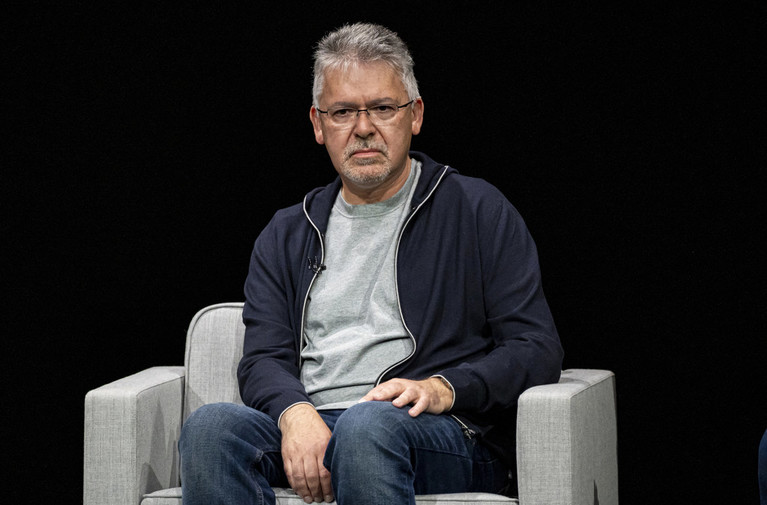
Apple’s bold leadership shakeup signals a desperate sprint to catch up in the blistering AI arms race, with the tech titan tapping a former Google and Microsoft exec to rescue its faltering Siri amid mounting investor jitters. As rivals like OpenAI and Google dominate headlines with breakthrough models, Cupertino’s latest move could redefine the iPhone giant’s future—or expose deeper cracks in its innovation engine.
The announcement, dropped on December 1, 2025, has sent ripples through Silicon Valley, spotlighting Apple’s new AI chief hire, Siri upgrade delays, and the intensifying Apple AI strategy push. John Giannandrea, who steered Apple’s machine learning and AI strategy since jumping ship from Google in 2018, is stepping down to serve as an advisor before retiring in spring 2026. In his place steps Amar Subramanya, a 46-year-old Bangalore native and AI powerhouse whose resume reads like a playbook from the competition: 16 years at Google, where he headed engineering for the Gemini digital assistant, followed by a brief but impactful stint as corporate vice president of AI at Microsoft’s newly minted AI division. Subramanya, a Bangalore University alumnus with a PhD in machine learning from Carnegie Mellon, now reports directly to software chief Craig Federighi, overseeing Apple Foundation Models, ML research, and AI safety and evaluation.
This isn’t just a personnel swap—it’s a tactical reset for a company that’s bled market share in the generative AI boom. Apple Intelligence, unveiled with fanfare at WWDC 2024, promised on-device magic like personalized Siri actions and context-aware summaries, but delivery has been a slog. Key features, including Siri’s ability to pull from emails or execute multi-step tasks, got bumped to 2026 after internal tests revealed glitches in legacy code. A May 2025 Bloomberg exposé laid bare the chaos: Even Federighi, Apple’s software guru, found Siri flopping on basic demos just weeks from launch. Notification summaries spewed fake news headlines in early 2025, eroding trust and inviting lawsuits over unfulfilled promises tied to iPhone 16 sales.
Giannandrea’s tenure, once hailed as a coup, now draws scrutiny. He built Apple’s AI infrastructure from scratch, embedding machine learning into Face ID and photo editing, but critics say he couldn’t pivot fast enough to the ChatGPT era. Reports swirled of CEO Tim Cook’s waning faith, with Federighi and Vision Pro architect Mike Rockwell absorbing AI reins in mid-2025. Subramanya inherits a hybrid strategy: beefing up on-device processing via Apple Silicon for privacy hawks, while leaning on cloud partners like Google’s Gemini for heavy lifts.
Wall Street’s verdict? Thumbs up, mostly. Wedbush analysts, fresh off reiterating an Outperform rating and $320 price target, dubbed Subramanya “the right hire at the right time” to supercharge Apple’s AI talent rebuild. “This signals aggressive competition,” tweeted analyst Dan Ives, echoing X chatter where #AppleAI trended with memes of Siri “waking up” post-hire. Tech insiders like Georgia Tech’s Mark Riedl praised the pick on podcasts: “Subramanya’s Gemini chops could turbocharge Siri’s personalization without sacrificing Apple’s privacy fortress.” But skeptics abound. On X, users quipped, “Apple’s playing catch-up—hope Subramanya brings more than Bangalore vibes,” highlighting the Bangalore boy angle that’s sparked proud threads in Indian tech circles.
The stakes couldn’t be higher for everyday Americans hooked on iPhones and Macs. Economically, Apple’s AI lag has dented its $3.5 trillion valuation—shares up just 16% in 2025 versus Nvidia’s 150% surge—potentially costing U.S. jobs in Cupertino’s 164,000-strong workforce if innovation stalls. Lifestyle perks? Imagine a Siri that finally books your flights hands-free or curates workout chats via the Fitness app, features teased but delayed. For tech enthusiasts, this hire promises real-time AirPods translation upgrades—catching up to Google’s 2017 tech—and smarter health tracking amid a booming $100 billion wearables market.
Politically, it underscores Washington’s AI tussle: As Biden-era regs push ethical guardrails, Subramanya’s safety focus aligns with calls for bias audits, but rivals accuse Apple of “slow-walking” to dodge scrutiny. On the sports front? AI-driven coaching apps could explode, with Apple Watch metrics feeding personalized regimens for weekend warriors—though that’s years out.
Subramanya’s to-do list is brutal from day one: Overhaul Siri’s “embarrassing” core, integrate Gemini without privacy leaks, and prove Apple can ship frontier models rivaling GPT-5. As Cook put it in the release, this “new chapter” commits to “intelligent, trusted experiences.” X buzz suggests optimism: “Cupertino’s catching up, but is it too late?” one post pondered.
Looking ahead, success hinges on 2026 deliverables—a revamped Siri at WWDC, seamless Apple Intelligence across devices. If Subramanya delivers, Apple sheds its laggard skin, reclaiming AI leadership with privacy as its secret weapon. Fail, and the iPhone empire risks irrelevance in a world where AI isn’t a feature—it’s the OS. Either way, this hire marks Apple’s fiercest bet yet on the tech that could power the next decade.
*By Mark Smith*
Follow us on X and subscribe for push notifications—stay ahead of the breaking news beat!