
As Court Stenographer Numbers Plunge 21% in Decade, Legal Battles Over Audio Reporting Accuracy Surge in 2025
In America’s bustling courtrooms, where every word can tip the scales of justice, a quiet crisis is brewing. The vanishing ranks of traditional stenographers are forcing judges and lawyers to lean harder on audio recordings—but at what cost? A wave of disputes over flawed transcripts is clogging dockets and rattling the legal system.
This year alone, the stenographer shortage has hit fever pitch, with just 23,000 certified professionals left nationwide after a 21% drop over the past decade. Terms like court stenographer shortage, audio reporting disputes, transcription errors in court, digital court reporting, and court reporter crisis are exploding in legal searches, as attorneys scramble for reliable records amid rising caseloads. From California to New York, the fallout is real: delayed trials, skyrocketing fees, and heated arguments over whether a garbled tape truly captures the truth.
The Vanishing Art of Stenography: A Workforce in Freefall
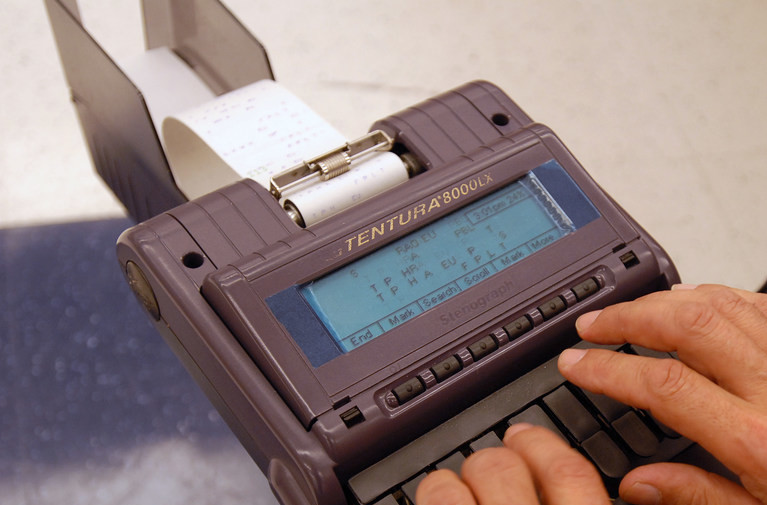
Stenographers, those wizards of the stenotype machine who capture up to 225 words per minute with eerie precision, have long been the gold standard for courtroom documentation. Trained for years in shorthand and legal nuance, they produce verbatim transcripts that stand up to the fiercest scrutiny. But the profession is graying fast. The average stenographer is 56 years old, and for every 1,120 who retire, only 200 newcomers step up. Enrollment in training programs has cratered by 42% in the last decade, closing schools like Brown College of Court Reporting due to low turnout.
The Bureau of Labor Statistics pegs the current workforce at around 21,300, well below 2018 projections of 27,700. In California, a hotspot for litigation, the state needs 428 more full-time reporters to keep pace, yet only 121 new licenses issued last year. Pandemic-fueled remote hearings accelerated the exodus, as Zoom fatigue and income dips pushed many to pivot or retire early. Now, 76% of legal pros report scheduling headaches, and 55% gripe about ballooning costs.
Audio Recording: The Risky Stopgap That’s Sparking Firestorms
Enter electronic audio recording—the budget-friendly alternative that’s become a lifeline for cash-strapped courts. It’s cheap, scalable, and doesn’t require a human scribe on site. But here’s the rub: Audio isn’t foolproof. Background noise, overlapping voices, accents, or glitchy tech can turn a crystal-clear argument into a mush of “inaudibles.” Transcribing these tapes? That’s where the trouble starts.
Rules like California’s Rule 2.1040 demand transcripts for audio evidence, but if a party’s version clashes with the court’s, objections fly. Poor quality can torpedo admissibility, with judges scrutinizing chain of custody to sniff out tampering. In federal appeals, audio is routine, but transcripts are optional—and disputed ones rarely sway outcomes since jurors can sync them to the tape. Yet, as one expert notes, “Even minor errors can compromise credibility and legal outcomes.”
Recent flare-ups underscore the chaos. In a 2025 Texas federal case, a botched audio transcript omitted a key witness’s alibi, forcing a mistrial and $150,000 in refiling fees. Attorneys clashed over who foots the bill for re-transcription, citing “unreliable digital capture” under Federal Rule of Evidence 1002—the best evidence rule that prioritizes originals but allows aids like transcripts only if undisputed. Up in New York, a family court spat saw dueling transcripts from the same Zoom hearing—one from an outsourced service riddled with errors, the other a costly stenographer redo. The judge sided with the original, but not before appeals dragged on for months.
These aren’t isolated hiccups. A 2025 AAERT survey found 62% of courts using audio as a primary method, up from 45% in 2020, correlating with a 30% spike in transcript challenges. In Michigan, plaintiffs sued for access to raw audio post-appeal, arguing transcripts masked errors—but the court shut them down, deeming certified reporters’ work sufficient. Critics say this entrenches inequality: Wealthy litigants hire private stenographers for airtight records, while public defenders settle for spotty tapes.
Expert Takes: From Alarm Bells to Tech Hopes
The chorus of concern is loud. AAERT’s Matt Riley calls it “a constitutional crisis,” warning that verbatim records are the bedrock of fair appeals. NCRA’s Christine Willette pushes back, insisting stenography’s revival—via overflowing schools and voice-writing—is underway, not doomed. But digital advocates like those at Rev hail hybrids: AI-assisted transcription for speed, human oversight for accuracy. “96% of users prioritize precision over method,” their 2025 report states.
Public reaction? Frustration boils over online. X users vent about “AI hallucinations” butchering legal lingo, with one thread decrying a deposition where software misheard “mens rea” as “men’s ray.” Legal aid groups like Bay Area Legal Aid slam the status quo, noting over a million California hearings last year lacked verbatim records, hobbling low-income families in custody battles. Unions, meanwhile, fight electronic mandates, fearing job losses—California’s SEIU touted a 350% license jump but still blocks broader audio adoption.
Hitting Home: How This Messes with American Lives
For everyday Americans, this isn’t courtroom drama—it’s a drag on justice that echoes far beyond the bench. Delayed civil suits mean small businesses wait years for contract resolutions, stalling expansions and jobs in heartland towns. In family courts, transcription snags prolong divorces, spiking child support arrears and emotional tolls on kids.
Politically, it’s a powder keg. With midterms heating up, reformers push bills like California’s AB 2010 to greenlight electronic recording statewide, but unions rally against it, calling it a “race to the bottom.” Economically, the crunch costs billions: A single mistrial can burn $500,000 in taxpayer dollars, per industry estimates. Tech ties in too—Silicon Valley firms litigate IP wars where flawless records are make-or-break, yet audio woes force pricey stenographer premiums.
Sports fans? Think endorsement disputes in the NFL, where a fumbled transcript could void a multimillion-dollar deal. And for the average Joe facing a traffic ticket or eviction, spotty audio means uneven playing fields—public defenders lack resources for top-tier fixes, eroding trust in the system.
Users tuning into court stenographer shortage updates crave practical intel: How to verify transcripts? Demand certified reporters? Budget for backups? Smart plays include stipulating stenography in filings, cross-checking audio with multiple transcribers, and lobbying for hybrid tech mandates. Stay proactive—your next dispute could hinge on a single, shaky syllable.
As the dust settles on 2025’s trends, the path forward demands balance: Revive stenography pipelines with incentives and scholarships, while regulating audio for reliability. Bills in Congress aim to fund 5,000 new training slots by 2027, blending old-school skill with digital smarts. Until then, the courts limp on, one disputed “inaudible” at a time. Yet hope flickers—industry watchers predict a hybrid boom could halve disputes by 2030, restoring faith in records that truly reflect reality.
Back in the fray of court stenographer shortage woes, audio reporting disputes, and the push for digital court reporting solutions, one truth stands: Fixing transcription errors in court isn’t optional—it’s the key to keeping justice swift and sure for all.
By Sam Michael
Follow and subscribe to us for the latest updates—turn on push notifications to never miss a beat on breaking U.S. news!