
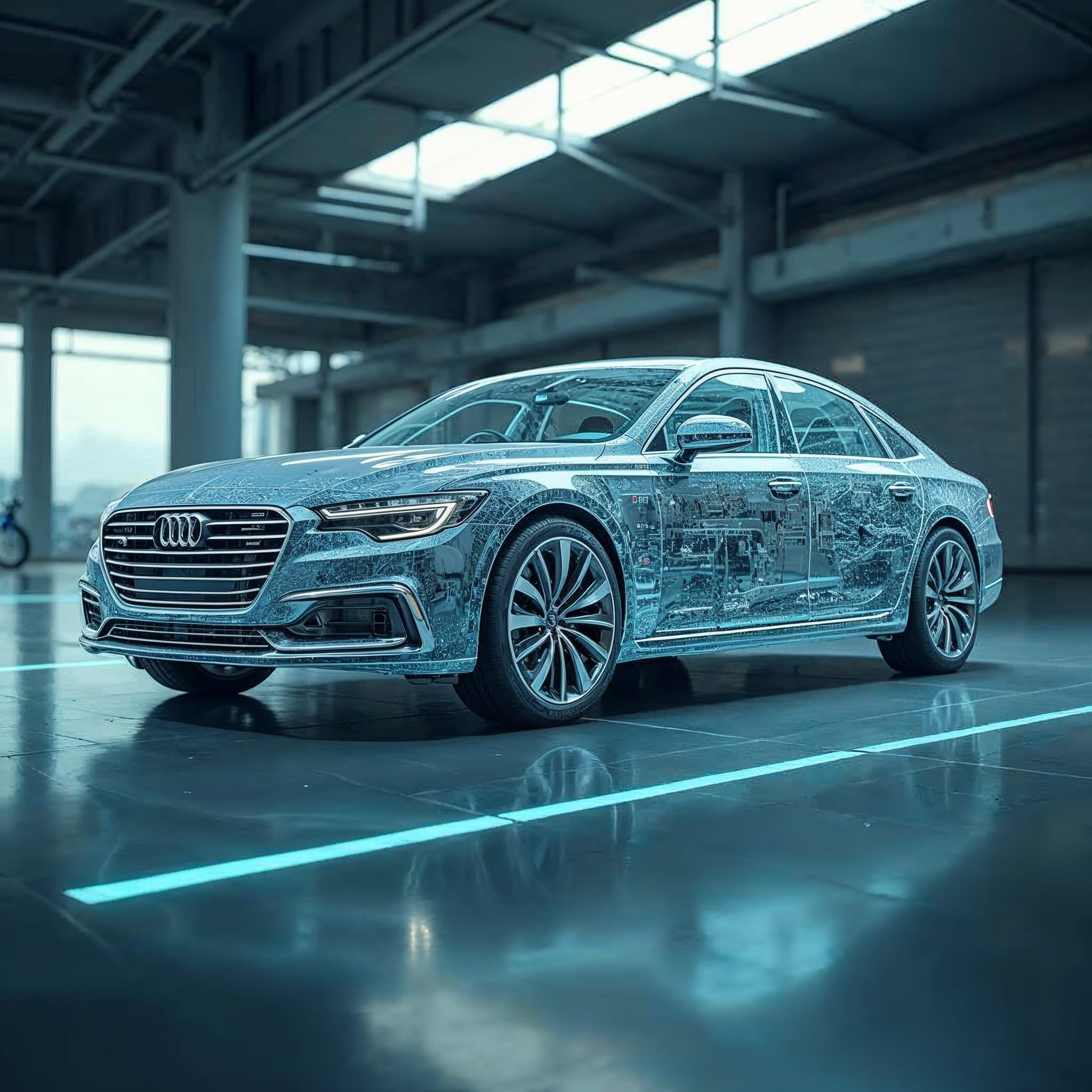
In the evolving landscape of automotive technology, hybrid vehicles stand out as a bridge between conventional internal combustion engines and fully electric powertrains. A cornerstone technology that defines their efficiency and distinct operational characteristics is regenerative braking. Far more than just a mechanism for slowing a vehicle down, regenerative braking is a sophisticated system that transforms what would traditionally be wasted energy into usable electricity, fundamentally altering the longevity and performance of a hybrid’s entire ecosystem. This article delves deep into the mechanics, benefits, and broader implications of regenerative braking, illuminating how it extends not only the life of your brake pads but also contributes to the robust health and extended operational life of the hybrid system itself.
Imagine a world where every time you decelerate, your vehicle isn’t just generating heat and brake dust, but is actively recharging its own battery, becoming more efficient with every stop. This is the reality offered by regenerative braking. It represents a paradigm shift in how we think about braking, moving from a purely consumptive process to one of intelligent energy recovery. As we journey through the intricacies of this technology, we will explore its fundamental principles, its tangible impact on component wear, its role in battery management, and how modern advancements continue to push the boundaries of what’s possible in energy conservation. Prepare to discover the profound engineering behind the seamless, silent energy recovery that defines the modern hybrid driving experience.
Understanding the Basics of Regenerative Braking
At its heart, regenerative braking is an ingenious system designed to recover kinetic energy that is typically lost as heat during conventional braking. When a driver lifts their foot off the accelerator or presses the brake pedal in a hybrid or electric vehicle, instead of solely relying on friction brakes to slow the car, the electric motor reverses its function. Rather than consuming electricity to drive the wheels, it acts as a generator, converting the vehicle’s kinetic energy (the energy of motion) back into electrical energy. This recovered electricity is then stored in the vehicle’s high-voltage battery pack.
This process is crucial for the overall efficiency of hybrid vehicles. Traditional braking systems convert kinetic energy into heat through friction between the brake pads and rotors, which is then dissipated into the atmosphere. This energy is simply wasted. Regenerative braking intervenes in this process, capturing a significant portion of that energy before it can be lost. The amount of energy recovered depends on several factors, including the vehicle’s speed, weight, the aggressiveness of deceleration, and the state of charge of the battery. For instance, a vehicle decelerating from a high speed will generate more kinetic energy to recover than one slowing down from a very low speed. Similarly, a heavier vehicle will have more kinetic energy to convert. The battery’s ability to accept a charge also plays a role; a full battery cannot accept much more energy, limiting the effectiveness of regeneration until some energy is consumed.
The seamless integration of regenerative braking with the conventional friction braking system is a marvel of modern automotive engineering. Drivers typically experience a smooth, controlled deceleration without needing to understand the complex interplay beneath the surface. When the driver applies light pressure to the brake pedal, the regenerative system handles most, if not all, of the braking force. If more aggressive braking is required, or if the battery is full, the conventional friction brakes seamlessly engage to supplement the regenerative effort, ensuring adequate stopping power in all conditions. This blended braking system provides safety and efficiency in equal measure, making the transition almost imperceptible to the driver. The sophisticated electronic control unit (ECU) manages this delicate balance, deciding how much regenerative braking to apply and when to bring in the friction brakes, optimizing for both energy recovery and driver comfort.
The Core Principle: Energy Conversion and Recovery
The fundamental principle behind regenerative braking is the transformation of energy from one form to another. In physics, energy cannot be created or destroyed, only converted. When a vehicle is in motion, it possesses kinetic energy. To slow down or stop, this kinetic energy must be dissipated. In a conventional car, this dissipation occurs primarily as heat due to friction. In a hybrid or electric vehicle equipped with regenerative braking, a significant portion of this kinetic energy is converted into electrical energy and stored, effectively recycling what would otherwise be wasted.
This conversion is facilitated by the vehicle’s electric motor, which also doubles as a generator. Here’s a step-by-step breakdown of the process:
- Driver Deceleration Request: When the driver lifts their foot off the accelerator or presses the brake pedal, the vehicle’s control system detects a deceleration request.
- Motor as Generator: Instead of drawing power from the battery to propel the wheels, the electric motor’s connection to the wheels means that as the wheels continue to spin (due to the vehicle’s momentum), they force the motor to turn.
- Electricity Generation: When the motor is forced to turn without receiving power, it acts as a generator. The rotational motion of the motor’s rotor within its magnetic field induces an electrical current. This process converts the mechanical energy from the spinning wheels (kinetic energy of the vehicle) into electrical energy.
- Power Inversion: The generated electricity is typically alternating current (AC). However, vehicle batteries store direct current (DC). An onboard inverter/converter system is responsible for rectifying this AC power into DC and adjusting its voltage to match the battery’s requirements, allowing for efficient charging.
- Battery Storage: The converted electrical energy is then sent to the vehicle’s high-voltage battery pack, where it is stored for future use. This energy can later be drawn upon by the electric motor to assist in acceleration, power accessories, or enable all-electric driving at lower speeds.
- Blended Braking: If the regenerative braking alone cannot provide sufficient stopping power (e.g., during hard braking) or if the battery is fully charged and cannot accept more energy, the conventional friction brakes automatically engage to provide the necessary additional deceleration. The vehicle’s electronic control unit seamlessly manages this blend, ensuring optimal energy recovery while maintaining driver safety and comfort.
This sophisticated interplay allows for a continuous cycle of energy use and recovery, significantly boosting the vehicle’s overall energy efficiency and reducing its reliance on the internal combustion engine, thereby also reducing fuel consumption and emissions. The effectiveness of this conversion is a key metric in hybrid vehicle design, with engineers constantly striving to maximize the percentage of kinetic energy that can be recovered and reused.
Impact on Brake System Longevity: Reduced Wear and Tear
One of the most immediate and tangible benefits of regenerative braking, and perhaps the most widely understood, is its profound impact on the lifespan of conventional brake components. In a traditional vehicle, every time the driver slows down or stops, the friction brakes—comprising pads and rotors—are engaged. This engagement involves direct contact and friction, which inevitably leads to wear and tear. Brake pads are designed to be sacrificial components, gradually wearing down over thousands of miles as they convert kinetic energy into heat and brake dust.
With regenerative braking, a significant portion of the deceleration effort is handled by the electric motor acting as a generator. This means that for light to moderate braking, the friction brakes are either not engaged at all or are engaged minimally. This drastically reduces the workload on the conventional brake pads and rotors. Consider a typical city driving scenario: frequent stops and starts, often involving moderate deceleration. In a conventional car, this would mean constant friction and wear. In a hybrid or EV with regenerative braking, many of these decelerations would primarily utilize the electric motor, saving the mechanical brakes for more demanding situations or emergencies.
The result is a substantial extension of brake pad and rotor life. While conventional brake pads might need replacement every 30,000 to 60,000 miles, it is not uncommon for hybrid vehicle owners to report their original brake pads lasting well over 100,000 to 150,000 miles, and in some cases, even longer. This longevity translates into significant cost savings for the owner in terms of maintenance. Fewer brake pad replacements mean less money spent on parts and labor. Furthermore, less wear means less brake dust, which is a particulate pollutant. This contributes to cleaner air, albeit a small but cumulatively significant environmental benefit.
Beyond the pads and rotors, the reduced heat generated by the braking system also benefits other components. Less heat means less stress on brake calipers, fluid, and lines, potentially extending their operational life and reducing the likelihood of heat-related failures. The entire braking system operates under less strain, leading to greater reliability and consistency in performance over the long term. This reduced maintenance burden is a key selling point for hybrid and electric vehicles, offering a compelling economic argument alongside their environmental advantages. It fundamentally shifts the perspective of braking from a maintenance liability to an energy-recovering asset.
Enhancing Battery Health and Efficiency: Role in Charging
While the extension of brake pad life is a widely recognized benefit, the impact of regenerative braking on the vehicle’s high-voltage battery pack is equally, if not more, critical for the overall health and efficiency of the hybrid system. Regenerative braking serves as a primary charging mechanism for the battery, playing a pivotal role in maintaining its optimal state of charge (SOC) and contributing to its long-term health.
Hybrid vehicle batteries, typically made of Nickel-Metal Hydride (NiMH) or Lithium-Ion (Li-ion), operate most efficiently and have the longest lifespan when kept within a specific operating window, often between 20% and 80% of their full capacity. Deep discharges and prolonged full charges can accelerate degradation. Regenerative braking helps to keep the battery within this optimal range by intelligently topping it up during deceleration. This constant, moderate charging prevents the battery from experiencing severe discharge cycles, which can be detrimental to its chemical composition and internal resistance over time. By frequently recovering energy, the battery undergoes more frequent, shallower charge and discharge cycles, which are far less stressful than infrequent, deep cycles.
Furthermore, regenerative braking systems are integrated with sophisticated Battery Management Systems (BMS). The BMS meticulously monitors various parameters of the battery pack, including temperature, voltage, current, and individual cell health. When regenerative braking occurs, the BMS ensures that the incoming electrical energy is delivered to the battery in a controlled manner, preventing overcharging or excessive current surges that could harm the cells. It precisely dictates how much charge the battery can accept at any given moment, taking into account its current state of charge and temperature. For example, if the battery is cold, the BMS might limit the regenerative charge rate to protect the cells.
This continuous, intelligent charging from regenerative braking also enhances the overall efficiency of the hybrid powertrain. A well-maintained state of charge means the internal combustion engine doesn’t have to work as hard or as often to recharge the battery, thus reducing fuel consumption and emissions. The recovered energy is readily available to assist the engine during acceleration or to power the vehicle in full-electric mode at lower speeds. This dynamic interplay between the engine, electric motor, and battery, orchestrated by regenerative braking, is what makes hybrid vehicles so efficient and responsive. In essence, regenerative braking acts as a constant health monitor and charger for the battery, ensuring its longevity, optimizing its performance, and maximizing the overall fuel economy of the vehicle.
Integrating Regenerative Braking with Conventional Systems: Seamless Experience
One of the most impressive feats of engineering in modern hybrid and electric vehicles is the seamless integration of regenerative braking with the traditional friction braking system. For the driver, the experience should be intuitive and consistent, regardless of whether the vehicle is using its electric motors to slow down or relying on the mechanical brake pads. This smooth transition, often referred to as “blended braking,” is crucial for driver comfort, safety, and acceptance of the technology.
The key to this seamless experience lies in a sophisticated electronic control unit (ECU) and specialized hydraulic braking components. When the driver presses the brake pedal, the ECU interprets the request for deceleration. Instead of immediately engaging the friction brakes, the system first attempts to maximize regenerative braking. The ECU calculates the required braking force and determines how much of that force can be supplied by the electric motor/generator. For most light to moderate braking situations, the electric motor can provide a significant portion, if not all, of the necessary deceleration.
However, there are scenarios where regenerative braking alone is insufficient: during aggressive braking, when the battery is fully charged and cannot accept more energy, or at very low speeds where the electric motor’s generating capacity diminishes. In these instances, the ECU smoothly activates the conventional hydraulic friction brakes to supplement the regenerative effort. This is achieved through a brake-by-wire system, where the brake pedal’s input is translated into an electronic signal rather than a direct hydraulic connection. This allows the ECU to precisely modulate the hydraulic pressure to the wheel calipers, blending it with the regenerative force to achieve the desired deceleration.
The driver experiences a consistent pedal feel, thanks to mechanisms like brake pedal simulators or sophisticated master cylinders that provide haptic feedback, mimicking the feel of traditional hydraulic brakes even when regeneration is doing most of the work. This prevents the driver from noticing any unusual sensations or variations in pedal firmness, which could be unsettling. The goal is to make the driver completely unaware of which braking system is providing the deceleration, focusing instead on a predictable and safe stopping experience.
This integration is not just about driver comfort; it’s also about safety. The system is designed with fail-safes, ensuring that if the regenerative system encounters an issue, the conventional friction brakes are always ready to take over immediately and fully. This layered approach guarantees robust braking performance under all operating conditions, providing peace of mind while simultaneously maximizing energy recovery and component longevity.
Advanced Regenerative Braking Technologies: Beyond Basic Recovery
While the core principle of regenerative braking remains constant, advancements in hybrid and electric vehicle technology have led to more sophisticated and nuanced implementations. These innovations aim to maximize energy recovery, enhance driver experience, and further improve overall system efficiency. Modern regenerative braking goes beyond simply recovering kinetic energy; it integrates with navigation, driver preferences, and even traffic conditions.
- One-Pedal Driving: A significant advancement, particularly prominent in many fully electric vehicles and some plug-in hybrids, is one-pedal driving. In this mode, lifting the foot off the accelerator pedal significantly increases the level of regenerative braking, often to the point where the vehicle can decelerate to a complete stop without the driver needing to touch the brake pedal. This creates a highly intuitive and relaxing driving experience, especially in stop-and-go traffic. The driver can modulate speed almost entirely with the accelerator, using the brake pedal only for emergency stops or very specific situations. The intensity of regeneration in one-pedal driving can often be adjusted by the driver, from a mild coasting feel to a strong deceleration mimicking traditional braking.
- Variable Regeneration Levels: Many modern hybrids and EVs allow drivers to select different levels of regenerative braking. This can be done via paddle shifters on the steering wheel, a dedicated button, or through infotainment system settings. For example, a driver might choose a stronger regeneration setting for downhill driving to maximize energy recovery, or a milder setting for highway cruising where coasting is preferred. This customization allows drivers to tailor the driving dynamics to their personal preferences and specific driving conditions.
- Predictive and Adaptive Regenerative Braking: Integrating with advanced driver-assistance systems (ADAS) and navigation data, some vehicles employ predictive regenerative braking. The system uses information from radar, cameras, GPS, and map data to anticipate upcoming road conditions (e.g., upcoming turns, traffic lights, speed limit changes, downhill gradients, or vehicles ahead). It can then proactively adjust the regenerative braking intensity to optimize energy recovery. For instance, if the navigation system knows a sharp turn is approaching, it might initiate a stronger regenerative braking phase earlier, smoothly slowing the vehicle while recovering maximum energy.
- Coasting Regeneration: In some systems, even when the accelerator is released for a mere coasting effect, a minimal level of regeneration might still be active. This “coasting regeneration” continuously trickles energy back into the battery, even during periods of seemingly passive driving, further contributing to overall efficiency. The vehicle management system carefully balances between pure coasting (which can be very efficient on flat terrain) and slight regeneration, depending on various factors like battery state of charge and driver input.
- Brake Blending Refinements: The sophistication of brake blending continues to improve. Engineers are constantly refining the algorithms that control the transition between regenerative and friction braking, making it even smoother, more consistent, and imperceptible to the driver across a wider range of speeds and deceleration demands. This includes considerations for anti-lock braking (ABS) and stability control systems, ensuring that regenerative braking works harmoniously with these critical safety features.
These advanced technologies not only push the boundaries of energy efficiency but also enhance the driving experience, making hybrid and electric vehicles even more appealing and user-friendly. They represent a continuous evolution of smart energy management within the automotive industry, moving towards even more intelligent and autonomous energy recovery processes.
Beyond Wear: Environmental and Economic Benefits
While the tangible benefits of extended brake pad life and optimized battery health are significant, the advantages of regenerative braking extend much further, encompassing broader environmental and economic implications. This technology is a cornerstone in the ongoing shift towards more sustainable transportation.
Environmental Benefits:
- Reduced Emissions: By recovering kinetic energy and storing it as electricity, regenerative braking effectively reduces the workload on the internal combustion engine in hybrid vehicles. This means the engine runs less frequently, or at more optimal, fuel-efficient RPMs, leading to a direct reduction in tailpipe emissions of greenhouse gases (like CO2) and other pollutants (like NOx and particulate matter). In fully electric vehicles, it extends range, indirectly reducing the demand for grid electricity and the associated emissions from power generation.
- Lower Brake Dust Pollution: Conventional friction braking generates fine particulate matter (brake dust) as pads and rotors wear down. This dust, containing heavy metals and other harmful substances, contributes to air pollution, especially in urban environments. Since regenerative braking significantly reduces the reliance on friction brakes, it drastically cuts down on the production of brake dust, contributing to cleaner air quality in cities and along roadways.
- Resource Conservation: Less frequent replacement of brake pads and rotors means a reduced demand for the raw materials used in their manufacturing, such as steel, copper, and various friction materials. This conserves natural resources and reduces the energy and environmental impact associated with mining, processing, and manufacturing these components.
- Energy Efficiency: At a macro level, the widespread adoption of regenerative braking contributes to overall energy efficiency in transportation. By recycling energy that would otherwise be wasted, it reduces the total energy input required to move vehicles, leading to a more efficient use of fuel or electricity.
Economic Benefits:
- Lower Fuel Costs: For hybrid vehicles, the direct recovery of energy means better fuel economy. Drivers experience fewer trips to the gas station and lower annual fuel expenses, representing a substantial long-term saving over the vehicle’s lifespan.
- Reduced Maintenance Costs: As previously discussed, the extended life of brake pads and rotors translates directly into lower maintenance costs. Fewer replacements mean fewer parts to buy and less labor to pay for, adding up to significant savings over many years of ownership. While hybrid components like the battery might be perceived as expensive to replace (though less common than often assumed), the savings from brake maintenance can partially offset these concerns.
- Enhanced Resale Value: Vehicles equipped with advanced, well-maintained technologies like regenerative braking systems often retain their value better. Buyers are increasingly aware of the maintenance benefits and fuel efficiency advantages, making these vehicles more attractive in the used car market.
- Potential for Extended Battery Life: By maintaining the battery’s state of charge within optimal parameters and reducing stress from deep discharge cycles, regenerative braking can contribute to the overall longevity of the high-voltage battery pack. A longer-lasting battery means avoiding a costly replacement, which is a major economic benefit for owners.
In essence, regenerative braking is a win-win technology. It offers tangible benefits to the individual vehicle owner through reduced costs and enhanced performance, while simultaneously contributing to broader environmental goals by reducing emissions and conserving resources. It’s a prime example of how smart engineering can lead to sustainable and economically viable solutions in the automotive sector.
Driving Habits and Regenerative Braking Optimization
The effectiveness of regenerative braking is not solely dependent on the vehicle’s technology; it is significantly influenced by the driver’s habits and driving style. By adopting certain techniques, drivers can maximize the energy recovery potential of their hybrid or electric vehicle, thereby enhancing fuel efficiency, extending component life, and improving the overall driving experience.
Maximizing Regenerative Braking:
- Anticipatory Driving: This is perhaps the most crucial technique. Instead of waiting until the last moment to brake hard, try to anticipate traffic flow, upcoming turns, and traffic lights. By gradually lifting off the accelerator earlier, you allow the regenerative braking system more time to slow the vehicle down gently and efficiently, maximizing energy capture. Smooth, gradual deceleration is far more effective for regeneration than sudden, aggressive braking, which forces the friction brakes to engage.
- “Coasting” Wisely: On downhill stretches or when approaching a stop, releasing the accelerator pedal allows the vehicle to enter a regenerative coasting mode. This uses the motor as a generator, converting gravitational potential energy and kinetic energy into electricity. Rather than maintaining speed with the accelerator and then braking, letting the car coast and regenerate is a far more efficient approach.
- Moderate Braking Pressure: For vehicles with blended braking systems, applying moderate, consistent pressure to the brake pedal (rather than stomping on it) keeps the vehicle primarily in regenerative braking mode. Many hybrids have a display that indicates when regeneration is active or how much power is being recovered, allowing drivers to fine-tune their pedal input for optimal energy capture.
- Utilizing One-Pedal Driving (if available): If your vehicle offers one-pedal driving, master its nuances. Learning how to modulate the accelerator for both acceleration and deceleration can significantly increase regenerative energy capture, especially in urban environments with frequent stops. It takes some getting used to, but once accustomed, it becomes a very efficient way to drive.
- Choosing Optimal Regeneration Settings: If your vehicle allows for adjustable regenerative braking levels (e.g., via paddle shifters or drive modes), experiment with them. Stronger regeneration might be beneficial for city driving or steep descents, while milder settings might be preferred for highway cruising. Adjusting these settings to suit the driving conditions can optimize energy recovery.
Common Mistakes to Avoid:
- Aggressive Braking: Sudden, hard braking bypasses much of the regenerative system’s capability, forcing the conventional friction brakes to do most of the work. This wastes kinetic energy as heat and accelerates brake wear.
- Frequent Acceleration and Deceleration: A “jackrabbit” driving style with rapid acceleration followed by abrupt braking is detrimental to both fuel efficiency and regenerative braking effectiveness. It places unnecessary strain on the powertrain and minimizes energy recovery opportunities.
- Ignoring Vehicle Feedback: Many hybrid and EV dashboards provide real-time feedback on energy flow and regeneration. Ignoring these indicators means missing opportunities to adjust driving style for better efficiency. Pay attention to power meters, regeneration indicators, and efficiency scores.
By consciously adopting a smoother, more anticipatory driving style, hybrid and EV owners can unlock the full potential of their regenerative braking systems, leading to greater fuel savings, extended component life, and a more eco-friendly driving experience. It transforms every deceleration into an opportunity for efficiency, making driving an active partnership with your vehicle’s advanced technology.
Comparison Tables
To further illustrate the distinct advantages of regenerative braking, here are two comparison tables. The first contrasts regenerative braking with conventional friction braking, highlighting their core differences. The second provides illustrative data on regenerative efficiency across various hybrid vehicle types, showcasing the varying capabilities within the market.
Table 1: Regenerative Braking vs. Conventional Friction Braking
| Feature | Regenerative Braking | Conventional Friction Braking |
|---|---|---|
| Mechanism | Electric motor acts as a generator, converting kinetic energy into electrical energy. | Friction between brake pads and rotors converts kinetic energy into heat energy. |
| Energy Fate | Energy recovered and stored in battery for reuse. | Energy wasted as heat, dissipated into the atmosphere. |
| Brake Pad Life | Significantly extended (often 2-4x longer or more). | Standard wear and tear, requires regular replacement. |
| Rotor Life | Extended due to less direct wear and corrosion. | Standard wear, warping risk from heat. |
| Fuel Efficiency / Range | Increases fuel efficiency in hybrids, extends range in EVs. | No direct impact on fuel efficiency or range (consumes energy). |
| Maintenance Costs | Lower long-term brake maintenance costs. | Regular and recurring brake maintenance costs. |
| Environmental Impact | Reduced brake dust, lower overall emissions (indirectly). | Generates brake dust particulate matter. |
| Driving Feel | Often smoother deceleration, can allow for “one-pedal driving.” Blended with friction brakes for consistent feel. | Direct, mechanical feel. |
| Battery Impact | Charges battery, contributing to battery health and longevity. | No impact on battery charging or health. |
Note: This table illustrates general differences. Modern vehicles utilize a blended braking system, combining both for optimal performance and safety.
Table 2: Illustrative Regenerative Efficiency in Hybrid Vehicle Types
| Vehicle Type Example | Regenerative System Characteristics | Estimated Energy Recovery Rate (Illustrative) | Typical Brake Pad Life Extension (Illustrative Multiplier) |
|---|---|---|---|
| Mild Hybrid (MHEV) (e.g., some Honda, older Mercedes/BMW) | Uses a small electric motor/generator (often 48V system) for modest assistance and regeneration. Primarily aids engine and recovers energy during deceleration. | 5-15% of braking energy recovered | 1.2x – 1.5x longer |
| Full Hybrid (HEV) (e.g., Toyota Prius, Ford Fusion Hybrid) | More powerful electric motor(s) and larger battery. Significant energy recovery during braking and coasting. Can drive short distances on electric power alone. | 20-40% of braking energy recovered | 2.0x – 3.0x longer |
| Plug-in Hybrid (PHEV) (e.g., Toyota RAV4 Prime, Hyundai Ioniq Plug-in) | Similar to full hybrids but with larger batteries and more powerful electric motors, allowing for extended all-electric range and more robust regeneration. | 30-50% of braking energy recovered | 2.5x – 4.0x longer |
| Battery Electric Vehicle (BEV) (e.g., Tesla Model 3, Nissan Leaf) | Relies entirely on electric motors for propulsion and primary braking. Highly optimized regenerative braking, often enabling “one-pedal driving.” | 40-60% of braking energy recovered (can be higher in specific scenarios) | 3.0x – 5.0x longer (friction brakes used sparingly) |
Note: Energy recovery rates and brake pad life extensions are illustrative and can vary significantly based on driving conditions, driver behavior, vehicle weight, specific model, and battery state of charge. These values represent typical observations rather than precise, universally applicable statistics.
Practical Examples: Real-World Use Cases and Scenarios
Understanding the theoretical aspects of regenerative braking is important, but its true value becomes apparent when we look at its application in real-world driving scenarios. Different driving conditions present unique opportunities for energy recovery, and hybrid systems are designed to maximize this potential.
1. City Driving: The Regenerative Sweet Spot
City driving, characterized by frequent stop-and-go traffic, low average speeds, and numerous traffic lights, is where regenerative braking truly shines. In a conventional car, this type of driving is highly inefficient, leading to poor fuel economy and rapid brake wear. In a hybrid or EV:
- Scenario: You’re driving through a busy urban street, approaching a red light.
- Regenerative Action: As you lift off the accelerator, the electric motor immediately begins to convert the car’s kinetic energy into electricity, slowing the vehicle down. For most of the deceleration, the friction brakes remain disengaged or minimally engaged.
- Benefit: The battery is constantly being topped up. This allows the vehicle to often remain in all-electric mode at lower speeds, significantly reducing fuel consumption. The brake pads and rotors experience minimal wear, extending their life dramatically. Many hybrid owners report brake pads lasting over 100,000 miles in urban environments.
2. Downhill Driving: Maximizing Potential Energy Recovery
Driving downhill presents a prime opportunity to recover gravitational potential energy, which would otherwise be wasted as heat in conventional braking.
- Scenario: Descending a long, winding mountain road.
- Regenerative Action: Instead of constantly riding the friction brakes (which can lead to overheating and fade), the driver can gently apply the brakes or simply lift off the accelerator. The regenerative system then works harder, acting like an engine brake, but instead of just slowing the car, it actively generates electricity.
- Benefit: The battery gets a significant charge, potentially allowing for extended all-electric driving once on flatter terrain. This prevents brake fade, extends the life of brake components, and saves fuel. In some vehicles, specific “B” (Brake) or “L” (Low) gears or selectable regeneration modes are designed to maximize this effect on descents.
3. Highway Driving: Nuanced Regeneration
While highway driving involves fewer stops, regenerative braking still plays a crucial role, albeit in a more nuanced way.
- Scenario: Cruising on a highway and needing to slow down slightly for traffic ahead or an exit ramp.
- Regenerative Action: When the driver lifts off the accelerator, the vehicle typically enters a mild regenerative mode, effectively providing a smooth deceleration while recovering some energy. For longer decelerations, such as approaching an off-ramp, more significant regeneration occurs.
- Benefit: Even small amounts of recovered energy contribute to the overall efficiency, reducing the need for the engine to later recharge the battery. When the vehicle needs to accelerate again, the electric motor, powered by the regenerated energy, can assist the engine, reducing fuel consumption during acceleration bursts. This smooths out the power delivery and enhances the driving experience.
4. “One-Pedal Driving” in EVs: A Game Changer
In many modern electric vehicles and some plug-in hybrids, one-pedal driving takes regenerative braking to its logical extreme, transforming the driving experience.
- Scenario: Navigating stop-and-go traffic or winding roads.
- Regenerative Action: The driver controls speed almost entirely with the accelerator pedal. Lifting off the pedal triggers strong regenerative braking, slowing the vehicle down dramatically, often to a complete stop, without touching the brake pedal.
- Benefit: Maximizes energy recovery by making regeneration the primary mode of deceleration. It’s incredibly intuitive, reduces driver fatigue in heavy traffic, and further extends the life of friction brakes, which become almost exclusively for emergency stops or holding the vehicle on steep inclines. This also contributes to a smoother, more fluid driving style.
These practical examples demonstrate that regenerative braking is not just a theoretical concept but a dynamically applied technology that constantly adapts to driving conditions, providing tangible benefits in efficiency, maintenance, and driving pleasure across various real-world scenarios.
Frequently Asked Questions
Here are some frequently asked questions about regenerative braking, designed to provide comprehensive answers and demystify this essential hybrid and EV technology.
Q: How does regenerative braking actually work?
A: Regenerative braking works by reversing the function of the vehicle’s electric motor. When you lift your foot off the accelerator or press the brake pedal, the electric motor, instead of using electricity to turn the wheels, is forced to spin by the wheels’ momentum. This converts the vehicle’s kinetic energy into electrical energy, much like a generator. This electricity is then sent to the high-voltage battery pack to be stored for later use, effectively recycling energy that would otherwise be lost as heat through friction.
Q: Does regenerative braking completely eliminate the need for traditional brake pads?
A: No, it does not completely eliminate them. Regenerative braking handles most of the light to moderate braking demands. However, traditional friction brakes (pads and rotors) are still essential for hard braking, emergency stops, or when the battery is full and cannot accept more charge. They also function as a fail-safe. While friction brakes are still present, their usage is drastically reduced, leading to a significantly extended lifespan compared to conventional vehicles.
Q: Is regenerative braking safe?
A: Yes, regenerative braking is very safe. Modern hybrid and electric vehicles are equipped with sophisticated electronic control units (ECUs) that seamlessly blend regenerative braking with traditional friction braking. This ensures that you always have adequate stopping power. The system is designed with redundancies, so if the regenerative system has an issue, the conventional brakes are always ready to take over. Drivers often find the braking experience smoother and more controlled.
Q: How much energy can regenerative braking recover?
A: The amount of energy recovered varies significantly based on the vehicle type (mild hybrid vs. full EV), driving conditions (city vs. highway), speed, weight of the vehicle, and the aggressiveness of deceleration. Generally, systems can recover anywhere from 10% to over 60% of the kinetic energy lost during braking. In ideal conditions, such as long downhill stretches, the recovery can be quite substantial, providing a noticeable charge to the battery.
Q: Does regenerative braking save me money?
A: Absolutely. The primary ways it saves you money are through significantly reduced fuel consumption (in hybrids) and much longer brake pad and rotor life. Fewer trips to the gas station and far less frequent brake maintenance translate into substantial long-term savings over the ownership of the vehicle. It also contributes to the overall longevity of the high-voltage battery by keeping it within optimal operating parameters, potentially avoiding costly battery replacements in the very long term.
Q: What is “one-pedal driving” and how does it relate to regenerative braking?
A: One-pedal driving is an advanced feature found in many electric vehicles and some plug-in hybrids. It takes advantage of strong regenerative braking. In this mode, when the driver lifts their foot off the accelerator pedal, the vehicle decelerates significantly, often to a complete stop, without the need to touch the brake pedal. The level of regeneration is much higher than standard, making the accelerator pedal control both acceleration and most deceleration. It maximizes energy recovery and makes driving intuitive, particularly in stop-and-go traffic.
Q: Can I feel regenerative braking when I’m driving?
A: Yes, you can. You’ll typically feel a slight deceleration, similar to engine braking, when you lift your foot off the accelerator. The intensity of this feeling varies between vehicles and can often be adjusted by the driver. When you press the brake pedal, the transition from regenerative braking to friction braking is usually very smooth and largely imperceptible, thanks to sophisticated blending systems. Some vehicles have displays that show you when regeneration is active and how much power is being recovered.
Q: Does regenerative braking wear out the electric motor or battery faster?
A: No, quite the opposite. The electric motor is designed to function efficiently as both a motor and a generator, and this dual role does not inherently cause premature wear. For the battery, regenerative braking is beneficial. It helps keep the battery within its optimal state of charge, avoiding deep discharge cycles that are detrimental to battery health. This intelligent charging and discharging, managed by the Battery Management System (BMS), actually contributes to extending the battery’s overall lifespan.
Q: Do all hybrid and electric vehicles have regenerative braking?
A: Yes, regenerative braking is a fundamental and integral technology in virtually all modern hybrid (mild, full, and plug-in) and battery electric vehicles. It is a core component that defines their energy efficiency and operational characteristics. Without it, these vehicles would not achieve their advertised fuel economy or range figures, and their brake components would wear out much faster.
Q: Does driving style affect regenerative braking efficiency?
A: Absolutely. Smooth, anticipatory driving maximizes regenerative braking efficiency. Gradual deceleration allows the system more time to recover kinetic energy. Hard, sudden braking, on the other hand, forces the friction brakes to engage, bypassing much of the regenerative potential and wasting energy as heat. Drivers who learn to “coast” more and brake less abruptly will see significant improvements in their vehicle’s energy recovery and overall efficiency.
Key Takeaways
Regenerative braking is a pivotal technology that fundamentally redefines vehicle operation and maintenance in the hybrid and electric era. Here are the core insights:
- Energy Recovery: Regenerative braking converts kinetic energy, typically lost as heat during deceleration, into usable electrical energy that is stored in the vehicle’s battery.
- Extended Brake Component Life: By handling most of the braking force, regenerative systems drastically reduce wear on conventional brake pads and rotors, extending their lifespan by multiple times and leading to significant maintenance savings.
- Enhanced Battery Health: The system intelligently charges the high-voltage battery, keeping it within optimal operating parameters (state of charge and temperature), thereby contributing to the battery’s longevity and efficiency.
- Improved Fuel Efficiency/Range: For hybrids, recovered energy reduces reliance on the internal combustion engine, leading to better fuel economy. For EVs, it extends the all-electric driving range.
- Seamless Integration: Sophisticated electronic control units seamlessly blend regenerative braking with traditional friction braking, ensuring consistent pedal feel, safety, and optimal energy recovery.
- Advanced Technologies: Innovations like one-pedal driving, variable regeneration levels, and predictive braking further enhance energy recovery and driver experience.
- Environmental Benefits: Reduced brake dust emissions, lower tailpipe emissions (in hybrids), and overall resource conservation contribute to a greener transportation footprint.
- Economic Advantages: Owners benefit from lower fuel costs, reduced maintenance expenses, and potentially higher resale value.
- Driver Influence: A smooth, anticipatory driving style is crucial for maximizing the effectiveness of regenerative braking, allowing drivers to actively participate in energy conservation.
Conclusion
Regenerative braking is far more than a technical feature; it is a testament to intelligent engineering, transforming a traditionally wasteful process into one of continuous energy reclamation. Its genius lies in its simplicity of concept and the sophisticated execution that allows for seamless integration into the modern driving experience. By converting kinetic energy back into electricity, it addresses multiple critical aspects of vehicle ownership and environmental responsibility.
From dramatically extending the life of brake pads and rotors, thus saving drivers hundreds or even thousands of dollars in maintenance over the vehicle’s lifespan, to meticulously nurturing the health and efficiency of the crucial high-voltage battery, regenerative braking is a silent workhorse. It empowers hybrid vehicles to achieve remarkable fuel economy figures and enables electric vehicles to push the boundaries of range, all while contributing to cleaner air by reducing particulate emissions and greenhouse gases. The evolution of this technology, exemplified by features like one-pedal driving and predictive braking, promises an even more efficient and intuitive future for automotive locomotion.
As the automotive industry continues its rapid pivot towards electrification, regenerative braking stands as a foundational pillar, underscoring the shift from mere consumption to intelligent energy management. It reminds us that efficiency isn’t just about what we burn, but also about what we save and reuse. Embracing and understanding this technology is not just about appreciating a car’s engineering; it’s about recognizing a crucial step towards a more sustainable, economically viable, and smarter future for personal transportation.