
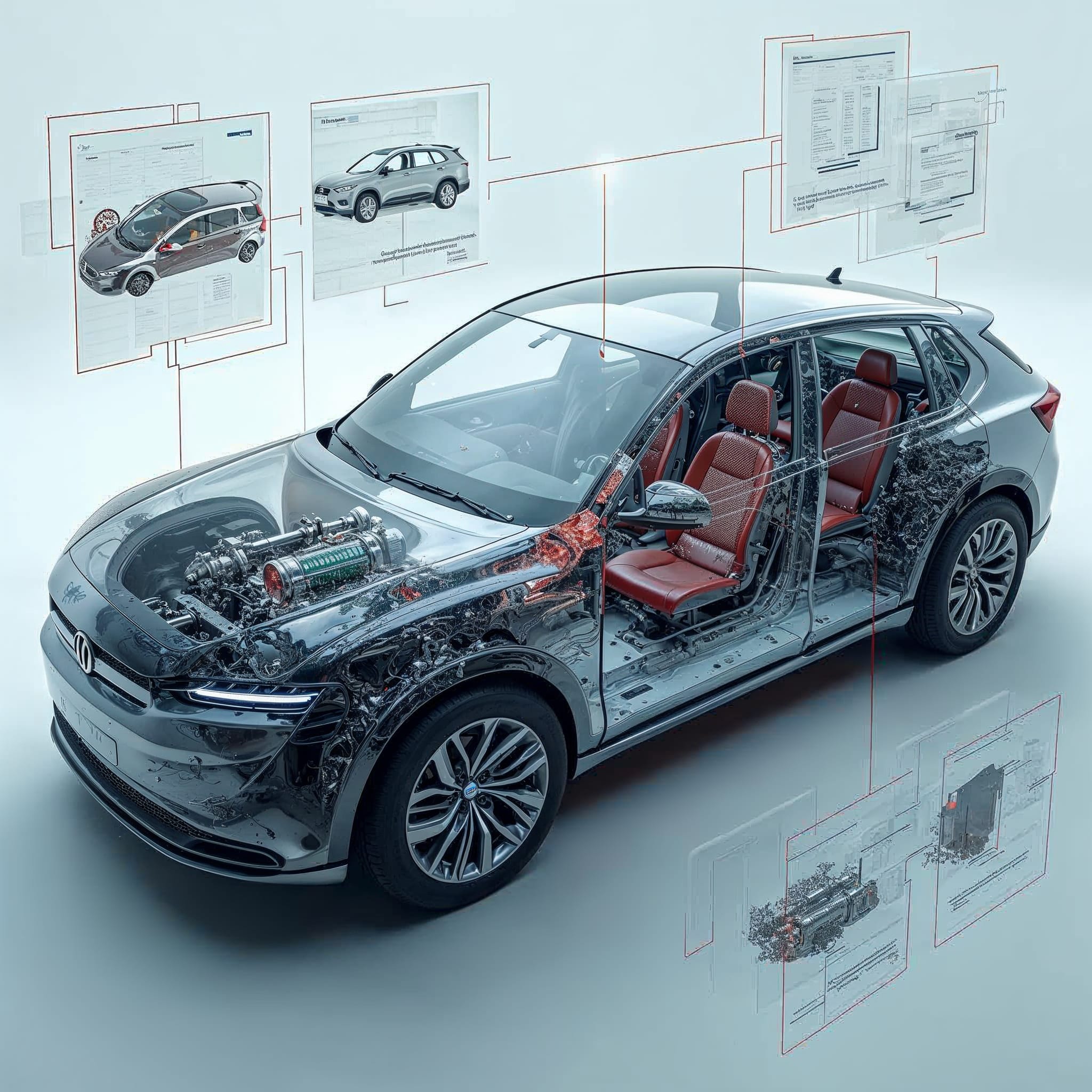
The automotive world is in a constant state of evolution, driven by the relentless pursuit of efficiency, performance, and reduced environmental impact. Hybrid electric vehicles (HEVs) represent a significant step in this journey, offering a compelling bridge between traditional internal combustion engine (ICE) vehicles and fully electric vehicles (EVs). Within the spectrum of hybrid technologies, parallel hybrid systems stand out for their versatility and dynamic capability. However, the true magic in advanced parallel hybrids lies in a sophisticated process known as torque blending.
Torque blending is far more than just alternating between an engine and an electric motor; it is the art and science of seamlessly combining, distributing, and managing the propulsive forces from multiple power sources to achieve an optimal balance of performance, fuel economy, and emission control across every imaginable driving scenario. This deep dive will unravel the complexities of torque blending, exploring its fundamental mechanics, the ingenious hardware that enables it, the intelligent software that controls it, and its profound impact on the driving experience and the future of sustainable mobility. We will also contextualize this within the broader discussion of parallel versus series hybrid configurations, highlighting why torque blending is particularly critical for the former.
Understanding Hybrid Architectures: A Quick Recap
Before we delve into the intricacies of torque blending, it is crucial to establish a foundational understanding of the primary hybrid architectures: series and parallel. Each has distinct advantages and operational philosophies that influence how power is delivered to the wheels.
Series Hybrid Configurations
In a series hybrid system, the internal combustion engine (ICE) is not directly connected to the wheels. Instead, its sole purpose is to act as a generator, producing electricity to power an electric motor that drives the vehicle, or to recharge the battery pack. Think of it as a small, onboard power plant. The electric motor is the sole source of propulsion. A perfect example is a diesel-electric locomotive, or early hybrid concepts like the Chevy Volt (which operated as a series hybrid in many conditions, though it technically had parallel capabilities).
- Operation Principle: ICE generates electricity; electric motor propels the vehicle.
- Advantages:
- The ICE can operate at its most efficient RPM range, independent of vehicle speed, leading to optimized fuel consumption.
- Simpler powertrain control from a mechanical perspective, as only the electric motor drives the wheels directly.
- Excellent low-speed electric performance.
- Disadvantages:
- Energy conversion losses: Mechanical energy from ICE to electricity, then back to mechanical energy at the wheels.
- Requires a larger, more powerful electric motor and generator for high-speed performance.
- Less efficient at higher speeds due to multiple energy conversions.
- Torque Blending Implication: Torque blending in a series hybrid is less about combining mechanical forces and more about managing electrical power flow from the generator, battery, and motor. The electric motor’s torque is the singular output to the wheels.
Parallel Hybrid Configurations
In contrast, a parallel hybrid system allows both the internal combustion engine and the electric motor to independently, or simultaneously, provide power directly to the wheels. This direct mechanical connection is the defining characteristic. The two power sources can operate in tandem, with the electric motor assisting the ICE during acceleration, or the ICE assisting the motor at higher speeds. They can also operate individually, with the vehicle running purely on electric power at low speeds or on engine power during highway cruising.
- Operation Principle: Both ICE and electric motor can mechanically drive the wheels, either alone or together.
- Advantages:
- Higher overall efficiency across a wider range of driving conditions due to direct drive capability.
- Less energy conversion loss compared to series hybrids when the ICE is directly driving the wheels.
- Potential for greater performance as both power sources can combine their torque.
- Disadvantages:
- More complex mechanical design and control system due to the need to manage two power sources simultaneously.
- The ICE is often forced to operate outside its peak efficiency range at times, depending on the driving cycle.
- Torque Blending Implication: This is where torque blending becomes absolutely critical. The ability to seamlessly combine, manage, and transition power between the ICE and electric motor is paramount for performance, efficiency, and a smooth driving experience.
The Core Concept of Torque Blending
At its heart, torque blending in a parallel hybrid configuration is the sophisticated process of coordinating the output torque from the internal combustion engine and the electric motor to achieve a desired wheel torque. It is not just about adding power; it is about intelligent power management that considers driver demand, battery state of charge, vehicle speed, road conditions, and emissions targets.
Imagine driving a car where the engine suddenly kicks in with a jolt, or the electric motor disengages with a noticeable shudder. This would be an unacceptable driving experience. Torque blending ensures that transitions between power sources, or the combination of them, are imperceptible to the driver, delivering a smooth, refined, and responsive drive.
Goals of Effective Torque Blending:
- Optimized Fuel Efficiency: By allowing the ICE to operate in its most efficient range as often as possible, or by shutting it off entirely and relying on electric power when appropriate (e.g., in city driving or during coasting).
- Enhanced Performance: Delivering instantaneous torque boost from the electric motor during acceleration, supplementing the ICE’s power delivery.
- Reduced Emissions: Minimizing ICE operation in high-emission zones (e.g., cold starts, low speeds) and maximizing electric-only driving.
- Smooth Driving Experience (NVH Management): Ensuring seamless transitions between engine and electric power, minimizing noise, vibration, and harshness (NVH).
- Battery Management: Charging the battery effectively through regenerative braking and sometimes by using excess ICE power, while preventing overcharging or deep discharge.
The complexity arises because the engine and motor have different torque characteristics. The electric motor delivers maximum torque from zero RPM, while the ICE has a much narrower band of optimal torque and power output, typically at higher RPMs. Torque blending algorithms must skillfully orchestrate these differences to produce a cohesive and powerful output.
Key Components Enabling Torque Blending
The ability to blend torque requires a sophisticated interplay of mechanical components and electronic control systems. These components facilitate the connection, disconnection, and combination of power sources.
1. Power Split Devices (Planetary Gearsets)
Perhaps the most iconic example of a power split device is the planetary gearset found in Toyota’s Hybrid Synergy Drive (HSD) system. This ingenious mechanical marvel acts as a continuously variable transmission (CVT) and a power blender simultaneously.
- How it works: A planetary gearset has three main components: a sun gear, planet gears (mounted on a carrier), and a ring gear. In the HSD, the ICE might be connected to the planet carrier, the main electric motor/generator (MG2) to the ring gear (driving the wheels), and a smaller electric motor/generator (MG1) to the sun gear.
- Blending Function: By controlling the speed of MG1, the system can vary the effective gear ratio for the ICE and MG2, allowing for continuous torque blending. It can send power from the ICE to the wheels, to MG1 (to generate electricity), or both. It can also combine power from MG2 and the ICE to the wheels. This results in incredibly smooth, stepless transitions.
- Advantages: Inherently smooth, mechanically robust, capable of series, parallel, and blended operation within a single unit.
- Disadvantages: Mechanically complex to understand and engineer, can lead to a “rubber band” effect (engine RPM not directly correlated with vehicle speed) under heavy acceleration, which some drivers dislike.
2. Clutches
Many parallel hybrid systems, especially those developed by manufacturers like Hyundai, Kia, Ford, and some European brands, utilize clutches to connect and disconnect the ICE from the electric motor and the transmission.
- Types: These can be dry or wet multi-plate clutches, similar to those found in conventional automatic transmissions.
- Blending Function: A clutch (often called an engine disconnect clutch) placed between the ICE and the electric motor/transmission allows the ICE to be completely disengaged for electric-only driving. When both power sources are needed, the clutch engages, allowing the ICE’s torque to combine with the electric motor’s torque at the transmission input. The careful modulation of clutch engagement is critical for smooth blending.
- Advantages: Simpler to integrate with existing conventional transmissions (like automatic transmissions), provides a more direct mechanical feel, can allow for engine-off coasting more readily.
- Disadvantages: Clutch engagement must be precisely controlled by the Hybrid Control Unit (HCU) to prevent jerks or harsh transitions. Can introduce wear components.
3. Dedicated Hybrid Transmissions (DHTs) and Multi-Mode Transmissions
While power split devices are a form of DHT, newer designs, particularly from manufacturers like Honda and GM, utilize multi-mode transmissions that cleverly integrate multiple electric motors with gearsets and clutches to offer a wide range of hybrid operating modes.
- Honda’s i-MMD (Intelligent Multi-Mode Drive): Often operates as a series hybrid in city driving, switching to direct drive from the ICE with a lock-up clutch at highway speeds, and using an electric motor for boost. Torque blending here involves coordinating the direct drive clutch engagement with electric motor assist.
- GM’s Voltec System (Chevrolet Volt): Utilizes multiple planetary gearsets and clutches to allow for various combinations of electric motor and ICE operation, enabling both series and parallel modes for optimal efficiency and performance across different speeds.
- Hyundai/Kia’s Hybrid System: Often couples an electric motor directly to a conventional automatic transmission (e.g., a 6-speed or 8-speed automatic) via an engine disconnect clutch. Torque blending here is managed by the HCU coordinating engine speed, motor speed, and clutch engagement, along with conventional transmission gear changes.
4. Hybrid Control Unit (HCU) / Engine Control Unit (ECU)
The HCU is the brain of the hybrid system. It is a sophisticated computer that receives inputs from numerous sensors (accelerator pedal position, brake pedal, vehicle speed, engine RPM, motor RPM, battery state of charge, temperature, gear selection, etc.) and uses complex algorithms to decide how to blend the torque.
- Blending Function: The HCU determines the optimal operating point for the ICE and electric motor based on driver demand and system efficiency maps. It controls throttle position, fuel injection, ignition timing for the ICE, and power delivery (voltage, current) to the electric motor, along with clutch engagement or power split device ratios.
- Complexity: The HCU runs predictive models and adaptive algorithms, constantly making decisions in milliseconds to ensure smooth, efficient, and responsive power delivery. It is perhaps the most critical component in achieving effective torque blending.
Mechanisms of Torque Blending in Action
Torque blending is not a single action but a continuous, dynamic process that adapts to every nuance of driving. Let us examine how it manifests in various driving scenarios within a parallel hybrid system.
- Electric-only Mode (EV Mode):
- Scenario: Low-speed city driving, parking maneuvers, initial acceleration from a stop.
- Blending: The ICE is completely shut off, and the engine disconnect clutch (if present) is open. The electric motor provides all propulsive torque. The HCU monitors battery state of charge and driver demand; if either falls below a threshold, the ICE may engage.
- Engine-only Mode:
- Scenario: Sustained highway cruising at moderate speeds.
- Blending: The electric motor might be off or idling, and the ICE directly drives the wheels. In some systems (like power-split devices), the ICE might also be providing some power to a generator to recharge the battery or power accessories. This mode optimizes for ICE efficiency at its sweet spot.
- Parallel Hybrid Drive (Combined Power):
- Scenario: Moderate to heavy acceleration, climbing hills, spirited driving.
- Blending: Both the ICE and the electric motor are engaged and simultaneously contributing torque to the drivetrain. The HCU carefully manages the torque split between them. The electric motor provides instant torque fill, while the ICE provides sustained power. This is where the most complex blending occurs, ensuring the combined torque is delivered smoothly without surges or lags.
- Example: During a strong acceleration, the electric motor’s immediate torque helps launch the vehicle, and as engine RPM builds, the ICE takes over more of the load, with the electric motor continuing to provide assistance. The seamless transition is critical.
- Regenerative Braking:
- Scenario: Deceleration, braking.
- Blending: When the driver lifts off the accelerator or presses the brake pedal, the HCU commands the electric motor to act as a generator. It converts the vehicle’s kinetic energy back into electrical energy, which is stored in the battery. The amount of regeneration is blended with mechanical friction braking to achieve the desired stopping force, maximizing energy recovery while providing consistent brake feel.
- Charge Sustaining/Generating:
- Scenario: Battery state of charge is low, and the vehicle is not in a situation conducive to pure EV driving.
- Blending: The ICE is kept running, and some of its mechanical output is diverted (either directly via a generator or through the power split device) to recharge the battery while simultaneously propelling the vehicle. This ensures the battery remains within its optimal operating range.
These modes are not discrete, static states but rather a continuum. The HCU constantly and imperceptibly shifts between and combines these mechanisms, often within milliseconds, to match the driver’s intent and optimize overall system performance. The smooth operation relies heavily on precise throttle-by-wire and brake-by-wire systems, which allow the HCU to directly control engine output and braking force electronically.
Advanced Torque Blending Strategies and Control
Modern torque blending goes far beyond simply reacting to driver input. Advanced strategies incorporate predictive capabilities and adaptive learning to further refine efficiency and driving dynamics.
1. Predictive Blending (e.g., Predictive Efficient Drive)
Some advanced hybrid systems integrate with navigation data and connectivity services to anticipate driving conditions. This allows the HCU to pre-optimize torque blending decisions.
- Route Topography: If the navigation system indicates an upcoming hill, the HCU might proactively charge the battery or operate the ICE more efficiently before the climb, ensuring sufficient electric boost for the ascent.
- Traffic Information: Real-time traffic data can inform the HCU about upcoming stop-and-go conditions, prompting it to maximize EV mode usage in anticipation.
- Destination Learning: Systems can learn frequent routes and driver habits, adjusting battery usage and engine engagement accordingly.
2. Adaptive Algorithms and Machine Learning
The control software is constantly evolving. Modern HCUs utilize sophisticated adaptive algorithms that learn from driving patterns and environmental factors.
- Driver Style Adaptation: If a driver consistently drives aggressively, the HCU might prioritize performance over maximum fuel economy, making more aggressive use of combined power. Conversely, a conservative driver might see more prolonged EV operation.
- Component Aging Compensation: Over time, components like batteries or clutches can degrade slightly. Adaptive algorithms can compensate for these changes to maintain optimal performance and smooth operation throughout the vehicle’s lifespan.
- Environmental Factors: Temperature, altitude, and humidity can all affect engine and battery performance. The HCU adjusts blending strategies to account for these variables.
3. NVH (Noise, Vibration, Harshness) Management
One of the greatest challenges in torque blending is ensuring that the transitions between power sources are imperceptible. A sudden engine start or stop can introduce noise and vibration.
- Engine Start/Stop Optimization: The HCU carefully controls the timing and speed of engine starts, often using the electric motor to spin up the ICE to its operating RPM before fuel injection and ignition, minimizing shock.
- Torque Ramp Control: When engaging or disengaging the ICE, the HCU precisely ramps up or down the engine’s torque output and simultaneously adjusts the electric motor’s output to maintain a constant wheel torque, effectively masking the transition.
- Active Engine Mounts: Some premium hybrids use active engine mounts that vibrate out of phase with the engine’s vibrations to cancel them out, further enhancing NVH control.
4. Fuel Economy Optimization vs. Performance Enhancement
The HCU often has to make trade-offs. The perfect blending strategy for maximum fuel economy might not be the best for maximum acceleration. Modern systems aim to provide a balance, or allow the driver to select modes (e.g., “Eco,” “Normal,” “Sport”) that prioritize one over the other.
- Eco Mode: Prioritizes electric-only driving, earlier engine shutdowns, and gentler acceleration curves.
- Sport Mode: Maximizes combined power, keeps the engine running more frequently, and delivers quicker throttle response, often at the expense of fuel efficiency.
The continuous innovation in sensors, processing power of HCUs, and refined algorithms is what pushes torque blending beyond basic functionality into a realm of highly sophisticated and intelligent power management.
Challenges and Innovations in Torque Blending
While torque blending offers significant advantages, its implementation presents several engineering challenges that drive ongoing innovation.
Challenges:
- Algorithmic Complexity: Developing robust, real-time control algorithms that can manage multiple power sources, clutch engagements, gear changes, and external factors (driver input, road conditions, battery state) is immensely complex. Billions of lines of code might be involved.
- Thermal Management: Both the ICE and electric motors generate heat, as do the batteries and power electronics (inverters, converters). Ensuring optimal operating temperatures for all components, especially during aggressive torque blending (high power output), is critical for performance and longevity.
- Packaging Constraints: Integrating an ICE, one or more electric motors, a battery pack, power electronics, and a complex transmission into the space typically designed for a conventional powertrain is a significant challenge. This often leads to innovative, compact designs.
- Cost Implications: The sophisticated components (high-power motors, advanced batteries, robust power split devices or clutches, powerful HCUs) and the extensive research and development required make hybrid systems, especially plug-in hybrids (PHEVs), more expensive than their conventional counterparts.
- NVH Integration: Achieving seamless, jolt-free transitions and quiet operation during engine starts/stops and power blending requires precise calibration and often additional NVH countermeasures.
Innovations:
- Artificial Intelligence and Machine Learning (AI/ML): Future HCUs will increasingly leverage AI and ML to learn from vast datasets, predict driver behavior, and optimize blending strategies with even greater precision and adaptability, leading to further efficiency gains and personalized driving experiences.
- More Compact and Efficient Power Electronics: Advances in semiconductor technology (e.g., Silicon Carbide – SiC) are leading to smaller, lighter, and more efficient inverters and converters, reducing packaging constraints and energy losses.
- Integrated Electric Motor Designs: Motors are becoming more compact and are increasingly being integrated directly into the transmission housing or even within the wheels (P4 architectures), reducing driveline losses and packaging complexity.
- Enhanced Battery Technology: Higher energy density and power density batteries allow for greater EV range, more powerful electric assist, and faster charging/discharging rates, which directly benefits torque blending strategies.
- Vehicle-to-Everything (V2X) Communication: Future hybrids could communicate with infrastructure (V2I) and other vehicles (V2V) to gain even more predictive data, further optimizing torque blending for traffic flow, energy consumption, and safety.
The ongoing push for greater efficiency and electrified mobility ensures that torque blending will remain a fertile ground for innovation, evolving with every new generation of hybrid vehicles.
Comparing Torque Blending Across Different Parallel Hybrid Architectures
Parallel hybrid systems can be further categorized based on where the electric motor is located in the powertrain, impacting how torque blending is achieved. These classifications are often referred to as P-series architectures (P0, P1, P2, P3, P4).
- P0 (Mild Hybrid): The electric motor (often an integrated starter-generator, ISG) is located on the engine’s crankshaft, typically replacing the alternator.
- Torque Blending: Limited to providing a small torque assist during acceleration (boost) and efficient regenerative braking. It cannot propel the vehicle on electric power alone for sustained periods or disconnect the engine. The blending is additive and constant with the engine.
- P1: The electric motor is located between the engine and the clutch (if manual) or torque converter (if automatic).
- Torque Blending: Can provide more substantial assist and regeneration than P0. The engine cannot be fully disconnected, so pure EV mode is limited to brief periods by decoupling the transmission or relying on the torque converter slip. Blending is primarily additive.
- P2: The electric motor is placed between the engine and the transmission, with an engine disconnect clutch located between the engine and the motor. This is a very common and versatile configuration for full hybrids and PHEVs.
- Torque Blending: Highly effective. The disconnect clutch allows for pure EV driving, engine-only driving, and powerful combined power modes. Torque blending involves precisely controlling the clutch engagement and disengagement, alongside the motor and engine outputs. The HCU manages the smooth engagement of the clutch for seamless transitions.
- P3: The electric motor is located after the transmission, typically integrated into the transmission’s output shaft or directly driving the driveshaft.
- Torque Blending: Offers significant flexibility as the motor’s torque can be applied directly to the wheels regardless of the transmission’s gear. This configuration often allows for larger electric motors and robust blending. The engine disconnect clutch is still crucial for EV mode.
- P4: The electric motor is located on a separate axle, usually the rear axle in a front-wheel-drive car, creating an “e-AWD” system.
- Torque Blending: Provides highly flexible and independent torque blending for front and rear axles. The front axle might be powered by the ICE, a P0/P2 motor, or both, while the rear axle is purely electric. Blending occurs between the front and rear power sources, allowing for sophisticated traction control and torque vectoring. This offers significant performance and efficiency gains, especially in PHEVs like the Volvo T8 system.
The choice of P-architecture heavily influences the complexity, cost, and ultimately, the capability of the torque blending system.
Comparison Tables
Table 1: Series vs. Parallel Hybrid Architectures and Torque Blending Implications
| Feature | Series Hybrid | Parallel Hybrid | Torque Blending Implication |
|---|---|---|---|
| Engine Connection to Wheels | Indirect (via generator and motor) | Direct (can drive wheels independently or with motor) | Series: Electrical power management. Parallel: Direct mechanical/electrical combination. |
| Primary Propulsion Source | Electric Motor | Both ICE and Electric Motor | Series: Electric motor torque is the final output. Parallel: Requires seamless combination of two distinct mechanical torque sources. |
| Energy Conversions | ICE (Mech) > Gen (Elec) > Motor (Mech) | ICE (Mech) > Wheels, Motor (Elec) > Wheels (or combined) | Series: Multiple conversions, less direct mechanical blending. Parallel: Focus on direct mechanical power combination with electric assist. |
| Efficiency Sweet Spot | ICE at optimal RPM (constant power output) | Optimized across wider range, direct drive for efficiency | Series: Simpler power flow, less blending complexity for output. Parallel: HCU must blend for optimal efficiency across diverse demands. |
| Drivability Challenge | Potentially disconnected feel (ICE RPM vs. speed) | Ensuring seamless transitions (NVH) | Series: Focus on motor response. Parallel: Critical for smooth power handover between ICE and motor. |
| System Complexity | Mechanically simpler, electrically complex | Mechanically and electrically complex | Series: Blending is primarily electrical. Parallel: Blending involves complex mechanical and electrical coordination. |
Table 2: Parallel Hybrid Configurations (P0-P4) and Torque Blending Characteristics
| Configuration | Motor Location | Engine Disconnect Clutch | EV Mode Capability | Torque Blending Complexity | Typical Use Case |
|---|---|---|---|---|---|
| P0 (Mild Hybrid) | Engine-mounted (ISG) | No | Very limited/None | Additive assist and regen, simpler blending (always with ICE). | Start/Stop systems, mild assist, basic regen. |
| P1 | Between engine and transmission input | No (or after motor) | Limited (brief, if transmission decoupled) | Primarily additive assist, engine always spinning, moderate blending. | Older or simpler full hybrids. |
| P2 | Between engine and transmission, with clutch | Yes (between engine and motor) | Full (significant range) | High; requires precise clutch control, engine starts/stops, and motor/engine torque coordination. | Common full hybrids and PHEVs (e.g., Hyundai, Kia, some European). |
| P3 | After transmission | Yes (before motor/transmission) | Full (significant range) | High; motor torque directly to wheels, efficient power delivery, complex control with transmission shifts. | More performance-oriented hybrids, allows for large motors. |
| P4 | On separate axle (e.g., rear axle in FWD car) | Not necessarily on main engine side | Full (often electric AWD) | Very High; independent axle control, sophisticated torque vectoring, complex distribution between front/rear. | Premium PHEVs, performance hybrids with e-AWD. |
Practical Examples of Torque Blending in Action
Understanding torque blending conceptually is one thing; seeing how different manufacturers implement it in real-world vehicles provides invaluable insight into its practical application and effectiveness.
1. Toyota Prius (Power-Split Device / Planetary Gearset)
The Toyota Prius is arguably the most well-known example of advanced torque blending using a power-split device. Its Hybrid Synergy Drive (HSD) system uses a planetary gearset to constantly combine and divide power from the ICE, two motor-generators (MG1 and MG2), and the wheels. MG1 acts primarily as a generator and starter for the ICE, while MG2 is the main drive motor and regenerative braking generator.
- Mechanism: The planetary gearset allows the HCU to continuously vary the effective gear ratio and split power. When accelerating, the ICE and MG2 can both send power to the wheels. If the battery needs charging, the ICE can drive MG1 to generate electricity, even while propelling the car.
- Blending Signature: Known for exceptionally smooth and seamless transitions between EV, engine, and combined modes. The engine RPM can sometimes seem disconnected from road speed under heavy acceleration (“rubber band effect”), but the actual power delivery to the wheels is very consistent.
- Real-world Benefit: Excellent fuel economy in varied driving conditions, particularly city driving, due to optimized ICE operation and efficient power routing.
2. Hyundai/Kia HEVs and PHEVs (Clutch-Based P2 System)
Hyundai and Kia models, such as the Sonata Hybrid, Sorento Hybrid, and their PHEV counterparts, often employ a P2 parallel hybrid architecture with an engine disconnect clutch and a conventional automatic transmission.
- Mechanism: An electric motor is strategically placed between the ICE and a multi-speed automatic transmission. An engine disconnect clutch sits between the ICE and the motor. For EV mode, the clutch opens, and the motor drives the wheels directly through the transmission. When more power is needed, the HCU smoothly engages the clutch, synchronizing the ICE speed with the motor and transmission, allowing both to contribute.
- Blending Signature: Aims to provide a more “conventional” driving feel, as the automatic transmission’s distinct gear changes are present. The HCU’s precise control of the clutch engagement is critical to prevent harshness during engine starts and power transitions.
- Real-world Benefit: Delivers strong acceleration by combining torque and maintains the familiar feel of an automatic transmission, appealing to drivers who prefer traditional gear shifts.
3. BMW/Mercedes-Benz PHEVs (P2 or P3 Architectures)
Premium European manufacturers often integrate electric motors into existing transmission designs, frequently utilizing P2 or P3 configurations to offer plug-in hybrid capabilities without sacrificing luxury and performance. For example, a motor might be integrated into the bell housing of an 8-speed automatic transmission.
- Mechanism: Similar to Hyundai/Kia, these systems use an engine disconnect clutch. The electric motor, often quite powerful, can drive the vehicle on electricity alone for significant distances. When the ICE engages, the HCU manages the clutch and transmission to blend power seamlessly, prioritizing smooth, powerful acceleration and refined operation.
- Blending Signature: Designed for minimal intrusion, providing robust electric-only capability for urban driving and potent combined performance for highway and spirited driving. The transitions are engineered to be imperceptible, aligning with luxury brand expectations.
- Real-world Benefit: Combines fuel efficiency and low emissions for daily commutes with strong performance and the premium driving experience expected from these brands, offering the best of both worlds.
4. Volvo Recharge Models (P4 Architecture)
Volvo’s “Recharge” PHEV models, like the XC60 Recharge or S60 Recharge, often utilize a P4 architecture, where the ICE powers the front wheels (sometimes with a P0/P1 assist), and a dedicated electric motor powers the rear wheels.
- Mechanism: The front axle receives power from the ICE (and possibly a small front electric motor). The rear axle is exclusively driven by a separate, powerful electric motor. Torque blending here involves coordinating the power delivery between the front ICE-driven axle and the rear electric-driven axle. The HCU dynamically distributes power to optimize traction, performance, and efficiency, effectively creating an electric all-wheel-drive (e-AWD) system.
- Blending Signature: Offers exceptional traction and stability, especially in adverse conditions, due to independent control over front and rear axle torque. The e-AWD capability also enhances performance.
- Real-world Benefit: Provides secure handling and powerful acceleration by leveraging the instantaneous torque of the rear electric motor, while still allowing for significant all-electric range and overall efficiency.
These examples illustrate the diverse approaches to torque blending, each optimized for different vehicle types, performance goals, and market segments. Yet, the underlying principle remains the same: the intelligent and seamless coordination of multiple power sources for an enhanced driving experience.
Frequently Asked Questions
Q: What exactly is torque blending in a hybrid vehicle?
A: Torque blending is the advanced process in a hybrid electric vehicle where the propulsion forces (torque) from the internal combustion engine (ICE) and one or more electric motors are seamlessly combined and managed. The goal is to deliver the optimal amount of power to the wheels for a given driving situation, balancing performance, fuel efficiency, and emissions, while ensuring smooth and imperceptible transitions between power sources. It’s about intelligently orchestrating multiple power producers.
Q: Why is torque blending particularly important in parallel hybrids?
A: In parallel hybrids, both the ICE and the electric motor can directly drive the wheels, either individually or simultaneously. This versatility means there are many more scenarios where power needs to be combined or transitioned. Torque blending is crucial to manage these complex interactions, ensuring smooth acceleration, efficient power delivery, and a refined driving experience without the driver feeling jerks or delays as different power sources engage or disengage.
Q: How does torque blending improve fuel efficiency?
A: Torque blending improves fuel efficiency by allowing the Hybrid Control Unit (HCU) to operate the ICE in its most efficient RPM range as much as possible, or to shut it off entirely when pure electric driving is more efficient (e.g., at low speeds, during coasting). It also uses the electric motor to provide torque fill, reducing the need for the ICE to operate in less efficient, high-demand zones, and captures energy through regenerative braking that would otherwise be lost as heat.
Q: Does torque blending affect driving performance?
A: Yes, it significantly enhances driving performance. The electric motor provides instantaneous torque from zero RPM, which torque blending uses to deliver immediate acceleration response, supplementing the ICE’s power during quick starts or overtakes. This results in quicker, more responsive acceleration than either power source could achieve alone, often providing a “boost” effect that feels very powerful.
Q: What are the main components involved in facilitating torque blending?
A: Key components include:
- Power Split Devices: Like planetary gearsets (e.g., Toyota HSD), which mechanically blend power.
- Clutches: (e.g., engine disconnect clutch) to connect/disconnect the ICE from the motor and transmission.
- Electric Motors/Generators: The power sources that provide electric torque and enable regenerative braking.
- Dedicated Hybrid Transmissions (DHTs): Specialized transmissions designed for hybrid operation.
- Hybrid Control Unit (HCU): The sophisticated electronic brain that orchestrates all component interactions and makes real-time blending decisions.
Q: How does torque blending differ between a Toyota Prius and a Hyundai Sonata Hybrid?
A: The primary difference lies in their mechanical architecture. A Toyota Prius uses a power-split device (planetary gearset) that continuously blends power, resulting in a smooth, gearless acceleration feel where engine RPM might not directly correlate to road speed. A Hyundai Sonata Hybrid typically uses a P2 architecture with an engine disconnect clutch and a conventional multi-speed automatic transmission. Its blending involves precise engagement/disengagement of the clutch and coordination with traditional gear shifts, aiming for a more familiar “geared” driving feel.
Q: Are there any downsides to complex torque blending systems?
A: While beneficial, complex torque blending systems can have downsides. They are inherently more mechanically and electronically complex, leading to higher manufacturing costs and potentially more intricate maintenance. The sophisticated control algorithms require extensive calibration and testing. Also, ensuring absolute seamlessness (minimizing noise, vibration, and harshness during transitions) is a significant engineering challenge, which if not perfectly executed, can detract from the driving experience.
Q: How does regenerative braking integrate with torque blending?
A: Regenerative braking is an integral part of the overall torque management strategy. When you decelerate or brake, the HCU commands the electric motor to act as a generator, converting the vehicle’s kinetic energy into electricity to recharge the battery. This “negative torque” from the motor is blended with the conventional friction braking system to provide the desired stopping force while maximizing energy recovery. The blending ensures consistent brake pedal feel, regardless of how much regenerative braking is occurring.
Q: What role does the hybrid control unit (HCU) play in torque blending?
A: The HCU is the central intelligence of the hybrid system. It continuously monitors numerous vehicle parameters (driver’s accelerator and brake input, vehicle speed, engine and motor RPMs, battery state of charge, road conditions, etc.). Using complex algorithms, it makes real-time decisions on how much torque each power source should provide, when to engage/disengage the engine, when to shift gears (if applicable), and how to manage battery charging and discharging. It is responsible for orchestrating the seamless blending of power for optimal efficiency, performance, and smoothness.
Q: What are the future trends in torque blending technology?
A: Future trends include even greater integration of Artificial Intelligence and Machine Learning (AI/ML) into HCUs for more predictive and adaptive blending strategies, potentially learning individual driver habits and route topography. Advances in power electronics (e.g., Silicon Carbide) will lead to more compact and efficient motor/inverter systems. Connectivity features (V2X communication) might allow hybrids to anticipate traffic or road conditions, further optimizing blending. There’s also a trend towards modular, scalable hybrid systems that can be adapted across different vehicle platforms more easily.
Key Takeaways
- Torque blending is the sophisticated process of seamlessly combining and managing power from both the internal combustion engine and electric motor in parallel hybrid vehicles.
- It is essential for parallel hybrids due to their ability to use both power sources simultaneously or independently, requiring complex coordination for optimal results.
- The primary goals of effective torque blending are enhanced fuel efficiency, improved performance, reduced emissions, and a smooth, refined driving experience.
- Key components enabling torque blending include power split devices (like planetary gearsets), engine disconnect clutches, advanced hybrid transmissions, and the intelligent Hybrid Control Unit (HCU).
- Torque blending involves dynamic operation across various modes, including EV-only, engine-only, combined power (parallel hybrid drive), regenerative braking, and charge sustaining.
- Advanced blending strategies utilize predictive capabilities (e.g., GPS data), adaptive algorithms, and sophisticated NVH management techniques to refine efficiency and driver comfort.
- Challenges include algorithmic complexity, thermal management, packaging, and cost, while innovations focus on AI/ML, more efficient power electronics, and integrated motor designs.
- Different parallel hybrid architectures (P0, P1, P2, P3, P4) impact how torque blending is implemented, ranging from mild assist to full electric all-wheel-drive systems.
- Real-world examples like the Toyota Prius (power-split), Hyundai/Kia (clutch-based P2), and Volvo (P4 e-AWD) showcase diverse and effective blending implementations.
Conclusion
The journey into the mechanics of parallel hybrid systems reveals that torque blending is not merely a feature, but the very essence of their advanced functionality. It is the intricate dance performed by the internal combustion engine and the electric motor, orchestrated by a highly intelligent Hybrid Control Unit, to deliver a driving experience that is simultaneously efficient, powerful, and remarkably smooth. From the ingenious planetary gearsets of Toyota to the precise clutch-based systems of Hyundai and the sophisticated e-AWD of Volvo, each manufacturer continually pushes the boundaries of this technology.
As the automotive industry marches towards greater electrification, the role of torque blending will only intensify. Future innovations, driven by advancements in AI, materials science, and connectivity, promise even more intelligent, adaptive, and efficient power management. Understanding torque blending is to appreciate the true sophistication beneath the hood of modern hybrid vehicles, highlighting how they meticulously balance the demands of performance, economy, and environmental responsibility, moving us beyond the basics and towards a more sustainable future of mobility.