
Background on the Case
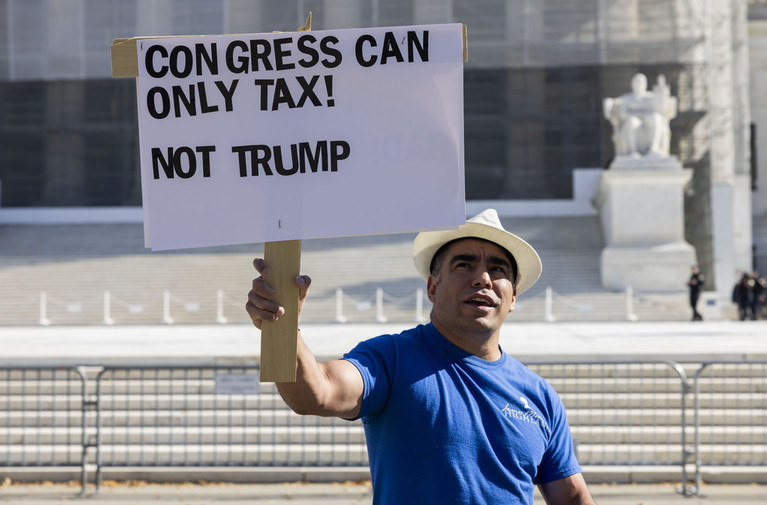
On November 5, 2025, the U.S. Supreme Court heard oral arguments in Learning Resources, Inc. v. Trump (Docket No. 24-1287), consolidated with related cases challenging President Donald Trump’s use of the International Emergency Economic Powers Act (IEEPA) to impose broad tariffs. The tariffs at issue include “trafficking” duties on products from China, Canada, and Mexico aimed at curbing fentanyl flows, and “reciprocal” 10% duties on imports from nearly all countries, justified by trade deficits as national security threats. Challengers—small businesses, states, and unions—argue the tariffs exceed IEEPA’s scope, which allows the president to “regulate… importation” during declared emergencies but does not explicitly authorize revenue-raising tariffs, a power reserved to Congress under Article I, Section 8. The administration defends the tariffs as regulatory tools within IEEPA’s broad delegation, layered on the president’s foreign affairs authority under Article II.
The nearly three-hour argument revealed widespread judicial skepticism, with justices across the ideological spectrum probing the limits of executive power, statutory text, and constitutional boundaries. Below is a breakdown of the key arguments, exchanges, and implications.
Administration’s Main Arguments (Petitioners)
Represented by Solicitor General D. John Sauer, the Trump administration asserted that IEEPA grants expansive authority to address foreign threats, including tariffs as a “nimble” regulatory mechanism:
- Textual Breadth: “Regulate importation” encompasses tariffs, akin to quotas or embargoes, with “licenses or otherwise” covering tariff-like fees. IEEPA’s verbs (e.g., “block,” “prohibit”) support broad controls, not just asset freezes.
- Historical Precedent: Presidents like Nixon (1971 import surcharge under TWEA, IEEPA’s predecessor), Lincoln, and Reagan used tariffs in crises, showing congressional acquiescence. No IEEPA change altered this.
- Constitutional Fit: Tariffs are “foreign-facing” regulatory levers, not domestic taxes, falling under the president’s Article II powers (Youngstown Category 1 deference). They pressure foreign behavior (e.g., fentanyl tariffs leverage China).
- Doctrinal Defenses: The major questions and nondelegation doctrines don’t apply in foreign affairs (Curtiss-Wright, Dames & Moore); IEEPA’s emergency declaration and congressional termination provide “intelligible principles.”
- Practical Need: Tariffs are calibrated responses to emergencies like trade imbalances or drug trafficking, more effective than blunt embargoes.
Challengers’ Main Arguments (Respondents)
Led by Neal Katyal and others, importers and unions countered that tariffs are unauthorized taxes, not regulations:
- Tariffs as Taxes: Under Article I, tariffs raise revenue from Americans, requiring explicit delegation. IEEPA omits tariff language, unlike statutes like Section 232 (national security) or Section 301 (unfair practices) with caps.
- Textual Constraints: IEEPA focuses on property controls (“nullify,” “block”), not revenue. “Regulate importation” never means taxing in congressional usage; history shows IEEPA curbed TWEA’s overreach.
- Doctrinal Barriers: Major questions doctrine voids “unheralded” delegations with $4 trillion economic impact; nondelegation fails without limits, risking abuse (e.g., climate tariffs).
- No Precedent: No president used IEEPA for tariffs in 48 years; Nixon’s actions predated it and weren’t ratified.
- Judicial Role: Courts must enforce separation of powers; emergency findings are deferential, but statutory authority isn’t.
Key Justices’ Questions and Exchanges
The justices’ interventions highlighted tensions between executive flexibility and congressional primacy. Liberals pressed textual limits, while conservatives invoked structural doctrines. Here’s a summary of pivotal moments:
| Justice | Key Themes | Notable Exchanges |
|---|---|---|
| Chief Justice Roberts | Major questions; taxing vs. foreign affairs | Challenged Sauer: “IEEPA lacks explicit tariff language—why invoke major questions if Congress meant this?” Pressed Katyal on navigation acts: “Were founding-era tariffs taxes or regulations?” Expressed concern over unchecked power bypassing Congress. |
| Justice Thomas | Nondelegation in extremes; major questions in foreign affairs | Asked Sauer: “Could IEEPA allow tariffs to free hostages from China?” To Katyal: “If embargoes are delegated, why not tariffs?” Skeptical of revenue distinction. |
| Justice Alito | Emergency breadth; statutory overlaps | Probed: “Could a tariff collect zero revenue if waived post-negotiation?” Referenced Tariff Act §338: “Why not use that instead?” Sympathetic to broad emergency phrasing but questioned mechanics. |
| Justice Sotomayor | Textual pairing; export limits | To Sauer: “Congress never pairs ‘regulate’ with taxing—why here?” Highlighted IEEPA’s conjunctive “importation and exportation,” questioning constitutional export tariffs. |
| Justice Kagan | Delegation history; Article II specifics | Asked: “Which Article II power covers tariffs, typically Article I?” Noted IEEPA’s invalid legislative veto: “Does that undermine delegation?” |
| Justice Gorsuch | Ratchet effect; historical analogies | Warned of “one-way ratchet” to executive power: “Could Congress delegate war or all commerce?” Pushed on Indian Commerce Clause: “Does broad delegation fit emergencies?” |
| Justice Kavanaugh | Precedent gaps; calibration | Referenced Algonquin (1976): “It allowed import adjustments including fees—why not tariffs?” Asked: “Why allow shutdowns but not 1% tariffs?” |
| Justice Barrett | Licenses as workaround; revenue intent | Grilled: “If licenses can charge fees, isn’t that a tariff?” Explored: “Could a 90-day tariff be non-revenue if waived?” Noted easy congressional fix if overbroad. |
| Justice Jackson | Emergency fit; indirect effects | To Sauer: “How do trafficking tariffs hit wrongdoers, not lawful importers?” Questioned verb theme: “IEEPA is about embargoes, not taxes—why stretch ‘regulate’?” |
These questions often left Sauer defensive, with justices like Roberts and Gorsuch appearing to lean against broad authority.
Five Key Takeaways
From the arguments, several themes emerged:
- Are tariffs taxes? Justices debated fiercely: Challengers called them revenue-raisers under Congress’s purview; the administration labeled them incidental regulatory fees.
- Conservatives advance legal theories: Gorsuch, Roberts, and Alito applied major questions and nondelegation scrutiny, demanding clearer congressional intent and flagging executive overreach.
- Licensing as a tariff workaround: Barrett and Gorsuch floated recharacterizing tariffs as revenue-generating licenses under IEEPA, potentially sidestepping a outright ban.
- Trump’s absence and administration presence: President Trump skipped the hearing, but top officials (Treasury’s Scott Bessent, Commerce’s Howard Lutnick, USTR’s Jamieson Greer) attended, signaling high stakes.
- Potential impact on Trump’s record: An adverse ruling could dent the administration’s 80% win rate in emergency appeals on issues like grants and deportations.
Potential Outcomes and Implications
The Court seemed dubious of the tariffs’ validity under IEEPA, with a majority (including conservatives) signaling they exceed statutory bounds. A ruling invalidating them—likely by June 2026—could apply prospectively to avoid reimbursing billions in paid duties, or prompt congressional fixes. Challengers urged swift resolution given ongoing economic harm. Broader effects include curbing executive trade tools, bolstering separation of powers, and influencing future emergencies (e.g., cyber threats). If upheld, it would expand presidential leverage but invite nondelegation challenges. The decision may hinge on textualism vs. foreign affairs deference, with Algonquin as a flashpoint precedent.