California will phase out the herbicide paraquat after all manufacturers voluntarily canceled their product registrations in the state, the California Department of Pesticide Regulation (DPR) announced on August 10, 2026.
The move follows a reevaluation of the restricted-use weedkiller that began in November 2024. Paraquat has been associated with potential thyroid impacts, birth defects, and risks to birds and other wildlife. Existing stocks may still be sold and used for up to two years under state law.
California to Phase Out Paraquat After Manufacturers Cancel Registrations
DPR said all manufacturers of pesticide products containing the active ingredient paraquat-dichloride (paraquat) have voluntarily canceled their California registrations. The process began in April 2026 when Syngenta canceled registration of Gramoxone SL 3.0, effective April 1, 2026. The final registrant canceled on August 6, 2026.
Paraquat is a restricted material under both California and U.S. Environmental Protection Agency rules. Only licensed dealers may sell it, and only professionally licensed applicators may use it. There are no registered homeowner or residential uses.
DPR initiated the reevaluation in November 2024 under requirements tied to Assembly Bill 1963 (Chapter 688, Statutes of 2024), signed by Gov. Gavin Newsom. The law directed DPR to complete a reevaluation of paraquat by January 2029. In December 2024, the department released two preliminary scientific assessments based on more than 150 studies and thousands of public comments.
Those assessments identified a potential association between paraquat exposure and thyroid impacts and/or birth defects. They also found that current registered uses may adversely affect non-target organisms, including birds, mammals, and aquatic organisms, with the most significant risks to birds. Additional mitigation measures beyond existing restrictions may not feasibly reduce those environmental impacts to acceptable levels. DPR’s review of existing human health studies did not indicate a causal association between paraquat exposure and Parkinson’s disease, consistent with the U.S. EPA’s 2019 review.
Rather than submit the additional scientific data DPR required by June 5, 2026, to address gaps in the human health toxicology database and other issues, companies chose to cancel their registrations.
- In 2023, paraquat ranked as the 46th most-used pesticide in California, with 369,978 pounds applied.
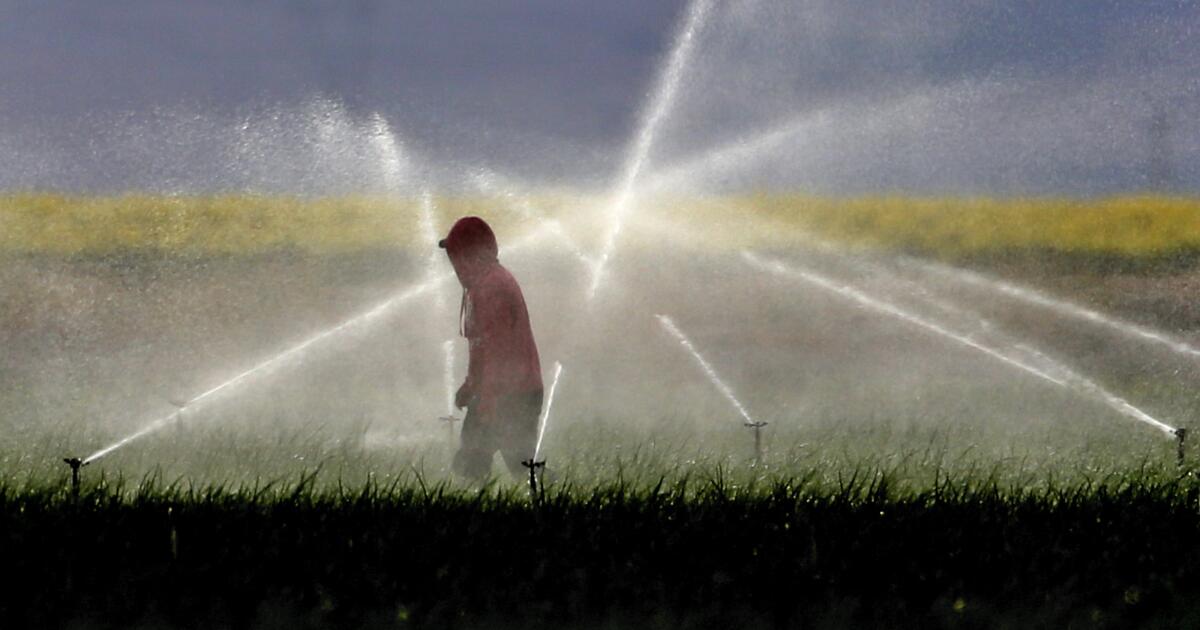
- It has been used primarily for weed control on crops including almonds, grapes, cotton, and others, with significant application in the San Joaquin Valley.
- Under California law, DPR-licensed dealers may continue to possess and sell voluntarily canceled products for up to two years after each product’s cancellation effective date. Growers must follow all label directions, use requirements, and state and federal regulations.
- Paraquat is banned in more than 60 countries.
- This is California’s first major pesticide phase-out of this scale since the near-elimination of chlorpyrifos uses around 2019.
Why It Matters
California has been one of the largest U.S. users of paraquat. Farmworkers, agricultural communities (particularly in the Central Valley), and nearby residents have raised concerns about potential health and environmental effects for years. Advocacy groups and lawmakers, including former Assemblymember Laura Friedman (who authored the original legislation that became AB 1963), pressed for tighter controls.
The voluntary cancellations effectively begin a phase-out without a formal regulatory ban or suspension by DPR. The department continues to support research into safer alternatives through its Sustainable Pest Management Grants program. The 2027 priority areas include projects that could reduce reliance on pesticides under evaluation or mitigation, such as paraquat, and alternatives for weed management. Applications are open through September 1, 2026.
Official Response
California Secretary for Environmental Protection Yana Garcia said: “For years, communities have fought to end the use of paraquat, a weedkiller associated with negative impacts to human health and wildlife. California will keep moving toward pest management practices that protect health and our ecosystems.”
DPR Director Karen Morrison stated: “We need the right data to identify where there are risks to people and the environment. This is a cornerstone of our continuous evaluation process to respond to evolving science on the impacts of pesticides.” She added that as growers transition away from paraquat, the department will support effective alternatives and sustainable pest management.
What Happens Next?
Licensed dealers may sell remaining stocks for up to two years after each product’s cancellation date. Use must comply with existing labels and regulations. DPR will continue its broader continuous evaluation and mitigation work on other pesticides. The original statutory deadline for completing the paraquat reevaluation was January 2029; with all registrations canceled, the practical effect is a phase-out through existing inventory.
Growers and applicators should consult county agricultural commissioners or DPR for guidance on remaining stocks and alternatives. DPR’s Continuous Evaluation and Mitigation Update webpage tracks related actions.
What Readers Should Know
Paraquat remains a restricted-use pesticide. Accidental or improper exposure can be highly toxic. There are no residential or homeowner products. Anyone handling remaining commercial stocks must follow label requirements strictly. Communities near agricultural areas that have historically seen paraquat applications may see reduced use over the next two years as inventories deplete.
Conclusion
All paraquat product registrations in California have been voluntarily canceled by manufacturers as of early August 2026, starting a phase-out of the herbicide. Existing stocks can remain available for limited time under state rules. The action follows DPR’s reevaluation process and preliminary findings on potential human health and ecological risks. Officials say the state will continue supporting safer pest management approaches.
Fact-Check Table
| Important Claim | Verification Status | Supporting Source |
|---|---|---|
| All manufacturers voluntarily canceled paraquat product registrations in California | Confirmed | DPR announcement, Aug. 10, 2026 |
| Last cancellation occurred Aug. 6, 2026 | Confirmed | DPR announcement |
| Reevaluation initiated November 2024 under AB 1963 | Confirmed | DPR announcements and AB 1963 records |
| Preliminary reports found potential association with thyroid impacts and birth defects | Confirmed | DPR preliminary human health report, Dec. 2024 |
| Significant risks to birds; possible effects on mammals and aquatic organisms | Confirmed | DPR preliminary ecotoxicology assessment |
| No causal association with Parkinson’s disease found in DPR review (consistent with EPA 2019) | Confirmed | DPR preliminary report |
| Existing stocks may be possessed/sold up to two years after cancellation | Confirmed | California law cited in DPR announcements |
| 369,978 pounds applied in California in 2023 | Confirmed | DPR pesticide use data |
| Restricted to licensed applicators only; no residential use | Confirmed | DPR and EPA designations |
Sources
- California Department of Pesticide Regulation – “DPR Announces Voluntary Cancellation of All Pesticide Products Containing Paraquat-Dichloride,” Aug. 10, 2026. Supports cancellation timeline, quotes from Garcia and Morrison, phase-out rules, reevaluation background. URL: https://www.cdpr.ca.gov/2026/08/10/dpr-announces-voluntary-cancellation-of-all-pesticide-products-containing-paraquat-dichloride/
- California Department of Pesticide Regulation – Syngenta cancellation announcement, April 10, 2026. Supports initial Syngenta action and two-year stock rule. URL: https://www.cdpr.ca.gov/2026/04/10/syngenta-voluntarily-cancels-registration-of-paraquat-pesticides-in-california/
- California Department of Pesticide Regulation – Preliminary findings release, Dec. 30, 2024. Supports scientific assessments on health and ecological risks, 2023 use data, reevaluation process. URL: https://www.cdpr.ca.gov/2024/12/30/department-of-pesticide-regulation-releases-preliminary-findings-from-review-of-environmental-and-human-health-studies-related-to-the-use-of-the-pesticide-paraquat/
- California Legislative information and related reporting on AB 1963 (2024). Supports statutory reevaluation requirement and timeline.