
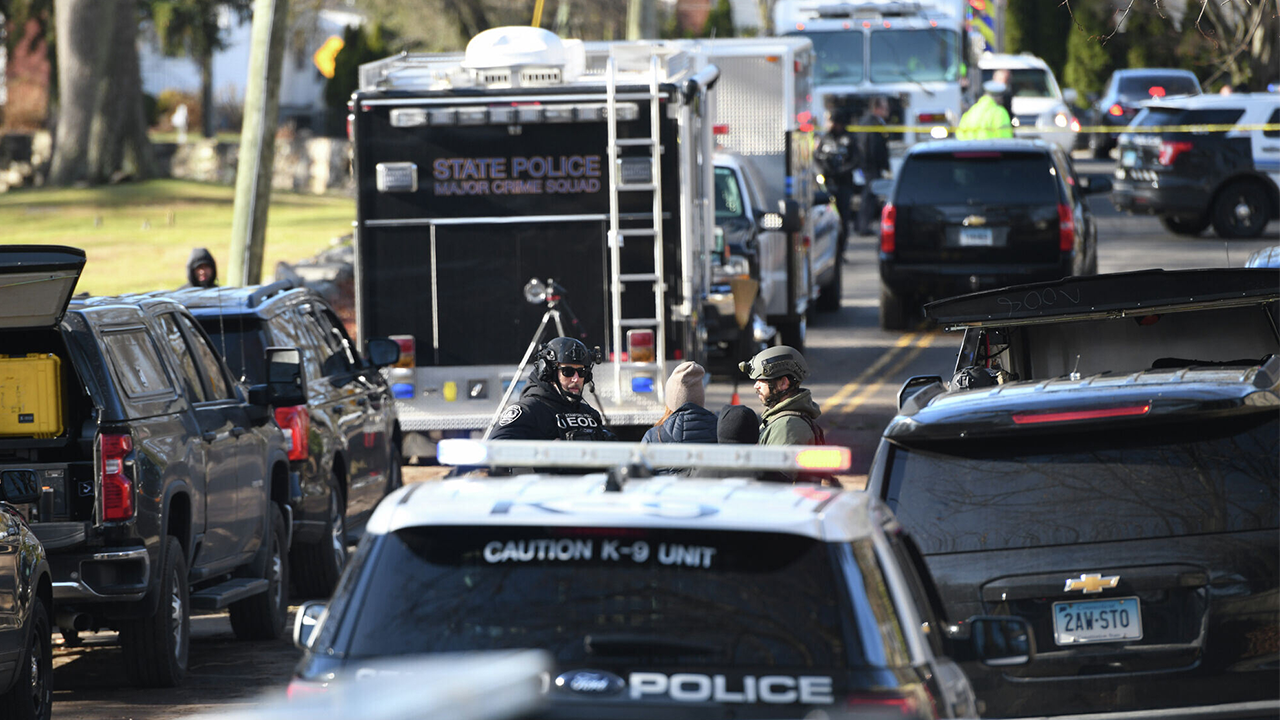
In the quiet suburban streets of Stamford, Connecticut, a routine eviction notice spiraled into a nightmare of gunfire, self-destruction, and gruesome secrets hidden within a family home. When the smoke cleared from an hours-long shootout, police uncovered not just the body of the shooter—but a concealed, decomposed corpse and a cache of homemade bombs that left investigators reeling.
The Stamford police standoff decomposed body, Connecticut shooting explosives find, and Jed Parkington death have gripped the nation, raising chilling questions about what horrors unfolded behind closed doors on Oaklawn Avenue. On Tuesday, December 2, 2025, Stamford officers responded to a 911 call around 9:15 a.m. from a state marshal attempting to serve an eviction notice at a single-family home in the city’s West Side neighborhood. What started as a civil matter quickly escalated: The 63-year-old resident, identified Wednesday as Jedediah “Jed” Parkington, barricaded himself inside, arming up and turning the house into a fortress of fury.
As SWAT teams rolled in with armored BearCat vehicles around 11:30 a.m., Parkington unleashed hell. From an upstairs window, he fired high-powered rounds—later confirmed as from an AK-47-style rifle—riddling police trucks with bullet holes that pierced windshields and shattered glass. Videos circulating on social media captured the chaos: Officers shouting “Take cover!” as residents fled, bullets pinging off metal, and drones buzzing overhead to assess the threat. Parkington, a reclusive figure with a history of mental health struggles and financial woes, exchanged fire multiple times over six tense hours, forcing a multi-agency lockdown that included federal, state, and local responders from Bridgeport to Westport. No officers were injured, but Stamford Police Chief Timothy Shaw later reflected grimly: “When the video comes out, you’ll realize how close it was… We might have lost lives.”
The siege peaked around 3 p.m. when tactical teams breached the perimeter, but Parkington held out, blasting at drones and barricading further. By evening, a single gunshot echoed from inside—self-inflicted, as it turned out. A tactical entry team swept the first floor at 7 p.m., confirming Parkington dead from his wound. But the real horrors awaited upstairs. Deploying a drone for reconnaissance, officers spotted a chilling arsenal: pipe bombs, grenades, Molotov cocktails scattered like deadly confetti. The bomb squad neutralized the threats before a full sweep, during which they pried open a concealed space on the second floor—revealing a body in advanced decomposition, hidden away like a macabre secret.
“It’s too early to identify the victim or determine how long they’ve been there,” Chief Shaw said at a somber Wednesday press conference, flanked by Mayor Caroline Simmons and Public Safety Director Louis DeRubeis. Neighbors, speaking to local outlets, painted Parkington as a loner in his 70s-era ranch house—a Vietnam vet who kept to himself, with overgrown lawns and whispers of hoarding. The eviction stemmed from unpaid debts, but the decomposed remains—possibly a relative or associate—hinted at darker isolation, perhaps a months-old tragedy gone unreported. The Connecticut State Police Major Crimes Squad and Office of the Inspector General have taken over, probing the shooting exchange, the explosives’ origins, and the second death’s circumstances. Autopsies are pending, with foul play not ruled out.
The incident’s roots trace to Parkington’s unraveling life: Court records show mounting foreclosures and noise complaints, but no prior violent flags. Mental health advocates, like those from the National Alliance on Mental Illness Connecticut chapter, decried the outcome as a “preventable tragedy,” urging better crisis intervention training. “Evictions are flashpoints for despair—why wasn’t there a welfare check sooner?” one counselor asked anonymously. On X, the story trended under #StamfordStandoff, with users like @CTNewsJunkie posting drone footage clips: “This is what happens when help doesn’t come fast enough—thoughts with the families,” amassing 8K retweets. Others speculated wildly about the bombs—”Domestic terror plot foiled?”—while gun rights groups defended Parkington’s arsenal as Second Amendment zeal.
For Connecticut families and beyond, this saga strikes at the heart of suburban fragility. Economically, it spotlights the eviction crisis: Over 5,000 filings statewide in 2025 amid rising rents, per CT Judicial Branch data, turning breadwinners into barricaded desperados and straining police resources—Stamford’s SWAT callout alone cost $50K in overtime. Lifestyle ripples hit home in tight-knit enclaves like Oaklawn, where block parties now whisper of “the house of horrors,” eroding that post-Thanksgiving sense of safety. Politically, it’s fodder for Gov. Ned Lamont’s push for red-flag laws and mental health funding, especially with federal grants drying up under budget hawks—could this tip the scales in Hartford’s 2026 session? Tech-wise, body cams and drones proved lifesavers here, but privacy advocates question their proliferation in “routine” calls.
As yellow tape flutters on Oaklawn Avenue and neighbors light candles for the unnamed lost, the Stamford police standoff decomposed body case underscores a brutal truth: Behind every eviction notice lurks a potential powder keg. Will autopsies and raids reveal murder, neglect, or something more sinister? For now, a community mourns—and braces.
In summing up, Tuesday’s deadly chaos in Stamford exposed layers of despair, from a gunman’s final stand to the silent scream of a hidden corpse, all amid a volatile mix of bombs and bullets. Looking ahead, expect forensic breakthroughs by week’s end and policy debates raging into the new year—reminders that unchecked isolation can detonate without warning.
Mark Smith
Follow us for real-time updates and subscribe to push notifications—stay ahead of the stories that matter.