
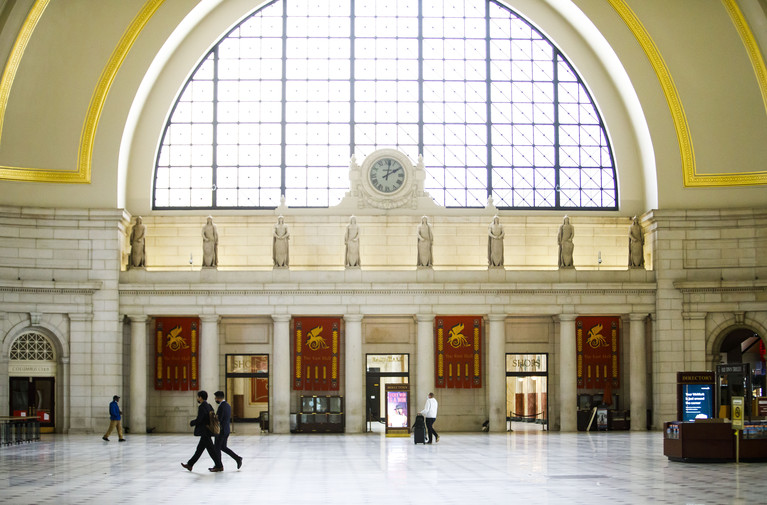
DOT Announces Takeover of DC’s Union Station, Citing Crime and Homelessness
Washington, D.C. — On August 27, 2025, U.S. Transportation Secretary Sean Duffy announced that the Department of Transportation (DOT) will reclaim management of Washington, D.C.’s Union Station, a major transportation hub, citing concerns over crime and homelessness. The move, part of President Donald Trump’s broader initiative to enhance safety and “beautify” the nation’s capital, marks a significant shift in federal oversight of the iconic station, which serves Amtrak, Metro, and regional transit systems.
The DOT, through its Federal Railroad Administration (FRA), has owned Union Station since the early 1980s, but management has been handled by the nonprofit Union Station Redevelopment Corporation (USRC) and Amtrak. Duffy stated that the station has “fallen into disrepair” and become a focal point for crime and homelessness, with vacant storefronts, graffiti, and reported violent incidents, including a shooting in the parking garage and a brutal assault earlier this year. “There’s too much crime, there’s too much homelessness,” Duffy told NBC News. “We think we can manage the property better, bring in more tenants, and reinvest that revenue into this beautiful building.”
The announcement coincides with the Trump administration’s aggressive crime crackdown in Washington, D.C., which includes deploying National Guard troops and federal law enforcement to patrol the city, including Union Station. Since the federal takeover of D.C.’s Metropolitan Police Department on August 7, 2025, authorities have reported 1,170 arrests and the seizure of 115 illegal guns, with only one murder recorded in the capital as of August 26. Posts on X have noted a visible reduction in loitering and homeless encampments around Union Station since the National Guard’s deployment.
Duffy emphasized that the takeover is “not a power play,” as the DOT already owns the station, but rather an effort to restore its status as a “world-class transit hub.” The department plans to renegotiate agreements with USRC and Amtrak, with formal control expected to be finalized in September 2025. Planned improvements include enhanced security, new elevators, better lighting, and roof repairs, with revenue from parking and retail leases reinvested into the station. Deputy Secretary Steve Bradbury added, “Our nation’s capital should be putting our best foot forward.”
The decision has sparked mixed reactions. D.C. Mayor Muriel Bowser called the federal involvement “a good thing,” noting that the station requires $8 billion to $12 billion in renovations that local government cannot fund alone. However, Delegate Eleanor Holmes Norton expressed concern over the lack of clarity in the announcement, seeking assurances that USRC and Amtrak’s roles will not be dissolved. Critics, including some D.C. residents, argue that the heavy federal presence, including National Guard troops and military vehicles, creates an unwelcoming atmosphere. Protesters disrupted a recent press conference at Union Station attended by Vice President JD Vance, Defense Secretary Pete Hegseth, and White House Deputy Chief of Staff Stephen Miller.
The takeover also shelves a $10 billion expansion plan for Union Station, which included residential, office, and hotel developments. Instead, the DOT aims to leverage private-sector investment to revitalize the station’s commercial aspects, potentially attracting new businesses to fill vacant retail spaces. Amtrak, which took control of the station’s management and retail operations in 2024 through eminent domain, will continue to oversee passenger areas, while USRC focuses on retail management.
Union Station, a historic landmark near the U.S. Capitol, serves 5.7 million passengers annually and is the second-busiest hub in Amtrak’s network. Despite recent efforts to address crime, including a partnership with the h3 Project that reduced disorderly conduct incidents from 133 in 2017 to 70 in 2023, the station continues to face challenges with homelessness and safety perceptions. The DOT’s intervention aims to address these issues while restoring the station’s grandeur, though its success will depend on balancing federal control with local collaboration.
This article has been reviewed for grammar and clarity to ensure accuracy and readability for a U.S. audience.