
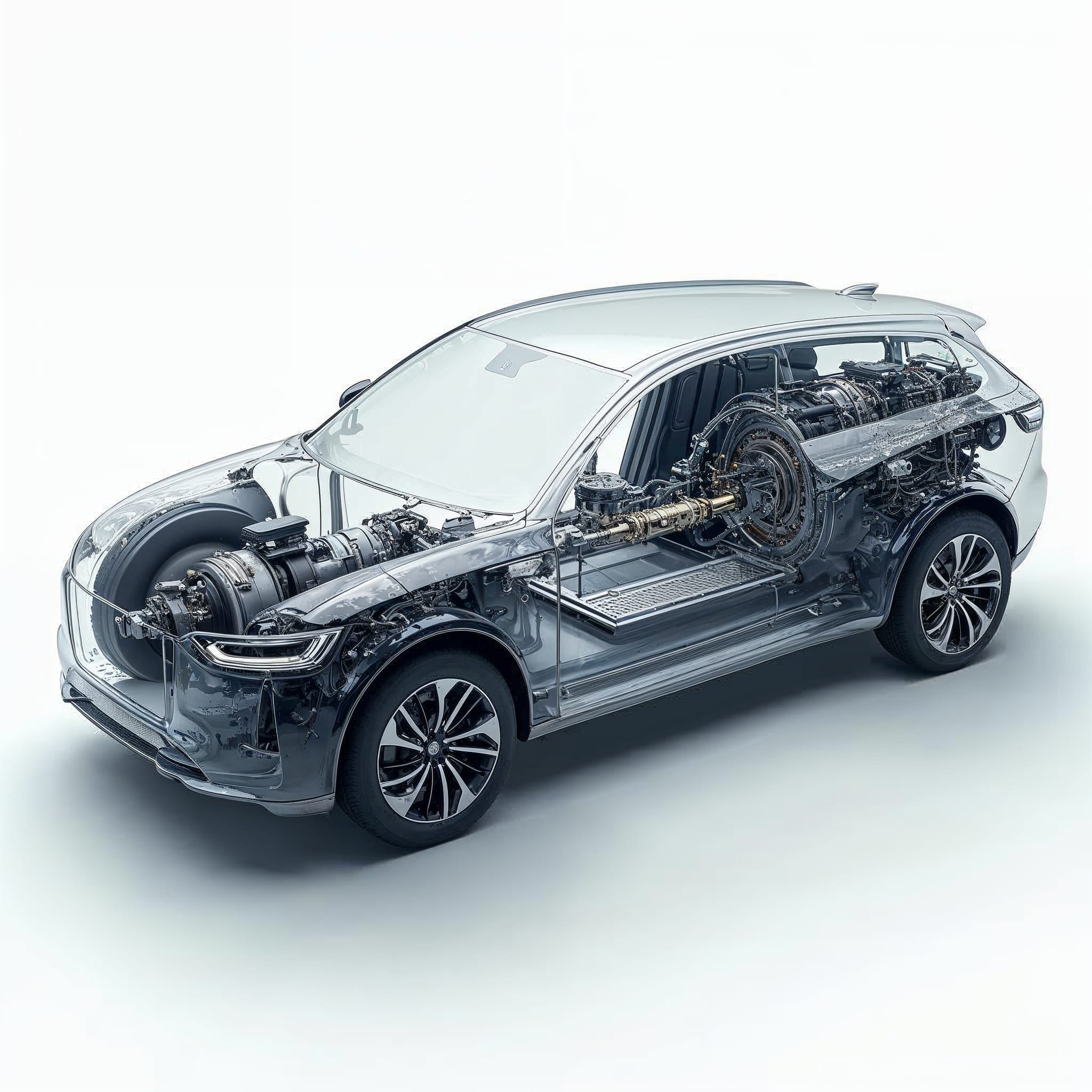
Quiet Operation and Smooth Acceleration: The Hybrid Driving Experience
Imagine merging onto a bustling highway, feeling a gentle surge of power that propels you forward with remarkable quietness, no lurching gears, no roaring engine, just a smooth, confident climb to speed. Or perhaps you are navigating stop-and-go city traffic, moving from a standstill with an almost ethereal grace, your vehicle responding instantly to your every command. This is not a futuristic dream; it is the everyday reality for millions of drivers behind the wheel of a hybrid car. Underneath their increasingly sleek exteriors, hybrid vehicles conceal a marvel of engineering designed specifically to deliver an unparalleled driving experience characterized by both efficiency and, crucially, a remarkably seamless and powerful acceleration.
For too long, the narrative around hybrid cars has predominantly focused on their fuel efficiency and environmental benefits. While these advantages are undeniable and critically important, they often overshadow another defining characteristic that makes hybrids truly stand out: their exceptional driving dynamics. The fusion of an internal combustion engine (ICE) with one or more electric motors creates a powertrain capable of delivering power in a way that traditional gasoline cars simply cannot replicate. This innovative approach doesn’t just save fuel; it fundamentally redefines how a car accelerates, offering a blend of instant torque, refined power delivery, and serene quietness that elevates the entire journey.
This comprehensive exploration delves into the intricate mechanisms and sophisticated technologies that allow hybrid cars to achieve such a masterful command over acceleration. We will uncover the secrets behind the electric motor’s instantaneous response, the intelligent power management systems that orchestrate the dance between two disparate power sources, and the innovative transmissions that eliminate the harshness of gear shifts. Through detailed explanations, practical examples, and current insights, we aim to shed light on why hybrid acceleration is not just efficient, but genuinely effortless and powerfully smooth. Prepare to understand why the hybrid driving experience is far more than just economical; it is an exercise in refined performance and quiet confidence.
The Hybrid Advantage: A Symphony of Power Sources
At its core, a hybrid car is a vehicle that utilizes more than one power source for propulsion, typically combining a gasoline-powered internal combustion engine with one or more electric motors. This dual-source approach is the fundamental reason behind their distinctive acceleration characteristics. Unlike conventional gasoline cars that rely solely on an ICE, or pure electric vehicles (EVs) that depend entirely on electric motors and batteries, hybrids skillfully blend the strengths of both worlds, creating a powertrain that is greater than the sum of its parts.
The magic happens in how these two power units collaborate. The electric motor excels at delivering immediate torque from a standstill, a property inherent to electric machines. Internal combustion engines, on the other hand, require time to build revs and reach their optimal power band. By pairing them, hybrid systems can leverage the electric motor for instant, silent launches and low-speed driving, where the ICE is least efficient and most prone to producing noise and vibrations. As speed increases or more power is required, the ICE seamlessly kicks in, either independently or in conjunction with the electric motor, to provide sustained power and recharge the battery.
This intelligent interplay results in several key advantages for acceleration. Firstly, the electric motor’s ability to provide immediate torque means that a hybrid car can accelerate from a stop with a smoothness and responsiveness that often surprises drivers accustomed to the slight delay or “lag” associated with a traditional gasoline engine. There is no waiting for an engine to spool up, no lurching as gears engage; just a continuous, linear surge of power. Secondly, the presence of the electric motor can augment the gasoline engine’s power output during heavy acceleration, allowing the vehicle to feel more potent than its engine size might suggest. This ‘power boost’ is particularly noticeable when merging onto highways or overtaking, providing an extra layer of confidence and performance.
Furthermore, the integration of these power sources is managed by sophisticated electronic control units (ECUs) that continuously monitor driving conditions, driver input, and battery state. This real-time optimization ensures that the most efficient and powerful combination of gas and electric power is always being utilized. This level of coordination is what transforms two distinct power sources into a single, highly refined propulsion system that delivers a uniquely quiet, smooth, and effortlessly powerful acceleration experience.
Electric Motor: The Instant Torque Hero
The electric motor is arguably the unsung hero behind the seamless acceleration of hybrid vehicles. Its inherent operational characteristics are perfectly suited to overcome the traditional shortcomings of internal combustion engines, particularly when it comes to initial responsiveness and low-speed performance. Unlike an ICE, which needs to build revolutions per minute (RPM) to generate significant torque, an electric motor delivers its maximum torque almost instantaneously from 0 RPM. This fundamental difference is what gives hybrid cars their distinctive “electric boost” and incredibly smooth takeoff.
Consider the experience of starting from a traffic light. In a conventional gasoline car, there is a slight moment of hesitation as the engine revs, the clutch engages (in manual transmissions) or the torque converter locks up (in automatics), and power is finally transmitted to the wheels. This process, while often imperceptible to experienced drivers, involves a series of mechanical actions that can introduce minor delays and subtle jerks. In a hybrid, particularly a full hybrid or plug-in hybrid, the electric motor typically handles the initial acceleration. As soon as the accelerator pedal is pressed, the electric motor responds immediately, delivering a quiet, continuous wave of torque to the wheels. This instantaneous delivery eliminates any lag, resulting in an exceptionally smooth and satisfying launch.
This characteristic is not just about comfort; it also translates to practical advantages in various driving scenarios. In heavy city traffic, where frequent stops and starts are the norm, the electric motor’s ability to smoothly accelerate and decelerate without constant engine cycling reduces driver fatigue and significantly enhances the driving experience. Furthermore, for situations requiring a quick burst of speed, such as navigating a busy intersection or quickly changing lanes at low speeds, the electric motor provides that immediate surge of power exactly when it is needed, contributing to a sense of agility and control.
Moreover, the electric motor operates with minimal noise and vibration. When a hybrid car is moving under electric power alone, the cabin remains remarkably quiet, a stark contrast to the typical engine roar or rumble associated with gasoline cars during acceleration. This quietness not only contributes to the premium feel of the hybrid driving experience but also allows for a more relaxed and comfortable journey for both the driver and passengers. The electric motor, therefore, is not merely a supplementary power source; it is a transformative component that redefines the very nature of vehicle acceleration, making it instant, quiet, and effortlessly smooth.
Internal Combustion Engine: The Sustained Powerhouse
While the electric motor takes center stage for instantaneous torque and silent starts, the internal combustion engine (ICE) remains a crucial component in the hybrid powertrain, acting as the sustained powerhouse responsible for higher speeds, prolonged cruising, and efficient battery recharging. The brilliance of hybrid engineering lies not just in the presence of an ICE, but in how it is seamlessly integrated and optimized to complement, rather than detract from, the overall smooth acceleration experience.
In a hybrid vehicle, the gasoline engine is often designed to operate within its most efficient RPM range, thanks to the assistance of the electric motor and sophisticated transmission systems. This means it can avoid the inefficient and noisy phases of operation common in traditional gasoline cars, such as low-RPM lugging or excessive revving during gear changes. When the ICE engages, it does so with a level of refinement that might not be found in its conventional counterparts. Modern hybrid systems are engineered to minimize any jolt or interruption when the gasoline engine starts up or shuts down. This transition is typically so smooth that many drivers scarcely notice it, hearing only a faint hum as the engine comes to life.
For instance, during moderate acceleration from a standstill, the electric motor provides the initial thrust. As the vehicle gains speed, or if the driver demands more power, the ICE gently awakens and joins the electric motor. The electric motor can even act as a generator or a starter for the ICE, ensuring a quick and vibration-free start. When cruising at highway speeds, the ICE usually takes over as the primary power source, as it is generally more efficient than the electric motor for sustained high-speed operation. Here, it maintains the vehicle’s momentum while also channeling excess power to generate electricity, which is then stored in the battery for future electric-only driving or acceleration boosts.
The role of the ICE extends beyond just propulsion; it also serves as a crucial component for maintaining the battery’s state of charge. When the battery level drops, the ICE can run specifically to generate electricity, either while the car is moving or even when stationary, ensuring that there is always sufficient electric power available for future electric-only driving segments or for assisting with acceleration. This careful orchestration of power ensures that the driver always has access to the combined might of both power sources, delivering a consistent and reliable flow of power without the harshness or abrupt changes typically associated with traditional engine operation. Thus, the ICE in a hybrid system is not merely a conventional engine; it is a highly integrated and intelligent component that works in harmony with the electric motor to achieve truly seamless and refined acceleration.
Sophisticated Transmissions: Beyond Gears
One of the most significant contributors to the seamless acceleration of hybrid cars is their unique approach to transmission systems. Unlike conventional automatic or manual transmissions that rely on a series of fixed gears, many popular hybrids, especially those from pioneers like Toyota, employ an electronic Continuously Variable Transmission (eCVT) or a similar power-split device. These ingenious systems fundamentally eliminate the traditional gear changes that can introduce pauses, jerks, and power interruptions in other vehicles, thus ensuring a truly continuous and smooth power delivery.
A conventional automatic transmission shifts through discrete gear ratios, each shift resulting in a momentary break in power delivery and a noticeable change in engine RPM. While modern automatics are incredibly refined, these shifts are still inherently part of their operation. The eCVT in a hybrid, however, operates on a completely different principle. It does not have physical gears in the traditional sense. Instead, it uses a planetary gear set, combined with electric motors and the gasoline engine, to intelligently blend and transmit power to the wheels. This power-split device allows the system to continuously vary the effective gear ratio, meaning the engine can always operate at its most efficient RPM for a given speed and power demand, without the need for discrete gear steps.
The primary benefit of this design for acceleration is absolute smoothness. As you press the accelerator, the eCVT adjusts the power output from the electric motor and the gasoline engine in a fluid, stepless manner. There are no shifts to feel, no lurches as the transmission hunts for the right gear, and no drops in torque during a gear change. The power delivery is a continuous, uninterrupted stream, giving the driver a feeling of effortless, linear acceleration. This seamless transfer of power makes for a remarkably comfortable ride, especially in stop-and-go traffic or when navigating winding roads where constant speed adjustments are necessary.
Furthermore, the eCVT allows the engine to rev up and down independently of the road speed to optimize fuel efficiency or power output. For example, during heavy acceleration, the system can hold the engine at its peak power RPM while the vehicle accelerates, providing maximum thrust. Conversely, during light acceleration, it can keep the engine at a lower, more efficient RPM. This intelligent management not only enhances acceleration smoothness but also contributes significantly to the overall fuel economy that hybrids are known for. While some drivers initially find the ‘rubber band’ feeling of a CVT (where engine RPM doesn’t directly correlate with road speed as in a geared transmission) takes some getting used to, the undeniable advantage for a hybrid application is its unparalleled contribution to a truly seamless and efficient power delivery.
Intelligent Power Management Systems
The true genius behind a hybrid car’s seamless acceleration and efficient operation lies within its sophisticated intelligent power management system. This electronic brain, often referred to as the Hybrid Control System (HCS) or Power Control Unit (PCU), is the master orchestrator, continuously monitoring a multitude of parameters and making real-time decisions to blend the power from the electric motor and the internal combustion engine with impeccable precision. Without this intricate control system, the elegant dance between gasoline and electric power would be impossible, and the smooth driving experience would simply not exist.
The PCU operates on a complex network of sensors that gather data from every critical aspect of the vehicle. It monitors the driver’s accelerator pedal input, indicating desired acceleration. It assesses the vehicle’s speed, battery state of charge (SOC), engine load, road conditions, and even ambient temperature. With this constant stream of information, sophisticated algorithms within the PCU determine the optimal power distribution strategy at any given moment. Should the car run on electric power alone? Should the gasoline engine kick in? Should both work in tandem for maximum acceleration? Or should the ICE run to generate electricity for the battery?
For example, when starting from a standstill, the PCU will typically prioritize electric-only driving (EV mode) if the battery has sufficient charge and the acceleration demand is light. As the driver presses the accelerator harder, signalling a greater need for speed, the PCU makes a split-second decision to smoothly bring the gasoline engine online. This transition is not a crude switch but a finely tuned handover, often aided by the electric motor itself which can act as a generator or starter for the ICE, ensuring it comes to life without any noticeable shudder or delay. The timing and intensity of the ICE engagement are precisely controlled to match the electric motor’s output, creating a continuous and linear increase in power.
During heavy acceleration, the PCU will command both the electric motor and the ICE to work together, combining their power for maximum thrust. This ‘power boost’ effect allows hybrid vehicles to achieve impressive acceleration figures, often outperforming similarly sized non-hybrid vehicles, while still maintaining superior fuel efficiency. Conversely, during deceleration, the PCU activates regenerative braking, converting kinetic energy back into electricity to recharge the battery. This entire process, from acceleration to braking, is managed with an overarching goal: to maximize efficiency, minimize emissions, and, crucially for our topic, deliver an exceptionally smooth and responsive driving experience. The intelligent power management system is truly the conductor of the hybrid symphony, ensuring every note of power is played in perfect harmony.
Regenerative Braking: More Than Just Stopping
While often highlighted for its contribution to fuel efficiency, regenerative braking plays a subtle yet significant role in enhancing the overall smoothness of the hybrid driving experience, including its readiness for seamless re-acceleration. It is far more than just a mechanism for slowing down; it is an intelligent energy recovery system that constantly prepares the vehicle for its next surge of power.
In a conventional car, when you press the brake pedal, friction between the brake pads and rotors generates heat, and this energy is simply wasted into the atmosphere. Regenerative braking in a hybrid car works differently. When the driver lifts off the accelerator or lightly presses the brake pedal, the electric motor reverses its function, acting as a generator. Instead of consuming electricity to drive the wheels, it uses the kinetic energy of the moving vehicle to generate electricity, which is then sent back to recharge the hybrid battery. This process effectively slows the vehicle down without relying solely on friction brakes, thus saving wear and tear on the physical brake components.
The contribution of regenerative braking to smooth acceleration comes in several forms. Firstly, by efficiently recovering energy and keeping the battery charged, it ensures that there is always a ready supply of electric power for the immediate torque demands of the electric motor. This means that after a period of deceleration, the hybrid car is primed for an instant, electric-assisted acceleration, without having to wait for the gasoline engine to start or for the battery to be charged by the ICE. The system ensures the battery is at an optimal state of charge to provide that quick burst of power whenever the driver demands it.
Secondly, the smooth deceleration provided by regenerative braking contributes to the overall refined driving feel. The gradual, controlled slowing down that the system enables avoids the abruptness that can sometimes accompany heavy friction braking. This smoothness extends to the transition from braking to acceleration. Because the electric motor is already engaged in managing energy flow, the switch from regenerative deceleration to electric propulsion is incredibly fluid. There is no feeling of the system “resetting” or recalibrating; it simply shifts its energy flow direction, maintaining a consistent and uninterrupted sense of control for the driver.
Think of it as the car always being ready. Every time you slow down, the vehicle isn’t just stopping; it’s actively preparing itself for the next move, capturing energy to fuel the next effortless acceleration. This continuous cycle of energy capture and deployment is a cornerstone of the hybrid’s ability to deliver not just efficient, but consistently smooth and responsive power whenever and wherever it’s needed.
Types of Hybrid Systems and Their Acceleration Characteristics
The term “hybrid” encompasses a range of technologies, each with distinct characteristics regarding how they blend power, impact fuel efficiency, and, crucially, deliver acceleration. Understanding these different types provides insight into the varying levels of seamless power delivery one might experience.
-
Mild Hybrids (MHEV):
Mild hybrids represent the simplest form of hybrid technology. They typically use a small electric motor (often integrated with the starter-generator) that cannot power the car solely on electricity. Instead, its primary roles are to assist the gasoline engine during acceleration (providing a small torque boost), enable a smoother and faster engine start-stop function, and recover energy through regenerative braking. For acceleration, MHEVs offer a subtle enhancement. The electric motor provides a modest, almost imperceptible, burst of torque during initial takeoff or when accelerating from low speeds, reducing the load on the ICE and improving fuel efficiency. While smoother than a non-hybrid, the primary propulsion still comes from the gasoline engine, so the electric motor’s contribution to “seamless acceleration” is more about refinement and efficiency rather than a dramatic change in power delivery feel.
-
Full Hybrids (FHEV):
Full hybrids, also known as strong hybrids, are what most people envision when they think of hybrid cars. These systems feature more powerful electric motors and larger battery packs than MHEVs, allowing them to propel the vehicle on electric power alone for short distances and at low speeds (typically up to 25-40 mph). This is where the true “seamless acceleration” experience begins. From a standstill, a full hybrid will often launch purely on electric power, providing instant, silent torque. As speed increases, or if the driver demands more power, the gasoline engine seamlessly kicks in to assist or take over. The transition between EV mode and combined power mode is usually exceptionally smooth, thanks to intelligent power management and sophisticated transmissions like the eCVT. This blending of power sources gives FHEVs a distinctly smooth and responsive acceleration feel, making them very pleasant in city driving and effective on highways.
-
Plug-in Hybrids (PHEV):
Plug-in hybrids take the capabilities of full hybrids a step further by incorporating even larger battery packs that can be charged externally, similar to a pure EV. This allows PHEVs to travel significantly longer distances on electric power alone (often 20-50 miles or more) before the gasoline engine needs to engage. In terms of acceleration, PHEVs often offer the most compelling “seamless power” experience. When the battery is charged, they behave much like pure EVs, providing robust, instant electric torque for acceleration over extended periods. Their electric motors are typically more powerful than those in FHEVs, resulting in even more spirited electric-only acceleration. When the battery is depleted or maximum power is needed, the gasoline engine joins in, creating a formidable combined output. Many performance-oriented PHEVs leverage the instant torque of the electric motor to achieve impressive 0-60 mph times, showcasing that hybrid technology can deliver thrilling acceleration alongside efficiency.
Each hybrid type offers a different flavor of acceleration, ranging from subtle refinement in MHEVs to the exhilarating, electric-first thrust of PHEVs. However, a common thread across all full and plug-in hybrids is the inherent ability to leverage the electric motor’s instant torque, leading to a smoother, more responsive, and often quieter acceleration experience compared to their conventional gasoline-only counterparts.
Beyond the Numbers: The Driving Experience
While specifications and technological explanations provide a deep understanding of how hybrid cars achieve seamless acceleration, it is the subjective, real-world driving experience that truly underscores their value. The feeling of driving a hybrid with its refined power delivery transcends mere technical data; it impacts driver comfort, confidence, and overall satisfaction on the road.
One of the most immediate and profound aspects of the hybrid driving experience is the unparalleled quietness, especially during initial acceleration and low-speed maneuvers. When the vehicle glides away from a stop on electric power, there is an absence of engine roar, vibration, and exhaust noise that is deeply satisfying. This serene departure creates a sense of calm within the cabin, transforming everyday commutes from a potentially stressful activity into a more peaceful journey. Imagine pulling out of your driveway early in the morning without disturbing neighbors, or navigating a quiet residential street with just the subtle hum of electric motors – this quiet operation is a hallmark of the hybrid’s seamless acceleration.
The lack of traditional gear changes is another major contributor to the smooth driving experience. The continuous, linear power delivery afforded by eCVTs or similar power-split devices means there are no discernible shifts, no lurches, and no interruptions in the flow of power. This consistent acceleration without pauses reduces the physical strain on the driver and passengers, making long drives less fatiguing. It also translates to a smoother ride for everyone onboard, an important consideration for families or those who frequently transport passengers.
In practical scenarios, this seamless acceleration translates into tangible benefits:
- City Traffic: The ability to move off from a stop instantly and quietly, combined with smooth deceleration from regenerative braking, makes stop-and-go traffic far less irritating. The hybrid effortlessly glides through congestion, minimizing the jerky movements associated with conventional transmissions.
- Highway Merging: When merging onto a highway, confidence is key. Hybrid cars, especially full and plug-in variants, can combine the instant torque of the electric motor with the sustained power of the gasoline engine to provide a robust and swift acceleration that allows for easy and safe integration into fast-moving traffic. There’s no hesitant build-up; just a strong, steady surge of power.
- Hill Climbing: For ascents, the electric motor can provide an immediate power assist, reducing the strain on the gasoline engine and preventing the feeling of ‘lugging’ or the need for aggressive downshifts. This ensures a consistent power delivery, making hill climbing feel less arduous and more controlled.
- Overtaking: On two-lane roads, a quick, decisive burst of acceleration is essential for safe overtaking. Hybrids deliver this with precision, offering a responsive power boost that minimizes the time spent in the opposing lane.
Ultimately, the hybrid driving experience, defined by its quiet operation and smooth, seamless acceleration, is one of enhanced control, reduced fatigue, and elevated comfort. It’s a testament to how intelligent engineering can deliver not just efficiency, but a profoundly enjoyable and effortless way to drive.
Comparison Tables
To further illustrate the unique advantages of hybrid acceleration, let’s compare its characteristics against traditional internal combustion engine (ICE) vehicles and pure electric vehicles (EVs). These tables highlight how hybrids strike a compelling balance in the automotive landscape.
Table 1: Acceleration Characteristics Comparison
| Feature | Internal Combustion Engine (ICE) Vehicle | Full Hybrid Electric Vehicle (FHEV) | Battery Electric Vehicle (BEV) |
|---|---|---|---|
| Initial Torque Delivery | Requires RPM build-up; some lag. | Instantaneous (electric motor); seamless blend with ICE. | Instantaneous (electric motor); maximum torque from 0 RPM. |
| Power Delivery | Stepped, through gears; potential for jolts. | Continuous, linear; often through eCVT; no perceptible shifts. | Continuous, linear; single-speed transmission. |
| Sound during Acceleration | Engine roar/hum; noticeable revving. | Quiet (electric-only); subtle engine hum when ICE engages. | Near silent (electric motor whine). |
| Transmission Type (Typical) | Manual, Automatic, CVT (mechanical). | eCVT (power-split device) or specialized multi-mode. | Single-speed reduction gear. |
| Responsiveness (from stop) | Good, but with slight mechanical delay. | Excellent; immediate electric motor response. | Exceptional; instantaneous electric motor response. |
| Fuel Efficiency | Lower, especially in stop-and-go traffic. | High; excellent regenerative braking and EV mode utilization. | Zero tailpipe emissions (electric energy consumption). |
| Typical 0-60 mph (Performance Focus) | Varies widely; can be very fast with powerful engines. | Often surprisingly quick due to combined power; generally good. | Often very fast due to instant torque and high power. |
This comparison clearly demonstrates that while EVs offer the ultimate in instant torque and silent operation, hybrids come remarkably close, especially in initial acceleration, while still offering the flexibility of gasoline range. ICE vehicles, while powerful, cannot match the seamlessness provided by electric assistance.
Table 2: Hybrid System Types and Their Acceleration Feel
The “seamless acceleration” experience can vary slightly depending on the specific hybrid architecture. This table breaks down how different hybrid types deliver their power.
| Hybrid System Type | Electric Motor Role in Acceleration | Transmission Interaction | Perceived Acceleration Feel | Best Use Case for Acceleration |
|---|---|---|---|---|
| Mild Hybrid (MHEV) | Provides subtle torque assist; smoother engine restart for start/stop. | Works with conventional automatic or manual. | Refined ICE acceleration; reduced strain; slight boost. | Improving efficiency and smoothness of daily commutes. |
| Full Hybrid (FHEV) | Primary power for low speeds/starts; assists ICE for stronger acceleration. | eCVT (power-split device) for seamless blending. | Very smooth, quiet electric launch; strong, linear combined power. | City driving, varied conditions; balanced performance and efficiency. |
| Plug-in Hybrid (PHEV) | Primary power for extended EV range; significant boost for combined power. | eCVT or multi-mode hybrid transmissions. | Powerful, instant electric-only acceleration; exceptionally strong combined. | Daily electric commutes; demand for high power/performance. |
| Series Hybrid | Always drives wheels; ICE generates electricity for motor/battery. | Direct electric drive; no mechanical link between ICE and wheels. | Pure EV-like smoothness and responsiveness; ICE acts as generator. | City driving, situations prioritizing electric drive feel. |
| Parallel Hybrid | Directly assists ICE to drive wheels; can sometimes drive solo. | Can use conventional automatic/manual; electric motor between engine and transmission. | Strong combined power; slightly less EV-focused smooth launch than FHEV. | Highway efficiency, augmenting ICE power. |
From these tables, it is clear that while all hybrids offer some form of enhanced acceleration smoothness, full hybrids and plug-in hybrids stand out for their ability to deliver a truly seamless and often electric-first driving experience, combining the best attributes of both electric and gasoline propulsion.
Practical Examples and Case Studies
The theoretical benefits of hybrid seamless acceleration translate into tangible advantages in real-world driving situations, making daily commutes and long journeys more pleasant and efficient. Let’s look at a few practical examples and how specific models exemplify these characteristics.
Case Study 1: The Daily Commute in a Toyota Prius
Imagine your morning commute involves stop-and-go traffic on city streets before merging onto a highway. In a conventional gasoline car, this would involve frequent engine starts, gear shifts, and periods of inefficient idling. In a Toyota Prius, a pioneering full hybrid, the experience is dramatically different. As you pull away from each stoplight, the Prius launches silently on electric power. There is no engine noise, just a smooth, instant surge. This happens repeatedly in traffic, saving fuel and significantly reducing cabin noise. When you accelerate to merge onto the highway, the intelligent power management system seamlessly brings the gasoline engine online, often blending its power with the electric motor for a robust and confident acceleration onto the freeway. The eCVT ensures there are no jerky gear changes, providing a continuous, linear increase in speed. This effortless transition makes the dreaded merge a smooth, anxiety-free maneuver.
Case Study 2: Long Road Trips with a Honda CR-V Hybrid
For families embarking on a long road trip, comfort and consistent power are paramount. The Honda CR-V Hybrid offers a perfect example of how seamless acceleration contributes to a more relaxing journey. On stretches of open highway, the gasoline engine often takes the lead, but during moments of acceleration—like passing another vehicle or climbing a gentle incline—the electric motor provides an instant torque boost. This supplemental power means the engine doesn’t have to strain or downshift aggressively, maintaining a smoother, quieter operation. When you exit the highway and navigate through small towns, the CR-V Hybrid effortlessly switches to electric-only mode for low-speed cruising, offering peaceful travel through residential areas and efficient maneuvering in parking lots. The seamless nature of these power shifts means passengers might not even notice the engine engaging or disengaging, contributing to a more comfortable and less fatiguing ride over hundreds of miles.
Case Study 3: Performance and Efficiency with the Hyundai Ioniq 5 (or similar PHEV like RAV4 Prime)
For drivers who desire both exhilarating performance and exceptional efficiency, plug-in hybrids like the Toyota RAV4 Prime offer a compelling solution. Let’s consider the RAV4 Prime. With a fully charged battery, it can operate as a pure EV for significant distances (e.g., 42 miles EPA-estimated EV range), delivering immediate and powerful electric acceleration, similar to a pure EV. This means that for most daily driving, the acceleration is not just seamless but also incredibly responsive and quiet. However, when the driver demands maximum acceleration, such as during a high-speed overtake or a spirited sprint, the RAV4 Prime combines the robust power of its electric motors with its gasoline engine. The result is an astonishing combined output (302 horsepower in the Prime’s case) and an exceptionally quick 0-60 mph time (around 5.7 seconds), demonstrating that “seamless” can also mean “seriously fast.” The beauty is that this powerful acceleration is delivered without any turbo lag or clumsy gear changes, maintaining the smooth and refined character inherent to its hybrid design.
Case Study 4: Urban Delivery with a Ford Maverick Hybrid
Consider a small business owner using a Ford Maverick Hybrid for urban deliveries. This compact truck benefits immensely from its hybrid powertrain. In stop-and-go city traffic, the instant electric torque allows for smooth and efficient launches from every traffic light, reducing fuel consumption and wear on the engine. The driver experiences less fatigue from constant engine cycling and gear shifting. When a heavier load needs to be transported, the combined power of the hybrid system provides sufficient grunt to accelerate confidently, without feeling sluggish. The ability to creep silently in EV mode through quiet neighborhoods for early morning deliveries or to navigate tight parking lots with precision further enhances the practicality and seamless driving experience for such an application.
These examples illustrate that hybrid seamless acceleration is not just a theoretical benefit but a practical advantage that significantly improves the daily driving experience across a wide range of vehicles and scenarios, delivering power when needed with unmatched refinement and quietness.
Frequently Asked Questions
Here are some frequently asked questions about hybrid cars and their acceleration characteristics, providing comprehensive answers to common queries.
Q: How do hybrids achieve instant acceleration from a stop?
A: Hybrid cars achieve instant acceleration primarily through the immediate torque delivery of their electric motor(s). Unlike internal combustion engines (ICEs) which need to rev up to generate significant power, electric motors provide maximum torque instantaneously from 0 RPM. When a hybrid starts from a standstill, the electric motor typically provides the initial propulsion, offering a smooth, silent, and immediate surge of power to the wheels. This eliminates the lag or slight hesitation often associated with gasoline engines starting from a stop.
Q: Is hybrid acceleration always smooth, or can it be jerky?
A: Modern hybrid acceleration is designed to be exceptionally smooth. This is achieved through several technologies: the instant torque from the electric motor, sophisticated power management systems that seamlessly blend electric and gasoline power, and transmissions like the electronic Continuously Variable Transmission (eCVT) that eliminate traditional gear changes. While slight variations in engine noise or feel might occur during transitions, any jerkiness is usually minimal and far less pronounced than in many conventional gasoline cars, especially older models. The goal of hybrid engineering is precisely to provide a continuous, linear, and fluid power delivery.
Q: Do hybrid cars feel powerful when accelerating?
A: Yes, many hybrid cars, especially full hybrids and plug-in hybrids, can feel surprisingly powerful when accelerating. This is because they can combine the output of both the electric motor and the gasoline engine. The electric motor provides an instant torque boost, which is particularly effective from a standstill or at low speeds, while the gasoline engine adds sustained power at higher speeds. This combined power often results in a feeling of robust and effortless acceleration, making them capable of brisk launches and confident highway merging, sometimes outperforming non-hybrid vehicles with larger engines.
Q: Do hybrids have turbo lag or similar delays in power delivery?
A: No, hybrid cars typically do not suffer from turbo lag or similar delays in power delivery. Turbo lag is a characteristic of turbocharged internal combustion engines where there’s a delay before the turbocharger spools up to provide extra power. Since hybrids utilize an electric motor that provides instantaneous torque, they effectively negate any potential lag from the gasoline engine. Even if the hybrid’s gasoline engine is turbocharged, the electric motor’s immediate assistance covers any momentary delay, ensuring a seamless and responsive acceleration experience.
Q: How does a hybrid car switch between electric and gas power without a jolt?
A: The seamless switching between electric and gas power is managed by an intelligent power management system (often called the Hybrid Control System or PCU). This system continuously monitors driving conditions, driver input, battery state, and engine load. When the gasoline engine needs to engage, it is often started by the electric motor itself, which can act as a generator or starter, ensuring a quick, quiet, and vibration-free start. The engine’s RPM is then carefully synchronized with the electric motor’s output through the eCVT or other hybrid transmission, allowing for a smooth handover of power without any noticeable jolt or interruption to the driver.
Q: Are plug-in hybrids (PHEVs) faster than regular hybrids (FHEVs)?
A: Generally, yes, plug-in hybrids (PHEVs) tend to be faster than regular full hybrids (FHEVs) in terms of acceleration, especially their 0-60 mph times. PHEVs typically feature larger and more powerful electric motors, along with larger battery packs, enabling them to deliver more significant electric-only power and greater combined power when both the electric motors and gasoline engine are working together. This results in more aggressive acceleration and a sportier feel, while still offering extended electric-only range.
Q: Does regenerative braking affect acceleration?
A: Regenerative braking itself is a deceleration process, but it indirectly benefits acceleration. By converting kinetic energy back into electricity and recharging the hybrid battery, it ensures that there is always sufficient electric power available for immediate use. This means that after slowing down, the hybrid car is instantly ready to provide an electric-assisted launch or power boost without waiting for the engine to charge the battery, thus contributing to consistently seamless acceleration.
Q: What is an eCVT and how does it contribute to smoothness?
A: An eCVT (electronic Continuously Variable Transmission) in a hybrid is not a traditional mechanical CVT. It’s often a planetary gear set combined with electric motors and a gasoline engine, forming a power-split device. It has no physical gears in the conventional sense. This design allows the system to continuously vary the effective gear ratio, meaning the engine and electric motors can deliver power to the wheels in a fluid, stepless manner. This eliminates the jolts and pauses associated with traditional gear changes, providing a perfectly smooth, linear, and continuous acceleration experience.
Q: Are all hybrid cars quiet during acceleration?
A: Most full and plug-in hybrid cars are remarkably quiet during initial acceleration, especially when operating in electric-only (EV) mode at lower speeds. You’ll often hear only a faint whirring sound from the electric motor. When the gasoline engine engages or during heavy acceleration, there will be some engine noise, but modern hybrid systems are designed to make this transition as quiet and refined as possible. Mild hybrids, which rely more heavily on their gasoline engine for propulsion, will have more engine noise, though still potentially smoother due to electric assist.
Q: What are the main benefits of hybrid acceleration over traditional ICE vehicles?
A: The main benefits of hybrid acceleration over traditional ICE vehicles include:
- Instant Responsiveness: Immediate torque from the electric motor for quick launches and agile maneuvering.
- Exceptional Smoothness: No perceptible gear changes (due to eCVT) and seamless transitions between power sources.
- Quiet Operation: Silent electric-only starts and low-speed driving, reducing cabin noise.
- Enhanced Efficiency: Electric motor assists reduce fuel consumption, especially in stop-and-go traffic.
- Reduced Driver Fatigue: The smooth, quiet, and responsive nature of acceleration makes driving less strenuous.
These factors combine to create a more refined, comfortable, and confident driving experience.
Key Takeaways: The Hybrid’s Mastery of Motion
The journey through the intricate world of hybrid acceleration reveals a compelling picture of automotive innovation. Hybrid cars are not just about fuel economy; they offer a driving experience that is uniquely refined, powerful, and effortlessly smooth. Here are the key takeaways:
- Instant Electric Torque is King: The electric motor’s ability to deliver maximum torque from a standstill eliminates lag, providing immediate, responsive acceleration that traditional ICE vehicles struggle to match.
- Seamless Power Blending: Intelligent power management systems meticulously orchestrate the interaction between the electric motor and the gasoline engine, ensuring transitions are imperceptible and power delivery is continuous.
- Beyond Traditional Gears: Innovations like the eCVT (electronic Continuously Variable Transmission) eliminate physical gear changes, delivering a linear and uninterrupted flow of power without jolts or pauses.
- Quiet Confidence: Electric-only propulsion at low speeds and during initial acceleration results in a remarkably quiet cabin, enhancing driver comfort and the overall premium feel of the vehicle.
- Efficiency Meets Performance: Hybrids demonstrate that it’s possible to have both impressive fuel efficiency and strong, responsive acceleration, thanks to the synergistic operation of their dual power sources.
- Regenerative Braking’s Contribution: This energy recovery system not only saves fuel but also keeps the battery charged, ensuring constant readiness for electric-assisted acceleration.
- A Spectrum of Smoothness: From the subtle boost of mild hybrids to the robust electric-first thrust of plug-in hybrids, the degree of seamless acceleration varies, but the underlying principle of electric assistance for refinement remains constant.
- Enhanced Driving Experience: The cumulative effect of these technologies is a less fatiguing, more controlled, and profoundly enjoyable driving experience, whether navigating urban traffic or cruising on the open highway.
Hybrid cars represent a significant leap forward in vehicle dynamics, proving that eco-consciousness does not necessitate a compromise on driving pleasure. Their mastery of seamless acceleration is a testament to sophisticated engineering designed to deliver an optimal balance of efficiency, power, and serene operation.
Conclusion: The Future is Quietly Powerful
As the automotive world continues its inexorable march towards electrification, hybrid vehicles stand as a pivotal and highly sophisticated bridge technology. Their mastery of seamless acceleration, characterized by instant power delivery, exceptional smoothness, and remarkably quiet operation, offers a tangible glimpse into the future of driving. It’s a future where efficiency does not come at the expense of performance, and where the act of accelerating is transformed from a potentially noisy, lurching affair into an effortless, almost serene experience.
The intricate dance between the electric motor and the internal combustion engine, meticulously choreographed by intelligent power management systems and executed through advanced transmissions, creates a driving dynamic that is both intuitive and deeply satisfying. Drivers of hybrid cars enjoy not just the economic benefits of reduced fuel consumption and lower emissions, but also the profound pleasure of a ride that is consistently refined, responsive, and comfortable. Whether it’s the quiet glide away from a traffic light, the confident surge onto a busy motorway, or the smooth navigation through winding roads, the hybrid delivers power exactly when and how it’s needed, with an elegance that sets it apart.
As hybrid technology continues to evolve, we can anticipate even greater levels of integration, efficiency, and performance. The lessons learned from perfecting seamless acceleration in today’s hybrids will undoubtedly inform and inspire the next generation of electric and electrified vehicles, pushing the boundaries of what is possible in automotive propulsion. For now, the hybrid car stands as a compelling testament to ingenious engineering, offering a quiet, powerful, and utterly seamless driving experience that is not only beneficial for the planet but also genuinely enjoyable for those behind the wheel. The future of driving, it seems, is poised to be effortlessly powerful, and remarkably quiet.