
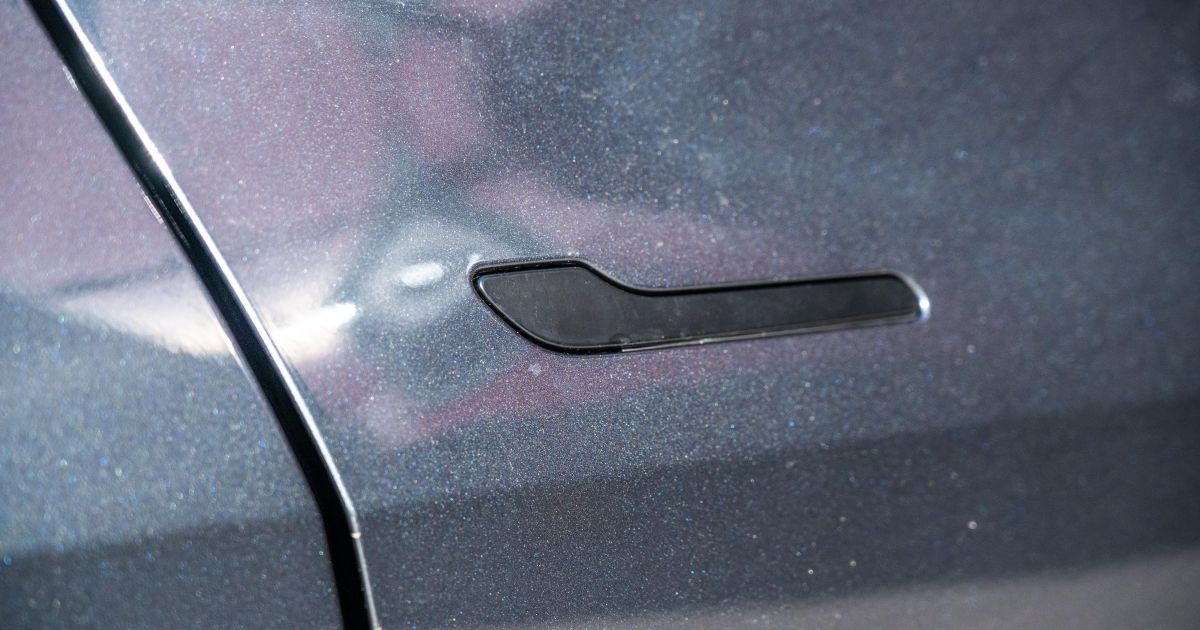
Europe Advances Electronic Door Handle Safety Rules After Fatal Trappings in Crashes
Trapped in a fiery wreck, unable to pop the door from inside or out—that nightmare became deadly reality for several Europeans, thrusting electronic door handles into the regulatory spotlight. Now, the EU is racing to mandate foolproof access mechanisms, as automakers like Tesla face mounting scrutiny over sleek designs that prioritize aesthetics over escape.
The push gained steam in May 2025 when the United Nations Economic Commission for Europe (UNECE) Working Party on Passive Safety convened to tackle electronic door failures. Flush-fitting, power-operated handles—common on EVs for their aerodynamic edge—can glitch post-collision, submerging vehicles or locking in flames. In the Netherlands, the RDW (Vehicle Authority) has certified Tesla models but now flags gaps in current regs, confirming new rules are “in the works” to ensure doors unlock under all crash scenarios. Euro NCAP, the bloc’s crash-testing benchmark, and UNECE are prioritizing this, with a spokesperson noting: “Where current regulations fall short due to new door concepts, this issue is being addressed within the respective committees.”
Tragedies underscore the urgency. On September 7, 2025, a Tesla Model S in Germany slammed into a barrier, erupted in flames, and claimed the lives of the driver and two children—witnesses couldn’t pry open the doors amid the inferno. Dutch authorities link multiple drownings to submerged cars where handles wouldn’t deploy, per the European Transport Safety Council (ETSC). “This issue is no longer theoretical. People have died because they couldn’t escape their vehicles in time,” ETSC Executive Director Antonio Avenoso warned, calling for swift recalls and updated rules covering all electronic doors. Regulators in Korea and Germany echo these alarms, insisting handles must activate for rescuers at all times.
The backdrop traces to EV innovation: Traditional pull-handles give way to motorized pop-outs for better range and style, but power loss in wrecks strands occupants. Tesla’s designs, retracting into the body, drew fire after U.S. complaints of kids locked inside malfunctioning Model Ys—prompting NHTSA probes. China, ahead of the curve, eyes a July 2027 ban on flush handles for new cars following similar burn-trap fatalities. Europe’s draft regs, potentially via UNECE harmonization, would require manual overrides, battery-independent releases, and external rescue pulls—mirroring post-crash protocols already mandated for some luxury models.
Safety advocates applaud the momentum. “UNECE discussions are welcome, but the pace must be urgent. Europe cannot wait years while thousands of cars with these systems remain on the roads,” Avenoso urged, pushing for immediate retrofits on high-risk fleets. Automaker responses vary: Tesla touts software fixes for handle deployment, while Euro NCAP tests now penalize non-compliant designs, docking stars from EVs like the Model 3. Public outcry simmers on forums, with one viral X post lamenting: “Innovation shouldn’t mean innovation in body counts—fix the doors before more families pay the price.”
For U.S. readers, this transatlantic alert rings familiar bells. Economically, it spotlights EV supply chain ties—Europe’s rules could hike costs for U.S.-bound Teslas and Audis, nudging up sticker prices amid a $50 billion green auto push. Politically, it pressures NHTSA to accelerate its Model Y inquiry, aligning with Biden-era safety mandates that already demand child-lock transparency. Tech angles intrigue: Carmakers eye haptic feedback or biometric unlocks as fixes, but skeptics warn of over-reliance on gadgets in blackouts or water.
Lifestyle stakes cut deep—commuters in flood-prone areas or fire-risk zones rethink flashy EVs for rugged reliability, while parents drill escape drills like fire safety 101. Sports fans might analogize: It’s the NFL helmet debate redux—style evolves, but when it fails in crunch time, lives hang in the balance. Cross-border, American road-trippers importing Euro-spec cars could dodge fines, but resale values dip for non-compliant rides.
As committees grind toward consensus, expect prototypes by mid-2026, with phased-in mandates for new sales. RDW hints at broader EV audits, potentially reshaping door tech from Lisbon to Luxembourg.
In summary, Europe’s electronic door handle crackdown, born from heartbreaking losses, signals a broader reckoning for EV safety. With global eyes watching, these regs promise to safeguard escapes without stifling sleek innovation—potentially saving hundreds of lives annually as adoption surges.
By Sam Michael
Follow and subscribe to us for push notifications on the latest automotive safety and EV updates.
electronic door handle safety, EU car door regulations 2025, Tesla door handle deaths, UNECE passive safety rules, Euro NCAP door access, flush door handles ban, EV crash escape mechanisms, automotive rescue protocols, vehicle door failures Europe, global EV safety standards