
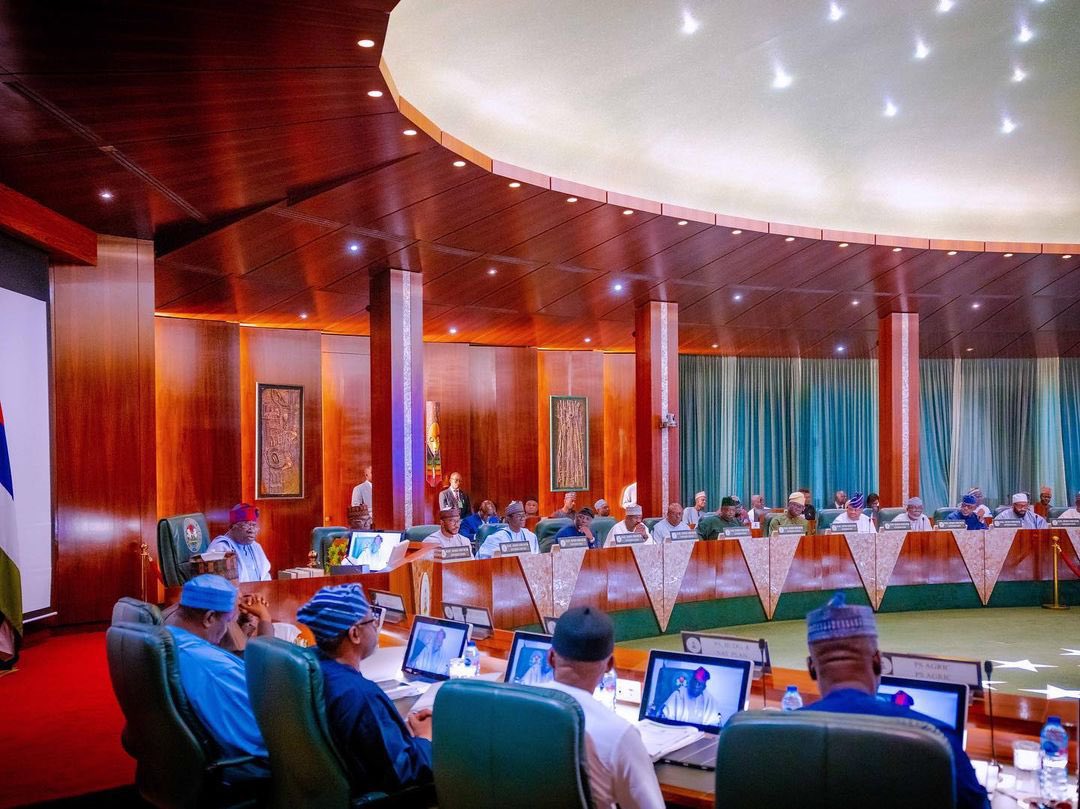
In a bustling State House session that could redefine Nigeria’s digital landscape, imagine remote villages in the Niger Delta or dusty plains of the North suddenly buzzing with 4G signals—farmers checking crop prices, kids streaming lessons, and families video-calling across continents. That’s the promise behind today’s bombshell approval, as the Federal Executive Council (FEC) unleashes a tower-building blitz to drag 23 million underserved Nigerians into the digital age.
The FEC telecom towers approval, 4000 telecom towers Nigeria, and rural digital access Nigeria have dominated headlines, igniting hopes for a connectivity revolution amid the country’s ambitious 3 Million Technical Talent drive. On December 3, 2025, President Bola Tinubu’s FEC nodded yes to erecting 4,000 telecom towers in underserved hotspots, a joint push by the Ministries of Communications, Innovation and Digital Economy, and Finance. Minister of Information and National Orientation Mohammed Idris, briefing reporters post-meeting, hailed it as a game-changer: “About 4,000 towers will be erected in underserved communities… This will help in fighting insecurity and enhancing commerce and economic activity amongst the people of Nigeria.” The rollout, tied to service centers for agricultural mechanization and digital economy hubs, targets those 23 million Nigerians—roughly 10% of the population—trapped in “digital deserts” where basic voice and data signals fizzle out.
This isn’t pie-in-the-sky dreaming; it’s the latest salvo in Nigeria’s broadband blitz. Back in July, the FEC inked a World Bank-backed blueprint for 90,000 kilometers of open-access fiber optic cables—the largest in any developing nation—paired with these towers to connect up to 20 million souls. Earlier nods included 7,000 towers for 5G rollout in March and the Nigeria Universal Communication Access Project in February, aiming to wire 21 million across 4,834 remote spots. Communications Minister Dr. Bosun Tijani, who championed the memo, framed it at the Digital Nigeria International Conference as a “flagship component” of the National Assembly-approved borrowing plan, underscoring Tinubu’s Renewed Hope Agenda for inclusive growth. The towers will prioritize rural and peri-urban zones, where coverage lags at under 50% in some states, per NITDA data—think no-signal blackouts during bandit raids or market slumps from offline traders.
Why now? Nigeria’s digital economy is exploding—telecoms contribute 13% to GDP, with mobile money transactions hitting N60 trillion last year—but the urban-rural chasm yawns wide. Only 55% of Nigerians have broadband access, versus 90% in South Africa, stunting e-commerce booms and telemedicine dreams. These towers, equipped for 4G/5G, promise to flip that script: Faster uploads for farmers selling via apps like FarmCrowdy, real-time alerts for security ops in the Northeast, and seamless schooling for kids in Kaduna’s hinterlands. Tied to agromech centers, they’ll supercharge year-round farming with IoT sensors tracking soil and weather—potentially boosting yields by 20-30%, experts estimate.
Stakeholders are buzzing with guarded optimism. Dr. Tijani tweeted post-approval: “This bridges the gap, empowering the underserved to thrive in our digital economy.” The Nigerian Communications Commission (NCC) and tower giants like IHS Towers and American Tower—already hosting 40,000 masts nationwide—pledged swift rollout, with build-to-suit deals for MTN and Airtel accelerating deployment. On X, reactions lit up: Tech influencer @TechCabal raved, “4K towers? Game over for Nigeria’s digital divide—rural fintech about to explode! #FECTowers,” snagging 5K likes, while rural advocate @FarmersVoiceNG cautioned, “Great start, but power grids must follow—solar backups or bust.” World Bank reps lauded the synergy with Project Bridge, but flagged timelines: Full fiber-tower integration could take 18-24 months, weather and funding permitting.
For everyday Nigerians—and the global diaspora eyeing investments—this FEC telecom towers approval and 4000 telecom towers Nigeria rollout ripple far beyond borders. Economically, it could inject $5-7 billion into GDP over five years via e-commerce and remote work, per McKinsey models, luring FDI from Silicon Valley to Shenzhen while juicing remittances (N10 trillion annually) through seamless apps. In the U.S., where 1.5 million Nigerian-Americans remit billions home, it means smoother family ties and investment portals—think Chicago entrepreneurs scouting Lagos startups via lag-free video. Lifestyle lift? Village moms in Enugu accessing health apps for vaccinations, or Delta youth launching TikTok side hustles, curbing urban migration that strains megacities like Abuja. Politically, it’s a win for Tinubu’s administration amid 2027 polls, countering youth unrest (#EndBadGovernance echoes) with tangible tech jobs—aiming for 500,000 in digital skills via the 3MTT program. Tech-wise, it catapults Nigeria toward Africa’s 5G leader, but challenges loom: Grid instability (only 4,000 MW reliable power) demands off-grid solutions, and cyber risks spike with wider access.
As cranes rise in forgotten hamlets, the FEC’s bold stroke spotlights a truth: Connectivity isn’t luxury—it’s lifeline. Will these towers truly tame the divide, or tangle in red tape? From Aso Rock to the savanna, the signal’s strengthening.
In summing up, the FEC’s 4000 telecom towers Nigeria and rural digital access Nigeria push marks a pivotal leap toward inclusive broadband, blending fiber dreams with tower muscle. Looking ahead, expect phased rollouts by mid-2026, job surges in construction and tech, and a ripple of innovation—if execution matches ambition, Nigeria’s digital dawn could outshine the continent.
Sam Michael
Follow us for real-time updates and subscribe to push notifications—stay ahead of the stories that matter.