
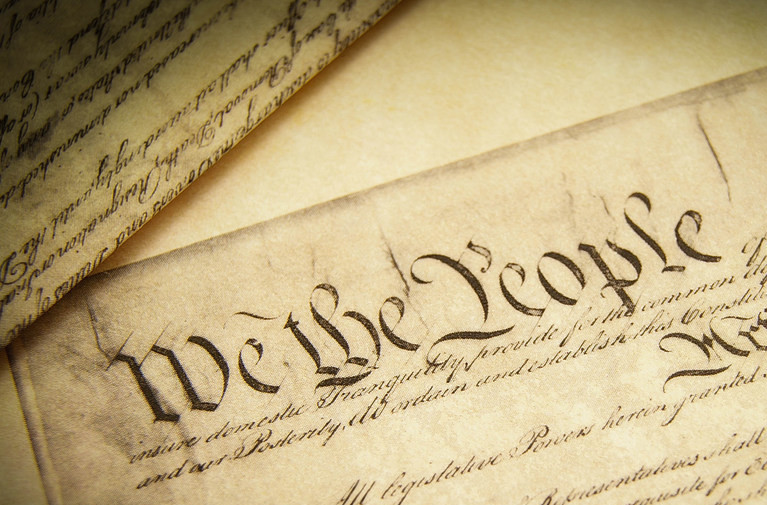
How Originalism Went from ‘Fringe’ Theory to Supreme Court Credo
Imagine a legal philosophy once mocked as the hobbyhorse of conservative ideologues now dictating rulings on abortion, guns, and presidential power. That’s the improbable ascent of originalism—from academic outlier in the 1970s to the animating force behind a 6-3 conservative Supreme Court supermajority by the mid-2020s.
What Is Originalism, Anyway?
At its core, originalism insists that the Constitution’s meaning is fixed at the moment of its adoption—typically the 1787 ratification for the original text or 1868 for the 14th Amendment. Judges must uncover that “original public meaning” through historical texts, dictionaries, and practices from the era, rather than letting societal values evolve the document’s scope. Proponents argue it tethers judges to democratic will, preventing “activist” rulings that invent rights.
But originalism isn’t monolithic. Early versions fixated on the framers’ subjective “intentions,” while modern “New Originalism” emphasizes objective public understanding. There’s even a distinction between “interpretation” (decoding fixed text) and “construction” (applying vague terms via doctrine), allowing some flexibility for ambiguities like “due process.”
The Fringe Roots: A Backlash Against the Warren Court
Originalism didn’t spring from neutral scholarship; it was born in the fires of 1970s conservative discontent. The Warren Court (1953–1969), led by Chief Justice Earl Warren, unleashed a torrent of liberal triumphs: desegregating schools in Brown v. Board of Education (1954), striking down interracial marriage bans in Loving v. Virginia (1967), and inventing a right to privacy in Griswold v. Connecticut (1965). These decisions, conservatives charged, twisted the Constitution to impose elite values on an unwilling nation.
Enter Robert Bork. In a 1971 article, the Yale professor lambasted “neutral principles” lacking textual or historical roots, planting seeds for originalism as a bulwark against judicial overreach. By 1985, Reagan’s Attorney General Edwin Meese III turbocharged it, declaring in a fiery speech that judges must hew to “the intentions of the framers” or risk tyranny. At the time, most scholars dismissed it as fringe—impractical, given the framers’ own debates and the Constitution’s deliberate vagueness, as James Madison noted in Federalist No. 37 about terms needing “liquidation” through time and practice.
Scalia’s Spotlight: From Theory to Judicial Arsenal
The theory’s breakout star was Antonin Scalia, appointed to the Supreme Court in 1986. Scalia rebranded it “original meaning” to dodge intentions’ pitfalls, wielding it like a scalpel in opinions. His 2008 masterpiece, District of Columbia v. Heller, unearthed 18th-century linguistics to affirm an individual right to bear arms, ignoring the amendment’s militia clause—a feat of “law office history,” critics sneered, cherry-picking sources to fit modern gun politics.
Behind the scenes, the Federalist Society—a network of conservative lawyers founded in 1982—provided the infrastructure. It vetted nominees, funded scholarship, and allied with think tanks like the Heritage Foundation and the NRA. By the George W. Bush era, originalists like John Roberts (chief justice, 2005) and Samuel Alito (2006) solidified a slim majority, but it was Donald Trump’s 2017–2021 term that flooded the bench: Neil Gorsuch (2017), Brett Kavanaugh (2018), and Amy Coney Barrett (2020), all Federalist alums swearing allegiance to Scalia’s creed.
The Power Pivot: 2022 and Beyond
With a lock on the Court, originalism exploded in the 2022 term. Dobbs v. Jackson Women’s Health Organization axed Roe v. Wade‘s abortion right, deeming it absent from founding-era history—despite women’s limited roles then. New York State Rifle & Pistol Association v. Bruen demolished modern gun restrictions unless mirroring colonial analogs, upending a century of regulation. These weren’t anomalies; they marked originalism’s entrenchment as the Court’s default for the Second, 14th, and other amendments.
By 2024’s United States v. Rahimi, even nuances emerged: The Court upheld a gun ban for domestic abusers, citing historical analogues, but Justices Brett Kavanaugh and Neil Gorsuch doubled down: “History, not policy,” must rule. Critics like historian Jack Rakove decry this as “ideological cherry-picking,” ignoring how Founders saw rights as regulable for the common good, not absolute shields.
The Backlash: Not So ‘Original’ After All?
Detractors, including most constitutional historians, argue originalism is less history lesson than partisan playbook. It struggles with the “Brown problem”: How to justify desegregating schools when 1787 (or 1868) understandings tolerated slavery? Proponents finesse this by invoking broader principles, but skeptics see hypocrisy—evolving when convenient, freezing when not.
As H. Jefferson Powell revealed in 1985, even the framers rejected rigid intent-based reading, favoring fluid interpretation. Today, it’s accused of enabling a “new constitutionalism” that rolls back Warren-era gains while cloaking conservative outcomes in 18th-century garb.
Entrenched, But Not Unchallenged
By 2025, originalism isn’t just credo—it’s canon, shaping everything from religious liberty to the administrative state. Yet with public trust in the Court at historic lows and calls for reform rising, its grip invites scrutiny. As Justice Barrett put it: The Constitution’s meaning “doesn’t change.” Whether that freezes progress or restores fidelity depends on whose history you trust. For now, the Court marches to an 18th-century drumbeat, remaking America one founding fact at a time.