
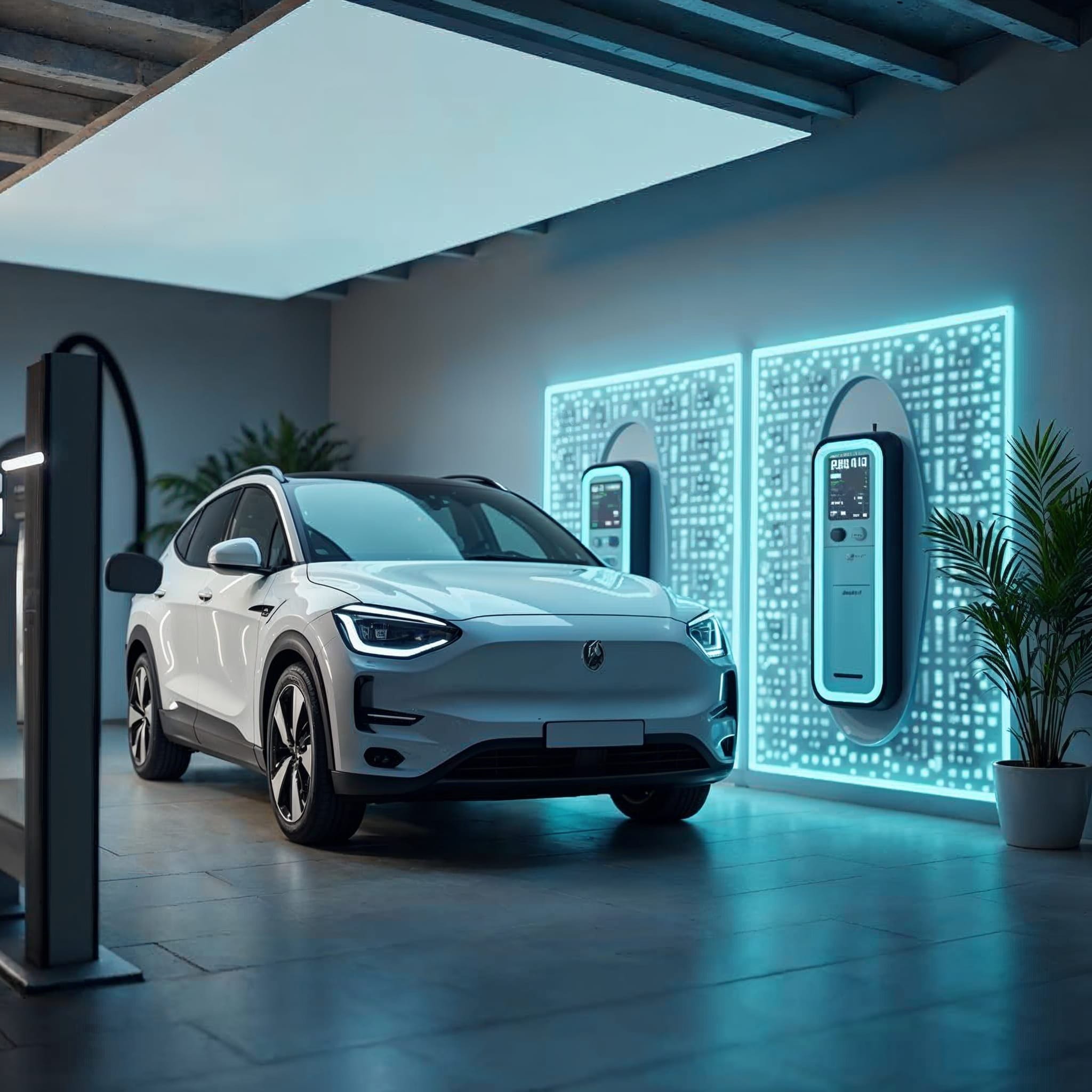
The Ultimate Guide to Plug-in Hybrid Electric Vehicle Charging at Home
As the automotive world continues its exciting shift towards electrification, more and more drivers are discovering the incredible benefits of Plug-in Hybrid Electric Vehicles (PHEVs). These innovative vehicles offer the best of both worlds: the ability to run on electric power for shorter trips, significantly reducing fuel consumption and emissions, combined with the reassuring flexibility of a gasoline engine for longer journeys. However, to truly unlock the potential of your PHEV and maximize its electric range, a reliable and efficient home charging station is not just a luxury, but a fundamental necessity.
Imagine waking up every morning with a fully charged battery, ready to tackle your daily commute entirely on electricity. This convenience is the cornerstone of the PHEV ownership experience. Without a dedicated home charging setup, you might find yourself relying more on public charging infrastructure or, worse, defaulting to gasoline power, which negates many of the environmental and economic advantages you bought the PHEV for in the first place. Choosing the right home charging station can seem daunting, with a myriad of options, technical specifications, and installation considerations. This comprehensive guide aims to demystify the process, providing you with all the information you need to select the best home charging solution for your specific PHEV and lifestyle, ensuring you get the most out of your electrified driving experience.
From understanding the different charging levels and connector types to exploring smart features and navigating installation complexities, we will walk you through every critical decision point. By the end of this article, you will be equipped with the knowledge to make an informed choice, transforming your garage or driveway into a personal, efficient, and cost-effective fueling station for your plug-in hybrid.
Understanding PHEV Charging Needs: Why a Dedicated Home Charger Matters
Plug-in Hybrid Electric Vehicles bridge the gap between traditional gasoline cars and Battery Electric Vehicles (BEVs). They feature a conventional internal combustion engine alongside an electric motor and a battery pack that can be recharged by plugging into an external power source. This duality offers significant advantages, primarily the ability to complete many daily drives using only electricity, leading to substantial fuel savings and reduced tailpipe emissions. However, to fully realize these benefits, consistent and convenient charging is paramount. This is where a dedicated home charging station becomes indispensable.
The Fundamentals of PHEV Charging
Unlike a traditional hybrid, a PHEV’s battery is designed to provide a significant all-electric range, typically between 15 and 50 miles, before the gasoline engine kicks in. Maximizing this electric range means frequent charging. If you are constantly running on gasoline because charging is inconvenient or too slow, you are essentially driving a more expensive, heavier hybrid without leveraging its core advantage. A home charging station provides the ultimate convenience: plug in overnight, and wake up to a full electric tank.
The key differentiator for PHEVs compared to BEVs is their typically smaller battery pack. While a BEV might have a battery capacity ranging from 40 kWh to over 100 kWh, a PHEV usually operates with a battery between 8 kWh and 20 kWh. This smaller battery means two things:
- Shorter Charging Times: PHEVs generally require less time to fully charge compared to BEVs, even with lower power charging setups.
- Potentially Sufficient Level 1 Charging: For some PHEV owners, especially those with shorter commutes and less demanding driving habits, the slower Level 1 charging might actually be adequate.
However, “adequate” does not always mean “optimal.” A dedicated home charger, particularly a Level 2 unit, transforms the PHEV ownership experience from good to exceptional. It ensures that your vehicle is always topped up, ready to provide its maximum electric range, thereby saving you money on gasoline and contributing more effectively to a cleaner environment.
Level 1 vs. Level 2 Charging: What’s Right for Your PHEV?
When it comes to charging your PHEV at home, you essentially have two primary options: Level 1 and Level 2 charging. Understanding the differences between these two levels is crucial for making an informed decision that aligns with your lifestyle, vehicle, and budget.
Level 1 Charging: The Basics
Level 1 charging is the simplest and most accessible form of EV charging. It utilizes a standard 120-volt AC outlet (the same type you use for most household appliances) and typically delivers about 1.4 to 1.9 kilowatts (kW) of power. All PHEVs come with a portable Level 1 charging cord that plugs directly into a standard wall outlet. This means you have a charging solution from day one, without any additional investment in charging equipment or electrical upgrades.
Pros of Level 1 Charging:
- Cost-Effective: No extra equipment purchase beyond what comes with the car, and no installation costs.
- Universal Accessibility: Can be used anywhere there is a standard 120V outlet, offering great flexibility.
- Simplicity: Truly plug-and-play, requiring no technical knowledge.
Cons of Level 1 Charging:
- Slow Charging Speed: This is the biggest drawback. Level 1 charging typically adds only 3 to 5 miles of electric range per hour. For PHEVs with larger batteries, a full charge can take 8 to 12 hours or even longer.
- Limited Utility for Higher Mileage: If your daily electric driving exceeds 20-30 miles, Level 1 might not fully replenish your battery overnight, forcing you to use gasoline sooner.
- Not Future-Proof: As PHEV batteries grow and BEVs become more common, Level 1 charging is increasingly seen as a temporary or backup solution.
Level 2 Charging: The Upgrade
Level 2 charging uses a 240-volt AC power source, similar to what powers large appliances like electric clothes dryers or ovens. These chargers, also known as Electric Vehicle Supply Equipment (EVSE), deliver significantly more power, typically ranging from 3.3 kW to 19.2 kW, though most residential Level 2 chargers for PHEVs will operate between 3.7 kW and 11.5 kW. A Level 2 charger requires professional installation of a dedicated 240-volt circuit and a specific NEMA outlet (commonly a NEMA 14-50 or NEMA 6-50) or can be hardwired directly.
Pros of Level 2 Charging:
- Much Faster Charging: Level 2 chargers can add 12 to 80 miles of electric range per hour, depending on the charger’s power output and the vehicle’s onboard charger capacity. For most PHEVs, a full charge can be achieved in 2 to 4 hours.
- Maximizes Electric Range: Ensures your PHEV battery is fully charged daily, maximizing your electric driving and fuel savings.
- Convenience: Quicker top-ups mean less waiting and more driving on electricity.
- Future-Proofing: A Level 2 charger is a sound investment, as it will also be suitable if you eventually upgrade to a full Battery Electric Vehicle (BEV).
- Advanced Features: Many Level 2 chargers come with smart features like Wi-Fi connectivity, app control, scheduling, and energy usage tracking.
Cons of Level 2 Charging:
- Higher Upfront Cost: Requires purchasing a dedicated EVSE unit (typically $300 to $800) and professional installation, which can range from $500 to $2,000 or more depending on your home’s electrical setup.
- Requires Electrical Upgrade: May necessitate an upgrade to your home’s electrical panel if it lacks sufficient capacity, adding to the cost.
Factors Influencing Your Choice
Deciding between Level 1 and Level 2 for your PHEV involves weighing several factors:
- Daily Driving Habits: How many electric miles do you drive per day? If it’s consistently less than 20-25 miles, and you have ample overnight charging time, Level 1 might suffice. If you regularly exceed that, or want to ensure a full charge in a few hours, Level 2 is superior.
- PHEV Battery Size: Larger PHEV batteries (e.g., 15-20 kWh) benefit significantly more from Level 2 charging, as Level 1 can take a very long time to fully charge them. Smaller batteries (e.g., 8-10 kWh) might be perfectly fine with Level 1 overnight.
- Budget: Consider the total cost, including the charger and installation. If budget is extremely tight, Level 1 is the no-cost entry point.
- Home Electrical Capacity: Does your home have an existing 240V outlet available in a convenient location, or sufficient space in your electrical panel for a new circuit?
- Future Plans: Do you anticipate switching to a full BEV in the coming years? If so, investing in Level 2 now makes more sense.
For most PHEV owners, a Level 2 charger offers the ideal balance of speed, convenience, and efficiency, significantly enhancing the ownership experience. While Level 1 is a viable fallback or a sufficient solution for very specific, low-demand scenarios, Level 2 truly unlocks the full potential of your plug-in hybrid.
Key Features to Look for in a Home Charging Station
Once you have decided that a Level 2 home charging station is the right fit for your PHEV, the next step is to navigate the diverse market of available units. Not all chargers are created equal, and understanding the key features will help you choose a device that perfectly matches your needs and provides lasting value.
Charging Speed and Amperage
The speed at which your PHEV charges is primarily determined by two factors: the amperage of the charging station (EVSE) and the maximum charging capacity of your vehicle’s onboard charger. Most residential Level 2 chargers offer various amperage settings, commonly ranging from 16 amps (A) to 48A.
- 16A (3.8 kW): This is usually the minimum for Level 2 and might be found in older or entry-level units. It adds about 12-15 miles of range per hour.
- 32A (7.7 kW): A very common and popular choice, adding approximately 25-30 miles of range per hour. This is often sufficient for fully charging most PHEVs in 2-3 hours.
- 40A-48A (9.6 kW-11.5 kW): These higher-powered units offer faster charging, adding 30-45+ miles of range per hour. While many PHEVs cannot fully utilize this much power (as their onboard chargers are often capped at 3.3 kW to 7.7 kW), purchasing a higher amperage charger can be a form of future-proofing if you plan to eventually get a full BEV with a larger battery and faster charging capability.
Always check your PHEV’s specifications to determine its maximum AC charging rate. There is no benefit to buying a 48A charger if your car can only accept 3.3 kW (approximately 16A), other than potential future use for a different vehicle. A good balance for most PHEV owners is a 32A or 40A charger, as it covers the vast majority of PHEV charging capabilities and offers some headroom.
Connector Type: J1772 Standard
For PHEVs in North America (and most non-Tesla EVs globally), the standard charging connector is the J1772 (also known as the SAE J1772 or Type 1 connector). This is a universal connector for Level 1 and Level 2 AC charging. Virtually every home charging station sold will come with a J1772 plug. Tesla vehicles use a proprietary connector, but they typically include an adapter to use J1772 chargers, and third-party J1772 chargers are also available for Teslas with an adapter. Rest assured, if you are buying a charger for a non-Tesla PHEV, a J1772 connector is what you need and what you will get.
Cord Length and Durability
Consider the practicalities of where you park your PHEV and where your charging station will be installed. Standard charging cables are typically 18 to 25 feet long. A longer cord (e.g., 25 feet) offers more flexibility, especially if your parking spot isn’t always consistent or if you share a driveway. Ensure the cable is robust, flexible even in cold weather, and durable enough to withstand daily use and minor accidental tugs. High-quality cables are a hallmark of a good EVSE.
Smart Charging Features and Connectivity
Many modern Level 2 charging stations are “smart” chargers, equipped with Wi-Fi or Bluetooth connectivity. These features significantly enhance convenience and can lead to cost savings.
- Smartphone App Control: Allows you to start, stop, and monitor charging sessions from your phone.
- Scheduling: You can schedule charging to occur during off-peak utility hours, taking advantage of lower electricity rates. This is one of the most significant cost-saving features.
- Energy Monitoring: Track your energy consumption and charging costs over time, helping you understand your vehicle’s efficiency and manage your budget.
- Over-the-Air Updates: Smart chargers can receive software updates, improving functionality and adding new features.
- Integration with Home Energy Management Systems: Some advanced units can integrate with smart home platforms or solar energy systems, optimizing charging based on energy production or grid demand.
- Load Management: For homes with limited electrical capacity or multiple EVs, some smart chargers offer load sharing, distributing power efficiently between vehicles or other household appliances to prevent circuit overloads.
While not strictly necessary for charging, smart features often provide excellent value, offering convenience, cost savings, and insights into your energy usage.
Safety Certifications and Build Quality
Safety should be a top priority. Look for chargers that have been certified by recognized testing laboratories such in North America by Underwriters Laboratories (UL) or Intertek (ETL). These certifications ensure the device meets stringent safety standards for electrical components, fire safety, and overall construction. A robust, well-built enclosure (often made of durable plastic or metal) is also important for longevity, especially if the unit is installed outdoors.
Outdoor Rating and Weather Resistance
If you plan to install your charging station outdoors, it absolutely must have an appropriate NEMA enclosure rating. NEMA 3R or NEMA 4 ratings indicate that the unit is designed to withstand rain, snow, dust, and other environmental elements. Most modern Level 2 chargers are built for both indoor and outdoor use, but always double-check the product specifications to ensure it meets your installation environment’s requirements.
By carefully evaluating these key features, you can choose a home charging station that is not only compatible with your PHEV but also robust, efficient, safe, and convenient, providing years of reliable service.
Installation Considerations and Electrical Requirements
The physical installation of your home charging station is a critical step that requires careful planning and, in most cases, professional expertise. Understanding the electrical requirements and the installation process will help you prepare your home and avoid costly surprises.
Assessing Your Home’s Electrical Panel
A Level 2 charger requires a dedicated 240-volt circuit. Before purchasing a charger, it is highly recommended to have a licensed electrician assess your home’s electrical panel (breaker box). The electrician will determine if your panel has:
- Sufficient Available Breaker Space: A Level 2 charger typically needs a double-pole circuit breaker, which occupies two slots in your panel.
- Adequate Amperage Capacity: The panel itself must have enough overall capacity (e.g., 100-amp, 200-amp service) to handle the additional load of the EV charger without overloading your system. A 32A charger, for instance, typically requires a 40A circuit breaker, which means it will draw up to 32 amps continuously. Your main panel must have enough reserve capacity to safely supply this.
In older homes or those with 100-amp service, a panel upgrade might be necessary if you plan to install a high-powered Level 2 charger. This can significantly add to the installation cost, so it is vital to get a professional assessment early in your planning process.
Professional Installation: Why It’s Crucial
While some chargers are “plug-in” units (connecting to a NEMA 14-50 or 6-50 outlet) and seem DIY-friendly, the installation of the dedicated 240-volt circuit and the outlet itself is complex and carries significant safety risks if not done correctly. Moreover, many charging stations can also be “hardwired,” meaning they are directly connected to your home’s electrical system without an outlet.
Here’s why hiring a licensed and qualified electrician is not just recommended, but often mandatory:
- Safety: Working with high-voltage electricity is dangerous. An improperly installed circuit can lead to electrical fires, shocks, and damage to your home or vehicle.
- Code Compliance: Electrical installations must adhere to strict local and national electrical codes (e.g., National Electrical Code or NEC in the US). A licensed electrician is knowledgeable about these codes and ensures your installation is compliant, which is crucial for safety and for obtaining necessary permits.
- Warranty Preservation: Many EVSE manufacturers require professional installation to maintain the product warranty.
- Proper Sizing: An electrician will correctly size the circuit breaker and wiring gauge for your chosen charger’s amperage, preventing overheating and ensuring efficient operation.
- Optimal Location: They can advise on the best placement for the charger, considering cable length, weather protection, and accessibility.
Permits and Regulations
Installing a dedicated 240-volt circuit and an EVSE typically requires an electrical permit from your local municipality. This is a common requirement to ensure that the work is done safely and according to code. Your electrician should handle the permit application process and ensure that the installation passes inspection. Skipping permits can lead to fines, difficulties with insurance claims, and complications when selling your home.
Choosing Between Plug-in and Hardwired Installation
You will often encounter chargers that are either designed for plug-in installation (using a NEMA 14-50 or 6-50 outlet) or for hardwired installation.
- Plug-in Installation: This is generally more flexible. If you move, you can unplug the charger and take it with you. However, it requires a specific 240V outlet to be installed. A NEMA 14-50 outlet is most common and is also used for RVs, making it a versatile option if you ever need that outlet for other purposes.
- Hardwired Installation: This offers a cleaner look as there is no visible outlet. It also allows for higher amperage chargers (above 50A, where plug-in options become less common) and may be preferred for outdoor installations where a sealed connection is desired. However, it means the charger is permanently fixed in place.
Your electrician can help you decide which option is best for your situation, considering your specific charger model and future needs. Regardless of the type, remember that the goal is a safe, reliable, and compliant installation that supports years of convenient PHEV charging.
Cost Analysis: Charger, Installation, and Running Costs
Understanding the full financial picture is essential when investing in a home charging station for your PHEV. This involves looking beyond just the sticker price of the charger itself to include installation expenses, ongoing electricity costs, and potential financial incentives.
Upfront Charger Cost
The price of a Level 2 home charging station can vary significantly based on its features, brand, and power output. Basic 16-amp or 32-amp units with minimal smart features might start around $300-$500. More advanced 40-amp or 48-amp chargers with robust smart connectivity, energy monitoring, and enhanced durability can range from $500 to $800 or more. While it is tempting to go for the cheapest option, remember that a slightly higher investment in a more reliable or feature-rich unit can provide better long-term value and convenience.
Installation Expenses
This is often the most variable and potentially significant part of the overall cost. Installation costs depend on several factors:
- Distance from Electrical Panel: The farther the charger is from your main electrical panel, the more conduit and wiring are required, increasing labor and material costs.
- Home’s Electrical Capacity: If your home’s electrical panel needs an upgrade to accommodate the new 240V circuit, this can add $1,000 to $3,000 (or more) to the total cost.
- Type of Installation: A simple plug-in installation where an existing suitable 240V outlet is already available will be less expensive than a hardwired installation requiring a new circuit run through walls and ceilings.
- Geographic Location: Labor rates for electricians vary by region.
- Permit Fees: Local permit fees can add another $50-$200.
On average, expect installation costs for a Level 2 charger to range from $500 to $2,000. It is crucial to get multiple quotes from licensed electricians to compare prices and ensure they understand the specific requirements for EVSE installation.
Electricity Costs
While home charging is generally much cheaper than gasoline, it does add to your electricity bill. The cost depends on your local electricity rates and how much you drive on electric power. To calculate the cost, you need to know:
- Battery Capacity: For example, a PHEV with a 15 kWh battery.
- Cost per Kilowatt-hour (kWh): Check your electricity bill (e.g., $0.15/kWh).
Example: To fully charge a 15 kWh battery at $0.15/kWh, it would cost 15 kWh * $0.15/kWh = $2.25. If this gives you 35 miles of electric range, your cost per mile is $2.25 / 35 miles = approx. $0.064 per mile. Compare this to gasoline at $3.50/gallon with a 30 MPG car: ($3.50 / 30 miles) = approx. $0.117 per mile. This demonstrates the significant savings over time.
Many utility companies offer Time-of-Use (TOU) rates, where electricity is cheaper during off-peak hours (e.g., overnight). A smart charger’s scheduling feature allows you to take full advantage of these lower rates, dramatically reducing your running costs.
Potential Incentives and Tax Credits
The cost of home charging equipment and installation can often be offset by various incentives:
- Federal Tax Credits: In the United States, there has historically been a federal tax credit for alternative fuel vehicle refueling property, which includes EV charging equipment. This credit can cover a percentage of the cost of the charger and installation, up to a certain maximum. It is important to consult current IRS guidelines or a tax professional, as these credits can change.
- State and Local Programs: Many states, counties, and even cities offer their own rebates, grants, or tax incentives for EVSE purchases and installations. These programs are often administered by local government agencies or environmental departments.
- Utility Company Rebates: Your local electric utility might offer rebates for installing a Level 2 charger, sometimes tied to participating in smart charging or demand response programs.
Researching these programs is highly recommended, as they can significantly reduce your net out-of-pocket expenses. Websites like the Alternative Fuels Data Center (AFDC) from the U.S. Department of Energy are excellent resources for finding current incentives in your area.
By considering all these cost factors, you can create a realistic budget and make a financially sound decision for your PHEV home charging setup, ensuring long-term savings and convenience.
Top Brands and Models: A Brief Overview
The market for home EV charging stations has matured considerably, offering a wide array of reliable and feature-rich options. While specific models evolve, certain brands have established themselves as leaders in terms of quality, performance, and customer support. It is important to note that specific recommendations can change, but generally, these brands offer excellent choices for PHEV owners.
Popular Level 2 Chargers for PHEVs
When selecting a charger, remember to prioritize units with the J1772 connector, adequate amperage for your PHEV’s onboard charger, and any smart features you deem essential.
- ChargePoint Home Flex:
- Key Features: Highly flexible amperage settings (16A to 50A), allowing customization to your home’s electrical capacity. Excellent smart features including Wi-Fi connectivity, app control, scheduling, energy tracking, and reminders. Known for its sleek design and robust build.
- Why it’s good for PHEVs: Its flexibility means it can match a PHEV’s smaller charging needs perfectly, while also future-proofing for a full BEV.
- Enel X Way JuiceBox 40 / 48:
- Key Features: Robust smart features, including Wi-Fi connectivity, precise energy metering, scheduling, and notifications via the JuiceNet app. Available in various amperage ratings, typically 40A or 48A. Good for utility rebates due to smart grid capabilities.
- Why it’s good for PHEVs: Offers fast charging for PHEVs and excellent smart energy management, helping manage electricity costs by charging during off-peak hours.
- Wallbox Pulsar Plus:
- Key Features: Compact and stylish design, making it less intrusive. Adjustable power output from 16A up to 48A (depending on model). Features Wi-Fi and Bluetooth connectivity, allowing for app control, scheduling, and power management features. Some models offer power sharing for multiple EVs.
- Why it’s good for PHEVs: Its small footprint is appealing, and its adjustable power output makes it versatile for various PHEV battery sizes.
- Grizzl-E Smart / Classic:
- Key Features: Known for its rugged construction and durability, often touted as “built like a tank.” The Classic version is a non-smart, basic but reliable charger. The Smart version adds Wi-Fi connectivity and app control. Available in 40A.
- Why it’s good for PHEVs: If you prioritize durability and reliability, especially for outdoor installation in harsh climates, Grizzl-E is a strong contender. The Classic offers a no-frills, robust solution.
- Tesla Wall Connector (with J1772 adapter):
- Key Features: While primarily designed for Tesla vehicles, the Tesla Wall Connector is a very powerful and aesthetically pleasing charger. With a third-party J1772 adapter, it can be used to charge non-Tesla PHEVs. Offers high amperage (up to 48A) and load sharing capabilities.
- Why it’s good for PHEVs: If you already have a Tesla or plan to get one, or if you simply appreciate the design and reliability, it can be a viable option with an adapter. However, the adapter adds an extra step and cost.
When making your final selection, read reviews, compare features, and consider the brand’s reputation for customer service. Your chosen charger will be a long-term fixture in your home, so a reliable and well-supported unit is key.
Comparative Analysis of Popular PHEV Charging Options
To help solidify your understanding of the different charging levels and what they offer, here are two tables comparing key aspects of Level 1 versus Level 2 charging, and a general comparison of common Level 2 charger features.
| Feature | Level 1 (Standard 120V Outlet) | Level 2 (Dedicated 240V Charger) |
|---|---|---|
| Power Output (kW) | 1.4 – 1.9 kW | 3.3 – 11.5 kW (residential) |
| Amperage (A) | 12 – 16 A | 16 – 48 A |
| Charging Speed (Miles of Range per Hour) | 3 – 5 miles/hour | 12 – 45 miles/hour |
| Typical Full Charge Time for PHEV (10-15 kWh battery) | 8 – 12 hours | 2 – 4 hours |
| Equipment Cost | $0 (comes with vehicle) | $300 – $800+ |
| Installation Cost | $0 (uses existing outlet) | $500 – $2,000+ (professional electrician needed) |
| Required Electrical Circuit | Standard 120V NEMA 5-15 (or 5-20) | Dedicated 240V (e.g., NEMA 14-50 or hardwired) |
| Best Use Case | Very short daily electric driving, occasional charging, budget-constrained. | Regular daily electric driving, desire for fast, convenient charging, future-proofing. |
This table illustrates the stark difference in speed and convenience between the two charging levels. For most PHEV owners, the benefits of Level 2 charging far outweigh the initial investment.
| Feature Category | Basic/Entry-Level Charger | Mid-Range Smart Charger | Premium Smart Charger |
|---|---|---|---|
| Max Power Output (kW) | 3.8 – 7.7 kW (16A – 32A) | 7.7 – 9.6 kW (32A – 40A) | 9.6 – 11.5 kW (40A – 48A) |
| Connectivity | None (Dumb charger) | Wi-Fi/Bluetooth, Basic App Control | Wi-Fi/Bluetooth, Advanced App Control, Cloud Services, API Integration |
| Smart Features | None | Scheduling, Basic Energy Monitoring | Advanced Scheduling, Detailed Energy Reports, Load Balancing, Demand Response, Voice Assistant Integration |
| Cord Length (feet) | 18 – 20 ft | 20 – 25 ft | 25 ft (premium quality, flexible) |
| Build Quality/Durability | Standard (often plastic casing) | Good (durable plastic, some metal components) | Excellent (rugged metal casing, premium components, high NEMA rating) |
| Safety Certifications | UL/ETL Listed | UL/ETL Listed | UL/ETL Listed (often with additional specific certifications) |
| Typical Price Range (USD) | $300 – $450 | $450 – $650 | $650 – $900+ |
This second table gives you an idea of how features scale with price. For a PHEV, a mid-range smart charger often strikes the best balance, providing essential smart features for cost savings without needing the absolute highest power output of a premium charger, which many PHEVs cannot fully utilize anyway.
Real-World Scenarios and Practical Examples
To bring the considerations for selecting a home charging station to life, let us explore a few real-world scenarios that illustrate how different needs and lifestyles influence the best choice for a PHEV owner.
Scenario 1: The Daily Commuter – Sarah and Her Toyota RAV4 Prime
Sarah lives in a suburban area and commutes 20 miles round trip to work each day. Her Toyota RAV4 Prime has an estimated all-electric range of 42 miles and a 18.1 kWh battery. She parks her car in her attached garage every night.
- Initial Thought: Sarah considers using the Level 1 charger that came with her car, plugging it into a standard garage outlet.
- Analysis: A Level 1 charger provides about 3-5 miles of range per hour. To fully charge her 18.1 kWh battery (which would give her 42 miles), it would take approximately 10-12 hours. Since her commute is only 20 miles, a Level 1 charger could replenish her daily used range overnight. She would leave home with a full charge every morning, using mostly electricity.
- Decision: Sarah initially sticks with Level 1. However, she sometimes drives extra errands after work, pushing her daily electric usage to 30-35 miles. On those days, Level 1 struggles to fully recharge her battery, meaning she starts some mornings with a partially depleted battery or the gas engine kicks in sooner. After a few months, realizing she is relying on gas more often than she would like, she invests in a 32A Level 2 charger. Now, her RAV4 Prime is fully charged in about 2.5-3 hours, no matter how much she drove the previous day, ensuring she maximizes her electric range and fuel savings.
- Key Takeaway: While Level 1 might technically “work” for short commutes, Level 2 offers superior convenience and ensures full electric utilization even with unexpected extra driving.
Scenario 2: The Weekend Adventurer – Mark and His Jeep Wrangler 4xe
Mark lives in a rural area and uses his Jeep Wrangler 4xe (21 miles all-electric range, 17.3 kWh battery) for both daily errands (5-10 miles) and frequent weekend off-road adventures or long drives. He parks in his detached garage.
- Initial Thought: Mark assumes a Level 1 charger is fine, given his short daily electric usage.
- Analysis: For his 5-10 miles of daily driving, Level 1 easily tops up his battery overnight. However, his weekend plans often involve driving 200+ miles. While the Jeep’s gas engine handles the long stretches, Mark wants to start every trip, even short ones around town, on a full electric charge. He also values being able to quickly top up before an impromptu evening drive. Relying solely on Level 1 means a full charge takes 9-11 hours, which is too slow for quick turnarounds. His detached garage has a 240V outlet for a welder, which he rarely uses.
- Decision: Mark opts for a 40A plug-in Level 2 charger. He pays an electrician to convert the welder’s 240V outlet to a NEMA 14-50 and installs his charger. Now, his Jeep charges fully in less than 2.5 hours, providing the flexibility he needs for both daily use and spontaneous adventures. The smart features allow him to schedule charging during his utility’s off-peak hours, saving money.
- Key Takeaway: If your driving habits include frequent longer trips or quick turnarounds, Level 2 charging provides the speed and flexibility to always start with a full electric battery.
Scenario 3: Living in an Apartment or Condo – Emily and Her Hyundai Santa Fe PHEV
Emily lives in a condominium with dedicated underground parking. Her Hyundai Santa Fe PHEV has an estimated 30 miles of all-electric range and a 13.8 kWh battery. She wants to charge at home.
- Challenge: Charging in multi-unit dwellings (MUDs) is often more complex. Emily cannot simply install a charger herself.
- Investigation: Emily first checks with her condo association. They inform her that they have a “right to charge” policy, but individual unit owners are responsible for installation costs and adhering to building codes. She discovers the building’s electrical infrastructure is aged, and running a dedicated 240V line to her spot will be expensive due to trenching and conduit work.
- Decision: After getting quotes for a Level 2 installation that run upwards of $4,000, Emily re-evaluates. She realizes her PHEV’s 30-mile range covers most of her daily 25-mile commute. She discovers there is a standard 120V outlet near her parking spot. She decides to use the Level 1 charger for now. It takes her Santa Fe PHEV about 7-8 hours to fully charge on Level 1, which works perfectly overnight. She supplements this with occasional public Level 2 charging at a grocery store while she shops. She advocates for the condo association to install shared Level 2 chargers for residents in the future, possibly leveraging grant programs.
- Key Takeaway: For MUDs or situations with high installation costs, Level 1 charging can be a practical and cost-effective interim solution for PHEVs, especially if daily electric range is consistent and relatively low. Advocacy for shared infrastructure is often a long-term strategy.
These scenarios highlight that the “best” home charging station is not a one-size-fits-all solution but rather one that is tailored to your specific PHEV, driving needs, home environment, and budget.
Frequently Asked Questions
Navigating the world of PHEV home charging can raise many questions. Here are some of the most common ones, along with detailed answers to help you make an informed decision.
Q: What exactly is EVSE, and how is it different from a charger?
A: EVSE stands for Electric Vehicle Supply Equipment. It is the technical term for the box that connects your vehicle to the electrical grid. While commonly called a “charger,” the EVSE itself does not actually “charge” the battery. Its primary role is to provide electricity safely to your vehicle and communicate with your vehicle’s onboard charger. The actual charging process (converting AC power from the grid to DC power for the battery) happens within your vehicle’s onboard charger. The EVSE essentially acts as a smart, safety-conscious intermediary, managing power flow and ensuring proper communication between your home’s electrical system and your PHEV.
Q: Do I absolutely need a Level 2 charger for my PHEV, or is Level 1 sufficient?
A: Whether you “need” a Level 2 charger depends on your specific PHEV’s battery size, your daily driving habits, and your tolerance for slower charging. For PHEVs with smaller batteries (e.g., 8-12 kWh) and drivers who travel less than 20-25 electric miles per day, Level 1 charging (which typically takes 8-12 hours for a full charge) can be sufficient if you plug in overnight. However, if your PHEV has a larger battery (e.g., 15-20 kWh) or if you regularly drive more than 25 electric miles daily, Level 2 charging (2-4 hours for a full charge) is highly recommended. It ensures your battery is fully replenished, maximizing your electric driving and fuel savings, and provides significantly greater convenience and flexibility.
Q: Can I use a Tesla charger for my PHEV?
A: Most PHEVs use the J1772 connector, which is different from Tesla’s proprietary connector. However, you can use a Tesla Wall Connector (their home charging station) with your PHEV if you purchase a readily available J1772 to Tesla adapter. These adapters plug into the Tesla charger’s cable, allowing it to connect to your PHEV. Be aware that the adapter adds an extra step to the charging process, and it is an additional cost. Alternatively, some public Tesla Destination Chargers are now being equipped with J1772 connectors, allowing direct compatibility.
Q: How long does it typically take to charge a PHEV fully?
A: The charging time for a PHEV varies greatly depending on its battery size and the charging level.
- Level 1 (120V): A PHEV with a 10 kWh battery might take 6-8 hours, while a 15-20 kWh battery could take 10-14 hours.
- Level 2 (240V): A PHEV with a 10 kWh battery could fully charge in 1.5-2.5 hours at a common 32A (7.7 kW) Level 2 charger. A 15-20 kWh battery would typically charge in 2.5-4 hours at the same speed. The actual time is limited by whichever is lower: the charger’s output or your vehicle’s onboard charger capacity.
For most PHEVs, Level 2 charging provides a full battery top-up in a comfortable overnight window or even just a few hours during the day.
Q: What is the difference between amps (A) and kilowatts (kW) in charging?
A: Amps (amperes) measure the electrical current flowing through a circuit, while kilowatts (kW) measure the actual power delivered. In the context of EV charging, a charger’s amperage (e.g., 32A, 48A) refers to the maximum current it can draw from your home’s electrical panel. The kilowatts (e.g., 7.7 kW, 11.5 kW) represent the rate at which power is delivered to your car. For 240V Level 2 charging, kW = (Amps * Volts) / 1000. So, a 32A charger at 240V provides (32 * 240) / 1000 = 7.68 kW. Both are important; amperage dictates the circuit breaker size and wiring needed, while kilowatts indicate the charging speed.
Q: Are smart chargers worth the extra cost for a PHEV?
A: Yes, for most PHEV owners, smart chargers are well worth the investment. While a basic “dumb” charger will get the job done, smart chargers offer significant advantages:
- Cost Savings: You can schedule charging for off-peak hours when electricity rates are lower, significantly reducing your running costs.
- Convenience: Control and monitor charging sessions from your smartphone, receive notifications, and track energy usage.
- Future-Proofing: Many smart features like load balancing or integration with solar panels can be valuable if your energy needs change or if you eventually switch to a BEV.
The initial extra cost is often recouped through electricity savings and enhanced convenience over the life of the charger.
Q: How much does it cost to install a Level 2 home charging station?
A: Installation costs can vary widely, typically ranging from $500 to $2,000 or more. This depends on several factors: the distance between your electrical panel and the charging location, whether your electrical panel needs an upgrade to handle the additional load, the complexity of running new wiring, and local labor rates for electricians. It is essential to get quotes from multiple licensed electricians and ensure they are experienced in EVSE installations. Don’t forget to factor in permit fees, which are usually required.
Q: Can I install a Level 2 charger myself to save money?
A: For safety and code compliance reasons, it is strongly recommended that a licensed electrician install your Level 2 charging station. Working with 240-volt electricity is dangerous and improper installation can lead to electrical fires, damage to your vehicle, or serious injury. Furthermore, most local building codes require a permit and inspection for such electrical work, and professional installation ensures compliance. Attempting a DIY installation could also void your charger’s warranty or your home insurance policy in the event of an incident.
Q: What if I move? Can I take my home charging station with me?
A: If your Level 2 charger is a plug-in unit (connected via a NEMA 14-50 or 6-50 outlet), you can typically unplug it and take it with you when you move, assuming you leave the dedicated outlet in place. If the charger is hardwired (permanently connected to your home’s electrical system), it is usually considered a fixture of the home. In such cases, removing it would require an electrician to safely disconnect it and cap the wires, and it might be customary to leave it for the next homeowner or negotiate its removal in your sale agreement. Always discuss this with your real estate agent during the selling process.
Q: Are there any government incentives or rebates for home charging stations?
A: Yes, various incentives are often available! In the United States, there has been a federal tax credit for “Alternative Fuel Vehicle Refueling Property” that can cover a percentage of the cost of the charger and installation. Additionally, many state and local governments, as well as electric utility companies, offer their own rebates, grants, or incentives for purchasing and installing Level 2 EVSE. These programs are constantly evolving, so it’s crucial to check current offerings through resources like the U.S. Department of Energy’s Alternative Fuels Data Center (AFDC) website or your local utility provider.
Key Takeaways for Selecting Your PHEV Home Charger
Choosing the best home charging station for your Plug-in Hybrid Electric Vehicle is a significant decision that enhances your driving experience. To summarize the most critical points:
- Assess Your Needs First: Understand your daily electric mileage, your PHEV’s battery size, and your desired charging speed before anything else. This will guide your Level 1 vs. Level 2 decision.
- Level 2 is Generally Superior: For most PHEV owners, a Level 2 charger offers unparalleled convenience, speed, and ensures you maximize your electric range daily, translating to greater fuel savings and environmental benefits.
- Prioritize Amperage Wisely: Match the charger’s amperage to your PHEV’s onboard charger capacity. A 32A or 40A charger is often a sweet spot, providing sufficient speed for PHEVs and future-proofing for potential BEV upgrades.
- Embrace Smart Features: Invest in a smart charger with Wi-Fi connectivity. Features like scheduling, energy monitoring, and app control can lead to significant cost savings by charging during off-peak hours and provide invaluable convenience.
- Safety and Professional Installation are Non-Negotiable: Always use a licensed electrician for Level 2 charger installation. They ensure safety, code compliance, and proper electrical sizing, safeguarding your home and vehicle.
- Factor in All Costs: Beyond the charger’s price, budget for installation, potential electrical panel upgrades, and ongoing electricity costs. Don’t forget to research available federal, state, and utility incentives to offset these expenses.
- Consider Cord Length and Durability: A longer, robust charging cable offers greater flexibility and longevity, especially if the parking spot varies or the charger is outdoors.
- Future-Proofing is Key: While your PHEV might not fully utilize the highest amperage, choosing a slightly more powerful Level 2 charger or one with advanced smart features can be a wise investment for future electric vehicles.
Conclusion: Powering Your PHEV Journey with Confidence
The journey towards sustainable and efficient driving with a Plug-in Hybrid Electric Vehicle truly begins at home, with the right charging setup. By taking the time to understand your specific needs, evaluating the benefits of Level 1 versus Level 2 charging, and carefully considering the features and installation requirements of a home charging station, you are making an investment that pays dividends in convenience, cost savings, and environmental impact.
No longer will you have to seek out public charging stations or rely heavily on your gasoline engine. With a thoughtfully selected home charging station, you will unlock the full potential of your PHEV, ensuring it is always ready to deliver its maximum electric range. This not only translates to significant reductions in your fuel budget but also allows you to contribute more effectively to cleaner air and a greener future.
Empower your electrified driving experience by choosing a home charging solution that perfectly integrates with your lifestyle. Armed with the comprehensive knowledge from this guide, you can confidently select the best home charging station for your PHEV, transforming your daily commute and weekend adventures into seamlessly powered, economically smart, and environmentally friendly journeys. Drive forward with confidence, knowing your PHEV is always optimally charged and ready for whatever the road brings.