
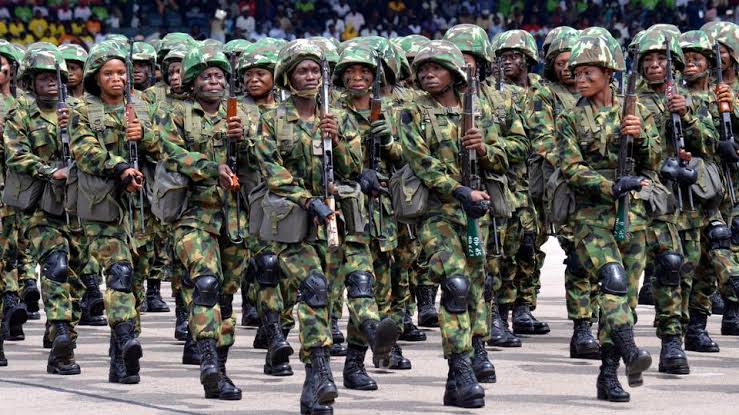
In a bold escalation against the scourge of banditry plaguing Nigeria’s northeast, troops of the 6 Brigade/Sector 3 Operation Whirl Stroke (OPWS) unleashed a series of precision strikes across Taraba State, demolishing multiple criminal hideouts and gunning down armed assailants in a coordinated offensive that sent bandits fleeing into neighboring Benue State. Acting on razor-sharp intelligence, the operations—launched under the banner of Operation Zafin Wuta—have dismantled what security experts call “impenetrable” mountain enclaves, marking a significant blow to networks terrorizing rural communities and underscoring the military’s renewed vigor in reclaiming contested frontiers.
The Nigerian Army Taraba operations, bandit camps destroyed Taraba, and troops neutralize attackers Taraba have dominated security briefings and local chatter since December 2, 2025, as the raids exposed the fragility of bandit strongholds amid a nationwide push to curb insurgency’s spillover. The first wave hit hard in the rugged Tor-Tser axis of Takum Local Government Area (LGA), where soldiers stormed Shiid, Agia, and Tyozua villages—remote hamlets long plagued by kidnappings and cattle rustling. Credible tips pinpointed armed groups hunkered in Likam Mountain’s craggy peaks, a natural fortress bandits had exploited for ambushes on farming routes. As dawn broke on December 2, assault teams advanced under cover of early mist, flushing out the criminals who torched a wooden bridge in a desperate bid to halt the pursuit. Undeterred, the troops pressed on, crossing power lines into Benue and razing two major camps in their wake—abandoned stockpiles of looted goods and rudimentary weapons reduced to smoldering ruins.
The momentum carried into December 4, when a fighting patrol near Karim Lamido LGA—aimed at choking bandit mobility—drew fire from gunmen concealed behind Wudompi Community. In a fierce exchange, soldiers neutralized two attackers, seizing an AK-47 rifle loaded with ammunition and other materiel that could arm a dozen raids. One high-value catch: Dahiru Maigari, a suspected logistics kingpin, nabbed during follow-ups and now spilling details under interrogation. “No terrain is beyond our reach,” declared Brigade Commander Brigadier General Kingsley Uwa in a Jalingo briefing, flanked by Lt. Umar Muhammad, the acting spokesperson who detailed the hauls: Destroyed camps yielding rusting rifles, recovered arms, and intel on cross-border smuggling rings.
These raids aren’t isolated triumphs; they’re threads in a broader tapestry of intensified ops under Operation Zafin Wuta and Peace Shield, launched to seal Taraba’s porous borders after a spike in cross-state incursions. Banditry here, often intertwined with farmer-herder clashes and spillover from Boko Haram affiliates, has displaced thousands and choked trade corridors vital to Nigeria’s food basket. Recent months saw a 30% uptick in attacks, per Taraba’s security council, with villages like Tyozua paying the price in blood and burned homes. Uwa’s assurance? “We’re sustaining pressure until peace reigns—no enclave too remote, no criminal too sly.” The ops’ intel-driven edge—drones scouting peaks, locals tipping off patrols—has flipped the script, turning once-safe havens into kill zones for the outlaws.
Local voices echo cautious hope. In Takum’s dusty markets, elders like 62-year-old farmer Yusufu Adamu told reporters: “These soldiers came like thunder—bandits ran like rats. My sons can farm without fear now.” Yet, skeptics whisper of reprisals, recalling last year’s ambushes that claimed 15 troops. On X, reactions split the feed: @TarabaWatch hailed “Army on fire—Zafin Wuta delivering!” with 8K likes, while @NorthEastVigil warned, “Great wins, but herdsmen tensions simmer—holistic fix needed.” Advocacy groups like the Arewa Consultative Forum praised the raids but urged community policing to hold gains.
For Taraba’s 3 million residents—from cassava farmers in Agia to traders in Jalingo—this surge in security hits like a lifeline. Economically, safer routes could revive yam exports, stalled by $50 million in annual losses to bandit tolls. Lifestyle-wise, kids return to schools shuttered by fear, and women fetch water without whispers of raids. Politically, it’s a win for Gov. Agbu Kefas’s “Taraba First” agenda, blending military might with youth jobs in vigilante units—though federal funding debates loom in Abuja. Tech’s role? Satellite intel and AI-flagged hotspots are game-changers, bridging Nigeria’s rural blind spots.
As follow-ups chase the Benue fugitives, these raids signal a tipping point: Bandits on the back foot, communities breathing easier. Uwa’s vow rings true—no mercy, no respite. Taraba’s fight isn’t over, but the tide’s turning.
In summing up, the Nigerian Army’s December blitz in Taraba—raiding Shiid, Agia, and Tyozua to torch bandit camps, neutralize two gunmen, and nab Dahiru Maigari—exposes the fragility of criminal redoubts, with seized AK-47s and intel paving the way for deeper incursions. Looking ahead, sustained ops under Zafin Wuta could halve attacks by Q2 2026, but blending military muscle with local reconciliation will seal lasting peace in this volatile northeast flashpoint.
Sam Michael
Follow us for real-time updates and subscribe to push notifications—stay ahead of the stories that matter.