
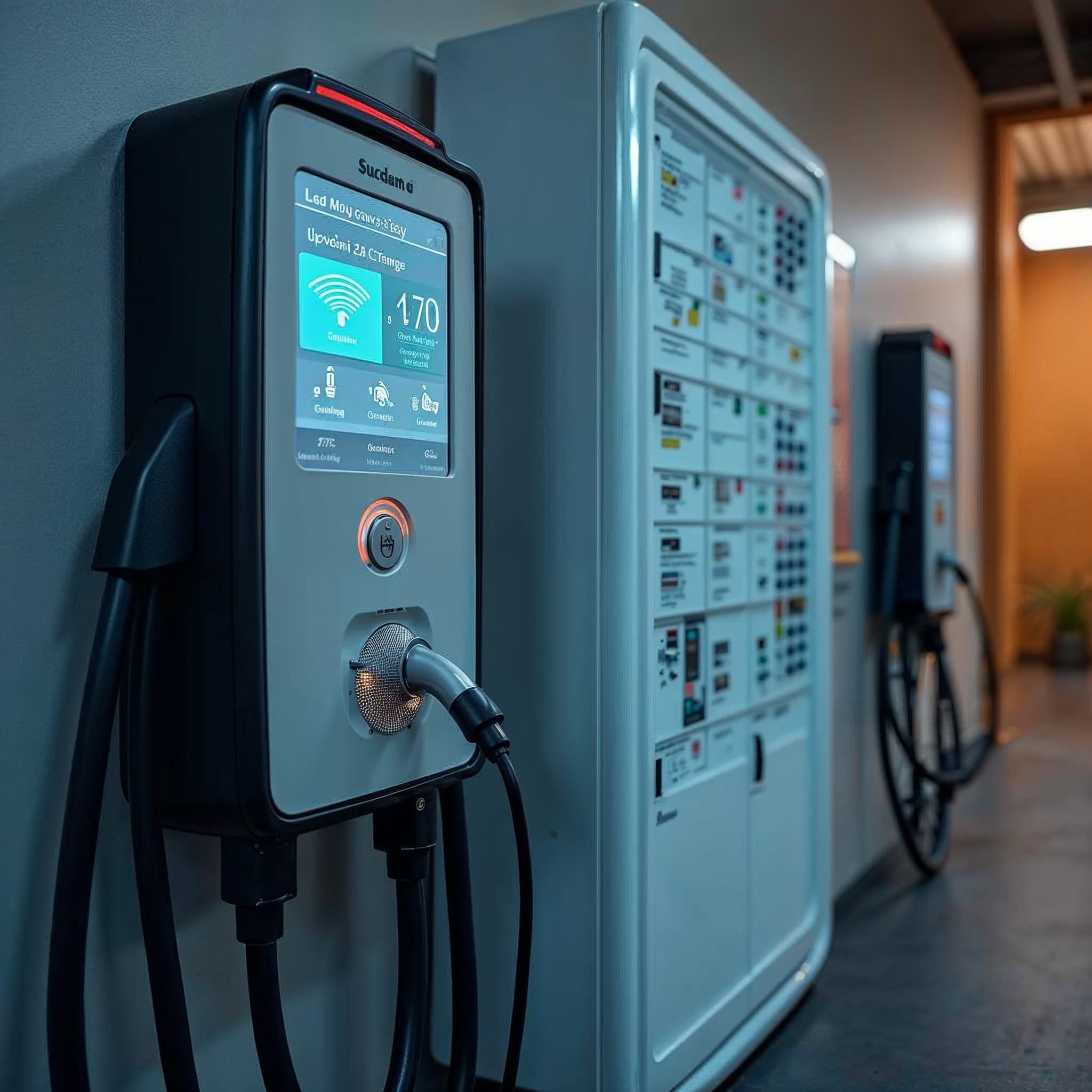
The hum of an electric motor, the silent glide, and the satisfying feeling of reducing your carbon footprint are just some of the joys of owning a Plug-in Hybrid Electric Vehicle (PHEV). As more drivers embrace this innovative technology, the convenience of charging your vehicle at home becomes a significant advantage. However, before you plug in your new ride, it is absolutely essential to understand the electrical requirements of your home. This comprehensive guide will walk you through everything you need to know, from deciphering your electrical panel to ensuring a safe and efficient charging setup. We will cover current information and recent developments, providing practical insights to help you prepare your home for the electric future.
The Ultimate Guide to Plug-in Hybrid Electric Vehicle Charging at Home
Welcome to the ultimate guide designed to demystify the process of setting up home charging for your PHEV. While the concept might seem daunting at first glance, breaking it down into manageable steps makes it surprisingly straightforward. Our goal is to empower you with the knowledge to make informed decisions, ensuring your home is not just ready, but optimally equipped for your PHEV.
Section 1: The Basics of PHEV Charging Levels – Level 1 Versus Level 2
Understanding the different charging levels is the first step in preparing your home. PHEVs typically support two main types of AC charging at home: Level 1 and Level 2. The choice between them largely depends on your driving habits, budget, and existing electrical infrastructure.
Level 1 Charging: The Slow and Steady Approach
Level 1 charging is the simplest and most accessible form of home charging. It utilizes a standard 120-volt AC outlet, the same type you use for most household appliances. Every PHEV comes with a portable charging cord, often referred to as an EVSE (Electric Vehicle Supply Equipment), that plugs directly into a standard three-prong wall socket (NEMA 5-15).
- Voltage and Amperage: 120 Volts, typically drawing 8-12 Amps.
- Power Output: Around 1.0-1.4 kilowatts (kW).
- Charge Rate: Offers a slow charge, typically adding about 2-5 miles of range per hour. For a PHEV with a relatively small battery (e.g., 10-20 kWh), this might mean a full charge in 8-12 hours overnight.
- Installation: Requires no special installation. Simply plug into an existing wall outlet.
- Pros: Extremely convenient, requires no upfront electrical work, good for overnight charging of smaller PHEV batteries or for drivers with minimal daily mileage.
- Cons: Very slow. If you drive frequently or have a larger PHEV battery, Level 1 might not fully recharge your vehicle overnight, especially if you arrive home with a deeply depleted battery. It is also not ideal for quickly topping up the battery during the day.
Real-life Example: Imagine you drive a Toyota RAV4 Prime with an 18.1 kWh battery and a 42-mile electric range. If you plug it into a Level 1 charger at 7 PM after driving 40 electric miles, it might not be fully charged by 7 AM the next morning, especially if the charging rate is on the lower end. This could be perfectly acceptable if your daily commute is only 15 miles, but less so if you frequently max out your electric range.
Level 2 Charging: The Faster and More Capable Option
Level 2 charging uses a 240-volt AC circuit, similar to what powers large appliances like electric dryers or ovens. This requires a dedicated circuit and a more robust EVSE, which is typically a wall-mounted unit or a heavy-duty portable charger. The benefits of Level 2 charging are significantly faster charge times and greater flexibility.
- Voltage and Amperage: 240 Volts, typically drawing 16-80 Amps. Most residential Level 2 chargers operate between 32-48 Amps.
- Power Output: Ranges from 3.8 kW to 19.2 kW, with typical home units delivering 7-11 kW.
- Charge Rate: Significantly faster, adding approximately 20-30 miles of range per hour for a typical 7-11 kW charger. This means most PHEVs can be fully charged in 2-4 hours.
- Installation: Requires professional installation by a licensed electrician. This involves running a dedicated 240V circuit from your electrical panel to the charging location and installing a specific outlet (like a NEMA 14-50 or 6-50) or hardwiring the EVSE.
- Pros: Much faster charging, allowing for full overnight charges even with higher mileage, greater convenience, and future-proofing for potentially larger EV batteries. Many smart Level 2 chargers offer features like schedule charging and energy monitoring.
- Cons: Higher upfront cost due to professional installation and the cost of the EVSE itself. Requires careful assessment of your home’s electrical panel capacity.
Real-life Example: The same Toyota RAV4 Prime mentioned earlier, plugged into a 32-amp (7.7 kW) Level 2 charger, could be fully recharged from empty in roughly 2.5 hours. This allows for full use of its electric range daily, even if you arrive home late and need to leave early.
For most PHEV owners who want to maximize their electric driving, Level 2 charging is the recommended choice. It provides the speed and convenience necessary to keep your battery topped up without impacting your daily routine.
Section 2: Understanding Your Home’s Electrical Panel – The Heart of the System
Before considering any electrical upgrades, it is crucial to understand your home’s electrical panel. This metal box, usually found in your garage, basement, or utility closet, is the central distribution point for all electricity in your home. It houses the circuit breakers that protect your wiring from overloads and short circuits.
Key Electrical Terms Explained
- Voltage (V): The “pressure” at which electricity flows. In North America, residential circuits are typically 120V (for standard outlets) or 240V (for larger appliances like dryers, ovens, and Level 2 EV chargers).
- Amperage (A): The “rate of flow” of electricity. It indicates how much current a circuit can safely carry. Circuit breakers are rated in amps (e.g., 15A, 20A, 50A).
- Wattage (W) / Kilowatt (kW): The actual power consumed or delivered. Wattage is calculated by multiplying Voltage by Amperage (W = V x A). A kilowatt is 1,000 watts. Your EVSE will typically be rated in kW, and your electricity bill is measured in kilowatt-hours (kWh).
Assessing Your Electrical Panel’s Capacity
Your electrical panel has a main breaker that determines the total amperage available to your entire home. Common capacities for residential panels are 100 Amps, 150 Amps, 200 Amps, or even 400 Amps. The larger the number, the more electricity your home can safely draw simultaneously.
To find your panel’s capacity, look at the main breaker, which is usually larger than the other breakers and often located at the top or bottom of the panel. It will have a number clearly marked on it (e.g., “200”).
Importance of Available Capacity (Headroom): When you install a Level 2 EV charger, you are adding a significant, continuous load to your home’s electrical system. A typical 32-amp Level 2 charger requires a 40-amp circuit. If your home already uses a substantial portion of its total available amperage (e.g., you have electric heating, a large central AC, electric water heater, and other high-demand appliances), adding a 40-amp circuit might push your panel beyond its safe limits. This is where an electrician’s assessment becomes critical.
Signs Your Panel Might Be Insufficient
Older homes, particularly those built before the 1980s, often have 100-amp panels that may not have enough spare capacity for a Level 2 EV charger without an upgrade. Even newer homes with 150-amp panels can sometimes be tight if they are packed with electric appliances. Signs that your panel might need attention include:
- Frequent tripping of circuit breakers (especially if it is not due to a specific overloaded appliance).
- Flickering lights when large appliances turn on.
- A panel that feels warm to the touch.
- Visible rust, corrosion, or burnt smells near the panel.
- A panel that simply has no physical space for new circuit breakers (all slots are full).
Do not attempt to open your electrical panel yourself unless you are qualified. Always consult a licensed electrician for any inspection or work involving your home’s main electrical system.
Section 3: Dedicated Circuits and Breaker Requirements for Level 2 Charging
For Level 2 PHEV charging, a dedicated circuit is not just recommended; it is a mandatory safety requirement under the National Electrical Code (NEC). A dedicated circuit means that the circuit breaker and wiring serving your EVSE are exclusively for that purpose, ensuring that the charger does not share power with other appliances and preventing dangerous overloads.
Why a Dedicated Circuit is Crucial
- Safety: Prevents circuit overloads, which can lead to tripped breakers, overheating wires, and potentially electrical fires.
- Performance: Ensures your EVSE receives consistent power, allowing it to charge your PHEV at its maximum rate without interruption.
- Compliance: Required by electrical codes and often by EVSE manufacturers for warranty validity.
Common Circuit Sizes and the 80% Rule
Level 2 EVSEs come in various amperage ratings (e.g., 16A, 24A, 32A, 40A, 48A). The circuit breaker installed in your electrical panel must be rated higher than the continuous current draw of your EVSE. The NEC mandates a safety factor, commonly known as the 80% rule for continuous loads.
The 80% rule states that a circuit used for continuous loads (like EV charging, which can run for several hours) should only be loaded to 80% of its breaker’s rating. This means:
- A 16A EVSE requires a 20A circuit breaker (16A is 80% of 20A).
- A 24A EVSE requires a 30A circuit breaker (24A is 80% of 30A).
- A 32A EVSE requires a 40A circuit breaker (32A is 80% of 40A). This is a very common setup for home Level 2 charging.
- A 40A EVSE requires a 50A circuit breaker (40A is 80% of 50A). This setup uses a NEMA 14-50 outlet, often chosen for its versatility.
- A 48A EVSE requires a 60A circuit breaker (48A is 80% of 60A).
It is important to select an EVSE that matches your driving needs and your home’s electrical capacity. While a 48A charger offers faster charging, a 32A charger is often perfectly adequate for PHEVs and might be easier to accommodate on older electrical panels.
Types of Outlets for Level 2 Charging
If your EVSE is plug-in (rather than hardwired), it will connect to a specific 240V outlet. The two most common types are:
- NEMA 14-50: This is a four-prong outlet (two hot, one neutral, one ground) commonly used for electric ranges or RV hookups. It supports up to a 50-amp circuit, allowing for a 40-amp continuous charge. Many portable Level 2 EVSEs come with a NEMA 14-50 plug.
- NEMA 6-50: This is a three-prong outlet (two hot, one ground) often used for welding equipment. It also supports up to a 50-amp circuit for a 40-amp continuous charge.
Some higher-power EVSEs are hardwired directly into your home’s electrical system, bypassing the need for a specific outlet. This can sometimes be a more cost-effective option for installations in a new build or when installing a permanent charging station, as it avoids the cost of the heavy-duty outlet.
Section 4: The Role of an Electrician – Assessment and Installation
While DIY projects can be tempting, when it comes to installing a Level 2 EV charger, hiring a licensed and experienced electrician is not just recommended, it is a non-negotiable safety and regulatory requirement. This is not a task for the inexperienced due to the high voltage and current involved.
Why Professional Help is Non-Negotiable
- Safety: Working with 240V electricity carries significant risks, including electrocution and fire hazards, if not handled correctly.
- Code Compliance: Licensed electricians are knowledgeable about local and national electrical codes (like the NEC), ensuring your installation meets all safety and legal standards.
- Expert Assessment: An electrician can accurately assess your home’s electrical system, identify potential issues, and recommend the most appropriate and cost-effective solution.
- Permitting and Inspections: They can guide you through the necessary permitting process and ensure the work passes required inspections, which are crucial for insurance and resale purposes.
- Warranty Preservation: Many EVSE manufacturers require professional installation for their product warranties to remain valid.
What an Electrician Assesses During a Site Visit
When you call an electrician for an EV charger installation quote, they will typically perform a thorough site assessment, which includes:
- Electrical Panel Capacity: They will examine your main electrical panel to determine its total amperage and, more importantly, the available unused capacity (headroom) for adding a new dedicated circuit. They will check if there are empty breaker slots or if a panel upgrade or subpanel addition is necessary.
- Wiring Path: The electrician will determine the most efficient and safe route for the new wiring from your electrical panel to the desired charging location (e.g., garage, driveway). This involves considering the distance, the type of wall construction, and whether conduit is needed.
- Load Calculation: They will perform a detailed load calculation to ensure that adding the EV charger will not overload your existing electrical system, especially during peak usage times when other major appliances are running.
- Grounding: They will verify that your home’s grounding system is adequate and up to code.
- Location Suitability: They will advise on the best placement for the EVSE, considering factors like cable reach, weather protection (if outdoors), and accessibility.
- Cost Estimation: Based on the assessment, they will provide a detailed quote covering labor, materials (wire, conduit, breaker, outlet), and any necessary upgrades.
Permits and Inspections: Do Not Skip These Steps
Almost all Level 2 EV charger installations require an electrical permit from your local municipality. This is a critical step often overseen by your electrician. After installation, a local electrical inspector will review the work to ensure it complies with all safety codes. While it might seem like an extra bureaucratic hurdle, permits and inspections are vital for:
- Safety: Ensuring the work meets minimum safety standards.
- Insurance: Unpermitted electrical work can void your home insurance policy in the event of an electrical fire or incident.
- Resale Value: When selling your home, buyers may request documentation of permitted electrical work.
Always confirm with your chosen electrician that they will handle the permitting process and schedule the necessary inspections.
Section 5: Future-Proofing Your Home for EV Charging
Investing in a Level 2 charging setup for your PHEV is a smart move, but thinking a step ahead can save you time, money, and hassle in the long run. The automotive landscape is rapidly evolving, and what serves your PHEV today might need an upgrade for a future full Battery Electric Vehicle (BEV).
Considering Future Full-EV Purchases
PHEVs typically have smaller battery packs (e.g., 10-25 kWh) compared to BEVs (e.g., 60-100+ kWh). While a 32-amp (40A circuit) Level 2 charger is excellent for most PHEVs, a full BEV might benefit from a faster 40-amp or 48-amp (50A or 60A circuit) charger, especially if you have a long commute or often need quick top-ups.
When planning your installation, consider running thicker gauge wire (e.g., 6-gauge instead of 8-gauge) if your electrical panel has the capacity. This allows you to install a 50A or 60A breaker and a higher-power EVSE in the future, even if you initially only use a 32A charger for your PHEV. The cost difference for slightly heavier wire is often minimal compared to the cost of re-running wires later.
Smart Chargers and Load Management Systems
Recent developments in EV charging technology include smart chargers and sophisticated load management systems. These are particularly relevant for homes with limited electrical panel capacity.
- Smart Chargers: These EVSEs connect to your home Wi-Fi and often come with a mobile app. They allow you to schedule charging during off-peak hours (when electricity rates are lower), monitor energy consumption, and receive charging notifications. Some can even integrate with smart home systems. For PHEV owners, this means optimizing charging costs and ensuring the car is ready when needed.
- Load Management Systems: For homes where a panel upgrade is too costly or complex, load management devices can be an excellent solution. These systems monitor your home’s total electricity usage and dynamically adjust the power delivered to your EVSE. For example, if your clothes dryer and central AC suddenly turn on, the load management system might temporarily reduce the power to your EV charger to prevent the main breaker from tripping. This allows you to install a Level 2 charger without a full panel upgrade, provided your panel has some spare capacity.
Discussing these options with your electrician can help you find a solution that fits your current needs and anticipates future requirements.
Vehicle-to-Grid (V2G) and Vehicle-to-Home (V2H)
While still emerging and more common for BEVs, the concepts of V2G and V2H are worth noting for future reference. These technologies allow your EV to not only draw power from the grid but also to send power back. V2H, in particular, could enable your vehicle to power your home during a blackout. While most current PHEVs do not support these features, some models are beginning to incorporate bi-directional charging capabilities. If these technologies become mainstream, a robust home electrical setup would be a prerequisite.
Section 6: Overcoming Common Electrical Challenges and Solutions
Every home is unique, and some present specific electrical challenges when installing an EV charger. Being aware of these common hurdles can help you anticipate potential costs and solutions.
Old Wiring and Electrical Systems
Homes built before the 1970s or 1980s often have older wiring (e.g., knob-and-tube, aluminum wiring) or smaller electrical panels (60-100 amp). These systems may not be able to safely handle the continuous load of a Level 2 charger. Solutions include:
- Wiring Upgrade: Replacing old, inadequate wiring with modern, properly sized copper wiring. This can be a significant undertaking but is crucial for safety and capacity.
- Grounding System Upgrade: Ensuring the home’s grounding system is up to current codes.
Cost Implication: Upgrading old wiring can add considerable cost to the installation, potentially ranging from a few hundred to several thousand dollars depending on the extent of the work.
Full Electrical Panel
Even if your panel has sufficient total amperage (e.g., 200A), it might be physically full, meaning there are no empty slots for a new circuit breaker. Solutions include:
- Tandem/Half-Size Breakers: In some cases, if your panel is compatible, an electrician can replace two single-pole breakers with a tandem breaker that fits in one slot, freeing up space. This is only possible if the panel is rated for tandem breakers.
- Subpanel Installation: Installing a smaller, secondary electrical panel (subpanel) near the main panel or charging location. This subpanel is fed by a large breaker from the main panel and then distributes power to new circuits, including your EV charger.
- Full Panel Upgrade: If your current panel is too small (e.g., 100A and you need 200A), or very old and unsafe, a full panel upgrade is the solution. This involves replacing the entire electrical panel with a new, higher-capacity unit. This is the most extensive and costly option but provides the greatest long-term benefits.
Long Wire Runs
If your electrical panel is far from your desired charging location (e.g., a detached garage 100 feet away), the cost of wiring can increase significantly. Longer distances require thicker gauge wire to prevent voltage drop and maintain efficiency. Voltage drop occurs when the resistance of a long wire causes a reduction in the voltage reaching the charger, leading to slower charging and potential damage to the EVSE or vehicle over time.
Solution: An electrician will calculate the appropriate wire gauge based on the distance and amperage to minimize voltage drop, ensuring safe and efficient power delivery.
Apartments and Condos: Navigating Shared Infrastructure
Charging in multi-unit dwellings presents unique challenges:
- Homeowners Association (HOA) Rules: Many HOAs have strict rules regarding exterior modifications and electrical installations. You will need to get approval before any work begins.
- Shared Parking: If you have assigned parking, you might be able to install a dedicated charger. For shared parking, solutions often involve communal charging stations.
- Electrical Service: Your individual unit’s electrical panel might be too small, or the building’s overall electrical service might not have the capacity for multiple EV chargers.
Solutions: Work closely with your HOA management and a specialized electrician experienced in multi-unit dwelling EV installations. They can explore options like:
- Individual sub-metered chargers in assigned spots.
- Shared Level 2 chargers for residents, often managed by a third-party service.
- Exploring existing outlets for Level 1 charging as a temporary solution.
Overcoming these challenges often requires patience and collaboration, but with the right approach, home charging for your PHEV is achievable in almost any scenario.
Comparison Tables
Table 1: Level 1 vs. Level 2 PHEV Charging Comparison
| Feature | Level 1 Charging | Level 2 Charging |
|---|---|---|
| Voltage | 120V AC (standard household outlet) | 240V AC (heavy appliance circuit) |
| Amperage Draw (Typical) | 8-12 Amps | 16-80 Amps (commonly 32A-48A for home) |
| Power Output (Typical) | 1.0-1.4 kW | 3.8-19.2 kW (commonly 7.0-11.5 kW for home) |
| Miles of Range Added Per Hour | 2-5 miles/hour | 20-30+ miles/hour |
| Typical Full Charge Time (18 kWh PHEV) | 8-12 hours | 2-4 hours |
| Installation Requirements | None (uses existing standard outlet) | Professional electrician installation, dedicated 240V circuit, specific outlet (e.g., NEMA 14-50) or hardwired EVSE |
| Estimated Installation Cost | $0 (if outlet is available) | $500 – $2,500+ (depending on electrical panel capacity, distance, and upgrades) |
| Suitable Use Case | Overnight top-ups for low daily mileage, occasional charging, supplementary charging. | Daily driving with significant electric range use, faster charging, future-proofing. |
| Pros | Simple, inexpensive, universal access. | Fast, convenient, smart features, efficient. |
| Cons | Very slow, may not fully charge overnight, not suitable for high daily mileage. | Higher upfront cost, requires electrical assessment and installation. |
Table 2: Common Level 2 Charger Circuit Requirements and Charge Rates for PHEVs
| EVSE Output Amperage | Required Circuit Breaker Size | Common NEMA Outlet Type (if plug-in) | Typical Wire Gauge (Copper) | Approximate Charging Power (kW) | Approximate Miles of Range Added Per Hour |
|---|---|---|---|---|---|
| 16A | 20A | NEMA 6-20 | 12 AWG | 3.8 kW | 12-15 miles |
| 24A | 30A | NEMA 6-30 | 10 AWG | 5.8 kW | 18-22 miles |
| 32A | 40A | NEMA 14-50 / NEMA 6-50 | 8 AWG | 7.7 kW | 25-30 miles |
| 40A | 50A | NEMA 14-50 / NEMA 6-50 | 6 AWG | 9.6 kW | 30-38 miles |
| 48A | 60A | Hardwired (typically) | 6 AWG | 11.5 kW | 35-45 miles |
Note: Wire gauge recommendations are general; always consult an electrician who will consider specific wire type, insulation, conduit, and local codes. The miles per hour added is an estimate and can vary based on vehicle efficiency, battery state of charge, and temperature.
Practical Examples and Case Studies
To put all this technical information into perspective, let us look at a few real-world scenarios that illustrate the decisions PHEV owners face regarding home charging.
Case Study 1: The Urban Commuter with a New PHEV
Sarah lives in a newly built suburban home with a 200-amp electrical panel in her garage. She recently purchased a brand new Kia Sorento PHEV, which has a 13.8 kWh battery and approximately 32 miles of electric range. Her daily commute is 25 miles, primarily electric. She wants to ensure her car is fully charged every morning.
- Initial Assessment: Her 200-amp panel is modern and has plenty of spare capacity. The garage is adjacent to the panel, so the wire run will be short.
- Decision: Sarah opts for a 32-amp Level 2 charger (requiring a 40-amp dedicated circuit) because it is more than enough to fully charge her PHEV overnight (around 2-3 hours) and provides some future-proofing.
- Outcome: A licensed electrician installed the NEMA 14-50 outlet and circuit in a few hours. Sarah bought a plug-in EVSE. Her car is always ready, and she maximizes her electric driving, saving significantly on gasoline. The cost was reasonable due to minimal electrical work required.
Case Study 2: The Older Home Owner with a PHEV
David lives in a charming 1960s bungalow with a 100-amp electrical panel located in his basement, far from his driveway where he parks his Chrysler Pacifica Hybrid (16 kWh battery, 32 miles electric range). He frequently uses his van for school drop-offs and errands, totaling about 40 electric miles per day.
- Initial Assessment: The 100-amp panel is nearly full, already powering an electric water heater and an old central AC unit. There are no spare breaker slots. The distance to the driveway is about 60 feet. Level 1 charging is too slow for his daily needs.
- Decision: An electrician informs David that a panel upgrade to 200 amps is necessary, along with a new 40-amp circuit. They also recommend installing a subpanel in the garage for easier future expansion.
- Outcome: David proceeds with the panel upgrade and subpanel installation, which is a more substantial investment. The electrician runs a new 6-gauge wire to the subpanel to accommodate future higher-power charging. While more expensive upfront, David now has a safe, robust electrical system that can handle his PHEV and potential future electrical demands. He has peace of mind knowing his family’s vehicle is charged efficiently.
Case Study 3: The Apartment Dweller
Maria lives in a condo building with an underground parking garage. She owns a Hyundai Ioniq PHEV (8.9 kWh battery, 29 miles electric range) and has an assigned parking spot. Her condo unit’s electrical panel is small and far from the garage.
- Initial Assessment: Her HOA has strict rules, and direct wiring from her unit is infeasible. The building’s management has been exploring EV charging solutions for residents.
- Decision: After researching, Maria finds that the HOA has recently partnered with an EV charging network provider to install several shared Level 2 charging stations in the garage. These are smart chargers that residents can activate via an app and are billed per kWh.
- Outcome: Maria registers for the service. She can now plug in her Ioniq whenever a station is free, typically adding a full charge in about 1.5-2 hours while she is at home. While not a dedicated charger, this communal solution provides the convenience of Level 2 charging at home without the individual installation hassle or cost. She still uses her Level 1 charger for occasional top-ups when a Level 2 spot is not available or if she is not in a hurry.
These examples highlight that while the underlying electrical principles are the same, the practical application and solutions can vary widely based on home characteristics, budget, and living situation. The common thread is always to involve a qualified professional.
Frequently Asked Questions
Q: Can I just plug my PHEV into any standard wall outlet?
A: Yes, you can. Every PHEV comes with a charging cable that allows you to plug into a standard 120-volt wall outlet (Level 1 charging). This is the simplest option and requires no special installation. However, it is very slow, typically adding only 2-5 miles of range per hour. It is best suited for overnight charging of smaller PHEV batteries or for drivers who do not drive much on electricity daily. Ensure the outlet is in good condition and on a dedicated circuit if possible, especially if you plan to use it for extended periods, to avoid overloading.
Q: What’s the difference between an EVSE and a charger?
A: Technically, the “charger” is actually built into your PHEV. The device you plug into the wall is called an EVSE (Electric Vehicle Supply Equipment). Its role is to safely deliver electricity from your home’s power source to your vehicle’s onboard charger. The EVSE handles communication with the vehicle, manages the power flow, and has critical safety features like ground fault interruption. While colloquially referred to as a “charger,” it is more accurately a “charging station” or “power supply unit.”
Q: How much does it typically cost to install a Level 2 charger?
A: The cost can vary widely, typically ranging from $500 to $2,500 or more. This includes the cost of the EVSE unit itself (usually $300-$1,000) and the electrician’s labor and materials. Factors influencing the cost include: the distance from your electrical panel to the charging location, the need for trenching (if outdoors), whether your electrical panel needs an upgrade or a subpanel, and local labor rates. Always get multiple quotes from licensed electricians.
Q: Do I need a permit for EV charger installation?
A: In almost all cases, yes, you will need an electrical permit from your local municipality for a Level 2 EV charger installation. This is a critical safety and regulatory step. Your licensed electrician will typically handle the permitting process and ensure the work passes required inspections. Installing without a permit can lead to safety hazards, potential issues with home insurance, and difficulties when selling your home.
Q: My home has old wiring. Is it safe to charge a PHEV?
A: If your home has old wiring (e.g., knob-and-tube, or ungrounded two-wire systems), it might not be safe to charge a PHEV, especially at Level 2. Older wiring may not be able to handle the continuous load required by an EVSE, leading to overheating, fire hazards, or tripped breakers. It is imperative to have a licensed electrician inspect your wiring and electrical panel. They can advise on necessary upgrades to ensure a safe and code-compliant charging setup, which might include replacing old wiring or upgrading your electrical panel.
Q: What if my electrical panel is full?
A: If your electrical panel is physically full (no empty slots for a new circuit breaker), you have a few options:
- Tandem Breakers: If your panel supports it, an electrician might be able to replace two single-pole breakers with a tandem (or “half-size”) breaker to free up a slot.
- Subpanel Installation: A common solution is to install a subpanel. This is a smaller secondary panel fed by a larger breaker from your main panel, providing new slots for circuits, including your EV charger.
- Full Panel Upgrade: If your main panel is also too small in terms of overall amperage capacity (e.g., 100 amps), or very old, a full panel upgrade to a higher capacity (e.g., 200 amps) might be necessary. This is the most extensive and costly option but provides the most headroom for future electrical needs.
An electrician will assess your specific situation and recommend the best solution.
Q: Will charging a PHEV significantly increase my electricity bill?
A: Yes, charging a PHEV will increase your electricity bill, but the extent depends on how much you drive, your vehicle’s battery size, and local electricity rates. PHEVs generally have smaller batteries than full EVs, so their impact on your bill is usually less. Many owners find that the cost of electricity per mile is significantly lower than the cost of gasoline, resulting in overall fuel savings. You can further reduce costs by utilizing smart chargers to schedule charging during off-peak hours when electricity rates are lower.
Q: Can I use an extension cord for charging my PHEV?
A: It is generally not recommended to use an extension cord for EV charging, especially for Level 2 charging, and even for Level 1 charging for prolonged periods. Most standard extension cords are not designed to handle the continuous high current draw required by an EVSE, which can lead to overheating, fire hazards, or damage to your vehicle or EVSE. If an extension cord is absolutely necessary for Level 1, it must be a heavy-duty, outdoor-rated cord with the appropriate gauge wire for the amperage draw (e.g., 12-gauge or thicker). Never use a lightweight household extension cord. For Level 2, an extension cord is a definite no-go.
Q: What’s the average charging time for a PHEV on Level 2?
A: The average charging time for a PHEV on Level 2 (240V) typically ranges from 2 to 4 hours for a full charge. This depends on the size of your PHEV’s battery pack and the power output of your Level 2 EVSE. For example, a PHEV with a 15 kWh battery using a 32-amp (7.7 kW) Level 2 charger would go from empty to full in approximately 2 hours.
Q: Are there any grants or incentives for EV charger installation?
A: Yes, many governments, states, and local utilities offer grants, rebates, or tax credits for EV charger installation. These incentives can significantly reduce the upfront cost of your EVSE and installation. It is highly recommended to research available programs in your specific area. Websites for your state’s energy office, local utility provider, or the Department of Energy’s Alternative Fuels Data Center are good starting points.
Key Takeaways
Preparing your home for PHEV charging involves several important considerations. Here are the key takeaways to guide you:
- Understand Charging Levels: Level 1 is slow (120V) and requires no installation; Level 2 is much faster (240V) and requires professional installation. For most PHEV owners, Level 2 is the preferred option.
- Assess Your Electrical Panel: Know your main panel’s amperage capacity and determine if there is enough headroom and physical space for a new dedicated circuit. Older homes may require upgrades.
- Prioritize Safety with Dedicated Circuits: Level 2 charging requires a dedicated 240V circuit with a properly sized breaker (applying the 80% rule) and appropriate wiring.
- Hire a Licensed Electrician: Professional installation is crucial for safety, code compliance, and warranty validity. They will perform load calculations, recommend the best setup, and handle permits.
- Do Not Skip Permits and Inspections: These are mandatory for safety, insurance, and future home resale.
- Consider Future-Proofing: If possible, install wiring capable of supporting higher amperage (e.g., 50A or 60A circuit) even if you initially use a lower-power charger, to accommodate future full EVs.
- Explore Smart Chargers and Load Management: These technologies can optimize charging, save costs, and help manage electrical load in homes with limited capacity.
- Be Prepared for Challenges: Older homes, full panels, or long wire runs may require additional upgrades like panel replacement, subpanels, or thicker gauge wiring.
- Avoid Extension Cords: Using extension cords for EV charging is generally unsafe and not recommended.
Conclusion
Embracing a Plug-in Hybrid Electric Vehicle is an exciting step towards a more sustainable and efficient driving experience. The convenience of charging at home is undoubtedly one of its greatest advantages. However, ensuring your home’s electrical system is adequately prepared is paramount for both safety and optimal performance. By understanding the differences between Level 1 and Level 2 charging, assessing your electrical panel’s capabilities, and recognizing the non-negotiable role of a licensed electrician, you can confidently prepare your home for the demands of PHEV charging.
Do not let the technical jargon intimidate you. With the insights provided in this guide, you are now equipped to make informed decisions. Take the proactive step to consult with a qualified electrician to evaluate your home’s unique requirements. A well-planned and professionally installed home charging setup will not only enhance your PHEV ownership experience but also add long-term value and future-readiness to your home. Drive on, knowing your power source is as reliable and efficient as your vehicle.