
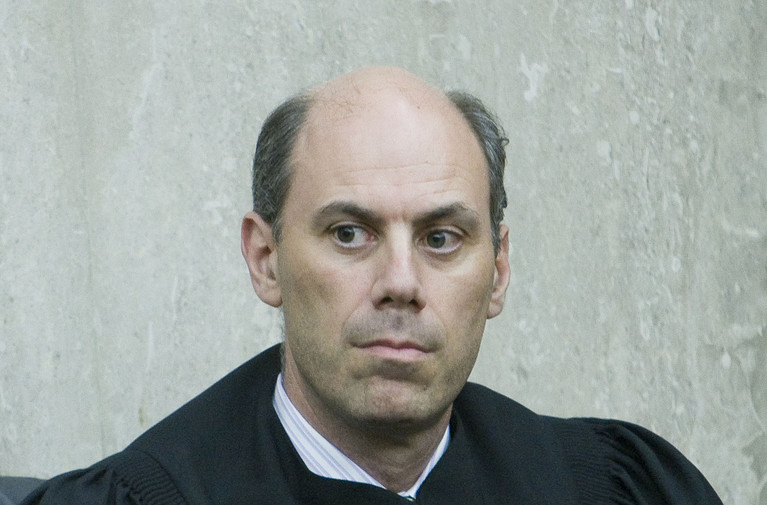
A federal judge delivered a significant win for Meta Platforms on Tuesday, ruling that the company does not maintain an illegal monopoly in social networking services. In a detailed 89-page opinion, U.S. District Judge James E. Boasberg rejected the Federal Trade Commission’s bid to unwind Meta’s acquisitions of Instagram and WhatsApp, arguing that evidence of current anticompetitive harm falls short. The decision, handed down amid a shifting digital landscape dominated by new rivals, represents a major hurdle for antitrust enforcers targeting Silicon Valley giants.
Judicial Breakdown: Why the FTC’s Monopoly Claim Fell Flat
At the heart of the ruling was the judge’s assessment of market dynamics in 2025, not the landscape of over a decade ago. Boasberg emphasized that antitrust law demands proof of present-day monopoly power under Section 2 of the Sherman Act, not just historical dominance. “The FTC’s theory rests on a snapshot from 2012 and 2014,” he wrote, “but markets evolve, and so must the evidence.”
The FTC had defined the relevant market narrowly as “personal social networking services” (PSSNS)—platforms for sharing with friends and family—where Meta allegedly held 70-80% share. Boasberg dismissed this as overly restrictive, pointing to the blurring lines between personal and public content. Apps like TikTok, with its algorithm-driven feeds, and YouTube’s Shorts now compete head-on for user attention and ad revenue. “The government’s walled garden ignores the open savanna of modern social media,” the judge quipped in his opinion.
Trial evidence from April 2025, including depositions from Meta executives and economic experts, bolstered the defense. Meta presented data showing Instagram’s evolution into a discovery tool, not just a photo-sharing app, while WhatsApp has pivoted to business messaging. The FTC countered with emails from Mark Zuckerberg hinting at acquisition motives, but Boasberg found them “anecdotal and outdated,” lacking ties to today’s 3.3 billion daily users across Meta’s apps.
Acquisition History: From Bargain Buys to Billion-User Empires
The case originated from deals that once seemed like savvy investments: Meta snapped up Instagram for $1 billion in 2012 when it had just 30 million users, and WhatsApp for $19 billion in 2014 with 450 million monthly actives. Regulators at the time greenlit both, viewing them as pro-competitive infusions of capital. By 2020, however, the FTC sued, alleging these moves were predatory “killer acquisitions” to neutralize threats.
Boasberg’s ruling flips that narrative, crediting the integrations for explosive growth. Instagram now has 2 billion users globally, per Meta’s Q3 2025 earnings, while WhatsApp serves 2.5 billion—figures that dwarf early projections. Without Meta’s infrastructure, the judge noted, these apps might have stagnated amid server costs and scaling challenges. “Innovation flourished under common ownership,” he stated, citing features like end-to-end encryption on WhatsApp and Reels on Instagram as examples of shared tech synergies.
Critics, including FTC economists, argued this hindsight bias ignores what might have been: standalone Instagram challenging Facebook’s ad model. But data from SimilarWeb shows TikTok alone captured 25% more U.S. user sessions in 2025 than in 2020, eroding Meta’s grip without any divestiture.
- Deal Milestones: Instagram users grew 6,600% post-acquisition; WhatsApp’s valuation hit $50 billion by 2018.
- Revenue Boost: Acquisitions contributed $25 billion to Meta’s 2024 ad sales, up from $5 billion pre-deals (company filings).
- User Retention Rates: 85% of Instagram users stay via personalized feeds, blending personal and exploratory content (internal Meta metrics).
Competitive Pressures: TikTok and YouTube Reshape the Battlefield
Central to the judge’s logic was the undeniable rise of challengers. TikTok, launched in the U.S. in 2018, now commands 170 million monthly users stateside—nearly matching Instagram’s core demographic—according to App Annie analytics. Its for-you-page algorithm has lured creators away, with 40% of U.S. influencers reporting higher earnings there, per a 2025 Influencer Marketing Hub survey.
YouTube, under Alphabet, isn’t far behind, boasting 2.5 billion logged-in users and dominating short-form video with 50 billion daily Shorts views. Boasberg highlighted how these platforms siphon ad budgets: Meta’s share of U.S. digital ads dipped to 22% in Q3 2025 from 28% in 2020, per eMarketer, as TikTok and YouTube grabbed 18% combined. “Meta faces credible threats that the FTC’s model overlooks,” the ruling stated.
Emerging players like Snapchat (100 million U.S. users) and BeReal add to the fray, focusing on authentic, ephemeral sharing. Even X (formerly Twitter) has expanded into longer videos and communities, drawing 20% more daily engagement since 2024 rebranding. These shifts, accelerated by AI personalization, make monopoly claims ring hollow in Boasberg’s view.
FTC’s Enforcement Era: A Pattern of Ambitious but Stumbling Probes
This loss caps a turbulent five years for the FTC’s tech antitrust push, launched amid post-2016 merger waves. Under Chair Lina Khan, appointed in 2021, the agency sued Amazon, Google, and Apple alongside Meta, aiming to break up perceived empires. Successes include a 2024 Google search monopoly finding, but remedies remain elusive—Judge Amit Mehta in September 2025 spared Chrome and Android from divestiture.
The Meta case, filed in late 2020 and twice amended, spanned administrations: initiated under Trump, turbocharged by Biden, and resolved under Trump’s return. Budget constraints hobbled the FTC; its 2025 enforcement funding sat at $420 million, supporting just 1,200 staff against a $1.5 trillion tech sector. Legal scholars like William Kovacic, former FTC chair, called the ruling a “wake-up call” for needing forward-looking evidence in dynamic industries.
Globally, contrasts sharpen the U.S. setback. The EU’s 2022 Digital Markets Act designated Meta a “gatekeeper,” imposing fines up to 10% of revenue—$16.7 billion last year—for data practices. Australia’s 2024 News Media Bargaining Code forced Meta to pay publishers $200 million annually, a model U.S. lawmakers eye.
- FTC Track Record: 6 major tech suits since 2020; 2 wins, 1 full dismissal (Meta), 3 pending (DOJ/FTC joint report).
- Budget vs. Scale: FTC’s $420M vs. Meta’s $50B R&D spend in 2025 (annual disclosures).
- International Fines: EU levied €1.2B on Meta in 2023 for GDPR breaches; U.S. max penalty per violation: $50,120.
Market Reactions: Stocks Surge, Critics Cry Foul
Wall Street cheered the verdict. Meta shares jumped 4.5% to close at $612, boosting its market cap past $1.55 trillion and adding $70 billion in value (Nasdaq data). Peers followed: Alphabet rose 2.1%, Amazon 1.8%, signaling relief from regulatory contagion. Analysts at JPMorgan upgraded Meta to “overweight,” forecasting smoother M&A paths for AI and VR bets.
In D.C., fallout was immediate. Khan announced an appeal to the D.C. Circuit, vowing, “This fight for fair markets continues—Big Tech’s grip harms consumers daily.” Bipartisan grumbles emerged: Sen. Josh Hawley (R-Mo.) slammed it as “woke overreach failing,” while Rep. Pramila Jayapal (D-Wash.) decried “corporate capture of the courts.” Consumer groups like the Electronic Frontier Foundation warned of unchecked data monopolies, citing Meta’s role in 2024 election misinformation.
On social platforms, discourse split: #FTCFail trended with 180,000 X posts mocking regulators, countered by #BreakUpBigTech memes. Zuckerberg, in a rare public nod, posted: “Grateful for the court’s recognition of how competition drives us forward.”
Future Ramifications: Easing M&A While Antitrust Evolves
For Meta, the green light extends to its $40 billion 2025 AI war chest, eyeing buys in generative tools and metaverse hardware. Without divestiture shadows, integrations like AI across Threads and Facebook could accelerate, potentially reaching 4 billion users by 2030 (company projections). Yet, privacy suits loom— a separate Illinois case on biometric data could cost $650 million.
Broader antitrust may pivot: Incoming Trump appointees signal lighter touch, but Congress mulls ex-ante merger blocks via the 2023 Merger Filing Fee Modernization Act, raising scrutiny thresholds to $119.5 million. Economists like Joseph Stiglitz argue for “structural presumptions” against tech deals, but Boasberg’s dynamic-market test could chill aggressive filings.
As appeals unfold—likely 12-18 months—the ruling cements tech’s defense playbook: prove evolution over stasis. For everyday users, it means more seamless apps but persistent privacy trade-offs in an ad-fueled ecosystem.
U.S. District Judge James Boasberg’s dismissal of the FTC’s monopoly case against Meta underscores vigorous competition from TikTok and YouTube, sparing Instagram and WhatsApp from breakup. While a boon for innovation and stocks, it fuels calls for antitrust reform amid global scrutiny. Appeals ahead will test regulators’ resolve in taming digital titans.