
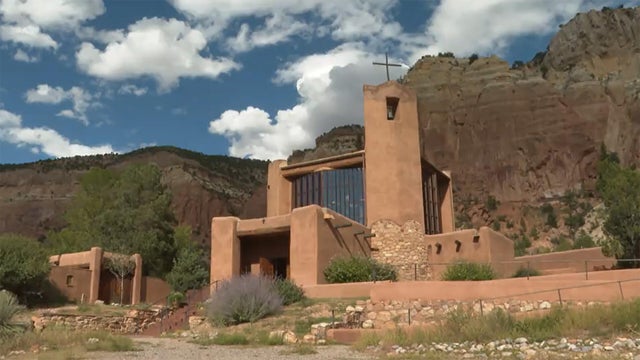
A Basis in Solitude and Prayer
Origins and Founding Rules
The Monastery of Christ within the Desert, a Benedictine neighborhood, stands as a testomony to the enduring attraction of contemplative life. Established in 1964 by a small group of monks from the Abbey of Mount Saviour in New York, the monastery sought a distant location that might foster an intense dedication to prayer, guide labor, and communal residing, all underneath the strictures of the Rule of Saint Benedict. The founding abbot, Father Aelred H. H. H., envisioned a neighborhood deeply rooted within the historic traditions of monasticism, the place the pursuit of God by silence and solitude was paramount.
The preliminary neighborhood comprised seven monks, devoted to establishing a self-sufficient monastery in an untouched wilderness. Their foundational vows included *stabilitas loci*, a dedication to stay in a single place, emphasizing the significance of geographical and religious rootedness. This dedication underscored their want to create a everlasting religious dwelling, away from the transient nature of recent society.
The Benedictine charism, with its emphasis on hospitality, neighborhood, and the seek for God in every day life, guided each facet of their preliminary planning and subsequent growth. The monks arrived with little greater than their religion, their Rule, and a profound want to stay out their vocation in a spot that might actually assist a lifetime of radical detachment and deep religious immersion. Their imaginative and prescient was not simply to construct constructions, however to domesticate a residing religious custom in a brand new, difficult surroundings.
The New Mexico Panorama and Its Religious Resonance
The selection of New Mexico was deliberate and deeply symbolic. The precise website, roughly 75 miles north of Santa Fe, was chosen for its profound isolation and pure grandeur, nestled inside a distant canyon carved by the Chama River. Surrounded by towering, multi-hued mesas and the stark, vibrant colours of the excessive desert, the placement itself turned an integral a part of the monastic expertise.
The arid local weather, the huge open skies, and the profound quietude of the panorama mirrored the inner silence the monks sought to domesticate. This geographical remoteness offered a pure barrier in opposition to the distractions of the secular world, reinforcing the monastic splendid of *stabilitas loci*. The area’s indigenous religious heritage, although indirectly built-in into Benedictine apply, subtly influenced the notion of the land as sacred house, a spot conducive to profound introspection. Early interactions with native Hispano and Native American communities, notably from the close by pueblos, fostered a mutual respect for the land and its religious potential.
The monks acknowledged the religious resonance already current within the land, a historical past of human connection to the divine stretching again millennia, and sought to combine their Benedictine presence respectfully inside this current tapestry. The sheer scale of the panorama, the limitless vistas, and the profound quietude provided a pure cathedral for contemplation, enhancing the monks’ every day prayers and fostering a deeper connection to creation. The challenges of the desert surroundings – the shortage of water, the extremes of temperature – additionally served as a religious self-discipline, reminding the monks of their dependence on God and the preciousness of life.
Architectural Philosophy and Early Building
The monastery’s structure, primarily designed by famend architect George Nakashima in collaboration with the monks, displays a deep respect for the surroundings and the Benedictine values of simplicity and performance. Using domestically sourced adobe and timber, the buildings mix seamlessly into the canyon partitions, showing to develop organically from the earth. The preliminary constructions included a modest chapel, a refectory, easy cells for the monks, and a small guesthouse. Building was largely undertaken by the monks themselves, embodying the Benedictine precept of *ora et labora* – prayer and work.
This hands-on strategy instilled a deep sense of possession and connection to their bodily dwelling. The chapel, consecrated in 1970, turned the religious coronary heart of the neighborhood, its unadorned inside designed to direct consideration in direction of contemplation and the divine, free from visible distractions. The development course of was sluggish and arduous, typically challenged by the distant location and excessive climate situations, requiring immense dedication and resilience from the pioneering neighborhood.
The unique design emphasised pure gentle, passive photo voltaic heating, and a deep connection to the outside surroundings, minimizing environmental affect lengthy earlier than such ideas turned widespread. The adobe partitions, thick and insulating, offered pure temperature regulation, conserving interiors cool in summer season and heat in winter. Each element, from the position of home windows to the selection of native wooden for beams, was thought of with each perform and religious concord in thoughts, creating areas that fostered peace and contemplation. The monastery stands as an architectural marvel of understated magnificence and profound religious intention, a testomony to the facility of human dedication in concord with nature.
Day by day Life and Religious Self-discipline
Life on the monastery is meticulously structured across the Divine Workplace, a cycle of prayer companies noticed seven occasions a day, starting earlier than daybreak with Vigils and concluding after sundown with Compline. These companies, sung in Gregorian chant, punctuate durations of *lectio divina* (sacred studying), guide labor, and personal prayer. Silence is rigorously maintained all through the monastery, particularly in frequent areas just like the refectory, cloister, and through work durations. Communication amongst monks is usually restricted to important issues, and sometimes performed by signal language or transient, whispered exchanges.
This intentional cultivation of exterior silence is designed to facilitate inner quietude, permitting the monks to pay attention extra attentively to God’s voice and to their very own interior religious actions. Guide labor, starting from gardening and baking to sustaining the property and crafting items, is taken into account an integral a part of their religious self-discipline, fostering humility, self-sufficiency, and a tangible connection to the earth. Every monk, upon coming into the novitiate, undergoes a rigorous interval of formation, usually lasting a number of years, studying the Benedictine Rule and immersing himself locally’s lifestyle. This course of culminates in solemn vows of stability, obedience, and *conversatio morum* (constancy to monastic life), a lifelong dedication to the monastic manner. The rhythm of prayer and work creates a profound sense of order and objective, guiding the monks in direction of a deeper union with the divine. The every day schedule isn’t merely a routine however a religious scaffold, supporting their journey of transformation. Even throughout meals, the silence is damaged solely by the studying of religious texts, guaranteeing that even sustenance contributes to religious nourishment.
Financial Self-Sufficiency and Neighborhood Engagement
From its inception, the monastery aimed for a excessive diploma of financial self-sufficiency, a sensible expression of Benedictine prudence and detachment from exterior monetary reliance. Early ventures included a small farm, producing greens and herbs for the neighborhood. Over time, they developed a thriving enterprise promoting spiritual books, handcrafted objects, and, notably, a singular line of gourmand scorching sauces and skincare merchandise comprised of native elements, akin to wild chiles and desert botanicals. These enterprises not solely present important revenue but additionally function a type of guide labor, integrating work into their religious self-discipline, and providing a managed interface with the broader world.
The guesthouse, initially a easy lodging for a number of retreatants, step by step expanded to welcome extra guests in search of silence and religious renewal. The monastery’s relationship with the encompassing communities has been one among quiet cooperation, sometimes offering help to native residents in occasions of want and collaborating in regional cultural occasions, all whereas sustaining their core dedication to enclosure and solitude. They turned a big, if understated, contributor to the native economic system, using a small variety of lay workers from close by cities for duties that don’t require monastic vows, and buying provides from regional companies. This symbiotic relationship underscores the monastery’s function not simply as a religious heart but additionally as a accountable neighborhood member, contributing to the welfare of its geographical neighbors. Their merchandise, typically bearing the monastery’s distinctive branding, have gained a popularity for high quality and authenticity, additional supporting their financial independence.
Evolution of the Retreat Program
The guesthouse program developed organically from the monks’ want to share their religious charism with lay people. Initially, company have been anticipated to stick strictly to the monastic schedule and guidelines of silence, collaborating as intently as attainable within the monks’ every day life. Over a long time, whereas the core dedication to silence remained, this system tailored to accommodate a wider vary of religious seekers. Retreats turned extra structured, providing alternatives for religious route with a monk, entry to the monastic library, and guided durations of contemplation. The demand for these silent retreats grew steadily, reflecting a burgeoning societal want for disconnection and introspection.
The guesthouse services have been periodically upgraded to offer snug but easy lodging, sustaining the ethos of humility and detachment. Every room is designed for solitary reflection, devoid of televisions or web entry, guaranteeing a whole break from exterior stimuli. The monastery’s distant location, which as soon as posed a logistical problem, paradoxically turned one among its best belongings, attracting these actually dedicated to escaping city noise and digital distractions. This system’s success lies in its unwavering dedication to offering an genuine expertise of Benedictine silence, permitting company to immerse themselves totally in a contemplative surroundings. The retreats typically embody introductory talks on Benedictine spirituality, the apply of *lectio divina*, and the significance of silence, guiding company by their immersive expertise.
Key Developments: Adapting Custom in a Noisy World
The Resurgence of Curiosity in Silence
Within the twenty first century, the Monastery of Christ within the Desert has skilled a notable surge in curiosity, a phenomenon instantly linked to the pervasive noise and digital saturation of recent life. As society grapples with info overload, fixed connectivity, and the escalating pressures of city existence, the monastery’s radical dedication to silence has resonated deeply with a brand new era of seekers. Retreat bookings have persistently elevated, typically with ready lists extending for months, indicating a profound societal starvation for quietude. This renewed curiosity isn’t solely confined to conventional spiritual adherents; a good portion of holiday makers now consists of people from various religious backgrounds, agnostics, and even atheists, all drawn by the promise of profound quietude and psychological readability. Sociologists and psychologists have famous a rising “silence economic system,” and the monastery stands as a primary instance of an establishment assembly this modern want.