
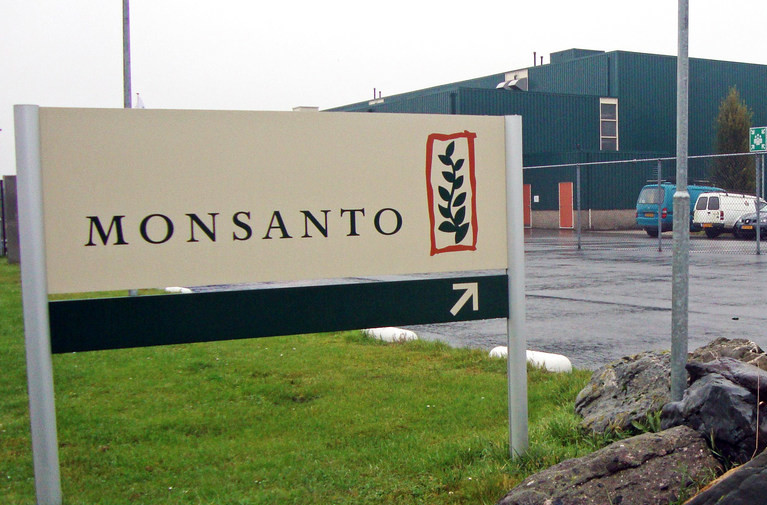
Monsanto Settles Lawsuits Over Toxic PCB Exposure at Seattle-Area School
August 19, 2025
Monsanto, a subsidiary of Bayer AG, has reached a settlement with over 200 plaintiffs, including teachers, students, and parents, who claimed they were sickened by exposure to polychlorinated biphenyls (PCBs) at Sky Valley Education Center in Monroe, Washington, near Seattle. The agreement, announced on August 18, 2025, resolves a high-profile toxic tort case that had drawn significant attention due to its implications for environmental litigation and corporate accountability. While the financial terms remain confidential, the settlement marks a pivotal moment in Monsanto’s ongoing legal battles over PCB contamination. Here’s a detailed look at the case, its background, and its broader impact, based on sources like news.bloomberglaw.com, legalnewsfeed.com, and mgmlaw.com.
Background of the Lawsuit
The lawsuits stemmed from allegations that PCB-containing materials, specifically in aging fluorescent light fixtures at Sky Valley Education Center, leaked and caused serious health issues, including neurological and developmental problems. Monsanto was the sole U.S. manufacturer of PCBs from the 1930s until their production ceased in 1977, two years before a federal ban under the Toxic Substances Control Act of 1979 (epa.gov). The plaintiffs, comprising over 200 individuals, claimed that exposure to PCBs from these fixtures led to significant harm, sparking a series of legal actions against Monsanto.
In 2021, a Washington state jury initially awarded $185 million to three teachers in a related case, citing health damages from PCB exposure (apnews.com). However, the Washington Court of Appeals overturned this verdict in May 2024 due to a choice-of-law error, as the trial court incorrectly applied Missouri law (where Monsanto was headquartered) instead of Washington law, which governed the incident (reuters.com). The plaintiffs appealed to the Washington Supreme Court, raising questions about the standards for proving toxic exposure, but the recent settlement has resolved these claims before further court rulings.
Details of the Settlement
Bayer announced on August 18, 2025, that Monsanto reached agreements in principle to settle all lawsuits related to the Sky Valley Education Center (news.bloomberglaw.com). The settlement covers more than 200 plaintiffs and is funded by a $61.8 million provision set aside by Bayer to address PCB liabilities (bloomberg.com). Key points include:
- Confidential Terms: The exact payout per plaintiff remains undisclosed, but the settlement avoids further trials in what was the 11th PCB-related case in the Seattle area (law360.com).
- No Admission of Liability: Monsanto, consistent with previous settlements, did not admit wrongdoing (legalnewsfeed.com).
- Legal Strategy: Bayer stated that while it remains confident in its defenses, settling was “strategically advantageous” to mitigate litigation risks (bloomberg.com).
The settlement does not affect 10 prior Washington state jury verdicts totaling over $1 billion, which are under appeal (news.bloomberglaw.com). The Washington Supreme Court is still reviewing related legal questions, including whether environmental sampling and expert testimony suffice to prove exposure without biological testing (reuters.com).
Health and Environmental Concerns
PCBs, used in electrical equipment and construction materials for their insulating and non-flammable properties, are linked to serious health risks, including cancer, neurological damage, and developmental issues (epa.gov). The plaintiffs at Sky Valley alleged that leaking light fixtures released PCBs into the air and surfaces, causing harm. Monsanto’s defense argued that:
- No biological proof (e.g., blood tests) showed PCB exposure.
- Air and surface sampling was conducted after PCB-containing materials were removed, weakening causation claims.
- Low-level environmental exposure lacks clear scientific links to the reported health issues (mgmlaw.com).
Despite these arguments, the settlement reflects Monsanto’s strategy to limit further legal and reputational damage, especially after Bayer’s $63 billion acquisition of the company in 2018 (bloomberg.com).
Broader Context and Implications
This settlement is part of a larger wave of PCB litigation against Monsanto, with Bayer facing dozens of lawsuits from school districts, cities, and states over health and environmental damages. Notable related developments include:
- Seattle’s $160 Million Settlement: On July 25, 2024, Monsanto agreed to pay Seattle $160 million to address PCB contamination in the Lower Duwamish River, a Superfund site (independent.co.uk, komonews.com). The funds will support cleanup efforts, including a $27 million stormwater treatment plant (courthousenews.com).
- Other Verdicts: A 2023 Seattle jury awarded $72 million for PCB exposure at a school, and another case saw $165 million awarded to Sky Valley employees (topclassactions.com). A December 2023 verdict ordered Monsanto to pay $857 million to seven former students and volunteers, though this is under appeal (cbsnews.com).
- Ongoing Litigation: Bayer faces potential costs of up to $3.9 billion to settle remaining PCB cases, per Bloomberg Intelligence (bloomberg.com).
The case highlights challenges in toxic tort litigation, particularly proving causation without direct biological evidence. It also underscores the persistence of PCBs in older buildings, as noted by mgmlaw.com, which emphasizes the role of experienced law firms in navigating such claims.
Impact on Stakeholders
- Plaintiffs: The settlement provides financial relief to affected families, avoiding prolonged litigation. However, the confidential terms leave questions about individual payouts.
- Monsanto/Bayer: The settlement reduces immediate litigation risks but doesn’t resolve ongoing appeals or future lawsuits, with Bayer’s shares rising 2.3% in Germany post-announcement (bloomberg.com).
- Communities: Funds from related settlements, like Seattle’s $160 million, will support environmental cleanup, benefiting public health and ecosystems (publiclawlibrary.org).
- Insurers and Legal Firms: The case parallels other high-stakes claims, like Allstate’s $1.48 million no-fault fraud lawsuit (news article above), highlighting insurers’ aggressive stance against questionable claims.
X posts reflect public interest, with @ReutersLegal and @business noting the settlement’s significance in managing Bayer’s PCB liabilities (post:0, post:1). Users like @stlbizjdrew emphasized the scale of the agreement, covering over 200 plaintiffs (post:5).
Advice for Affected Communities
- Check Health Impacts: Those exposed to PCBs should seek medical evaluations, as symptoms may manifest years later (epa.gov).
- Monitor Legal Updates: Follow cases via law360.com or reuters.com for developments on appeals or new lawsuits.
- Engage Legal Counsel: Consult firms experienced in toxic torts, like MG+M (mgmlaw.com), for potential claims.
- Support Cleanup Efforts: Advocate for local environmental remediation, leveraging funds from settlements like Seattle’s $160 million.
Final Thoughts
Monsanto’s settlement with over 200 plaintiffs over PCB exposure at Sky Valley Education Center marks a significant step in addressing legacy contamination issues. While the agreement avoids further trials, it leaves unresolved questions about proving toxic exposure and Monsanto’s broader liability. With billions in potential payouts looming, this case underscores the enduring impact of PCBs and the need for robust environmental and legal accountability. Affected communities should stay vigilant, seek health and legal support, and monitor ongoing litigation to ensure justice and remediation.
Sources: news.bloomberglaw.com, legalnewsfeed.com, mgmlaw.com, independent.co.uk, komonews.com, topclassactions.com, cbsnews.com, apnews.com, reuters.com, law360.com, publiclawlibrary.org, courthousenews.com, epa.gov, stlbizjdrew (X), ReutersLegal (X), business (X)