
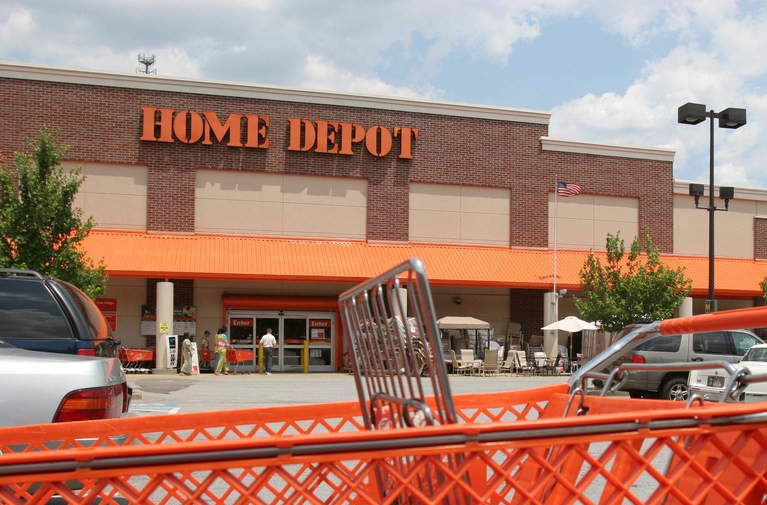
Overview of the Ruling
On November 6, 2025, the U.S. Court of Appeals for the Eighth Circuit vacated a decision by the National Labor Relations Board (NLRB) that had found Home Depot U.S.A. Inc. violated the National Labor Relations Act (NLRA) by barring employees from displaying “BLM” (Black Lives Matter) on their work aprons and constructively discharging one worker. In Home Depot U.S.A. Inc. v. NLRB (No. 24-1513), a three-judge panel—consisting of Judges James B. Loken (G.H.W. Bush appointee), Ralph R. Erickson, and Jonathan A. Kobes (both Trump appointees)—ruled that Home Depot’s enforcement of its uniform policy was justified under the NLRA’s “special circumstances” exception due to heightened racial tensions and safety risks in the Minneapolis suburb where the incident occurred. The court remanded the case to the NLRB for further proceedings but did not address other issues, such as the employee’s constructive discharge claim.
The decision emphasizes the context of the 2020 George Floyd murder, which unfolded just miles from the New Brighton, Minnesota, Home Depot store, leading to widespread protests, vandalism, and temporary store closures. Judge Loken’s opinion underscores that “context matters,” distinguishing the BLM message as tied to broader societal unrest rather than purely workplace-specific concerted activity protected under Section 7 of the NLRA.
Background on the Dispute
The controversy arose in the wake of George Floyd’s killing by Minneapolis police on May 25, 2020, which ignited national protests against racial injustice and police brutality. At the New Brighton Home Depot—a customer-facing retail environment—employees began expressing support for Black Lives Matter amid reports of internal racial harassment and vandalism of a Black History Month display. In February 2021, a Hispanic employee named George Sanchez (described in filings as having previously complained about coworker racism) wrote “BLM” on his orange work apron using a black marker as a show of solidarity with colleagues of color.
Home Depot’s dress code policy, in place since at least 2018, prohibits “causes or political messages unrelated to workplace matters” on required uniforms without prior approval from regional HR. Management informed Sanchez that the message violated this rule and suggested alternatives, such as a diversity, equity, and inclusion (DEI) pin or a “respect for all” pin. When Sanchez refused to remove it, he was barred from returning to work and resigned the following day, claiming constructive discharge. The company then directed other employees to remove similar “BLM” markings from their aprons.
Sanchez filed an unfair labor practice charge with the NLRB, alleging violations of NLRA Sections 7 (protecting concerted activities for mutual aid or protection) and 8(a)(1) (prohibiting employer interference with those rights). An administrative law judge (ALJ) initially dismissed the charge, finding the BLM display was not protected concerted activity. However, in February 2024, the NLRB reversed, ruling that the message was a “logical outgrowth” of prior workplace complaints about racial discrimination and working conditions. The Board ordered Home Depot to reinstate Sanchez with back pay, post notices of the violation, and cease similar conduct.
Home Depot appealed to the Eighth Circuit, arguing the NLRB misapplied the law and ignored the company’s legitimate business interests in maintaining a neutral, safe store environment.
Key Arguments in the Case
Home Depot’s Position (Petitioner)
- Special Circumstances Exception: Under NLRB precedent (e.g., Republic Aviation Corp. v. NLRB, 1945), employers may restrict otherwise protected activity if “special circumstances” justify it to protect business operations, customer relations, or employee safety. Home Depot cited:
- Proximity to Floyd’s murder site (about 10 miles away), leading to local unrest, including protests that disrupted store access and caused vandalism.
- Complaints from other employees about racial tensions, fearing the message could escalate conflicts or provoke counter-messages (e.g., “Blue Lives Matter” or “Thin Blue Line,” which the policy also barred).
- Uniforms as “walking billboards” in a high-traffic retail setting, where polarizing symbols could alienate customers or harm the brand’s neutral image.
- Not Concerted Activity: The BLM display was a general social justice statement, not directly tied to improving specific terms or conditions of employment, per NLRB v. City Disposal Systems, Inc. (1974).
- Evenhanded Enforcement: The policy applied neutrally to all divisive messages, regardless of viewpoint, aligning with First Amendment principles for private employers.
- No Disparate Treatment: Home Depot allowed non-political DEI expressions, showing the restriction was content-neutral in context.
NLRB’s Position (Respondent)
- Protected Concerted Activity: BLM support was inherently linked to workplace racism complaints, making it a continuation of mutual aid among employees. The Board viewed it as advancing broader equality in hiring, promotions, and a harassment-free environment.
- Overbroad Policy: The dress code chilled Section 7 rights without sufficient justification, especially post-Floyd when racial solidarity was a workplace issue.
- Remedial Need: Reinstatement and back pay were necessary to deter retaliation against employees addressing discrimination.
The Eighth Circuit’s Reasoning
In a unanimous opinion authored by Judge Loken, the panel held that the NLRB “erred as a matter of law” by failing to properly weigh special circumstances. Key excerpts and analysis:
- Contextual Specificity: “The activity in dispute was not a display at a random location in the United States; it was not at a normal moment in time; and it was not a generic message for equal rights or employee protection.” The court noted the store’s location amid “civil unrest, protests, and vandalism” created unique risks, including potential customer confrontations or safety threats to staff.
- Indirect Workplace Tie: While acknowledging prior discrimination complaints, the panel found the BLM message had only an “attenuated” connection to store-specific issues. “The BLM message relates to the workplace only in the sense that workplaces are part of society,” distinguishing it from cases like off-duty protests directly about employer policies.
- Business Justification: Home Depot provided “substantial evidence” of legitimate concerns, such as documented employee fears and the need for viewpoint neutrality on uniforms. The court rejected the NLRB’s view that alternatives like pins undermined the policy’s enforcement.
- Precedent Alignment: Drawing on Beth Israel Hospital v. NLRB (1978), the ruling reinforces that NLRA protections yield to employer interests in “promoting the efficient conduct of its business” during volatile periods.
The decision vacates the NLRB order and remands for reconsideration under the correct legal standard, potentially mooting reinstatement.
Broader Implications
This ruling provides employers with greater flexibility to enforce neutral uniform policies during periods of social tension, particularly in retail settings where customer interactions are key. It signals judicial skepticism toward expansive NLRB interpretations of “concerted activity” in the post-Floyd era, potentially influencing similar cases:
| Case | Court/Outcome | Key Similarity/Difference |
|---|---|---|
| Whole Foods (1st Cir., 2024) | Revived individual retaliation claim over BLM mask; dismissed class claims. | Similar mask/uniform issue, but focused on individual firing rather than policy-wide ban. |
| Bar in Birmingham (NLRB, 2023) | Upheld discipline for off-duty BLM protest. | Off-site activity; less direct tie to uniforms or safety. |
| Target/Trader Joe’s suits | Ongoing Title VII claims alleging discriminatory mask policies. | Race discrimination angle, not NLRA; could intersect if escalated. |
For HR leaders, the decision highlights the value of documenting “special circumstances” (e.g., local unrest logs, employee feedback) to defend restrictions. Labor advocates worry it could embolden suppression of social justice expressions, though the court’s nod to alternatives like DEI pins suggests room for inclusive policies.
Neither party has indicated plans to appeal to the Supreme Court as of November 9, 2025, but the NLRB may seek en banc review within the Eighth Circuit. The full opinion is available on the Eighth Circuit’s docket.