
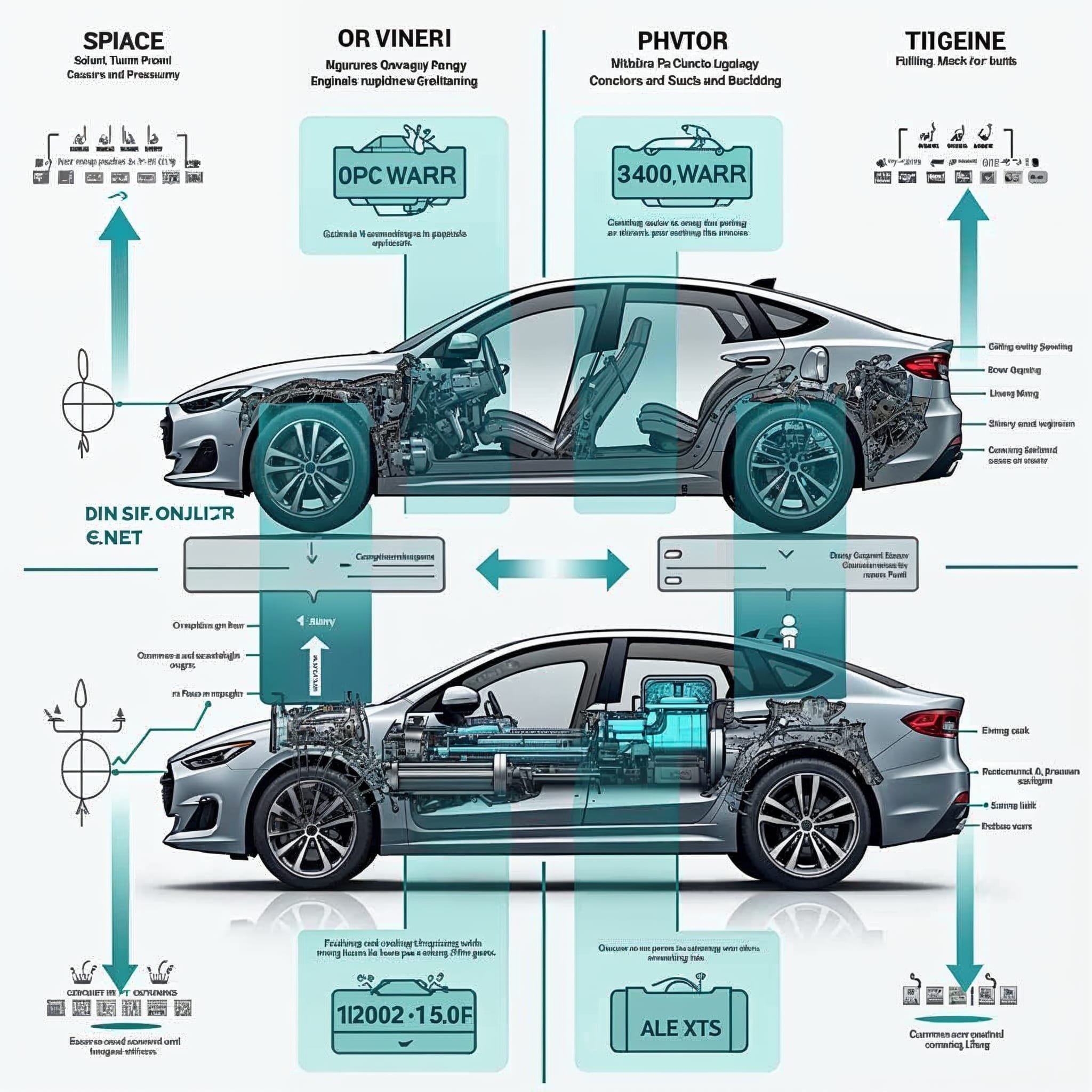
In an era where environmental consciousness and rising fuel costs are paramount concerns for consumers and manufacturers alike, the quest for enhanced fuel economy has never been more urgent. Automotive engineers are constantly pushing the boundaries of technology to create vehicles that sip fuel rather than guzzle it, without compromising on performance or driver experience. At the forefront of this innovation are hybrid electric vehicles (HEVs), which ingeniously combine traditional internal combustion engines (ICE) with electric motors and battery packs to deliver a powerful one-two punch against inefficiency.
Within the diverse landscape of hybrid architectures, the parallel hybrid system stands out as a particularly elegant and effective solution for optimizing fuel consumption. Unlike its series counterpart, which primarily uses the ICE to generate electricity for the motor, the parallel hybrid allows both the gasoline engine and the electric motor to directly drive the wheels, either independently or in tandem. This unique configuration offers a distinct blend of flexibility, power, and efficiency that has made it a popular choice across a wide range of vehicles, from compact sedans to robust SUVs.
This comprehensive article will embark on a deep dive into the fascinating world of parallel hybrid systems. We will dissect their fundamental mechanics, unravel the specific strategies they employ to maximize fuel economy, and meticulously compare them with series hybrid configurations to highlight their respective strengths and trade-offs. Furthermore, we will explore recent advancements in this technology, provide practical examples of their implementation, and address common questions to equip you with a thorough understanding of how these sophisticated machines contribute to a greener and more economical driving future. Whether you are a car enthusiast, a prospective hybrid owner, or simply curious about the cutting edge of automotive engineering, prepare to gain invaluable insights into the science behind optimized fuel efficiency.
Understanding Hybrid Systems: A Fundamental Primer
Before we delve into the specifics of parallel hybrids, it is crucial to establish a foundational understanding of what hybrid vehicles are and why they represent a significant leap forward in automotive technology. At its core, a hybrid electric vehicle is designed to mitigate the inefficiencies inherent in conventional gasoline-powered cars by integrating an electric powertrain. The primary goal is to improve fuel efficiency and reduce emissions, particularly in urban driving conditions where traditional engines are least efficient.
Conventional internal combustion engines are remarkably inefficient during certain operating conditions. For example, when a vehicle is idling, decelerating, or cruising at low speeds, a significant amount of energy is wasted as heat or simply not utilized effectively. Hybrid systems address these inefficiencies through several key mechanisms:
- Regenerative Braking: Instead of wasting kinetic energy as heat during braking (as in conventional cars), hybrids convert this energy back into electricity, storing it in a battery for later use. This is a game-changer for urban stop-and-go traffic.
- Electric-only Driving: At low speeds or under light loads, the electric motor can power the vehicle independently, consuming no gasoline and producing zero tailpipe emissions. This is particularly beneficial for city driving.
- Engine Shut-off: When the vehicle comes to a stop, the gasoline engine can be turned off automatically, conserving fuel that would otherwise be consumed during idling. It restarts seamlessly when the accelerator is pressed.
- Engine Optimization: The electric motor can assist the engine, allowing the ICE to operate more frequently in its most efficient RPM range. This avoids inefficient high-load or low-load engine operation.
- Power Boost: When maximum acceleration is required, both the electric motor and the gasoline engine can work together, providing a combined power output that can often surpass what either system could deliver alone, enhancing performance without necessarily increasing engine size.
These fundamental principles are applied in varying degrees and configurations across different hybrid architectures. The way the electric motor, battery, and internal combustion engine interact is what defines whether a hybrid system is classified as parallel, series, or series-parallel (often called “power-split”). Each configuration has its own set of advantages and disadvantages, tailored to different driving scenarios and manufacturer priorities. Understanding these basic functions sets the stage for appreciating the specific brilliance of the parallel hybrid system.
The Mechanics of Parallel Hybrid Systems
The parallel hybrid system distinguishes itself by allowing the internal combustion engine (ICE) and the electric motor to both be mechanically connected to the drivetrain, meaning they can both directly transmit power to the wheels. This parallel arrangement provides a high degree of flexibility in power delivery, making it one of the most common and versatile hybrid designs available today.
Key Components of a Parallel Hybrid
A typical parallel hybrid system comprises several critical components working in concert:
- Internal Combustion Engine (ICE): This is the primary power source, usually a gasoline engine, responsible for most of the vehicle’s motive power, especially at higher speeds and loads.
- Electric Motor/Generator (MG): This component serves multiple roles. It acts as a motor to propel the vehicle, an assist to the ICE, and a generator during regenerative braking or when driven by the ICE to recharge the battery.
- Battery Pack: A high-voltage battery (typically Lithium-ion or Nickel-Metal Hydride) stores the electrical energy for the motor. It is recharged via regenerative braking or by the ICE driving the generator.
- Power Coupling Device: This is a crucial element that mechanically links the ICE, the electric motor, and the transmission. It can be a clutch, a torque converter, or a set of gears that allows for various power flow configurations.
- Power Control Unit (PCU) / Hybrid Control Unit (HCU): This sophisticated electronic brain manages the flow of power, determining when to use the engine, the motor, or both, based on driving conditions, driver input, and battery state of charge.
Power Flow and Operating Modes
The beauty of the parallel hybrid lies in its ability to operate in several distinct modes, seamlessly transitioning between them to maximize efficiency and performance:
- Electric Vehicle (EV) Mode: At low speeds (typically up to 25-45 mph, depending on the model and battery charge) and under light acceleration, the vehicle can be powered solely by the electric motor. The ICE is completely shut off, resulting in zero emissions and maximum fuel efficiency. This is ideal for city traffic and stop-and-go situations.
- Engine-only Mode: At higher speeds, when the electric motor’s efficiency may decrease or the battery charge is low, the ICE takes over as the primary power source. The electric motor might be disengaged or used minimally for parasitic loads.
- Engine and Motor Assist Mode: During acceleration or when climbing steep grades, both the ICE and the electric motor work together to provide maximum power. The electric motor provides additional torque, allowing for a smaller, more efficient gasoline engine and boosting overall performance. This also helps the ICE operate in its optimal efficiency range by smoothing out load demands.
- Battery Charging Mode:
- Regenerative Braking: When the driver lifts off the accelerator or applies the brakes, the electric motor acts as a generator, converting kinetic energy into electricity and storing it in the battery.
- Engine Charging: If the battery’s state of charge is low, the ICE can run slightly harder than needed for propulsion, using the excess power to drive the electric motor (acting as a generator) and recharge the battery. This often happens when cruising or at optimal engine speeds.
- Start/Stop Functionality: When the vehicle comes to a complete stop (e.g., at a traffic light), the ICE automatically shuts off to save fuel and reduce emissions. It restarts instantly and smoothly when the driver presses the accelerator.
The seamless transitions between these modes are managed by the sophisticated Hybrid Control Unit, which constantly monitors dozens of parameters like vehicle speed, accelerator pedal position, brake pedal input, battery state of charge, and engine load. This intelligent management is what allows parallel hybrids to deliver impressive fuel economy figures and a refined driving experience. Examples of vehicles utilizing parallel hybrid systems include many Honda hybrids (e.g., CR-V Hybrid, Insight), Hyundai/Kia hybrids (e.g., Sonata Hybrid, Niro Hybrid), and some mild hybrid systems.
How Parallel Hybrids Achieve Superior Fuel Economy
The efficiency of parallel hybrid systems stems from their ability to intelligently manage power sources and recover energy that would otherwise be lost. This multi-faceted approach targets specific inefficiencies inherent in conventional gasoline vehicles.
1. Regenerative Braking: Harnessing Lost Energy
This is arguably one of the most significant contributors to fuel economy in any hybrid, and parallel hybrids leverage it effectively. In a conventional car, applying the brakes converts the vehicle’s kinetic energy into heat through friction, which is then dissipated into the atmosphere—a complete waste of energy. Parallel hybrids, during deceleration or braking, reverse the function of the electric motor, turning it into a generator. This generator resists the rotation of the wheels, slowing the vehicle down, and in doing so, converts the kinetic energy back into electrical energy. This electricity is then stored in the high-voltage battery pack, ready to be used later for electric propulsion. This process is particularly effective in urban driving with frequent stops and starts, significantly boosting city fuel economy figures.
2. Electric-only Driving (EV Mode): Zero Emissions, Zero Fuel Consumption
At low speeds, during light acceleration, or when coasting, the parallel hybrid’s electric motor can power the vehicle entirely on its own, with the internal combustion engine completely shut off. This “EV mode” is critical for reducing fuel consumption in stop-and-go traffic and low-speed urban environments where gasoline engines are notoriously inefficient. By eliminating gasoline consumption during these common scenarios, parallel hybrids achieve remarkable city mileage. The range and speed at which EV mode can be maintained depend on the battery’s state of charge, the vehicle’s speed, and the driver’s acceleration input.
3. Engine Shut-off at Idle: Eliminating Waste
Modern parallel hybrids incorporate an automatic start/stop system that goes beyond what conventional cars offer. When the vehicle comes to a complete stop—at a traffic light, in heavy traffic, or even just momentarily—the internal combustion engine seamlessly shuts down. This prevents fuel from being wasted on idling, a period of zero work output where an engine continues to consume fuel and produce emissions. As soon as the driver lifts off the brake pedal or presses the accelerator, the electric motor quickly and silently restarts the engine, ensuring a smooth and responsive takeoff. This functionality is a major factor in improving city fuel economy.
4. Optimal Engine Load Point: Running the ICE at its Best
Internal combustion engines have specific operating points (combinations of RPM and torque) where they are most thermally efficient, meaning they convert the most fuel into useful work. Outside of these optimal points, their efficiency drops. The electric motor in a parallel hybrid acts as a flexible assist. When the driver demands power that would push the ICE into an inefficient range (e.g., very high torque at low RPM, or very low load), the electric motor can provide supplementary torque or absorb excess engine power (by acting as a generator to charge the battery). This allows the hybrid control unit to keep the ICE operating closer to its peak efficiency envelope more often, thus reducing overall fuel consumption.
5. Torque Assist and Right-Sizing the Engine
Because the electric motor can provide instant, powerful torque, manufacturers can often equip parallel hybrid vehicles with smaller, more fuel-efficient internal combustion engines than would be necessary for a conventional vehicle of similar size and performance. The electric motor fills in the torque gaps, especially at low RPMs where gasoline engines might otherwise struggle or require turbocharging. This “right-sizing” of the engine reduces its displacement, weight, and inherent friction losses, leading to better baseline fuel economy even when the electric assist is not active.
By combining these strategies, parallel hybrid systems offer a highly adaptable and efficient solution for diverse driving conditions. Their ability to switch between power sources, recover energy, and optimize engine operation makes them exceptionally adept at achieving impressive fuel economy figures, particularly in mixed driving cycles.
Parallel Hybrid Systems vs. Series Hybrid Configurations
The landscape of hybrid vehicle technology is diverse, with the two most fundamental architectures being parallel and series configurations. While both aim to improve fuel economy and reduce emissions, they achieve these goals through vastly different approaches to power flow and component interaction. Understanding these differences is crucial for appreciating the unique strengths of each system.
Series Hybrid Configuration: Electricity as the Sole Propulsion
In a series hybrid, the internal combustion engine (ICE) has no direct mechanical connection to the wheels. Instead, its sole purpose is to act as a generator, producing electricity to power the electric motor(s) and/or recharge the battery pack. The electric motor(s) are the only components that directly propel the vehicle.
Think of it like an electric car with an onboard generator. The power flow is sequential, or “in series”:
Engine → Generator → Electricity → Electric Motor → Wheels
Key characteristics of series hybrids:
- Pure Electric Drive: The driving experience is very similar to an electric vehicle, with smooth, quiet operation and instant torque from the electric motor(s).
- Engine as Generator: The ICE can run at its most efficient RPM to generate electricity, irrespective of vehicle speed. This is highly efficient for charging the battery or providing power for the motor.
- No Mechanical Link to Wheels: Simplifies the transmission system, as there’s no need to shift gears for the ICE’s propulsion.
- Better City Efficiency: Excels in stop-and-go urban driving due to continuous electric propulsion and efficient engine operation for charging.
- Potential for Larger Batteries: Often paired with larger batteries to provide significant electric-only range.
- Energy Conversion Losses: There are inherent energy losses each time energy is converted (e.g., mechanical to electrical in the generator, then electrical to mechanical in the motor).
- Less Efficient at High Speeds: At sustained high speeds, the engine has to generate all the electricity, which then powers the motor. This double conversion can be less efficient than a direct mechanical connection from the engine to the wheels.
Examples: BMW i3 with Range Extender, Chevrolet Volt (first generation primarily series, second generation more power-split).
Parallel Hybrid Configuration: Shared Propulsion
As discussed extensively, the parallel hybrid allows both the internal combustion engine and the electric motor to mechanically drive the wheels, either individually or simultaneously. They “work in parallel” to deliver power.
The power flow is more flexible:
(Engine + Electric Motor) → Wheels
or
Engine → Wheels
or
Electric Motor → Wheels
Key characteristics of parallel hybrids:
- Direct Mechanical Drive: The ICE can directly drive the wheels, which is generally more efficient at higher speeds as it avoids the energy conversion losses present in series hybrids.
- Flexible Power Delivery: Seamless transitions between engine-only, electric-only, and combined power modes.
- Engine-like Driving Feel: Often feels more similar to a conventional gasoline car, especially at higher speeds, as the engine is directly connected.
- Strong Performance: The combined power of the engine and motor can deliver robust acceleration.
- Excellent Highway Efficiency: The direct mechanical drive from the ICE makes them very efficient for sustained highway cruising.
- Simpler Electrification: Can often integrate with existing transmission designs (e.g., by adding an electric motor between the engine and transmission), potentially reducing manufacturing complexity for certain designs.
Examples: Honda CR-V Hybrid, Hyundai Sonata Hybrid, Kia Niro Hybrid. Note that some systems, like Toyota’s Hybrid Synergy Drive, are often referred to as “series-parallel” or “power-split” hybrids because they combine elements of both, using a planetary gear set to continuously vary the power distribution between the engine, generator, and drive motor, offering the best of both worlds in many scenarios.
When Does Each Excel?
The choice between parallel and series often boils down to intended use and engineering priorities:
- City Driving: Series hybrids often have an edge in dense urban environments due to their pure electric drive capability and the ICE’s ability to run at optimal efficiency as a generator. Parallel hybrids are also very good here with their EV mode and regenerative braking, but the series might be slightly smoother or more “electric” feeling.
- Highway Driving: Parallel hybrids typically excel on the highway. The direct mechanical connection between the ICE and the wheels bypasses the conversion losses that a series hybrid incurs, leading to better long-distance fuel economy.
- Performance: Both can offer strong performance. Parallel hybrids can leverage the combined power of the ICE and motor for quick acceleration. Series hybrids deliver instant electric torque, which can also be very punchy.
In essence, series hybrids prioritize electric propulsion and optimize the engine as an energy generator, while parallel hybrids prioritize direct mechanical power delivery from both sources. Both are ingenious solutions, but their underlying philosophies dictate their optimal applications and efficiency profiles.
Recent Developments and Future Trends in Parallel Hybrid Technology
The evolution of hybrid technology is far from stagnant. Engineers are continuously refining parallel hybrid systems to push boundaries in efficiency, performance, and driver experience. Several key areas are seeing significant advancements and represent future trends.
1. Enhanced Battery Technology
The heart of any hybrid system is its battery. Recent developments in Lithium-ion (Li-ion) battery chemistry have led to:
- Higher Energy Density: Batteries can store more energy in a smaller, lighter package, allowing for greater electric-only range (EV mode) and more robust electric assist without adding excessive weight.
- Improved Power Density: Batteries can deliver and absorb power more quickly, enhancing regenerative braking efficiency and providing more immediate electric torque for acceleration.
- Extended Lifespan and Durability: Advanced thermal management systems and chemistry improvements are leading to batteries that maintain their capacity and power output over a longer vehicle lifespan, addressing consumer concerns about battery degradation.
- Cost Reduction: Manufacturing efficiencies and economies of scale are steadily bringing down battery costs, making hybrid vehicles more affordable.
2. More Efficient Electric Motors and Power Electronics
The electric motors themselves are becoming more compact, powerful, and efficient. Advances include:
- Permanent Magnet Synchronous Motors (PMSMs): These motors offer high power density and efficiency, crucial for hybrid applications. Continuous refinement in magnet materials and winding techniques further improves their performance.
- Integrated Motor/Generator Units: Modern designs often integrate the motor and generator functions into a single, highly efficient unit, reducing complexity and packaging constraints.
- Advanced Power Electronics: The inverters and converters that manage the flow of electricity between the battery, motor, and generator are becoming smaller, lighter, and more efficient at handling higher voltages and currents with minimal energy loss. Silicon Carbide (SiC) semiconductors, for instance, are gaining traction for their superior efficiency at higher temperatures and frequencies.
3. Sophisticated Hybrid Control Units (HCUs) and AI Integration
The “brain” of the hybrid system, the HCU, is becoming incredibly intelligent:
- Predictive Energy Management: Next-generation HCUs are leveraging navigation data, real-time traffic information, and even driver behavior patterns to predict upcoming road conditions (e.g., hills, traffic lights) and optimize power distribution accordingly. For example, a system might prioritize battery charging before a known downhill stretch to maximize regenerative braking potential.
- Machine Learning and AI: Some advanced systems are beginning to incorporate machine learning algorithms to continually learn and adapt to individual driving styles, further personalizing and optimizing efficiency.
- Seamless Transitions: Improvements in software and hardware integration lead to even smoother and imperceptible transitions between engine-only, electric-only, and combined power modes, enhancing the driving experience.
4. Growth of Plug-in Parallel Hybrids (PHEVs)
A major trend is the proliferation of plug-in hybrid electric vehicles that utilize a parallel architecture. PHEVs combine the best of both worlds:
- Extended EV Range: With larger battery packs (compared to conventional hybrids), PHEVs can offer significant all-electric driving ranges (e.g., 20-50 miles or more), allowing many commuters to drive entirely on electricity for their daily routines.
- Flexible Fueling: Once the electric range is depleted, the gasoline engine seamlessly takes over, eliminating range anxiety associated with pure electric vehicles.
- Charging Infrastructure: The increasing availability of home and public charging stations makes PHEVs a practical option for a growing number of consumers.
Many popular PHEVs, such as the Toyota RAV4 Prime, Hyundai Tucson Plug-in Hybrid, and Kia Sorento Plug-in Hybrid, employ sophisticated parallel or power-split (series-parallel) architectures to achieve their impressive blend of electric range and gasoline efficiency.
5. Integration with Advanced Driver-Assistance Systems (ADAS)
Hybrid control systems are increasingly being integrated with ADAS features. For instance, adaptive cruise control or lane-keeping assist systems can feed data to the HCU, allowing it to pre-charge the battery, optimize braking, or prepare for acceleration based on the flow of traffic ahead, further enhancing efficiency and smoothness.
These developments signify a continuous push towards making parallel hybrid systems even more efficient, responsive, and user-friendly. As the technology matures and costs decline, parallel hybrids, especially in their plug-in variants, are poised to play an increasingly central role in the automotive industry’s transition towards sustainable mobility.
Challenges and Considerations for Parallel Hybrid Systems
While parallel hybrid systems offer compelling advantages in terms of fuel economy and performance, they are not without their challenges and considerations. Understanding these aspects provides a balanced perspective on their practical implementation and ownership.
1. Increased Complexity and Cost
- Dual Powertrain: Integrating both an internal combustion engine and an electric motor (often with their own transmissions or coupling devices), along with a high-voltage battery and sophisticated control electronics, inherently adds complexity compared to a conventional gasoline vehicle. This complexity can translate to higher manufacturing costs.
- Initial Purchase Price: Consequently, hybrid vehicles typically have a higher initial purchase price than their non-hybrid counterparts. While fuel savings can offset this over time, it remains a barrier for some consumers.
- Maintenance: While many hybrid components are designed for longevity, the specialized nature of hybrid systems might require trained technicians and potentially more expensive replacement parts (e.g., battery pack replacement, though this is becoming less common).
2. Weight and Packaging
- Additional Components: The electric motor, battery pack, and power electronics add weight to the vehicle. This extra weight can slightly impact handling and performance, although manufacturers work hard to mitigate this.
- Packaging Constraints: Integrating these additional components requires careful design and can sometimes reduce cargo space or passenger room, particularly in smaller vehicles where space is at a premium. Battery placement, for instance, might be under the rear seats or the trunk floor.
3. Performance Trade-offs (in some cases)
- Focus on Efficiency: Many parallel hybrids are engineered with a primary focus on maximizing fuel economy. This might mean that while acceleration is adequate, it may not be as exhilarating as a purely performance-oriented vehicle. However, more powerful parallel hybrids and PHEVs are increasingly offering robust performance.
- Battery Limitations: The electric motor’s full power output is dependent on the battery’s state of charge and its ability to discharge rapidly. In prolonged high-demand situations, if the battery is depleted, the vehicle relies solely on the ICE, potentially impacting sustained performance.
4. Battery Degradation and Lifespan
- Capacity Loss Over Time: Like all rechargeable batteries, hybrid battery packs can experience a gradual loss of capacity over many years and charge cycles. This can slightly reduce electric-only range and overall efficiency.
- Replacement Cost: While modern hybrid batteries are designed to last the life of the vehicle and often come with substantial warranties (e.g., 8-10 years or 100,000-150,000 miles), eventual replacement can be a significant expense. However, the lifespan of these batteries has proven to be quite robust, and replacement is less common than often perceived.
5. Driving Experience Nuances
- Engine Cycling: For drivers accustomed to traditional vehicles, the engine frequently turning on and off (especially in EV mode and start/stop functionality) can initially feel unusual, though most systems are designed for seamless transitions.
- Brake Pedal Feel: Due to the blending of regenerative braking with friction braking, the brake pedal feel in some hybrids can be less linear or consistent than in conventional cars, although this has greatly improved in recent models.
Despite these challenges, the benefits of parallel hybrid systems often outweigh the drawbacks for many drivers, especially given the ongoing advancements addressing these very concerns. Manufacturers are continually working to reduce costs, improve packaging, enhance battery longevity, and refine the driving experience, making parallel hybrids an increasingly attractive and viable option for a broad spectrum of consumers.
Comparison Tables
To further clarify the distinctions and benefits, here are two comparison tables providing relevant data and insights into parallel hybrids and their efficiency.
| Feature/Characteristic | Parallel Hybrid System | Series Hybrid System | Note/Implication |
|---|---|---|---|
| Engine’s Connection to Wheels | Direct mechanical connection (can drive wheels) | No direct mechanical connection (only generates electricity) | Parallel offers direct power, Series offers electric-only feel. |
| Primary Propulsion Source | Engine, Electric Motor, or both (in parallel) | Electric Motor(s) (always) | Series has more EV-like driving. |
| Best for City Driving | Very Good (EV mode, regenerative braking) | Excellent (pure electric drive, efficient engine as generator) | Series often excels in stop-and-go. |
| Best for Highway Driving | Excellent (direct engine drive is efficient) | Good (energy conversion losses can reduce efficiency) | Parallel generally more efficient at sustained high speeds. |
| Driving Feel | More conventional, engine-like, robust combined power | Very smooth, quiet, EV-like, instant torque | Subjective preference for driving experience. |
| System Complexity | Moderate (integration of ICE, motor, transmission) | Moderate (engine, generator, motor, battery, power electronics) | Different types of complexity. |
| Energy Conversion Stages | Fewer for engine power (direct to wheels) | More (mechanical to electrical, then electrical to mechanical) | Fewer conversions generally mean higher efficiency. |
| Plug-in Hybrid (PHEV) Adaptation | Very Common and Effective (e.g., RAV4 Prime, Tucson PHEV) | Common (e.g., early Chevrolet Volt with range extender) | Both architectures are adaptable for PHEVs. |
| Examples | Honda CR-V Hybrid, Hyundai Sonata Hybrid, Kia Niro Hybrid | BMW i3 with Range Extender, some diesel-electric locomotives | Real-world applications showcase distinct design philosophies. |
| Mechanism | How it Improves Fuel Economy | Optimal Driving Conditions | Typical Fuel Economy Impact |
|---|---|---|---|
| Regenerative Braking | Recovers kinetic energy during deceleration, converts to electricity, stores in battery. Reduces reliance on friction brakes and engine. | Stop-and-go city traffic, downhill driving | Significant in city driving (e.g., 20-30% improvement) |
| Electric-only (EV) Mode | Propels vehicle solely with electric motor, turning off the ICE. Eliminates fuel consumption and emissions at low speeds. | Low-speed urban driving, parking lot maneuvers, light acceleration | Up to 100% fuel saving when active, especially in city. |
| Engine Start/Stop | Shuts off ICE when vehicle is stationary. Prevents wasteful idling. | Traffic lights, traffic jams, brief stops | Noticeable in heavy traffic (e.g., 5-10% improvement in city). |
| Engine Optimization (Optimal Load Point) | Electric motor assists or absorbs power, allowing ICE to operate closer to its most efficient RPM and load range. | Variable speeds, moderate acceleration, cruising | Consistent, subtle improvement across driving conditions. |
| Torque Assist / Right-Sizing ICE | Electric motor provides supplementary torque, allowing for a smaller, more efficient ICE. Reduces engine’s base fuel consumption and weight. | Acceleration, hill climbing, general driving | Overall baseline improvement in MPG compared to non-hybrid. |
| Combined Power (Hybrid Boost) | Both ICE and electric motor work together for peak power. Improves acceleration without needing a larger, less efficient ICE. | Hard acceleration, passing maneuvers | Not directly for economy, but enables smaller ICE for better baseline economy. |
| Aerodynamics/Low Rolling Resistance | Often designed with optimized aerodynamics and low rolling resistance tires as part of the overall efficiency package. | All driving conditions, especially highway | Adds to overall efficiency (e.g., 2-5 MPG gain). |
Practical Examples and Real-World Scenarios
Understanding the theoretical mechanics of parallel hybrids is one thing, but seeing how they translate into real-world driving situations provides a clearer picture of their benefits. Let us explore some practical examples and how various parallel hybrid vehicles leverage their technology.
Case Study 1: The Honda CR-V Hybrid – Everyday Efficiency
The Honda CR-V Hybrid is an excellent example of a modern parallel hybrid (specifically, a two-motor hybrid system that can operate effectively in series mode at times, but its core principle is direct drive). It utilizes a 2.0-liter Atkinson-cycle engine paired with two electric motors and a continuously variable transmission (eCVT) equivalent system. Here is how its efficiency plays out:
- City Driving: Imagine driving through a busy downtown area. The CR-V Hybrid frequently engages its EV mode at low speeds, using only the electric motors for propulsion, making for a quiet and fuel-free commute. When you decelerate for a traffic light, the regenerative braking system actively recharges the battery, recapturing energy that would otherwise be lost. When you accelerate from a stop, the electric motor provides instant torque, assisting the gasoline engine and smoothing out acceleration, while often allowing the engine to remain off until higher speeds are reached.
- Highway Cruising: On the open highway, the CR-V Hybrid primarily runs on its gasoline engine, directly driving the wheels, which is the most efficient mode for sustained high-speed travel. However, if you need a burst of speed for passing, the electric motor provides an immediate boost, complementing the engine’s power without forcing it to work excessively hard. During long downhill stretches, the system again engages regenerative braking to recharge the battery.
- Mixed Driving: This seamless blending of power sources results in a combined EPA fuel economy rating significantly higher than its gasoline-only counterpart. Owners report consistent real-world fuel economy figures that closely match or even exceed the official ratings, thanks to the system’s intelligent management across various driving scenarios.
Case Study 2: The Hyundai Sonata Hybrid – Sleek Sedan Efficiency
The Hyundai Sonata Hybrid employs a more traditional parallel hybrid architecture, integrating an electric motor directly between the gasoline engine and a conventional automatic transmission (in this case, a 6-speed automatic). This design allows for highly efficient power transfer and a familiar driving feel.
- Smooth Acceleration: When you press the accelerator from a standstill, the electric motor provides immediate torque, allowing for swift, silent initial acceleration without the gasoline engine needing to rev high. The engine then seamlessly kicks in as speed increases, with the motor continuing to assist for optimal efficiency.
- Highway Efficiency: The direct connection of the ICE to the multi-speed transmission means the Sonata Hybrid can operate the engine in its most efficient gear at highway speeds, avoiding the “rubber band” effect sometimes associated with CVT-based hybrids. This contributes to excellent highway fuel economy.
- Solar Roof Option: Some Sonata Hybrid models offer an optional solar roof that can generate additional electricity to charge the 12V and high-voltage batteries. While not providing massive range, it can contribute to small but tangible fuel savings over time, especially when the car is parked outdoors. This illustrates an innovative approach to supplementing hybrid efficiency.
Case Study 3: Plug-in Parallel Hybrids (PHEVs) like the Kia Sorento PHEV
PHEVs take the parallel hybrid concept further by incorporating larger battery packs that can be charged from an external power source. The Kia Sorento PHEV is a good example of this integration in an SUV platform.
- Daily Commuting in EV Mode: With a fully charged battery (e.g., from home overnight charging), the Sorento PHEV can drive solely on electric power for a significant range (often 30+ miles). This means many drivers can complete their daily commute without using a single drop of gasoline, effectively driving an electric vehicle for most of their routine needs.
- Long Road Trips: For longer journeys beyond the electric range, the gasoline engine seamlessly engages, and the vehicle operates as a traditional parallel hybrid. This eliminates range anxiety, as you can simply refuel with gasoline like any other car. The system still optimizes fuel usage through regenerative braking and engine assist.
- Strategic Charging: Drivers learn to integrate charging into their routine, plugging in at home overnight or at public charging stations during errands. This maximizes the utilization of the cheaper electric power and dramatically reduces overall fuel consumption over the vehicle’s lifetime.
Maximizing Your Parallel Hybrid’s Fuel Economy
As a driver, you can actively influence your parallel hybrid’s fuel economy:
- Gentle Acceleration and Braking: Smooth driving encourages more frequent EV mode operation and maximizes regenerative braking efficiency. Aggressive driving forces the engine to work harder and more often.
- Anticipate Traffic: Looking ahead allows you to coast and brake gently, extending EV mode and improving regeneration.
- Utilize EV Mode: If your vehicle has a dedicated “EV Mode” button, use it strategically in suitable low-speed conditions.
- Maintain Proper Tire Pressure: Correct tire pressure reduces rolling resistance, improving fuel economy regardless of powertrain type, but especially beneficial for hybrids.
- Regular Maintenance: Keeping your engine and hybrid system components in good working order ensures optimal efficiency.
These examples illustrate that parallel hybrid systems are not just theoretical constructs but practical, efficient, and increasingly adaptable solutions for a variety of driving needs, delivering tangible fuel savings in everyday use.
Frequently Asked Questions
Q: What is the primary difference between a parallel hybrid and a series hybrid?
A: The primary difference lies in how the internal combustion engine (ICE) and electric motor deliver power to the wheels. In a parallel hybrid, both the ICE and the electric motor can directly drive the wheels, either together or independently. In contrast, a series hybrid’s ICE does not directly drive the wheels; instead, it acts solely as a generator to produce electricity for the electric motor, which then propels the vehicle. This means a series hybrid always drives on electricity, while a parallel hybrid offers a mix of electric, engine, or combined power.
Q: Are parallel hybrids more fuel-efficient in the city or on the highway?
A: Parallel hybrids are generally very fuel-efficient in both city and highway driving. They excel in the city due to frequent use of electric-only (EV) mode, regenerative braking, and engine shut-off at idle. On the highway, their direct mechanical connection from the engine to the wheels often makes them more efficient than series hybrids, as it avoids the energy conversion losses inherent in series systems at sustained high speeds. Their efficiency is typically strong across mixed driving conditions.
Q: Do parallel hybrids require special fuel or maintenance?
A: No, parallel hybrids typically run on regular unleaded gasoline, just like most conventional cars. While their maintenance is generally similar to a conventional vehicle, some aspects are specialized. For instance, the high-voltage battery and electric motor systems require diagnostic tools and trained technicians. However, many components like brakes (due to regenerative braking) might even last longer than in conventional cars. Regular servicing is key, but it doesn’t usually involve significantly different procedures or costs compared to a modern conventional car.
Q: What is regenerative braking and how does it contribute to fuel economy?
A: Regenerative braking is a crucial feature in hybrids. When you decelerate or press the brake pedal, the electric motor reverses its function and acts as a generator. Instead of wasting kinetic energy as heat (like friction brakes), it converts this energy into electricity, which is then stored in the high-voltage battery. This recovered energy can later be used to power the electric motor, reducing the need for the gasoline engine to run, thus saving fuel, especially in stop-and-go driving.
Q: Can parallel hybrids drive on electricity alone? For how long?
A: Yes, parallel hybrids can drive on electricity alone, a mode often called “EV mode.” The duration and speed at which they can do so depend heavily on the specific vehicle model, the battery’s state of charge, the driver’s acceleration input, and road conditions. Most conventional parallel hybrids can operate in EV mode for short distances (e.g., 1-3 miles) at low to moderate speeds (up to 25-45 mph). Plug-in parallel hybrids (PHEVs) have much larger batteries and can offer significantly longer all-electric ranges, often 20-50 miles or more, before the gasoline engine needs to engage.
Q: Do hybrid batteries need to be replaced often, and how much does it cost?
A: Modern hybrid batteries are designed to last for the lifetime of the vehicle and are typically covered by extensive warranties (e.g., 8-10 years or 100,000-150,000 miles, depending on the manufacturer and region). While degradation can occur over time, outright replacement is less common than often perceived. When a replacement is necessary, costs can vary significantly, ranging from a few thousand dollars to upwards of five thousand dollars, but these costs have been decreasing over time as technology advances and aftermarket options become available.
Q: What is an “Atkinson-cycle engine” and why is it used in some parallel hybrids?
A: The Atkinson-cycle engine is a variant of the four-stroke internal combustion engine designed for improved fuel efficiency at the expense of peak power output. It achieves this by modifying the valve timing to have a shorter compression stroke than its expansion stroke, which results in a more complete combustion and exhaust cycle. In hybrids, where the electric motor can compensate for the Atkinson engine’s lower low-end torque, it’s an ideal choice for maximizing overall fuel economy, especially at constant speeds. Many popular hybrid vehicles, including those with parallel systems, utilize Atkinson-cycle engines.
Q: Are plug-in parallel hybrids (PHEVs) worth the extra cost?
A: The “worth” of a PHEV depends on individual driving habits and access to charging. If you have a short daily commute (within the electric range of the PHEV) and consistent access to charging (especially at home), a PHEV can significantly reduce your gasoline consumption, potentially saving substantial money on fuel and drastically lowering your emissions. The higher initial cost can be offset by fuel savings, potential tax credits, and the benefit of driving electric without range anxiety. For those with long daily commutes or no easy access to charging, a conventional parallel hybrid might be a more cost-effective choice.
Q: How does a parallel hybrid improve performance in addition to fuel economy?
A: The electric motor in a parallel hybrid can provide instantaneous torque, which complements the internal combustion engine’s power, especially at lower RPMs where gasoline engines might be less responsive. This combined power delivery results in stronger, quicker acceleration and smoother power delivery than a comparably sized non-hybrid engine. It allows manufacturers to use smaller, more fuel-efficient gasoline engines without sacrificing performance, often leading to a more satisfying driving experience with an added “boost” when needed.
Q: What are some common parallel hybrid vehicles on the market today?
A: Many manufacturers offer parallel hybrid vehicles. Some popular examples include the Honda CR-V Hybrid, Honda Insight, Hyundai Sonata Hybrid, Hyundai Elantra Hybrid, Kia Niro Hybrid, Kia Sorento Hybrid, and various Toyota models that utilize their “Hybrid Synergy Drive” (which is technically a power-split or series-parallel system but leverages parallel mechanisms for efficiency). Plug-in parallel hybrids (PHEVs) are also growing in popularity, such as the Toyota RAV4 Prime, Hyundai Tucson Plug-in Hybrid, and Kia Sorento Plug-in Hybrid.
Key Takeaways
As we conclude our deep dive into the optimization of fuel economy through parallel hybrid systems, here are the essential points to remember:
- Dual Power Delivery: Parallel hybrids uniquely allow both the internal combustion engine and the electric motor to directly drive the wheels, either simultaneously or independently, offering remarkable flexibility.
- Multi-faceted Efficiency: Their superior fuel economy stems from several integrated strategies: regenerative braking, electric-only (EV) driving, automatic engine shut-off at idle, operation of the ICE at its optimal load point, and torque assist from the electric motor.
- Series vs. Parallel: While series hybrids prioritize electric propulsion with the engine acting as a generator, parallel hybrids emphasize direct mechanical drive. Parallel systems generally excel on the highway due to direct engine power, while series systems can be highly efficient in pure city driving.
- Advanced Technology: Continuous advancements in battery chemistry, electric motor design, power electronics, and sophisticated hybrid control units are making parallel hybrids more efficient, powerful, and durable than ever before.
- PHEV Evolution: Plug-in parallel hybrids (PHEVs) represent a significant trend, offering extended all-electric range for daily commutes combined with the flexibility of a gasoline engine for longer trips.
- Practical Benefits: Real-world examples demonstrate that parallel hybrids deliver tangible fuel savings in diverse driving conditions, offering a smooth and responsive driving experience.
- Driver Influence: Smooth driving habits, anticipation of traffic, and regular maintenance can further enhance a parallel hybrid’s fuel economy.
- Considerations: While beneficial, challenges like initial cost, system complexity, and battery degradation (though increasingly rare) are factors to consider, which manufacturers are continually addressing.
Conclusion
The quest for optimizing fuel economy is a continuous journey, and parallel hybrid systems represent a highly successful and evolving milestone on this path. By ingeniously combining the strengths of both internal combustion engines and electric motors, these vehicles offer a compelling balance of efficiency, performance, and environmental responsibility. Their ability to intelligently switch between power sources, recover energy, and operate the engine at peak efficiency has made them a cornerstone of modern sustainable transportation.
As technology progresses, with advancements in battery capabilities, motor efficiency, and AI-driven control units, parallel hybrid systems are poised to become even more sophisticated and ubiquitous. The rise of plug-in parallel hybrids, in particular, empowers drivers with the flexibility of significant all-electric range for daily needs, coupled with the confidence of traditional gasoline power for extended journeys, effectively bridging the gap between conventional and fully electric vehicles.
For consumers seeking to reduce their carbon footprint, lower their fuel expenses, and embrace innovative automotive engineering, parallel hybrid systems offer a practical, proven, and increasingly refined solution. They are not merely a stepping stone but a vital, enduring component in the global effort to drive towards a more sustainable and fuel-efficient future. Understanding their mechanics and benefits empowers us to make informed choices that contribute to both personal savings and a healthier planet.