
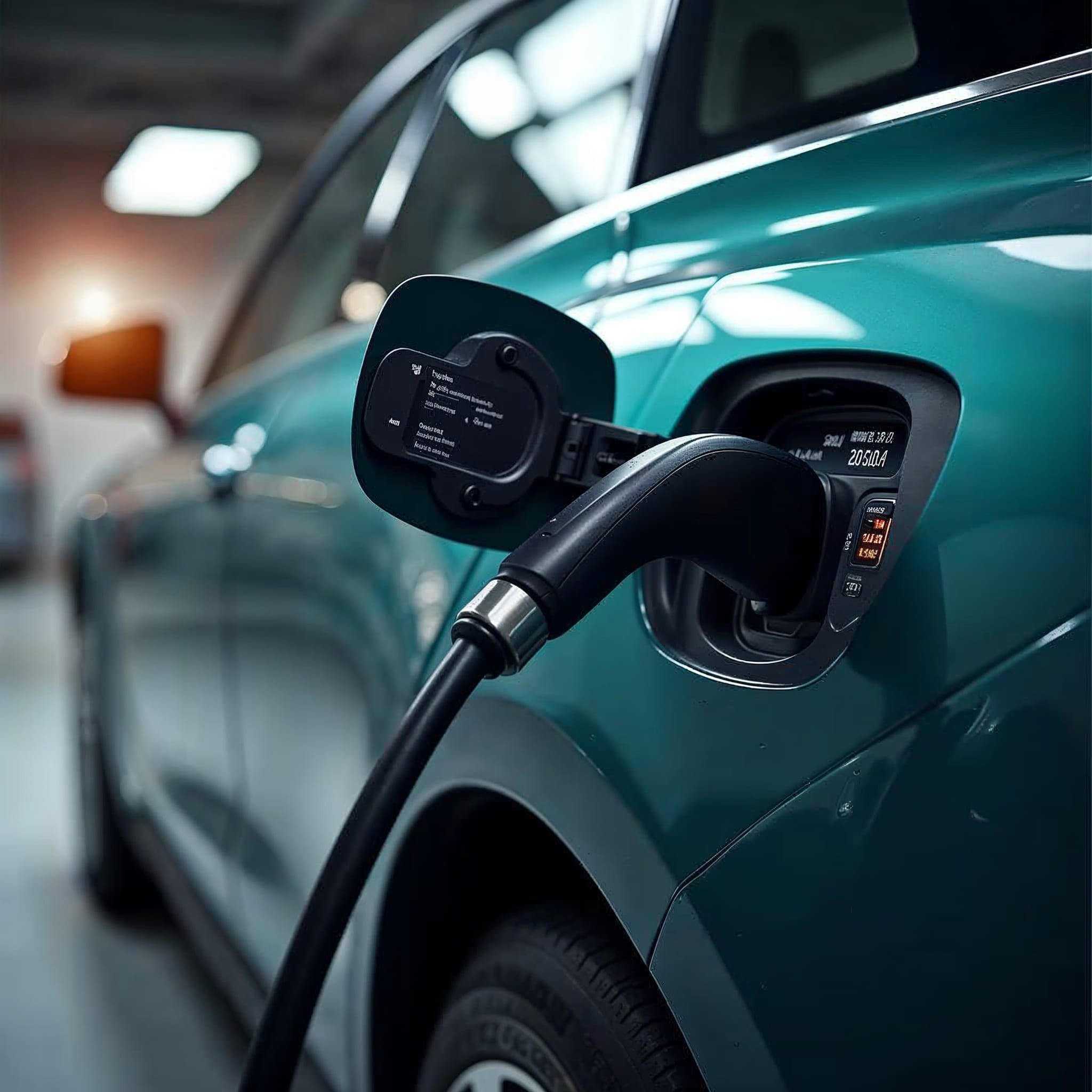
The dawn of the plug-in hybrid electric vehicle (PHEV) has ushered in a new era of automotive versatility, blending the efficiency of electric power with the convenience of gasoline. For many drivers, a PHEV represents the ideal compromise, offering significant environmental benefits, reduced fuel consumption, and the peace of mind of an extended range. However, to truly maximize the investment in a PHEV and enjoy its advantages for years to come, understanding and implementing proper battery care, especially through home charging, is absolutely paramount. The battery is the heart of your PHEV’s electric powertrain, and its longevity directly impacts your vehicle’s performance, range, and resale value.
This comprehensive guide is designed to equip you with expert insights and practical, actionable home charging habits that will significantly extend the life of your PHEV battery. We will delve into the science behind battery degradation, explore optimal charging strategies, demystify common myths, and provide real-world examples to help you integrate these habits seamlessly into your daily routine. By the end of this article, you will be empowered to become a responsible and knowledgeable PHEV owner, ensuring your vehicle continues to perform at its best for the long haul.
Understanding Your PHEV Battery: The Core of Longevity
Before we dive into charging habits, it is crucial to understand the fundamental nature of your PHEV’s power source: the lithium-ion battery. This advanced technology is responsible for storing and delivering the energy that drives your vehicle, and like all batteries, it is subject to degradation over time. By grasping how these batteries work and what factors influence their health, you can make informed decisions that promote their longevity.
Lithium-Ion Fundamentals: How They Work and Degrade
Lithium-ion batteries operate by the movement of lithium ions between a positive electrode (cathode) and a negative electrode (anode) through an electrolyte. During discharge (when you drive), ions move from the anode to the cathode, releasing energy. During charge (when you plug in), the process reverses, and ions move back to the anode, storing energy. This cycle of charging and discharging is fundamental to their operation.
However, this process is not infinitely repeatable. Over time, several factors contribute to the gradual degradation of the battery’s capacity and ability to hold a charge:
- Charging Cycles: Each full charge-discharge cycle contributes to wear. A “cycle” is typically defined as using 100 percent of the battery’s capacity, whether it is from 100 percent to 0 percent once, or from 50 percent to 0 percent twice, or any combination that totals 100 percent. While PHEV batteries are designed for thousands of cycles, minimizing the stress on each cycle is key.
- Depth of Discharge (DoD): How deeply the battery is discharged before recharging has a significant impact. Consistently discharging to very low states of charge (e.g., below 20 percent) and then fully recharging puts more stress on the battery than partial discharges.
- State of Charge (SoC): The percentage of charge a battery holds. Maintaining a very high (near 100 percent) or very low (near 0 percent) SoC for extended periods is known to accelerate degradation. Lithium-ion batteries prefer to operate in a mid-range SoC.
- Temperature Effects: Extreme temperatures are the enemy of lithium-ion batteries.
- High Temperatures: Prolonged exposure to high heat, especially during charging or discharging, accelerates chemical reactions within the battery that lead to capacity loss. This includes both ambient temperatures and heat generated by the charging process itself.
- Low Temperatures: While less damaging than extreme heat, very cold temperatures can temporarily reduce a battery’s power output and charging efficiency. Repeated charging in very cold conditions can also cause lithium plating, which is permanent damage.
- Calendar Aging: This refers to the natural aging process of a battery even when it is not being used. The chemical components within the battery degrade over time, regardless of charging cycles. This process is also accelerated by high states of charge and elevated temperatures.
BMS: Your Battery’s Best Friend
Fortunately, you are not alone in managing your PHEV battery. Every modern PHEV is equipped with a sophisticated Battery Management System (BMS). This electronic brain constantly monitors and controls various aspects of the battery pack to ensure its safety, performance, and longevity. The BMS performs critical functions such as:
- Voltage Monitoring: It keeps an eye on the voltage of individual cells to prevent overcharging or deep discharging, which can be damaging.
- Temperature Control: The BMS actively manages the battery’s thermal system, activating cooling or heating mechanisms to keep the battery within its optimal operating temperature range.
- Current Regulation: It controls the charging and discharging current to prevent excessive loads that could stress the cells.
- State of Charge (SoC) Estimation: Provides accurate readings of how much energy is left in the battery.
- Cell Balancing: Ensures that all cells within the battery pack are charged and discharged uniformly, preventing individual cells from becoming overstressed and thus extending the overall pack’s life.
Understanding the BMS’s role helps to demystify some aspects of battery care. While you control your charging habits, the BMS works tirelessly in the background to protect your investment.
The Golden Rules of Home Charging for PHEVs
With an understanding of how your PHEV battery works, we can now establish the best home charging practices. These rules are designed to minimize stress on the battery cells, thereby slowing down the inevitable process of degradation and maximizing its useful life.
The 80/20 Rule (or 80/60 Rule for PHEVs) for Daily Charging
This is perhaps the most crucial habit for PHEV battery longevity. Lithium-ion batteries experience increased stress when held at very high (above 80 percent) or very low (below 20 percent) states of charge. For daily driving, aim to keep your PHEV’s battery within a comfortable mid-range, typically between 20 percent and 80 percent.
- Why avoid 100 percent? Charging to 100 percent fills the battery completely, pushing lithium ions to their maximum capacity. This creates higher internal resistance and puts more strain on the electrodes. While PHEVs often have a buffer (meaning 100 percent on your dashboard might not be a true 100 percent of the battery’s physical capacity), consistently topping off to full capacity, especially if the vehicle then sits for extended periods, can accelerate calendar aging.
- Why avoid below 20 percent? Deep discharges also stress the battery. When the SoC drops very low, the internal resistance increases, and the chemical reactions become less efficient, leading to greater wear and tear. While your BMS will prevent dangerous deep discharges, consistently running the battery down unnecessarily shortens its lifespan.
Practical Application:
Many modern PHEVs and smart home charging stations (EVSEs) allow you to set a maximum charging limit. If your vehicle has this feature, configure it to stop charging at 80 percent. If not, consider manually unplugging your vehicle once it reaches around 80 percent. For PHEVs specifically, some manufacturers implement a strategy where the electric range is primarily used within a narrower SoC band (e.g., 20-80 percent of the *full battery capacity*), while the remaining capacity is reserved to protect the battery and ensure hybrid functionality. This might mean your dashboard “100 percent” is already a buffered value. Consult your vehicle’s manual for specific recommendations.
Real-life example: Imagine you commute 25 miles daily, and your PHEV has an all-electric range of 40 miles. Instead of charging to 100 percent every night, which you do not need, set your charger or car app to charge only to 80 percent. This ensures you have more than enough range for your daily needs while significantly reducing battery stress.
Optimal Charging Speeds: When Slower is Better
Home charging typically involves Level 1 (120V standard outlet) or Level 2 (240V dedicated circuit) charging. While Level 2 charging is much faster, slower charging rates are generally kinder to the battery.
- Level 1 Charging (120V): This is the slowest method, using a standard wall outlet. It typically adds 2-5 miles of range per hour. For many PHEV owners, especially those with shorter commutes, Level 1 charging overnight is perfectly adequate and is the gentlest on the battery. The lower current generates less heat, minimizing thermal stress.
- Level 2 Charging (240V): This requires a dedicated 240V circuit and a specialized EVSE, offering 12-35 miles of range per hour. While convenient for faster top-ups or larger battery PHEVs, regularly charging at the highest possible Level 2 rate can generate more heat and potentially contribute to slightly faster degradation compared to Level 1, although the difference is often marginal with modern BMS.
Recommendation: Use the slowest charging speed that comfortably meets your daily needs. If Level 1 charging overnight gets you enough electric range for your commute, stick with it. Reserve faster Level 2 charging for times when you need a quicker turnaround, such as before an unplanned long trip.
Temperature Management: Keeping Your Battery Cool (or Warm)
As discussed, extreme temperatures are detrimental to battery health. Managing the battery’s temperature during charging is a critical habit.
- Avoiding Extreme Heat:
- Park in the Shade: If charging outdoors in hot climates, try to park your PHEV in a shaded area or a garage to keep the battery pack cooler.
- Charge During Cooler Hours: In very hot regions, consider charging your PHEV during the cooler parts of the day or overnight, rather than in the scorching midday sun.
- Pre-cooling (if available): Some PHEVs allow you to pre-cool the cabin and, by extension, the battery using grid power before you drive or charge, reducing the initial thermal load.
- Protecting Against Extreme Cold:
- Charge in a Garage: A garage offers insulation against freezing temperatures, keeping the battery warmer.
- Pre-heating (if available): Just as pre-cooling helps in heat, pre-heating in cold weather warms the battery to an optimal operating temperature before charging or driving, which improves efficiency and reduces stress. Many PHEVs will do this automatically when plugged in during cold weather.
- Avoid Cold Soaks: Try to plug in your PHEV in cold weather even if you do not need a full charge. Being plugged in allows the BMS to use grid power to warm the battery, rather than depleting its internal energy for heating.
The Myth of Constant Plugging-In
A common question is whether it is bad to leave your PHEV plugged in all the time. For modern PHEVs, the answer is generally “no, it is not harmful,” but with important nuances.
Your PHEV’s BMS is highly intelligent. Once the battery reaches its set charge limit (e.g., 80 percent or 100 percent), the BMS stops the charging process. It will then only engage “trickle” charging if the battery naturally loses a small amount of charge over time (due to parasitic drain or calendar aging) to keep it topped off at the set limit. This is not continuous charging that overstresses the battery.
However, there are still considerations:
- If you are consistently charging to 100 percent and leaving it plugged in for days on end, while the BMS prevents overcharging, it still holds the battery at a high SoC, which contributes to calendar aging. This goes back to the 80/20 rule.
- If you follow the 80/20 rule and set your charge limit to 80 percent, leaving it plugged in ensures the BMS can maintain that optimal SoC, which is beneficial.
Recommendation: It is generally fine to leave your PHEV plugged in, especially if you have set a charging limit below 100 percent. This allows the BMS to manage the battery’s temperature and maintain an optimal SoC. If you are going away for an extended period, aim for a 50-60 percent SoC before leaving it unplugged or plugged in at a reduced charge level.
Advanced Charging Strategies and Smart Home Integration
Leveraging technology can further optimize your PHEV charging habits, making battery preservation convenient and cost-effective.
Utilizing Smart Chargers and Apps
Smart EVSEs (Electric Vehicle Supply Equipment) and vehicle companion apps offer a wealth of features that are invaluable for battery longevity:
- Scheduling: Most smart chargers and PHEV apps allow you to schedule charging sessions. This is essential for both battery health and cost savings.
- State of Charge (SoC) Limits: As mentioned, many allow you to set a maximum charge percentage (e.g., 80 percent), preventing unnecessary charging to full capacity.
- Remote Monitoring: Keep an eye on your charging status, current SoC, and even battery health metrics from your smartphone.
- Power Management: Some advanced smart chargers can integrate with your home’s energy management system, ensuring that your EV charging does not overload your electrical panel when other high-demand appliances are in use.
Example: You arrive home with 30 percent battery, planning to leave at 7 AM the next morning. Instead of immediately charging to 100 percent, you schedule your smart charger to begin charging at 2 AM, stopping at 80 percent by 6 AM, utilizing off-peak electricity rates and minimizing the time spent at high SoC.
Time-of-Use (TOU) Electricity Rates and Off-Peak Charging
Many utility companies offer Time-of-Use (TOU) electricity rates, where the cost of electricity varies depending on the time of day. Charging during off-peak hours (typically overnight) is significantly cheaper. This strategy aligns perfectly with good battery habits:
- Cost Savings: Charge when electricity is cheapest.
- Battery Health: Overnight charging often means slower charging (if you have sufficient time), and it allows the vehicle to charge during cooler ambient temperatures, both beneficial for the battery.
Strategy: Program your vehicle or smart charger to begin charging a few hours before your departure time, ensuring it reaches your desired SoC (e.g., 80 percent) just as you are ready to leave. This minimizes the time the battery spends at a high SoC. For instance, if you leave at 7 AM and want to reach 80 percent, and it takes 3 hours to charge, schedule it to start at 4 AM.
Solar Power Integration
For homeowners with solar panels, integrating your PHEV charging with your solar production offers both environmental and economic benefits. You can set up your charging schedule to utilize excess solar energy generated during the day, effectively charging your car for free and further reducing your carbon footprint. Smart energy management systems can help prioritize charging during periods of high solar generation.
Monitoring and Maintenance for Long-Term Health
Beyond daily charging habits, keeping an eye on your PHEV’s overall health and engaging in proper maintenance practices can further contribute to battery longevity.
Understanding Your PHEV’s Battery Health Metrics
While most PHEVs do not display a “battery health percentage” as directly as some dedicated EVs, you can often monitor various indicators:
- Reduced Electric Range: A noticeable and consistent drop in your all-electric range over time, despite consistent driving habits and similar conditions, can be an early indicator of degradation.
- Vehicle Diagnostic Tools/Apps: Some PHEV manufacturers provide detailed battery health reports or diagnostic tools accessible through their companion apps or dealership service centers. These might show metrics like “State of Health (SoH)” or “usable capacity.”
- Dealer Diagnostics: If you suspect significant degradation, a certified dealership can perform specialized diagnostics to assess the battery pack’s health accurately.
It is important to remember that some fluctuation in electric range is normal due to factors like temperature, terrain, driving style, and accessory use. Look for persistent declines.
Software Updates and Recalls
Automotive technology, including battery management, is constantly evolving. Manufacturers frequently release software updates for your PHEV’s onboard systems, including the BMS. These updates can:
- Improve charging efficiency.
- Refine battery temperature management algorithms.
- Optimize energy regeneration.
- Address known issues or vulnerabilities.
Recommendation: Always ensure your PHEV’s software is up-to-date. Pay attention to manufacturer recalls or service bulletins related to the battery system. These are crucial for maintaining optimal performance and safety, and can directly impact longevity.
Occasional Full Cycles (The “Calibration” Charge)
While the 80/20 rule is excellent for daily use, an occasional full charge to 100 percent, followed by driving until the battery is nearly depleted (though not completely empty, allowing the hybrid system to take over), can be beneficial. This is often referred to as a “calibration charge.”
- Purpose: The BMS relies on accurate voltage and current readings to estimate the battery’s SoC and SoH. Periodically allowing the battery to experience its full voltage range (from near empty to full) helps the BMS recalibrate its internal sensors and improve the accuracy of its range estimations.
- Frequency: This is NOT a daily habit. Performing a calibration charge once every few months or before a long trip is usually sufficient. Consult your PHEV’s owner’s manual for specific recommendations.
- Why not always? Doing this too frequently negates the benefits of the 80/20 rule for daily longevity. It is a maintenance task, not a routine charging practice.
Dispelling Common PHEV Charging Myths
The world of electric vehicles is still relatively new to many, leading to several misconceptions about battery care. Let us debunk some common PHEV charging myths.
Myth: “Always Charge to 100 Percent for Max Range”
Reality: While charging to 100 percent certainly gives you maximum immediate electric range, doing so daily, especially if you do not immediately use that full charge, can accelerate battery degradation. As discussed, lithium-ion batteries prefer a mid-range SoC. For daily commutes, 80 percent is often more than enough and much kinder to the battery.
Myth: “Completely Drain the Battery Before Recharging”
Reality: This myth stems from older nickel-cadmium (NiCad) batteries, which suffered from a “memory effect.” Modern lithium-ion batteries in PHEVs do NOT have this memory effect. In fact, deep discharges (below 20 percent SoC) are more stressful for lithium-ion batteries and should generally be avoided for daily use. While an occasional nearly full discharge for BMS calibration is acceptable, it is not a routine practice.
Myth: “Fast Charging is Always Bad”
Reality: “Fast charging” for PHEVs usually refers to Level 2 (240V) home charging, not the DC Fast Charging (Level 3) primarily used by pure EVs (which most PHEVs are not equipped for). Even if a PHEV supports faster DC charging, the impact of occasional fast charging on battery life is often overstated. Modern PHEV batteries and their BMS are designed to handle various charging rates safely. The key is moderation. While a slower charge is generally gentler, using Level 2 when you need it will not significantly harm your battery, especially if it is not done every single day and combined with good SoC management.
The Future of PHEV Battery Technology and Charging
The landscape of automotive technology is dynamic, and PHEVs are at the forefront of this evolution. Future developments promise even greater battery longevity and more intelligent charging solutions.
Advancements in Battery Chemistry
Researchers are continuously working on new battery chemistries that promise higher energy density, faster charging capabilities, and significantly longer lifespans. Solid-state batteries, for instance, are a promising technology that could offer improved safety, energy density, and potentially far greater durability than current liquid electrolyte lithium-ion batteries. As these technologies mature, future PHEVs will likely come with even more robust and long-lasting battery packs, further reducing concerns about degradation.
Bi-directional Charging and Vehicle-to-Grid (V2G)
An exciting development on the horizon for many EVs and potentially some PHEVs is bi-directional charging. This technology allows electricity not only to flow from the grid to your vehicle but also from your vehicle back to your home (Vehicle-to-Home or V2H) or even back to the grid (Vehicle-to-Grid or V2G). Imagine your PHEV acting as a giant power bank, providing electricity to your home during a power outage or selling excess energy back to the grid during peak demand hours.
While still in its early stages of deployment for consumer vehicles, V2G has the potential to:
- Enhance grid stability by leveraging parked vehicles as distributed energy storage.
- Offer significant financial benefits to vehicle owners who can earn money by providing grid services.
- Increase energy resilience for homes.
The battery management systems in V2G-capable PHEVs will be even more sophisticated, designed to manage these complex energy flows without compromising battery health, ensuring longevity even with bi-directional use.
Comparison Tables
To help visualize some of the key differences and impacts of various charging aspects, here are two comparison tables.
| Feature | Level 1 Home Charging (120V) | Level 2 Home Charging (240V) |
|---|---|---|
| Power Output (Approx.) | 1.4 – 1.9 kW | 3.3 – 19.2 kW (Commonly 7-11 kW for home use) |
| Charging Speed (Range/Hour) | 2 – 5 miles | 12 – 35 miles |
| Installation Requirements | Standard wall outlet (NEMA 5-15) – plug and play | Dedicated 240V circuit, professional electrician installation (NEMA 14-50 or hardwired) |
| Cost of EVSE Hardware | Included with most PHEVs or very low cost ($0 – $300) | Moderate to high ($300 – $1,000+) |
| Installation Cost | None (if existing outlet) | High ($500 – $2,000+, depending on electrical panel and wiring distance) |
| Impact on Battery Health (Generally) | Gentler, less heat generation, ideal for daily partial charges | Faster, generally safe with modern BMS, but higher current can generate more heat |
| Ideal Use Case | Overnight charging for commuters with shorter electric range needs, supplemental charging | Faster top-ups, larger PHEV batteries, homes with higher daily electric range needs |
| Charging Habit | Impact on Battery Health | Longevity Score (1-5, 5 being best) |
|---|---|---|
| Consistently charging to 80% SoC for daily use | Reduces stress on electrodes, minimizes calendar aging, preserves cycle life. | 5 |
| Regularly charging to 100% SoC and leaving it plugged in | Increases electrode stress, accelerates calendar aging, slightly reduces overall lifespan. | 3 |
| Allowing battery to frequently drop below 20% SoC | Increases stress on cells, especially at lower voltages, accelerates degradation. | 2 |
| Using Level 1 (slow) charging for daily needs | Minimal heat generation, gentlest on battery, ideal for frequent partial charges. | 5 |
| Frequent Level 2 (fast) charging for all needs | Higher current can generate more heat, but generally safe with BMS. Slight increase in degradation compared to Level 1. | 4 |
| Charging in extreme hot weather (direct sun) | Accelerates chemical degradation, increases internal resistance, significant capacity loss. | 1 |
| Charging in extreme cold weather (unheated garage) | Can reduce efficiency, temporarily reduce power, risk of lithium plating if no pre-heating. | 2 |
| Utilizing smart charging schedules for off-peak and SoC limits | Optimizes charging window, maintains ideal SoC, reduces cost, prolongs life. | 5 |
| Ignoring software updates and recalls | Misses critical BMS improvements, potential for suboptimal battery management. | 2 |
| Performing occasional BMS calibration (full cycle) | Improves accuracy of SoC estimations, necessary for BMS health. (Not for daily use) | 4 (when done occasionally) |
Real-World Scenarios: Applying Smart Charging Habits
Let us look at how these expert charging habits can be applied in various real-life situations for PHEV owners.
The Commuter’s Strategy: Daily Partial Charging
Meet Sarah, who drives a PHEV with an estimated 35 miles of all-electric range. Her daily commute is 20 miles round trip. She lives in a suburban area with access to a Level 1 charger in her garage.
Sarah’s strategy:
- Daily Habit: When she gets home, her battery is typically around 40-50 percent SoC. She plugs into her Level 1 charger.
- Smart Setting: She uses her car’s app to set the charging limit to 80 percent. Since Level 1 is slow, it takes a few hours to reach 80 percent, well before she leaves the next morning.
- Benefit: She always has more than enough electric range for her commute (20 miles out of 80 percent of 35 miles), and her battery is never left at 100 percent for extended periods. The slow charge rate is also gentle on the battery.
This approach maximizes battery longevity by staying within the optimal 20-80 percent SoC window for daily use and utilizing the gentler Level 1 charging speed.
The Weekend Warrior: Full Charge for Longer Trips, Then Back to Partial
John owns a PHEV with a 50-mile electric range. During the week, his driving is minimal, but on weekends, he often takes longer trips of 100+ miles. He has a Level 2 charger at home for convenience.
John’s strategy:
- Weekday Habit: For his infrequent local drives, he charges his PHEV to about 70-80 percent using his Level 2 charger, scheduling it for off-peak hours overnight. This keeps the battery healthy for day-to-day use.
- Weekend Trip Habit: The night before a long weekend trip, he overrides his usual setting and charges his PHEV to 100 percent. This ensures he starts his journey with maximum electric range, maximizing fuel economy for the initial leg of the trip.
- Post-Trip Habit: Upon returning home, even if the battery is low, he charges it back up to his usual 70-80 percent limit. He avoids leaving the battery fully charged or fully depleted for long durations.
This flexibility allows John to leverage the full capacity when needed, without making it a daily habit that accelerates degradation.
The Climate Conqueror: Adapting to Extreme Temperatures
Maria lives in a region that experiences harsh winters and scorching summers. She understands the impact of temperature on her PHEV’s battery.
Maria’s strategy:
- Winter Habit:
- She always parks her PHEV in her attached, unheated garage, which provides some insulation from the freezing outdoor temperatures.
- She keeps her PHEV plugged in overnight. Even if not charging, the BMS uses grid power to keep the battery within a safe temperature range, preventing cold-soaking.
- She utilizes her car’s pre-conditioning feature 15 minutes before departure, warming both the cabin and the battery using grid power.
- Summer Habit:
- When charging outdoors, she makes an effort to park her PHEV in the shade.
- She schedules her charging sessions to occur overnight when ambient temperatures are cooler, avoiding the peak heat of the day.
- If she knows her car will be sitting for an extended period in extreme heat, she ensures the battery SoC is around 50-60 percent before leaving it.
Maria’s proactive temperature management helps her mitigate the damaging effects of extreme weather, preserving her battery’s health year-round.
Frequently Asked Questions
Q: What is the ideal State of Charge (SoC) for my PHEV battery when parked for extended periods?
A: If you plan to leave your PHEV parked for an extended period (weeks or months), the ideal State of Charge is typically around 50-60 percent. This mid-range SoC minimizes stress on the battery cells and slows down calendar aging. Avoid leaving it at 100 percent or below 20 percent for long durations.
Q: Is Level 1 charging (standard wall outlet) better for battery longevity than Level 2 charging?
A: Generally, yes, Level 1 charging is considered slightly gentler on the battery. The slower charge rate generates less heat, which reduces thermal stress on the battery cells. For daily partial charges, if Level 1 meets your needs, it is an excellent choice for maximizing longevity. However, modern PHEV batteries and their sophisticated Battery Management Systems (BMS) are designed to handle Level 2 charging safely, so occasional or regular Level 2 use is not detrimental if managed correctly (e.g., sticking to the 80/20 rule).
Q: How does extreme cold weather affect my PHEV battery and charging?
A: In extreme cold, battery performance and charging efficiency can temporarily decrease. The battery may deliver less power, and charging can take longer. Repeated charging in very cold conditions without proper pre-heating can also risk lithium plating, a permanent form of degradation. Your PHEV’s Battery Management System (BMS) usually incorporates thermal management to warm the battery when plugged in, so it is often beneficial to keep your car plugged in during cold weather even if not actively charging, allowing the car to use grid power to maintain optimal battery temperature.
Q: My PHEV charges to 100 percent. Should I always stop it at 80 percent manually?
A: If your PHEV or home charging station (EVSE) allows you to set a maximum charge limit, it is highly recommended to set it to 80 percent for daily charging. If not, manually unplugging around 80 percent can be beneficial, especially if the car will sit for hours after reaching full. However, many PHEVs have a built-in buffer, meaning the “100 percent” displayed on your dashboard is not necessarily the true physical 100 percent of the battery’s capacity, offering some protection. Consult your vehicle’s owner’s manual for specific manufacturer recommendations.
Q: Can public fast chargers (DC Fast Chargers) harm my PHEV battery?
A: Most PHEVs do not support DC Fast Charging (Level 3) capabilities. If yours does, occasional use of DC fast chargers is generally safe due to robust Battery Management Systems (BMS). However, frequent and repeated DC fast charging can generate more heat and stress on the battery compared to slower AC charging, which could incrementally accelerate degradation over the very long term. For PHEVs, AC Level 2 charging is typically the fastest option you’ll use regularly.
Q: What is a Battery Management System (BMS) and why is it important for my PHEV?
A: The BMS is a sophisticated electronic system that monitors and controls all aspects of your PHEV’s battery pack. It manages voltage, current, temperature, and individual cell balancing. Its importance cannot be overstated: the BMS is crucial for preventing overcharging, over-discharging, overheating, and other conditions that could damage the battery or pose safety risks. It actively works to protect your battery and optimize its lifespan.
Q: How often should I fully discharge and recharge my PHEV battery for “calibration”?
A: This is NOT a daily or weekly habit. An occasional (e.g., once every few months or before a long trip) full charge followed by a nearly full discharge (letting the electric range go down significantly, but not completely to 0, as the hybrid system will take over) can help the BMS recalibrate its State of Charge (SoC) estimations, improving the accuracy of your range display. Rely on your owner’s manual for specific recommendations.
Q: Will keeping my PHEV plugged in all the time degrade the battery faster?
A: For modern PHEVs, the intelligent Battery Management System (BMS) prevents overcharging. Once the battery reaches its set charge limit, the BMS stops the charging process. It will only “trickle charge” to maintain that limit if needed. So, leaving it plugged in is generally not harmful, especially if you set a charge limit below 100 percent. In cold weather, it is often beneficial to leave it plugged in so the BMS can use grid power to manage battery temperature.
Q: What is the expected lifespan of a PHEV battery, and what is the typical cost for replacement?
A: Most PHEV batteries are designed to last the life of the vehicle, typically 8-10 years or 100,000-150,000 miles, with many exceeding these figures. Manufacturers often provide warranties covering the battery for at least 8 years or 100,000 miles, reflecting confidence in their longevity. Battery replacement costs vary widely depending on the PHEV model and manufacturer, ranging from several thousand dollars to upwards of $10,000 or more. However, complete pack replacements are relatively rare, and individual modules can sometimes be replaced. Following good charging habits significantly reduces the likelihood of premature replacement.
Q: How can I tell if my PHEV battery is degrading?
A: The most common sign of degradation is a noticeable and consistent reduction in your all-electric driving range over time, even under similar driving conditions and temperatures. Other signs might include the battery reaching its full charge quicker or depleting faster than it used to, or inconsistencies in the range displayed. For a precise assessment, a dealership can perform diagnostic tests to check the battery’s State of Health (SoH).
Key Takeaways for PHEV Battery Longevity
- Embrace the 80/20 Rule: For daily driving, aim to keep your PHEV’s battery charged between 20 percent and 80 percent to minimize stress and extend its life.
- Prioritize Slower Charging: Use the slowest charging speed (Level 1) that meets your daily needs. It is gentler on the battery and generates less heat.
- Manage Temperature: Protect your battery from extreme heat by parking in the shade and charging during cooler hours. In cold weather, utilize garages and pre-conditioning, and keep your car plugged in.
- Utilize Smart Technology: Leverage your PHEV’s app and smart charger features for scheduling charging and setting SoC limits.
- Stay Updated: Ensure your vehicle’s software is current, as updates often include improvements to battery management.
- Occasional Calibration: Perform a full charge and nearly full discharge cycle only occasionally (every few months) to help your Battery Management System recalibrate.
- Debunk Myths: Do not always charge to 100 percent, do not completely drain the battery, and understand that occasional fast charging (Level 2) is generally safe.
- Optimal Storage: If parking for an extended period, aim for a 50-60 percent SoC.
Conclusion
Your plug-in hybrid electric vehicle is a marvel of modern engineering, offering a compelling blend of efficiency, performance, and environmental responsibility. The battery, being the heart of its electric powertrain, is a vital component whose longevity directly impacts your ownership experience and the vehicle’s long-term value. By adopting the expert home charging habits outlined in this guide, you are not just plugging in your car; you are investing in its future.
Understanding the nuances of lithium-ion battery behavior, from the ideal State of Charge to the impact of temperature and charging speed, empowers you to make informed decisions. Integrating these practices, such as the 80/20 rule for daily charging, utilizing smart charging schedules, and being mindful of environmental conditions, will significantly slow down the natural process of battery degradation. Modern PHEVs, equipped with sophisticated Battery Management Systems, are incredibly resilient, but your proactive care can make a substantial difference over many years of ownership.
Embrace these habits, and you will not only ensure your PHEV continues to deliver its promised electric range and performance but also contribute to a greener, more sustainable future by maximizing the lifespan of its most critical component. Drive smarter, charge wiser, and enjoy the full potential of your plug-in hybrid electric vehicle for many miles to come.