
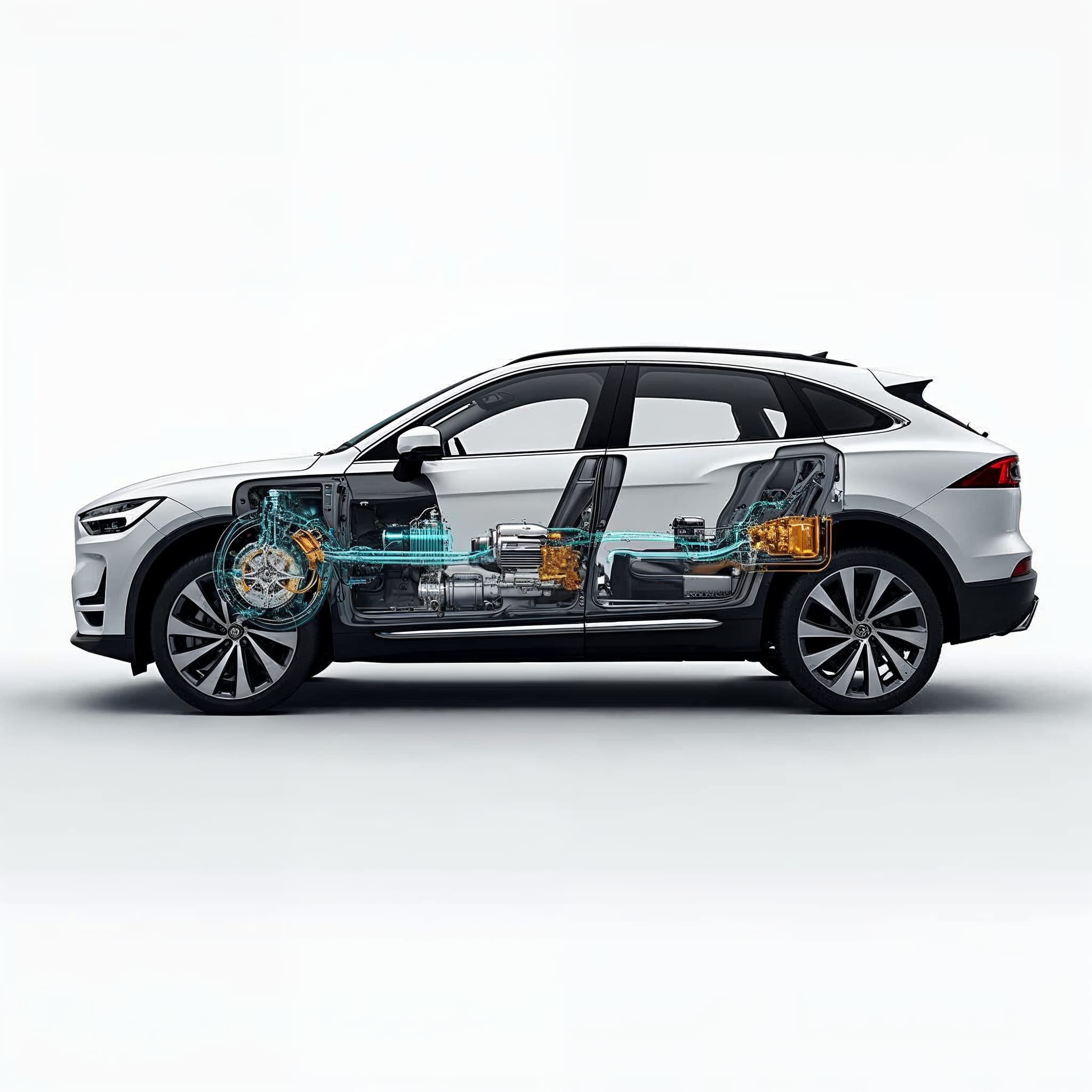
In the evolving landscape of automotive technology, hybrid electric vehicles (HEVs) represent a crucial bridge between traditional internal combustion engines (ICE) and fully electric vehicles (EVs). Among the various hybrid configurations, two primary architectures stand out: parallel hybrids and series hybrids. While parallel hybrids are perhaps more common, the series hybrid system offers a unique approach to maximizing electric range and delivering a driving experience remarkably similar to a pure EV. This comprehensive guide will delve into the mechanics of series hybrid configurations, explore how they achieve superior electric-only operation, and compare their performance against parallel hybrid systems, providing real-world examples and practical insights into their growing relevance.
The journey towards sustainable transportation is not a single path, but a mosaic of innovative solutions. Hybrid vehicles, in their diverse forms, play a significant role in reducing emissions and improving fuel efficiency. Our focus today is on the ingenious design of series hybrids, a system often misunderstood but increasingly vital for drivers seeking extended electric mobility without the anxiety of range limitations. We will uncover the engineering marvels that allow these vehicles to operate predominantly on electric power, optimizing performance and efficiency in ways that traditional hybrids cannot. By understanding the core principles behind series hybrid operation, we can appreciate their unique advantages in delivering a genuinely electric-centric driving experience, even with an internal combustion engine onboard.
Understanding Hybrid Electric Vehicles (HEVs)
Before we dive into the specifics of series hybrids, it is essential to grasp the fundamental concept of hybrid electric vehicles. An HEV combines at least two distinct power sources to propel the vehicle, typically an internal combustion engine and an electric motor powered by a battery. This combination allows the vehicle to switch between, or combine, these power sources to achieve better fuel economy and lower emissions compared to conventional gasoline-powered cars.
The core idea behind hybridization is to leverage the strengths of both powerplants while mitigating their weaknesses. Electric motors are highly efficient at low speeds and provide instant torque, making them ideal for urban driving and stop-and-go traffic. Internal combustion engines, on the other hand, are generally more efficient at sustained higher speeds and offer a greater range. By intelligently integrating these two systems, hybrids can offer a balanced solution for various driving conditions, reducing reliance on fossil fuels and often improving overall vehicle performance.
Different hybrid architectures achieve this integration in distinct ways, leading to varying performance characteristics, fuel efficiency ratings, and crucially, electric range capabilities. The choice of hybrid configuration dictates how the engine, motor, and wheels interact, directly influencing the driving experience, the environmental footprint of the vehicle, and its suitability for different driving styles and environments. Understanding these architectural differences is key to appreciating why certain hybrid types excel in specific performance metrics, such as electric-only range.
The Mechanics of Parallel Hybrid Systems
Parallel hybrid systems are perhaps the most common and widely recognized type of hybrid architecture today. In a parallel hybrid, both the internal combustion engine and the electric motor can directly provide power to the wheels, either independently or simultaneously. This direct mechanical connection from both power sources to the drive wheels is the defining characteristic of a parallel hybrid, allowing for a flexible power delivery strategy.
How Parallel Hybrids Operate
In a typical parallel hybrid setup, the electric motor is usually situated between the engine and the transmission. When driving, the vehicle’s control system intelligently manages power delivery based on driving conditions, battery state of charge, and driver input:
- Electric-only mode (EV Mode): At low speeds and under light load, the vehicle can often run purely on electric power, with the engine completely shut off. The electric motor draws power from the battery to propel the vehicle silently and without emissions. The duration and speed of this mode are typically limited by battery size and motor power.
- Engine-only mode: At higher speeds, during sustained highway cruising, or when the battery charge is low, the engine can directly drive the wheels, just like a conventional car. In some parallel systems, the electric motor might be off or act as a generator to recharge the battery while the engine drives.
- Combined power mode (Boost Mode): During acceleration, climbing uphill, or when maximum power is required, both the engine and the electric motor work together, combining their outputs to provide extra thrust to the wheels. This is where the “parallel” aspect truly shines, as their power flows are literally parallel to each other, adding their forces to the drivetrain.
- Regenerative Braking: When the driver applies the brakes or lifts off the accelerator, the electric motor acts as a generator, converting the vehicle’s kinetic energy back into electrical energy. This recaptured energy is stored in the battery, improving overall efficiency and slightly extending range.
Advantages of Parallel Hybrids
Parallel systems offer several distinct advantages that have contributed to their widespread adoption:
- Simplicity in Direct Drive: The direct mechanical connection between the engine and the wheels means that at higher speeds, the engine can drive the wheels very efficiently, much like a conventional vehicle, minimizing energy losses associated with converting mechanical energy to electrical and back again. This directness contributes to efficiency on highways.
- Cost-Effectiveness: Often, parallel hybrids can be designed with smaller, less powerful electric motors and battery packs compared to series hybrids, as the engine can provide the bulk of the power. This can potentially reduce manufacturing costs, making them more affordable to consumers.
- Familiar Driving Feel: The driving experience can feel quite similar to a traditional gasoline car, with the engine engaging and disengaging, which can be reassuring and familiar for some drivers transitioning from conventional vehicles.
- Excellent High-Speed Efficiency: When cruising on highways, the engine can operate in its most efficient RPM range, directly powering the wheels. This direct mechanical link can be more efficient than continuously generating electricity for an electric motor at those speeds, particularly over long distances.
Disadvantages of Parallel Hybrids
Despite their popularity, parallel hybrids also come with certain limitations, especially concerning electric range and the seamlessness of the driving experience:
- Limited Electric-Only Range: Due to the need for a powerful engine to also drive the wheels, and often smaller battery packs (in non-PHEV variants), parallel hybrids typically offer a relatively short electric-only range. Once the battery depletes, the engine takes over, and the pure EV experience ends quickly.
- Mechanical Complexity for Power Blending: Blending power seamlessly from two different sources (engine and motor) to the wheels requires sophisticated transmissions. This often involves intricate planetary gear sets (like Toyota’s Hybrid Synergy Drive) or multi-clutch systems, which can add mechanical complexity, weight, and potential points of failure.
- Less Flexibility in Engine Operation: The engine’s operation is often directly tied to the vehicle’s speed and torque demand. This means it might not always operate at its most fuel-efficient RPM range when engaged, as it must respond to immediate driving conditions.
- Less “EV-like” Driving Experience: While they can operate in EV mode, the engine frequently kicks in, especially under moderate acceleration or when the battery is low, interrupting the pure electric driving feel with engine noise and vibration.
The Mechanics of Series Hybrid Systems
In stark contrast to parallel hybrids, series hybrid systems adopt a fundamentally different approach. In a series hybrid, the internal combustion engine never directly drives the wheels. Instead, its sole purpose is to act as a generator, producing electricity to power the electric motor(s) and/or recharge the battery. The electric motor is the only component that directly provides power to the wheels, making the driving experience distinctly EV-like.
How Series Hybrids Operate
Imagine a series hybrid as essentially an electric vehicle with an on-board generator. Here’s how its power flow works, highlighting the “series” connection where power flows sequentially through components:
- Electric Motor Drives Wheels: At all times, whether the battery is full or empty, the wheels are propelled exclusively by one or more electric motors. This ensures a consistent, smooth, and quiet driving experience characteristic of an EV.
- Engine as Generator (Range Extender): When the battery’s state of charge drops below a certain threshold, or when sustained high power is needed beyond what the battery can provide, the internal combustion engine starts up. However, it does not connect to the wheels. Instead, it turns an electric generator, which then produces electricity.
- Electricity Destination: The electricity generated by the engine can follow one of two primary paths:
- It can directly power the electric motor(s) to drive the wheels, supplementing the battery’s output.
- It can recharge the vehicle’s high-voltage battery pack, storing energy for later use.
Often, the control system directs the electricity to do both simultaneously, supplying immediate power to the motor and storing any excess in the battery for optimal energy management.
- Battery is Central: The battery plays a more central and active role in a series hybrid, acting as a buffer that can store energy (from the generator or regenerative braking) and provide instantaneous bursts of power when the engine-generator cannot keep up with peak demand, or when the vehicle is in pure EV mode.
- Regenerative Braking: Similar to parallel hybrids and pure EVs, regenerative braking captures kinetic energy during deceleration and converts it back into electricity to replenish the battery, significantly improving efficiency in stop-and-go traffic and further extending the electric range.
Advantages of Series Hybrids
This distinct architecture provides several compelling advantages, particularly for maximizing electric range and optimizing engine efficiency:
- Maximized Electric-Only Range: Because the electric motor is the sole propulsion source, series hybrids are inherently designed to operate predominantly on electricity. The engine only activates when the battery is low or maximum power is consistently required, extending the pure electric driving distance significantly. They offer a true “EV-like” driving experience for longer durations.
- Optimal Engine Efficiency: The engine in a series hybrid can be decoupled from the immediate demands of the wheels. This allows the control system to run the engine at its most efficient RPM (revolutions per minute) and load point for generating electricity, irrespective of vehicle speed. This “sweet spot” operation translates to superior fuel economy when the engine is running, as it avoids inefficient engine speeds.
- Simpler Mechanical Drivetrain: Without a direct mechanical connection between the engine and wheels, the transmission can be simpler, often consisting of just a single-speed reduction gear for the electric motor. This reduces mechanical complexity, weight, and the number of moving parts prone to wear.
- Smoother Driving Experience: The electric motor provides smooth, instant torque characteristic of EVs, offering immediate acceleration response. Since the engine’s operation is independent of wheel speed, there are no perceptible gear shifts or direct engine vibrations transmitted to the drivetrain during acceleration, resulting in a remarkably smooth and quiet ride.
- Flexible Engine Placement: The engine can be placed almost anywhere in the chassis, as it only needs to connect to the generator and not directly to the drive wheels. This offers greater design flexibility for vehicle manufacturers, potentially improving weight distribution or interior space.
- Reduced Emissions in Urban Settings: By operating in EV-mode for extended periods, especially in urban environments, series hybrids can significantly reduce local tailpipe emissions, contributing to cleaner city air quality.
Disadvantages of Series Hybrids
While advantageous in many aspects, series hybrids also have some drawbacks that are important to consider:
- Energy Conversion Losses: The primary disadvantage is the “double conversion” of energy. Chemical energy in fuel is converted to mechanical energy by the engine, then to electrical energy by the generator, and finally back to mechanical energy by the electric motor to drive the wheels. Each conversion incurs some efficiency loss (though modern components are highly efficient), which can be noticeable at higher, sustained speeds where the engine is constantly running to generate electricity.
- Requires Powerful Electric Motor(s): Since the electric motor is the sole propulsion unit, it must be powerful enough to handle all driving demands, including peak acceleration and sustained highway speeds. This often necessitates a larger, more powerful, and thus potentially more expensive, electric motor and associated power electronics.
- Larger Battery Pack: To support extended EV-only range, series hybrids typically require larger battery packs than most non-plug-in parallel hybrids. This larger battery capacity adds to vehicle cost, weight, and can sometimes impact interior space, though it is crucial for the system’s benefits.
- Potential for Engine Noise/Vibration Mismatch: Although the engine can run optimally, its activation might sometimes feel disconnected from the driver’s acceleration input, as it’s primarily generating electricity rather than directly propelling the vehicle. This can lead to a slight perception of the engine “revving for no reason” in specific scenarios, though modern control systems are highly effective at mitigating this through intelligent power management.
Why Series Hybrids Excel in Electric Range
The fundamental design philosophy of series hybrids makes them inherently superior in maximizing electric range compared to most parallel hybrid configurations. This advantage stems from several core principles that prioritize electric propulsion and intelligent energy management.
1. Engine as a Dedicated Range Extender
In a series hybrid, the internal combustion engine is not a primary driver of the wheels but a dedicated power generator, often referred to as a “range extender.” Its role is purely to charge the battery and/or provide direct electricity to the motor when the battery’s charge is low. This clear separation of roles allows the vehicle to rely entirely on its electric powertrain for as long as possible, only engaging the engine when absolutely necessary to extend the overall driving range. This means the default mode is electric, and the engine acts as a backup or supplementary energy source, significantly extending the duration of pure EV operation.
2. No Mechanical Link to Wheels
The absence of a mechanical link between the engine and the drive wheels is a game-changer for electric range. It means the vehicle’s speed and acceleration are always controlled by the electric motor. This allows for seamless, pure electric acceleration from a standstill and quiet, emission-free cruising at lower speeds. The driver experiences a consistent EV-like feel, as the engine’s on/off cycles and RPM are completely detached from the direct driving dynamics. This uninterrupted electric drive is a major contributor to maximizing the perceived and actual electric range.
3. Optimal Engine Efficiency in Generator Mode
A key to maximizing overall efficiency, and by extension electric range, is ensuring the engine runs as efficiently as possible when it does operate. In a series hybrid, the engine’s primary task is to generate electricity. This allows the vehicle’s control unit to run the engine at its most efficient operating points (e.g., a constant, optimal RPM and load) for generating electricity, regardless of the vehicle’s speed or immediate power demand. This ‘sweet spot’ operation significantly reduces fuel consumption compared to an engine constantly fluctuating its RPMs and loads to match direct wheel demand in a parallel system, thereby making the most of every drop of fuel when the range extender is engaged.
4. Greater Flexibility in Electric Propulsion
Because the electric motor is always driving the wheels, series hybrids can feature larger, more powerful electric motors and larger battery packs. This larger electric capacity allows for longer electric-only driving distances, more robust electric acceleration, and better performance without immediately relying on the engine. It’s essentially an EV first, and a hybrid second, meaning the entire system is designed around the electric drivetrain’s capabilities, with the engine serving to sustain those capabilities rather than replacing them.
5. Battery Sizing Considerations
Series hybrids are typically designed with larger battery capacities than most non-plug-in parallel hybrids. This substantial battery capacity is crucial for enabling the extended electric-only range. The battery serves as the primary energy reservoir for propulsion, with the engine-generator system acting as a backup or supplementary power source to maintain that reservoir when needed. This allows the vehicle to cover most daily commutes on electricity alone, significantly reducing gasoline consumption for many users and reinforcing the vehicle’s electric-first philosophy. The larger battery also enhances the vehicle’s ability to capture more energy through regenerative braking.
Key Components of a Series Hybrid Drivetrain
Understanding the architecture of a series hybrid involves recognizing the distinct roles of its primary components. Each part is crucial to the system’s ability to maximize electric range and deliver its unique driving characteristics, working in concert to provide efficient and smooth propulsion.
- Internal Combustion Engine (ICE):
- Role: The ICE in a series hybrid serves exclusively as a generator. It does not provide direct mechanical power to the wheels. Its size and power output are optimized for efficient electricity generation at a specific, optimal RPM range, rather than for direct propulsion across a wide speed range.
- Contribution to EV Range: By only generating electricity when the battery needs recharging or when continuous high power is required, the ICE acts as a range extender, allowing the vehicle to operate on electric power for much longer periods than typical parallel hybrids, and extending the total driving range.
- Electric Generator:
- Role: Coupled directly to the ICE, the generator converts the mechanical energy produced by the engine into electrical energy. This is the crucial link that transforms the engine’s output into a usable form for the electric powertrain.
- Contribution to EV Range: It provides the vital link that allows the ICE to indirectly power the electric drive motor and recharge the battery, thus extending the total driving range beyond the battery’s initial capacity, eliminating range anxiety for longer journeys.
- Electric Motor(s):
- Role: The electric motor is the sole propulsion unit connected to the drive wheels. It receives electricity from either the battery or directly from the generator to move the vehicle. Modern series hybrids often employ one or more powerful electric motors for robust performance and strong acceleration.
- Contribution to EV Range: As the exclusive means of propulsion, the electric motor’s efficiency, power, and design are critical for enabling smooth, sustained electric driving, providing instantaneous torque, and handling all driving demands.
- High-Voltage Battery Pack:
- Role: The battery stores the electrical energy needed to power the electric motor. It can be charged by the generator, regenerative braking, or an external power source (in the case of plug-in series hybrids). It acts as the primary energy reservoir for the electric drivetrain.
- Contribution to EV Range: A larger battery capacity is a hallmark of series hybrids, directly translating to a longer all-electric driving range before the engine needs to activate. It also acts as a buffer, smoothing out power delivery and allowing the engine to run at optimal efficiency when generating power.
- Power Electronics (Inverter/Converter):
- Role: These components manage the flow and conversion of electrical power. The inverter converts the battery’s DC power into AC power for the electric motor and vice-versa for regenerative braking. Converters manage voltage levels between different systems (e.g., high-voltage battery to 12V auxiliary).
- Contribution to EV Range: Highly efficient power electronics minimize energy losses during conversion, ensuring that as much electricity as possible is utilized for propulsion or stored in the battery, thereby enhancing overall electric range and system efficiency.
- Vehicle Control Unit (VCU):
- Role: The VCU is the “brain” of the hybrid system. It continuously monitors various parameters (driver input, battery state of charge, vehicle speed, engine load, road conditions) and intelligently decides when to start the engine-generator, how much power to draw from the battery, when to engage regenerative braking, and how to distribute power.
- Contribution to EV Range: Sophisticated control algorithms are paramount. They ensure the engine operates at its most efficient point when generating electricity, optimize battery charging and discharge cycles, and prioritize electric-only driving whenever feasible, directly contributing to maximized electric range and fuel economy by intelligent energy management.
Software and Control Systems: The Unsung Heroes
While the mechanical and electrical components form the backbone of a series hybrid, it is the sophisticated software and intelligent control systems that truly unlock its potential for maximizing electric range and overall efficiency. These “brains” of the vehicle orchestrate the seamless interaction between the engine, generator, electric motor, and battery pack, transforming raw power into refined performance.
Modern series hybrids employ highly advanced Vehicle Control Units (VCUs) that continuously analyze myriad data points in real-time. These include, but are not limited to:
- Driver input (acceleration pedal position, brake pedal pressure, steering angle)
- Battery state of charge (SoC), temperature, and health
- Vehicle speed, acceleration, and deceleration rates
- Road gradient and terrain information (sometimes using GPS data)
- Ambient temperature and cabin heating/cooling demands
- Traffic conditions (for predictive energy management in advanced systems)
Based on this complex array of data, the VCU makes instantaneous decisions on critical operational parameters:
- Engine Start/Stop Logic: The VCU intelligently determines when the range extender engine should turn on or off. It will typically keep the engine off as long as the battery has sufficient charge to meet current driving demands, aggressively maximizing pure electric operation for silent and zero-emission travel.
- Optimal Engine Operation Point: When the engine does start, the VCU ensures it runs at the most fuel-efficient RPM and load point for generating electricity. This precise control decouples the engine’s operation from the vehicle’s speed, allowing it to operate in its ‘sweet spot’ for efficiency and minimal emissions, often at a constant, low-noise RPM.
- Power Flow Management: The VCU dynamically balances how much power should come from the battery for propulsion and how much from the generator. It might prioritize battery discharge for immediate power, using the generator to supplement power or to strategically recharge the battery for future electric driving segments.
- Regenerative Braking Optimization: The VCU precisely controls the intensity of regenerative braking during deceleration. By maximizing the capture of kinetic energy and converting it back into usable electricity for the battery, it significantly extends the effective electric range, especially in stop-and-go urban traffic.
- Thermal Management: The VCU plays a vital role in maintaining optimal operating temperatures for all critical components, especially the high-voltage battery and power electronics, which is crucial for longevity, performance, and charging efficiency.
The continuous refinement of these control algorithms is paramount. Predictive energy management, for instance, uses navigation data to anticipate upcoming terrain (e.g., hills) or traffic conditions, allowing the system to strategically charge or discharge the battery to maximize efficiency. For example, knowing a downhill section is coming, the system might allow the battery to discharge more, confident it can be recharged via regenerative braking on the descent. Conversely, before a long uphill climb, it might proactively engage the engine to build up battery charge, ensuring ample power for the ascent without straining the battery. This intelligent foresight significantly enhances the real-world electric range and fuel economy.
Ultimately, these intelligent control systems are the reason series hybrids can deliver an EV-like driving experience with extended range, minimizing fuel consumption and emissions by precisely managing every joule of energy flow. They transform a collection of advanced hardware components into a highly efficient, integrated, and responsive powertrain that adapts to every driving situation.
Comparison Tables
To further illustrate the differences and strengths of series versus parallel hybrid systems, let us examine their key characteristics and performance aspects in the following comparison tables. These tables highlight how their fundamental architectural differences lead to distinct real-world performance attributes.
| Feature | Series Hybrid (e.g., Nissan e-Power, BMW i3 REx) | Parallel Hybrid (e.g., Toyota Prius, Honda Insight) |
|---|---|---|
| Engine Connection to Wheels | No direct mechanical link; engine’s sole purpose is to power an electric generator. | Direct mechanical link; engine can drive wheels directly, independently, or with electric motor. |
| Primary Propulsion Source | Always the electric motor(s). Vehicle feels and drives like an EV. | Electric motor and/or internal combustion engine, often blending power. |
| Electric-Only Range (Typical) | Significantly longer. Designed for extended EV-only driving (e.g., 20-80 miles or more for PHEV versions), primary mode of operation. | Shorter for non-PHEV (e.g., 1-5 miles). PHEV versions offer 10-60 miles, but engine can also engage directly. |
| Engine Operation | Can operate at its most optimal, efficient RPM for generating electricity, independent of vehicle speed or driver demand. | Engine RPM is directly tied to vehicle speed and driver demand, meaning it may operate outside peak efficiency zones. |
| Drivetrain Mechanical Complexity | Simpler mechanical drivetrain (electric motor direct drive, often a single-speed reduction gear, no complex multi-speed transmission). | More complex mechanical drivetrain, requiring intricate power-splitting devices (e.g., planetary gear sets) or multi-clutch transmissions to blend engine/motor power. |
| Driving Feel | Pure EV-like, smooth, quiet, with instant and linear torque delivery. Engine engagement is often subtle and detached from acceleration. | Can feel similar to a conventional car with occasional electric boosts. Engine engagement is often more noticeable and directly affects acceleration. |
| Energy Conversion Losses | Higher due to “double conversion” (chemical to mechanical to electrical to mechanical) at sustained high speeds where engine runs constantly as generator. | Lower at sustained high speeds where engine directly drives wheels efficiently, as there are fewer energy conversions. |
| Battery Size | Typically larger capacity to support extended electric-only range and act as a primary energy buffer. | Typically smaller (for non-PHEV). Can be larger for Plug-in Hybrid Electric Vehicle (PHEV) versions, but still supports engine-direct drive. |
| Driving Scenario | Series Hybrid Performance & Efficiency Focus | Parallel Hybrid Performance & Efficiency Focus |
|---|---|---|
| Urban Stop-and-Go Traffic | Highly efficient; runs almost entirely on electric power using the battery and maximizing regenerative braking. Engine activates only if battery is low. Focus on maximizing EV range and local emissions reduction. | Efficient due to electric motor assisting and regenerative braking. Engine may frequently cycle on/off depending on battery state and acceleration, limiting pure EV duration. Focus on balancing engine/motor for overall efficiency. |
| Highway Cruising (Moderate to High Speed) | Excellent. Engine acts as generator, running at optimal efficiency to provide electricity for sustained electric drive, recharging battery. Smooth, EV-like ride. Focus on efficient power generation and maintaining electric drive. | Good to very good. Engine often runs continuously to drive wheels directly for efficiency, sometimes assisted by the electric motor. Electric motor may also generate if battery allows. Focus on direct engine drive efficiency. |
| Aggressive Acceleration | Battery and generator work together seamlessly to provide maximum power to the electric motor(s), resulting in instant, strong EV-like acceleration without gear shifts. Focus on combining electrical power for peak demand. | Engine and electric motor combine power. Acceleration can be strong, but engine noise and mechanical gear shifts are typically present. Focus on combining mechanical and electrical torque. |
| Long Distance Travel (Engine On) | Engine runs continuously at optimal efficiency to generate electricity for the electric motors. May incur slightly higher energy conversion losses compared to direct engine drive, but maintains an EV-like drive feel. Focus on sustained range extension and fuel economy. | Engine runs continuously, directly driving wheels, often leveraging its most efficient RPM range. Can be more efficient than series hybrid in this specific scenario due to fewer energy conversions. Focus on high-speed engine efficiency. |
| Cold Weather Start/Operation | Engine may start more frequently to warm up and ensure optimal battery temperature. Still prioritizes electric drive when possible, but battery performance may be reduced. Focus on component thermal management and battery health. | Engine starts immediately to warm up and provide cabin heat. Electric operation may be limited until engine reaches operating temperature for optimal performance. Focus on rapid cabin heating and engine stability. |
Practical Examples: Series Hybrids in the Real World
While often less publicized than their parallel counterparts, several notable vehicles and applications have successfully deployed series hybrid technology, demonstrating its real-world benefits, especially in maximizing electric range and providing a refined driving experience. These examples highlight the versatility and effectiveness of the series hybrid architecture across different segments.
1. Chevrolet Volt (First Generation)
The first generation Chevrolet Volt (2011-2015) is an excellent example of a series-dominant hybrid, particularly at lower speeds. While technically classified as an “extended-range electric vehicle” (EREV) or “series-parallel” due to its ability to mechanically engage its engine directly to the wheels under specific high-speed, high-load conditions (typically above 70 mph), its primary operational mode for the vast majority of driving was as a series hybrid. For everyday use and up to considerable speeds, the engine acted solely as a generator, recharging the battery or providing electricity directly to the electric drive motors. This allowed the Volt to offer a substantial all-electric range (around 35-40 miles EPA rated) that covered most daily commutes for many drivers, making it feel like an EV for everyday use. When the battery depleted, the gasoline engine would smoothly kick in as a range extender, maintaining electric propulsion without range anxiety, offering a seamless transition.
2. BMW i3 REx (Range Extender)
The BMW i3, particularly the version equipped with the Range Extender (REx), is a classic and clear example of a series hybrid in action. The i3 REx is primarily an all-electric vehicle, but it features a small, 647cc two-cylinder gasoline engine (originally adapted from a BMW scooter) placed under the trunk. Crucially, this engine does not drive the wheels directly. Instead, it powers a generator that recharges the vehicle’s high-voltage battery when its charge falls below a certain level (typically around 6%). This setup extends the total driving range significantly, mitigating range anxiety for users who might occasionally need to travel further than the battery’s pure electric capacity allows. Drivers could enjoy the pure electric driving dynamics of the i3 for its substantial electric range (around 80-100 miles depending on battery size and year), with the REx acting as a reliable backup, making it ideal for urban and suburban commuters who occasionally need to travel further without stopping to charge, effectively providing a backup plan for their EV lifestyle.
3. Nissan e-Power System
Nissan’s e-Power system is a more recent and increasingly popular application of series hybrid technology, particularly in markets like Japan, Europe, and some global markets such as Australia (e.g., Nissan X-Trail e-POWER). Vehicles like the Nissan Note e-Power, Kicks e-Power, and Qashqai e-Power (called X-Trail e-POWER in some markets) utilize this architecture. In e-Power vehicles, the wheels are 100% driven by the electric motor. The gasoline engine is solely dedicated to generating electricity for the battery and the motor. This design delivers an immediate, smooth, and quiet EV-like driving experience with strong acceleration, while the gasoline engine provides the flexibility of extended range, allowing owners to refuel at conventional gas stations without needing charging infrastructure. Nissan heavily emphasizes the “EV feel” of these vehicles, making them attractive to consumers who want the benefits of electric driving without the range limitations or charging habits of a pure EV, representing a pragmatic approach to electrification.
4. Heavy-Duty Applications: Buses and Locomotives
The series hybrid architecture is not new; it has been successfully employed in heavy-duty applications for many decades where robust, high-torque electric propulsion is advantageous. Diesel-electric locomotives, for instance, operate as series hybrids: a powerful diesel engine drives a large generator, which in turn supplies electricity to massive traction motors that propel the train. This system allows for precise power control, extremely high torque at low speeds (essential for moving heavy loads), and regenerative braking capabilities, all vital for railway operations. Similarly, many hybrid city buses utilize a series architecture, where a diesel engine powers a generator, and electric motors drive the wheels. This design is highly efficient in the stop-and-go nature of urban bus routes, providing smooth acceleration, strong regenerative braking to recharge batteries, and significantly reducing emissions in densely populated areas.
These examples illustrate that the series hybrid concept is a proven and versatile technology. From compact city cars designed for daily commuting to large locomotives engineered for immense power delivery, its ability to deliver an EV-like driving experience while providing extended range through an onboard generator offers compelling advantages for various transportation needs and driving scenarios, validating its robust engineering principles.
Frequently Asked Questions
Q: What exactly is a series hybrid vehicle?
A: A series hybrid vehicle is a type of hybrid electric vehicle where the internal combustion engine (ICE) does not directly drive the wheels. Instead, the engine is coupled to an electric generator, and its sole purpose is to produce electricity. This electricity can then either power the vehicle’s electric motor(s) directly to propel the wheels or recharge the high-voltage battery pack. The wheels are always driven exclusively by the electric motor, giving the vehicle an “EV-like” driving experience for extended periods, with the engine acting as a range extender when the battery’s charge is low or sustained power beyond battery capability is required. This architectural choice prioritizes electric propulsion.
Q: How do series hybrids maximize electric range?
A: Series hybrids maximize electric range through several key design features. First, they typically incorporate larger battery packs compared to conventional parallel hybrids, allowing for longer pure electric driving distances. Second, the engine acts as an on-board generator, recharging the battery and supplying power to the electric motor, thus extending the total range indefinitely without needing an external charging station (as long as fuel is available). Third, the engine’s operation is optimized; it can run at its most fuel-efficient RPM to generate electricity, irrespective of vehicle speed, minimizing fuel consumption when it is active. This fundamental focus on electric propulsion as the primary mode of operation means the vehicle operates on electricity for a significantly greater proportion of its journey, thereby maximizing electric range and reducing reliance on gasoline.
Q: What are the main differences between series and parallel hybrids?
A: The main difference lies in how the engine and electric motor deliver power to the wheels. In a series hybrid, the engine never directly drives the wheels; it only generates electricity for the electric motor and battery. The electric motor is the sole propulsion source. In a parallel hybrid, both the engine and the electric motor can directly drive the wheels, either independently or simultaneously through a mechanical connection. This means parallel hybrids maintain a direct mechanical link between the engine and the wheels. Series hybrids offer a more pure EV-like driving experience with longer electric range, typically excelling in urban efficiency, while parallel hybrids often achieve better highway fuel economy by leveraging the engine’s direct drive at speed and can be mechanically less complex in some implementations.
Q: Are series hybrids more efficient than parallel hybrids?
A: The answer depends on the driving scenario and specific vehicle design. In urban, stop-and-go driving, series hybrids are often more efficient because they can operate purely on electricity for longer durations, and when the engine runs, it does so at its optimal efficiency point. However, at sustained high speeds (e.g., continuous highway cruising), series hybrids can experience slightly higher energy losses due to the “double conversion” process (chemical to mechanical by engine, then to electrical by generator, then back to mechanical by electric motor). Parallel hybrids can be more efficient in this specific scenario as the engine directly drives the wheels with fewer energy conversions. Overall efficiency is complex and depends heavily on specific vehicle engineering, sophisticated control systems, and individual driving habits. For maximizing *electric range* and city efficiency, series hybrids generally excel, while for high-speed, long-distance efficiency, parallel hybrids can sometimes have an edge.
Q: What are some common series hybrid vehicles available today?
A: Some prominent examples of vehicles that predominantly use or have used a series hybrid configuration include:
- Nissan e-Power models: Such as the Nissan Note e-Power, Kicks e-Power, and Qashqai e-Power (or X-Trail e-POWER in some markets). These are contemporary examples where the engine exclusively generates electricity.
- BMW i3 REx (Range Extender): While primarily an EV, its small gasoline engine acts purely as a generator to extend the vehicle’s driving range when the battery is low.
- First-generation Chevrolet Volt: More accurately, a series-dominant extended-range electric vehicle (EREV). For most driving conditions, the engine functioned as a generator, making it feel like a series hybrid.
- Beyond passenger cars, series hybrid architecture is widely used in heavy-duty applications such as diesel-electric locomotives and many hybrid city buses, where the engine always powers a generator for electric traction motors due to their high torque and efficiency needs.
Q: Can a series hybrid run purely on electricity without ever using the engine?
A: Yes, absolutely. A series hybrid can run purely on electricity as long as its high-voltage battery pack has sufficient charge to meet the vehicle’s propulsion demands. The internal combustion engine only activates when the battery’s state of charge drops below a predetermined threshold or when the driver demands more power than the battery can supply on its own. For many daily commutes, especially if the vehicle is regularly charged, a series hybrid can operate entirely as an electric vehicle, using no gasoline at all. This is a core advantage of the series hybrid design and why it excels at maximizing electric range for everyday use, mimicking the experience of a pure EV.
Q: What is a “range extender” in the context of series hybrids?
A: A “range extender” refers specifically to the internal combustion engine (and its accompanying generator) in a series hybrid vehicle. Its function is not to directly power the wheels but to generate electricity to either recharge the battery or provide power directly to the electric motor(s) when the battery’s charge is depleted. This effectively extends the vehicle’s total driving range beyond what the battery alone can provide, eliminating “range anxiety” without requiring a charging stop, as the vehicle can simply be refueled with gasoline at any conventional station. It serves as an on-board electrical power plant, giving the electric vehicle limitless range capability.
Q: Are series hybrids suitable for all driving conditions?
A: Series hybrids are particularly well-suited for urban and suburban driving, where their extended electric range and smooth EV-like operation shine, significantly reducing fuel consumption and emissions in stop-and-go traffic. They are also highly effective for longer journeys, as the range extender eliminates range anxiety. While they perform well across a wide range of conditions, for continuous, high-speed highway driving over very long distances, the “double conversion” of energy (fuel to mechanical to electrical to mechanical) can sometimes lead to slightly lower overall efficiency compared to a parallel hybrid where the engine can directly drive the wheels at its optimal point for extended periods. Nevertheless, modern series hybrid control systems are highly advanced in mitigating these losses, making them generally suitable for a wide range of driving conditions and very versatile.
Q: What are the maintenance considerations for series hybrids?
A: Maintenance for series hybrids involves elements of both conventional gasoline cars and electric vehicles. The internal combustion engine, although used less for direct propulsion and often operating at optimal RPMs, still requires regular oil changes, filter replacements, and other standard engine maintenance tasks. The electric motor, generator, and battery are generally low-maintenance components, but they do require periodic checks for cooling systems, electrical connections, and overall system health. Overall, series hybrids tend to have fewer complex mechanical transmission components compared to many parallel hybrids, which can simplify some aspects of drivetrain maintenance. However, the sophisticated power electronics and high-voltage battery systems require specialized diagnostics and service when needed, emphasizing the importance of trained technicians.
Q: What is the future outlook for series hybrids?
A: The future outlook for series hybrids is promising, especially as electric vehicle technology continues to advance. They offer a compelling solution for consumers who desire the benefits of electric driving (instant torque, quiet operation, zero local emissions for much of the time) but need the flexibility of a gasoline-powered range extender for longer trips or when charging infrastructure is scarce or inconvenient. As battery technology improves (higher energy density, lower cost) and engines become even more efficient as dedicated generators, series hybrids will likely become even more competitive. Their architecture is also highly adaptable to future fuel types for the range extender, such as hydrogen fuel cells or even renewable synthetic fuels, making them a versatile and sustainable platform for the transition towards cleaner mobility.
Key Takeaways
The discussion of series hybrids versus parallel hybrids reveals distinct philosophies in balancing internal combustion and electric power. Series hybrids offer a unique and increasingly relevant approach to sustainable transportation. Here are the core insights regarding series hybrids and their performance:
- Electric-First Design: Series hybrids are fundamentally engineered to operate primarily on electric power, with the electric motor always driving the wheels, providing an authentic EV driving feel.
- Engine as Dedicated Generator: The internal combustion engine’s sole role is to generate electricity, either to power the electric motor or recharge the battery, thus acting as a seamless and effective range extender.
- Maximized EV Range Capability: This architecture allows for significantly longer all-electric driving ranges, offering a true EV-like experience for daily commutes and beyond, minimizing gasoline consumption.
- Optimal Engine Efficiency: When the engine is active, it can operate at its most efficient RPM for generating electricity, independent of vehicle speed, leading to excellent fuel economy and lower emissions when fuel is being burned.
- Smooth and Quiet Driving: The absence of a mechanical link between the engine and wheels, combined with pure electric propulsion, results in a remarkably smooth, quiet, and highly responsive driving experience, free from gear shifts.
- Reduced Mechanical Complexity in Drive Path: The drivetrain from the motor to the wheels is mechanically simpler than many parallel hybrids, as it avoids complex multi-speed transmissions or intricate power-splitting devices.
- Sophisticated Control Systems are Crucial: Highly advanced software and Vehicle Control Units are paramount for orchestrating optimal power flow, maximizing efficiency, and delivering all the benefits of the series hybrid system seamlessly.
- Proven Practical Applications: Series hybrids are successfully implemented in various vehicles, from popular passenger cars like the Nissan e-Power series and the BMW i3 REx, to robust heavy-duty applications such as locomotives and city buses.
- Effective Mitigation of Range Anxiety: They effectively bridge the gap between pure EVs and traditional gasoline cars by offering extended electric operation without the need for frequent charging stops or concerns about charger availability.
Conclusion
In the grand tapestry of automotive innovation, series hybrid systems stand out as a particularly elegant and effective solution for maximizing electric range and delivering a refined, EV-like driving experience. By fundamentally decoupling the internal combustion engine from the drive wheels, and ingeniously repurposing it as a highly efficient onboard generator, series hybrids offer the best of both worlds: the immediate, silent torque and zero-emission capability of an electric vehicle for most daily driving, combined with the unparalleled range and rapid refueling convenience of a gasoline-powered car for longer journeys.
While parallel hybrids have their own merits, particularly in their mechanical simplicity for certain applications and their efficiency at sustained high-speed cruising, the series configuration shines in its unwavering commitment to electric propulsion. This dedication translates directly into superior all-electric range, allowing drivers to cover significant distances without consuming a drop of gasoline, thereby drastically reducing their environmental footprint and running costs in typical usage scenarios. The intelligence of modern control systems further refines this experience, ensuring the engine operates with utmost efficiency when called upon, seamlessly transitioning between power sources without driver intervention, making the overall experience remarkably sophisticated.
As the automotive industry continues its march towards electrification, the series hybrid, especially in its plug-in variant or as a pure range-extended EV, is poised to play an increasingly vital role. It offers a practical, compelling pathway for drivers to embrace electric mobility with confidence, knowing that range anxiety is a concern of the past. The real-world performance of series hybrids demonstrates not just a technological advancement, but a thoughtful and impactful step towards a more sustainable and enjoyable driving future, providing a powerful combination of environmental responsibility and everyday convenience.