
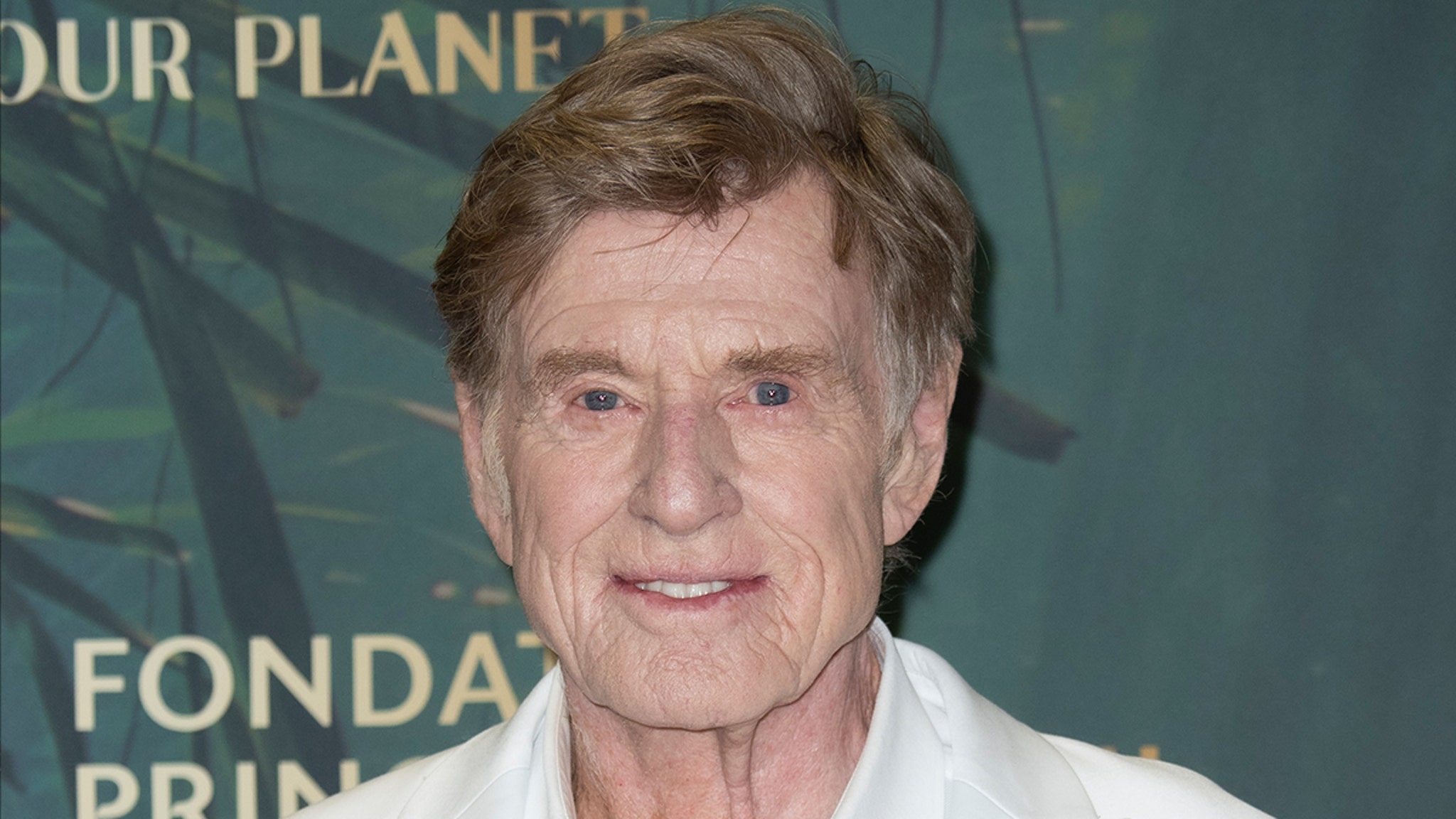
Robert Redford, Hollywood’s Golden Boy and Indie Champion, Dies at 89
Los Angeles, September 16, 2025 — The news hit like a scene from one of his own films: quiet, inevitable, and laced with a touch of melancholy. Robert Redford, the chiseled-jaw icon whose piercing blue eyes and quiet intensity lit up the silver screen for decades, has died at 89. He passed away early Tuesday morning at his beloved Sundance home in the Utah mountains, surrounded by family—the place where he built an empire of independent cinema and a legacy of environmental grit. No cause was given, but his publicist said he slipped away peacefully in his sleep. In a world quick to mythologize its stars, Redford was the real deal: a leading man who shunned the spotlight to champion stories that mattered, from Watergate exposés to quiet tales of loss.
From Santa Monica Streets to Sundance Dreams
Born Charles Robert Redford Jr. on August 18, 1936, in Santa Monica, California, Redford’s path wasn’t paved with easy callbacks. He lost his mother during a tough pregnancy when he was just a teen, and his first child, Scott, died of sudden infant death syndrome in 1959. After flunking out of the University of Colorado and drifting through Europe as a painter, he landed in New York, studying at the Pratt Institute before pivoting to acting at the American Academy of Dramatic Arts.
Broadway called first, with a breakout in “A View From the Bridge” opposite Eileen Heckart. But it was Hollywood that made him immortal. His film debut in “War Hunt” (1962) led to a string of hits: the roguish Sundance Kid opposite Paul Newman’s Butch Cassidy in 1969’s box-office smash, the con-man thrill of “The Sting” (1973) that netted him an Oscar nod, and the earnest journalist Bob Woodward in “All the President’s Men” (1976), where he and Dustin Hoffman peeled back the Nixon scandal with typewriter-clacking urgency. “He made serious topics like grief and political corruption resonate with the masses, in no small part because of his own star power,” The New York Times noted in its obituary.
Redford’s off-screen life was just as textured. He married Lola van Wagenen in 1958 (divorcing in 1985), fathering three more kids: Shauna, James (who died of liver cancer in 2020), and Amy. He wed artist Sibylle Szaggars in 2009. But Redford’s true partnership was with the land—he bought Sundance Resort in 1969, turning it into a haven for skiers and storytellers alike.
Directing with Heart: An Oscar and a Revolution
Redford wasn’t content playing the handsome hero forever. Behind the camera, he directed “Ordinary People” (1980), a raw gut-punch about family fracture that swept the Oscars, including Best Picture and Best Director—his only competitive win. “With a distaste for Hollywood’s dumb-it-down approach, he typically demanded that his films carry cultural weight,” his NYT obit reflected.
In 1981, he founded the Sundance Institute, birthing the famed film festival that became a launchpad for indies like “Reservoir Dogs” and “Little Miss Sunshine.” It democratized Hollywood, giving voice to outsiders. Later directorial turns—”Quiz Show” (1994), a sly look at ’50s TV scandals, and “The Horse Whisperer” (1998), which he also starred in—cemented his eye for the understated epic. Even in his 80s, he shone: reuniting with Jane Fonda in Netflix’s “Our Souls at Night” (2017) and capping his acting run with the sly “The Old Man & the Gun” (2018), though he flirted with retirement more than once.
Activist at Heart: From Pipelines to Presidential Medals
Redford’s politics were as bold as his on-screen gaze. A lifelong environmentalist, he trustee’d the Natural Resources Defense Council and railed against the Keystone XL pipeline, once calling it a “black snake” threatening sacred lands. He backed Native American causes and used Sundance to amplify voices on climate and justice. In 2016, President Obama awarded him the Presidential Medal of Freedom, lauding his “unwavering commitment to the environment and the arts.”
Hollywood liberals? Sure, but Redford walked the talk. “Like Gary Cooper, Gregory Peck and Steve McQueen, Robert Redford was never about having a particularly wide range as an actor, but as a movie star in his prime, few could touch him,” Variety wrote.
Tributes Pour In: A Bittersweet Echo
The outpouring was swift and heartfelt. Meryl Streep, who worked with him on “Out of Africa,” posted on X: “One of the lions has passed. Rest easy, Bob—you changed the game.” Jane Fonda, his four-film muse, shared a throwback photo: “We laughed, we cried, we made magic. Love you forever.” Even President Trump, no fan of the liberal elite, tweeted: “Robert Redford was a great talent—tough on the environment, but fair. Sad day for movies.” On X, fans mourned with clips from “The Twilight Zone,” where a young Redford played Death himself—poignantly ironic now.
Redford leaves behind daughters Shauna and Amy, grandchildren, and a wife of 16 years, Sibylle. His family asks for privacy as they grieve.
In an industry chasing reboots, Redford’s originals endure—proof that one man’s vision can reshape a culture. As the credits roll on his chapter, we’re left wondering: Who’ll step into those Sundance boots next?