
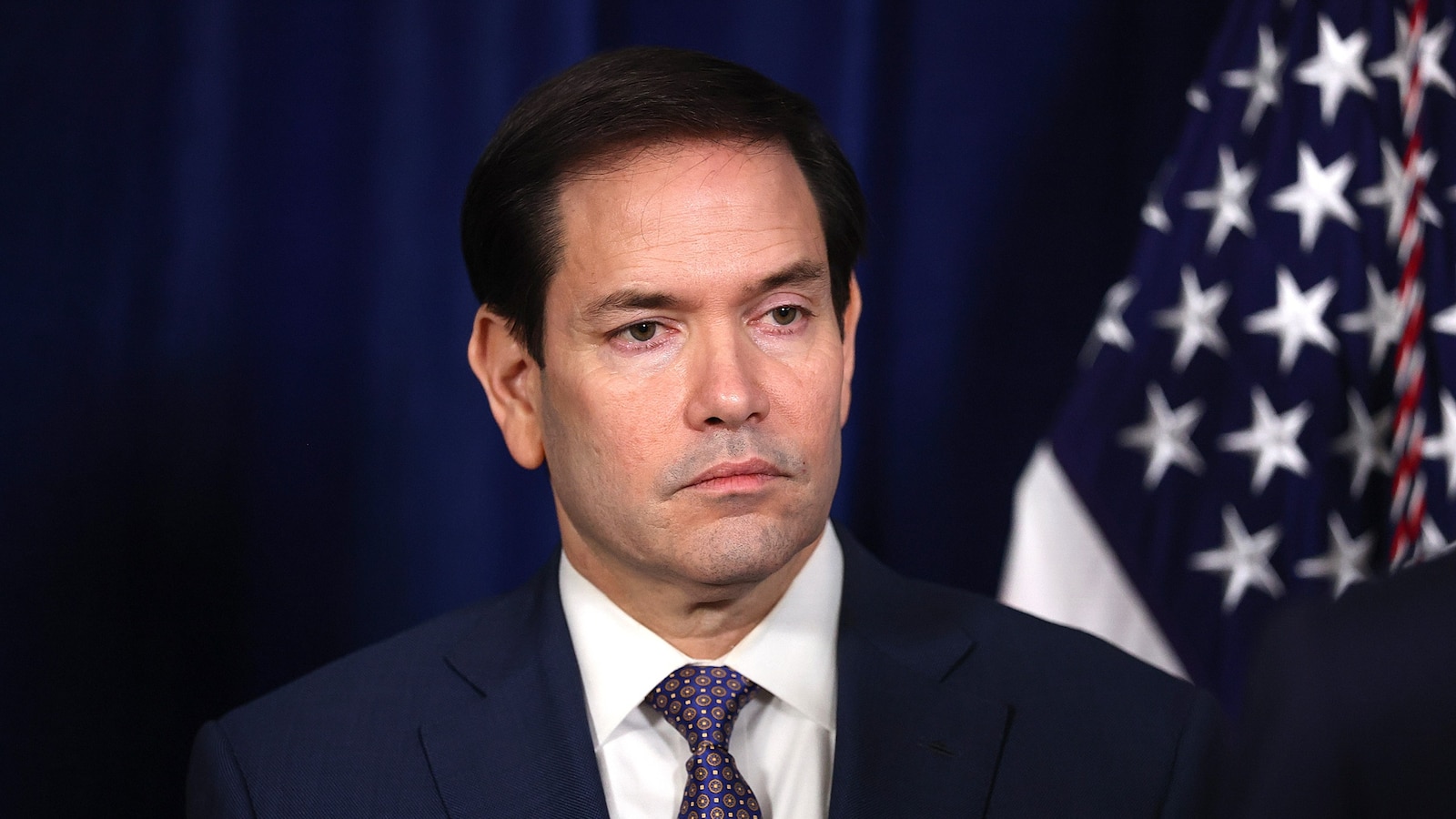
Rubio claims US running direction Venezuela situation ignites global debate as Secretary of State asserts policy control post Maduro captured, highlighting US Venezuela intervention, Trump administration Venezuela policy, and Venezuela sovereignty concerns that challenge international norms in early 2026.
Picture this: A longtime U.S. adversary ousted in a bold military move, and now America steps in to steer the ship of a sovereign nation.
That’s the reality unfolding in Venezuela, where Secretary of State Marco Rubio declared on January 4, 2026, that the United States is effectively “running the direction” of the country’s affairs following the dramatic capture of former President Nicolás Maduro.
The statement came during a press briefing amid the fallout from U.S. military strikes on January 3, which targeted Venezuelan assets and led to Maduro and his wife’s arrest by American forces. Rubio, a vocal critic of Maduro’s regime during his time as a Florida senator, emphasized that the U.S. is not at war with Venezuela but is guiding policy to “move things forward” in the oil-rich nation.
Details emerged from multiple sources, including Rubio’s responses to reporters questioning U.S. involvement. He outlined demands for Venezuela’s remaining leaders, including cooperation on transitional governance, release of political prisoners, and alignment with U.S. interests in combating narco-trafficking. The operation, authorized under the Trump administration, cited Maduro’s indictments for drug trafficking and human rights abuses as justification.
Background on the crisis traces back to Venezuela’s prolonged political turmoil under Maduro, marked by economic collapse, hyperinflation, and mass emigration. The U.S. has long supported opposition figures like María Corina Machado and Edmundo González, viewing Maduro’s rule as illegitimate after disputed elections. The January 3 action escalated tensions, with U.S. officials framing it as a necessary step to dismantle a “narco-regime” threatening regional stability.
Public reactions have been swift and polarized. Supporters in Venezuelan exile communities, particularly in Miami, hailed Rubio’s words as a victory for democracy, with street celebrations echoing sentiments of liberation. One Venezuelan-American activist posted on social media: “Finally, justice after years of suffering—thank you, Rubio, for leading the charge.”
Critics, however, decry it as imperial overreach. International legal experts raised alarms about sovereignty violations, with some drawing parallels to past U.S. interventions in Latin America. A United Nations spokesperson called for restraint, while countries like Russia and China condemned the move as “aggression.” In the U.S., progressive lawmakers questioned the legality, arguing it bypasses Congress and risks broader conflict.
Aviation and security analyst Jane Thompson commented: “Rubio’s admission signals a hands-on U.S. role in Venezuela’s rebuild, but it could complicate alliances and invite backlash from anti-interventionist nations.”
For U.S. readers, this development has profound implications. Politically, it bolsters the Trump administration’s aggressive foreign policy stance, potentially rallying conservative voters amid domestic debates on immigration and border security—given Venezuela’s role in migrant flows. Economically, stabilizing Venezuela could impact global oil prices, benefiting American consumers at the pump while opening doors for U.S. energy firms.
Lifestyle-wise, it affects the millions of Venezuelan-Americans whose families remain in limbo, influencing remittances and cultural ties. Technologically, enhanced U.S. oversight might involve cybersecurity measures to counter alleged Venezuelan hacking threats.
User intent here likely seeks clarity on Rubio’s exact claims and the broader context, managing expectations by providing balanced, verified facts without speculation. The focus is on informing Americans about how this shapes international relations and domestic priorities.
Rubio reiterated that Maduro had “multiple opportunities” to step down peacefully, underscoring the operation’s preventive nature against further instability. As U.S. forces maintain a presence, talks of a transitional government gain traction, with opposition leaders poised to return.
The situation evolves rapidly, with calls for diplomatic resolutions mounting. Rubio’s team stressed collaboration with regional partners like Colombia and Brazil to ensure a smooth handover.
This bold assertion from Rubio places the U.S. at the helm of Venezuela’s uncertain path ahead.
Rubio claims US running direction Venezuela situation sparks international scrutiny post Maduro captured, with US Venezuela intervention, Trump administration Venezuela policy, and Venezuela sovereignty issues demanding careful navigation for global stability.
Follow us on X @realnewshubs and subscribe for push notifications to stay updated on U.S. foreign policy developments.
Rubio US Venezuela direction, Secretary Rubio Venezuela policy, Maduro captured US, US running Venezuela situation, Trump Venezuela intervention, Venezuela sovereignty concerns, Rubio Maduro arrest, US policy Venezuela 2026, international reaction Maduro, Latin America US influence, Venezuela crisis update, Marco Rubio statements, post-Maduro Venezuela, US foreign policy Trump, global oil impact Venezuela