
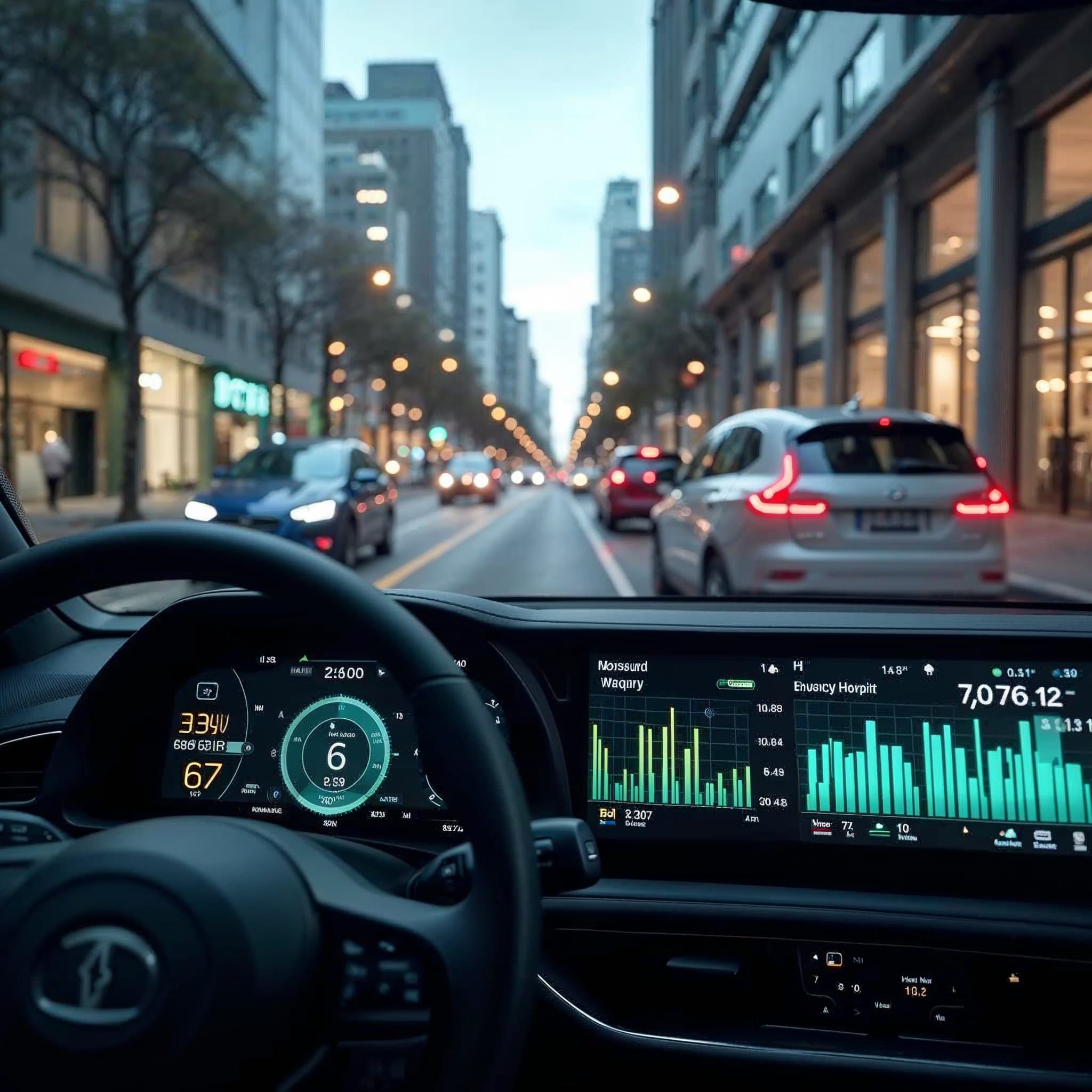
The daily city commute is a ritual for millions, a journey often characterized by stop-and-go traffic, bustling streets, and the constant hum of engines. As our cities evolve, so too do the vehicles that navigate them. In the quest for more efficient, sustainable, and enjoyable urban mobility, two distinct powertrain technologies have emerged as frontrunners: the pure electric vehicle (EV) and the hybrid electric vehicle (HEV). Both promise a greener drive, but their actual driving experiences in the cut and thrust of city life can be dramatically different. This comprehensive guide delves into the nuances of commuting with an EV versus an HEV, dissecting everything from the serenity of a silent ride to the roar of a hybrid engine kicking in, helping you determine which best suits your urban journey.
Understanding these differences is crucial not just for environmental reasons, but for personal comfort, cost efficiency, and overall satisfaction behind the wheel. We will explore how each vehicle type handles the unique challenges and opportunities of city driving, providing a detailed comparison that goes beyond mere specifications to touch upon the real-world implications for drivers and passengers alike. From the instant torque of an electric motor to the fuel-sipping versatility of a hybrid, prepare to embark on an insightful journey into the heart of modern urban commuting.
The Urban Symphony: Noise, Vibration, and Harshness (NVH)
Perhaps the most striking difference between an EV and an HEV in a city environment is the auditory experience, or lack thereof. This distinction significantly impacts the overall comfort and tranquility of the commute, a factor often underestimated until it is experienced firsthand.
Pure Electric Vehicles: The Serene Whisper
Imagine gliding through congested streets with only the gentle whir of electric motors and the subtle hum of tires on asphalt. This is the hallmark of an EV commute. In a pure electric vehicle, the absence of an internal combustion engine means there is no engine roar, no exhaust note, and significantly reduced vibrations. This silence is not merely a novelty; it fundamentally transforms the driving experience:
- Reduced Stress: The constant drone of traffic, amplified by engine noise, is a significant contributor to driver fatigue and stress. EVs offer a quiet sanctuary, allowing drivers to arrive at their destination feeling more refreshed and less agitated. This psychological benefit is particularly pronounced in dense urban environments where external noise pollution is already high.
- Enhanced Passenger Comfort: Passengers, especially children or those prone to motion sickness, often benefit from the smoother, quieter ride. Conversations are easier, music sounds clearer, and the overall cabin experience feels more premium and relaxing. For families undertaking daily school runs or city outings, this can make a world of difference.
- Heightened Awareness (initially): While initially disorienting for some, the quietness of an EV can actually sharpen a driver’s awareness of their surroundings. With less internal noise, external sounds like emergency sirens, pedestrian chatter, or other vehicles become more distinct, potentially contributing to safer driving, though EVs also come equipped with acoustic vehicle alerting systems (AVAS) at low speeds to protect pedestrians.
- Impact on Stop-and-Go Traffic: In the quintessential city driving scenario of stop-and-go traffic, the EV’s silence truly shines. There’s no engine restarting with a jolt or noise, just a seamless, quiet crawl. This makes bumper-to-bumper driving far less jarring and more peaceful.
Hybrid Electric Vehicles: The Blended Harmony (and Roar)
Hybrids offer a more complex acoustic profile. They operate with both an electric motor and a gasoline engine, meaning the driving experience shifts between periods of serene electric-only propulsion and the more traditional sounds of an internal combustion engine. This dynamic interplay can be a mixed bag:
- Electric-Only Mode: At lower speeds, typically under 25-30 mph (though this varies by model and battery state), many hybrids can operate purely on electric power, providing a silent, EV-like experience. This is common in traffic jams, parking lots, and residential areas, offering a taste of the serene commute. During these moments, the hybrid feels very much like an EV, a quiet whisper in the urban jungle.
- Engine Engagement: The moment more power is needed – whether for acceleration, climbing a hill, or when the battery charge is low – the gasoline engine seamlessly (or sometimes not so seamlessly) kicks in. This transition introduces engine noise and vibrations, sometimes abruptly, which can disrupt the tranquility established during electric-only driving. The “hybrid roar” refers to the sound of the gasoline engine engaging, particularly under load, which can be noticeable compared to the prior silence.
- Variable NVH: The overall NVH profile of a hybrid is therefore variable. It oscillates between near-silent and conventional engine noise. Some modern hybrids are incredibly refined, with engine engagement being barely perceptible. Others, especially older models or those with continuously variable transmissions (CVTs) that hold high RPMs, can be quite vocal when the engine is working hard.
- Effect in Traffic: In stop-and-go traffic, hybrids excel when they can remain in EV mode. However, if the battery drains quickly or the driver frequently needs to accelerate briskly, the engine will engage repeatedly, leading to a less consistent and potentially more jarring experience compared to a pure EV. The constant cycling of the engine can also be a point of minor annoyance for some drivers.
Ultimately, while both offer benefits over a traditional gasoline car, the EV stands out for its consistent, unwavering tranquility, providing a genuinely silent commute that can redefine the urban driving experience. The hybrid, while capable of quiet operation, ultimately introduces the familiar sounds and vibrations of an internal combustion engine, albeit intermittently.
Power Delivery and Acceleration: The City Sprint
Navigating city traffic often requires quick reflexes and responsive acceleration to merge, change lanes, and exploit gaps. The way power is delivered by EVs and HEVs profoundly influences this aspect of urban driving.
Pure Electric Vehicles: Instantaneous Torque
EVs are renowned for their immediate and linear power delivery. Electric motors produce maximum torque from zero RPM, meaning there’s no waiting for an engine to spool up or gears to shift. This characteristic is particularly advantageous in city driving:
- Responsive Acceleration: From a standstill, EVs can surge forward with remarkable immediacy. This “instant torque” makes them incredibly agile in traffic, allowing drivers to quickly get up to speed after a stop sign or traffic light, or to confidently execute a lane change. There’s no lag, just smooth, consistent power. This responsiveness is a major factor in reducing perceived driving effort and increasing driver confidence in busy urban settings.
- Smooth Power Curve: Unlike gasoline engines that have specific power bands, electric motors deliver power smoothly across their entire operating range. This means no jerking or lurching due to gear changes (as most EVs use a single-speed transmission), contributing to an exceptionally refined driving feel. The absence of traditional gear changes enhances the feeling of seamless acceleration, which is highly appreciated in stop-and-go conditions.
- Maneuverability: The ability to quickly accelerate out of tight spots or react to sudden changes in traffic flow makes EVs feel nimble and easy to pilot, even in larger forms. This contributes to a sense of control and reduces the stress associated with navigating congested city streets.
Hybrid Electric Vehicles: Blended and Responsive
Hybrids offer a more nuanced power delivery. They combine the initial boost of an electric motor with the sustained power of a gasoline engine, aiming for an optimal balance of efficiency and performance.
- Electric Assist at Low Speeds: Like EVs, hybrids utilize their electric motor for initial acceleration, often providing a brisk, quiet start. This electric assistance helps bridge the typical low-end torque deficit of a small gasoline engine, making city driving feel more responsive than a pure internal combustion engine vehicle. This initial electric push is crucial for quick getaways from traffic lights.
- Engine Engagement for Sustained Power: When more significant acceleration is required, or once the vehicle reaches a certain speed, the gasoline engine seamlessly (in well-designed systems) kicks in to provide additional power. The transition is generally smooth in modern hybrids, though some drivers might notice a slight surge or a change in sound as the engine takes over. The system intelligently blends the power sources to optimize performance and fuel economy.
- CVT Influence: Many hybrids employ continuously variable transmissions (CVTs), which, while excellent for efficiency, can sometimes lead to a “rubber band” effect where the engine revs high without a proportional increase in road speed during hard acceleration. This can feel less engaging and more noisy compared to a conventional automatic or an EV’s direct drive. However, recent CVT developments have significantly mitigated this, offering a more linear feel.
- Reliable Power on Demand: A significant advantage of hybrids is their ability to provide sustained power for highway merging or longer uphill climbs where an EV’s battery might be under more strain. For city drivers who occasionally venture onto faster roads, the hybrid’s gasoline engine offers a reassuring backup.
For sheer responsiveness and seamless acceleration in city traffic, the EV’s instant torque is hard to beat. Hybrids, however, offer a very capable and efficient blend, delivering good initial acceleration with the added assurance of a gasoline engine for all driving scenarios.
Energy Management: Efficiency in the Concrete Jungle
City driving, with its constant cycle of acceleration and deceleration, presents both challenges and opportunities for energy efficiency. EVs and HEVs tackle this in fundamentally different ways, each optimized for the unique demands of urban commutes.
Pure Electric Vehicles: Regenerative Braking Masters
EVs are incredibly well-suited for city driving efficiency, primarily due to their advanced regenerative braking systems. This technology captures kinetic energy that would otherwise be lost as heat during braking and converts it back into electricity to recharge the battery.
- Maximized Regenerative Braking: In stop-and-go city traffic, EVs constantly utilize regenerative braking. Every time the driver lifts off the accelerator or presses the brake pedal, energy is recovered. This means that instead of wasting energy, the car is effectively “recharging” itself multiple times during a typical city commute. This process dramatically increases urban efficiency.
- “One-Pedal Driving”: Many EVs offer a feature known as “one-pedal driving,” where lifting off the accelerator pedal initiates strong regenerative braking, often to the point where the car can come to a complete stop without touching the brake pedal. This simplifies driving in traffic, reduces wear on physical brake components, and maximizes energy recovery. It takes a little getting used to but becomes intuitive quickly, enhancing control and efficiency in city situations.
- Consistent Efficiency: Unlike gasoline cars whose efficiency plummets in stop-and-go traffic, EVs maintain high efficiency in these conditions because their electric motors are highly efficient at all speeds, and regenerative braking continually recoups energy. This makes them exceptionally frugal for city dwellers.
- Simplified Powertrain: With only one power source (the electric motor and battery), the energy management system is streamlined, focusing purely on optimizing electrical flow and recovery.
Hybrid Electric Vehicles: The Intelligent Blend
Hybrids employ a sophisticated energy management system that intelligently juggles power between the gasoline engine, electric motor, and battery to achieve optimal efficiency. This system is particularly effective in urban environments.
- Engine Shut-Off at Idle: A core efficiency feature of hybrids in the city is their ability to shut off the gasoline engine when the vehicle is stopped (e.g., at a red light) or coasting at low speeds. This eliminates wasteful idling and reduces emissions. When the driver presses the accelerator, the electric motor typically initiates movement, with the engine restarting only when necessary.
- Electric-Only Driving at Low Speeds: As mentioned, hybrids can often operate on pure electric power for short distances at low speeds. This is invaluable in congested traffic, parking lots, and residential areas, where the car consumes no gasoline and produces zero tailpipe emissions. This is where a hybrid’s city efficiency truly shines, often surpassing its highway fuel economy.
- Regenerative Braking: Hybrids also feature regenerative braking, though its implementation can be different. While it recovers energy, it often works in conjunction with the gasoline engine to determine the best energy allocation strategy. The recovered energy is stored in a smaller battery pack compared to EVs, and is used to power the electric motor or assist the engine.
- Optimal Power Blending: The hybrid system continuously monitors driving conditions, driver input, and battery state of charge to determine the most efficient combination of gasoline and electric power. This intelligent blending allows hybrids to deliver significantly better fuel economy in city driving compared to conventional gasoline vehicles, often by as much as 30-50% or more.
For pure energy recovery and consistent efficiency in stop-and-go conditions, EVs with their powerful regenerative braking are hard to beat. However, hybrids, through their intelligent blending of power sources and strategic engine shut-off, offer a highly efficient and versatile solution for city driving, dramatically reducing fuel consumption compared to traditional gasoline cars.
Range and Charging Infrastructure: The Daily Routine
For city drivers, the considerations of range and how to refuel or recharge their vehicle are paramount. This is where EVs and HEVs present their most significant practical differences.
Pure Electric Vehicles: Charging Considerations and Range Anxiety
The transition to an EV often involves a shift in mindset regarding “fueling.”
- Daily Range: Modern EVs typically offer a range of 200-300+ miles on a full charge. For most city commutes, which are often well under 50 miles daily, this range is more than adequate. The average urban driver rarely exhausts their battery in a single day.
- Home Charging is Key: For the vast majority of EV owners, home charging is the cornerstone of their daily routine. Plugging in overnight, like a smartphone, ensures a full “tank” every morning. A Level 2 (240V) charger can typically replenish a battery overnight, providing ample range for daily needs. Without reliable home charging (e.g., for apartment dwellers without dedicated charging), EV ownership can become significantly more challenging.
- Public Charging: City centers often have a growing network of public Level 2 and DC fast chargers. These are useful for topping up during errands, work, or longer trips. However, availability, reliability, and cost can vary. DC fast charging can add hundreds of miles of range in 20-40 minutes, but it’s generally more expensive and not recommended for daily use due to potential long-term battery degradation.
- Range Anxiety: While less of an issue for daily city commutes, range anxiety – the fear of running out of charge – can still be a concern for spontaneous longer trips or if public charging infrastructure is unreliable in certain areas. Planning longer routes around charging stops becomes necessary.
Hybrid Electric Vehicles: Fueling Flexibility and Peace of Mind
Hybrids offer the familiar convenience of gasoline fueling combined with the efficiency of electric power.
- Unlimited Range (with Gas): The primary advantage of a hybrid is its ability to simply refill the gas tank when needed. This eliminates range anxiety entirely, as long as there are gas stations available (which there are, almost everywhere). This flexibility is a major draw for those who want efficiency without the behavioral change associated with charging.
- Short Electric-Only Range: Most conventional hybrids have a very limited electric-only range, often just 1-3 miles, used primarily for low-speed maneuvering and short bursts. Plug-in Hybrids (PHEVs), however, offer a much greater electric range (20-50+ miles) which can cover many urban commutes entirely on electric power if charged regularly.
- No Charging Dependency (for conventional hybrids): For conventional hybrids, there’s no requirement to plug in. The battery is recharged through regenerative braking and the gasoline engine. This makes them an easy transition for drivers accustomed to gasoline cars, requiring no change in daily routine.
- PHEV Charging: While not mandatory, charging a PHEV regularly maximizes its fuel efficiency. PHEVs can be charged at home with a standard outlet or a Level 2 charger, and also utilize public charging infrastructure, similar to EVs but with the fallback of a gasoline engine when electricity runs out.
For absolute freedom from range anxiety and established fueling infrastructure, hybrids (especially conventional ones) remain highly convenient. EVs demand a shift to a charging-centric mindset, requiring reliable access to home charging, but offer the benefit of “fueling” at home and avoiding gas stations entirely for daily use.
Maintenance and Running Costs: The Wallet’s Perspective
Beyond the purchase price, the long-term costs of owning and operating a vehicle are critical. EVs and HEVs present different cost profiles regarding maintenance and daily running expenses.
Pure Electric Vehicles: Simplicity and Lower Running Costs
EVs generally boast lower maintenance costs due to fewer moving parts and simpler mechanical systems.
- Reduced Maintenance: EVs do not require oil changes, spark plug replacements, air filter changes, or complex exhaust system maintenance. There’s no transmission fluid to change, no timing belts, and typically fewer components prone to wear and tear. This significantly reduces the frequency and cost of scheduled maintenance appointments.
- Brake Longevity: Thanks to regenerative braking, the physical brake pads and rotors in an EV experience significantly less wear. Many EV owners report brake components lasting well over 100,000 miles before needing replacement, a stark contrast to gasoline cars that might need new pads every 30,000-50,000 miles in city driving.
- Electricity Costs: “Fueling” an EV with electricity is generally cheaper than gasoline, especially when charging at home during off-peak hours. The cost per mile for electricity can be 2-4 times lower than gasoline, leading to substantial savings over the vehicle’s lifetime. However, public fast charging can be more expensive, though still often competitive with gas.
- Battery Longevity: EV batteries are designed to last the life of the vehicle, often coming with warranties of 8 years or 100,000-150,000 miles. While degradation occurs over time, it’s typically a gradual process and not a sudden failure. Replacement costs, while high, are rarely encountered by the first owner.
Hybrid Electric Vehicles: Dual Systems, Blended Costs
Hybrids combine components from both gasoline and electric vehicles, which can lead to a different maintenance profile.
- Similar Engine Maintenance: Hybrids still have a gasoline engine, meaning they require oil changes, spark plug replacements, and other routine maintenance associated with internal combustion engines. However, because the engine runs less often (especially in city driving), these services might be needed less frequently than in a pure gasoline car.
- Brake Longevity (Improved): Like EVs, hybrids benefit from regenerative braking, which reduces wear on the physical brake components. This means longer life for brake pads and rotors compared to conventional cars, though usually not quite as long as in an EV that relies more heavily on regen.
- Dual System Complexity: While generally very reliable, hybrids have two distinct power systems (gasoline engine and electric motor/battery), along with complex control systems to manage their interplay. This can occasionally lead to more complex diagnostic and repair scenarios, though most components are robust.
- Fuel Costs: While significantly better than conventional gasoline cars, hybrids still incur fuel costs. The savings compared to a pure gasoline car are substantial, but they cannot match the ultra-low “fuel” costs of an EV running on cheap home electricity.
- Battery Replacement: Hybrid battery packs are typically smaller and less expensive to replace than EV batteries. They also come with long warranties (e.g., 8 years/100,000 miles). While less common, replacement can be a significant cost once the battery is beyond its warranty period.
For those prioritizing minimal maintenance and the lowest daily running costs, an EV typically holds the advantage. Hybrids offer a significant improvement over gasoline cars in both fuel efficiency and reduced brake wear, but still incur regular engine-related maintenance and higher daily fuel costs compared to electricity.
Environmental Footprint: A Breath of Fresh Air?
For many urban dwellers, the choice between an EV and an HEV is deeply intertwined with environmental considerations, especially concerning local air quality and overall carbon emissions.
Pure Electric Vehicles: Zero Tailpipe Emissions (Point of Use)
The immediate and most visible environmental benefit of EVs in cities is the complete absence of tailpipe emissions.
- Improved Local Air Quality: In congested urban areas, vehicle emissions are a major contributor to smog, particulate matter, and greenhouse gases. EVs produce zero tailpipe emissions, meaning they contribute directly to cleaner air in the neighborhoods they drive through. This is a significant health benefit for city residents, reducing respiratory illnesses and improving overall public health.
- Reduced Carbon Footprint (Grid Dependent): While EVs have no tailpipe emissions, their overall carbon footprint depends on how the electricity they consume is generated. If the grid relies heavily on renewable sources (solar, wind, hydro), the EV’s lifecycle emissions are very low. As grids decarbonize, the environmental advantage of EVs grows. Even with a grid powered by a mix of sources, EVs are often cleaner than gasoline vehicles on a “well-to-wheel” basis, especially in regions with cleaner electricity.
- Noise Pollution Reduction: The quiet operation of EVs also contributes to a reduction in noise pollution, a often-overlooked environmental benefit in bustling cities.
- Battery Production: It is important to acknowledge that the production of EV batteries is energy-intensive and involves mining for materials like lithium, cobalt, and nickel. However, manufacturers are continually working to reduce this impact, improve recycling processes, and source materials more responsibly. Over the lifespan of the vehicle, the operational benefits typically outweigh the initial production impact.
Hybrid Electric Vehicles: Significant Emission Reductions
Hybrids significantly reduce emissions compared to conventional gasoline vehicles, offering a substantial improvement in urban environments.
- Reduced Tailpipe Emissions: By combining a smaller, more efficient gasoline engine with an electric motor, hybrids achieve much better fuel economy and consequently emit fewer greenhouse gases and pollutants per mile than equivalent conventional cars. The ability to run on electric power at low speeds and shut off the engine at idle further minimizes emissions in city driving.
- Compliance with Low Emission Zones: Many cities worldwide are introducing Low Emission Zones (LEZs) or Ultra Low Emission Zones (ULEZs). While pure EVs are always compliant, some plug-in hybrids (PHEVs) with a sufficient electric range can also meet the requirements for entry without incurring charges, especially if they are driven in EV mode within these zones.
- Less Reliance on Infrastructure: Hybrids provide a practical step towards decarbonization for individuals who may not have access to charging infrastructure or are not ready for a full transition to EV ownership. They offer an immediate, tangible reduction in fossil fuel consumption and emissions without demanding significant lifestyle changes.
- Transition Technology: Hybrids are often seen as a crucial bridge technology, helping consumers accustomed to gasoline cars gradually shift towards electrification. They introduce electric propulsion and regenerative braking while retaining the familiarity of gasoline fueling.
For the ultimate reduction in local air pollution and the lowest overall carbon footprint (especially with a clean electricity grid), EVs are the superior choice. However, hybrids offer a significant and immediate improvement over conventional gasoline cars, making them an excellent choice for those seeking to reduce their environmental impact without fully committing to the EV charging ecosystem.
Driver Engagement and Driving Dynamics
Beyond the practicalities, the subjective feel of a car – its handling, responsiveness, and the connection it fosters with the driver – is a crucial part of the driving experience. EVs and hybrids offer distinct dynamics.
Pure Electric Vehicles: Grounded and Nimble
EVs often provide a unique and engaging driving experience, especially in urban settings.
- Low Center of Gravity: The heavy battery pack in an EV is typically mounted low in the chassis, spanning the floor of the vehicle. This results in a very low center of gravity, which significantly enhances stability and reduces body roll during cornering. For navigating city streets, this translates to a more planted and confident feel.
- Balanced Weight Distribution: The placement of the battery and motors often leads to a more balanced weight distribution (near 50/50 front/rear) than many conventional cars. This contributes to neutral handling characteristics and improved agility.
- Responsive Steering: With no engine vibration or complex drivetrain components interfering, EVs often feature very direct and responsive steering, making them nimble and easy to maneuver in tight city spaces, such as parking garages or narrow alleys.
- Quiet Serenity: While contributing to comfort, the quietness can also be a unique form of engagement. Drivers become more attuned to the road and their inputs, finding a serene focus that differs from the auditory feedback of a gasoline engine. For some, this quietness enhances the driving pleasure rather than diminishing it.
Hybrid Electric Vehicles: Familiarity with an Electric Twist
Hybrids generally offer a driving dynamic that blends traditional gasoline car characteristics with the added smoothness and torque of electric assistance.
- Familiar Feel: For drivers transitioning from gasoline cars, a hybrid’s driving dynamics feel largely familiar. The steering, pedal feel, and general responsiveness often align with what they are used to, especially when the gasoline engine is active.
- Enhanced Low-Speed Handling: The electric motor provides smooth, quiet propulsion at low speeds, making parking and slow-speed maneuvers effortless and refined, similar to an EV.
- Weight Distribution: While hybrids also carry an extra battery pack, it’s typically smaller and lighter than an EV’s, meaning the overall weight distribution might not be as perfectly balanced. However, most modern hybrids are designed for excellent ride and handling.
- Braking Feel: Hybrid braking systems seamlessly blend regenerative braking with traditional friction braking. This can sometimes lead to a slightly less linear or less predictable brake pedal feel compared to a purely hydraulic system, though modern systems are very refined. The transition between regenerative and friction braking is often imperceptible in current models.
- Variable Engagement: The variable nature of a hybrid, shifting between electric and gasoline power, means the driving engagement also shifts. The quiet electric moments offer a taste of EV serenity, while engine engagement brings a more traditional, auditory driving experience.
EVs tend to offer a more distinct and often more engaging driving dynamic due to their low center of gravity, balanced weight, and instant, seamless power delivery, leading to a confident and nimble feel in the city. Hybrids provide a familiar and competent driving experience, enhanced by electric assistance, offering a smooth ride with the reassurance of a gasoline engine.
Comparison Tables
Table 1: Driving Experience Metrics for City Commutes
| Feature | Pure Electric Vehicle (EV) | Hybrid Electric Vehicle (HEV) | Impact on City Driving |
|---|---|---|---|
| Noise, Vibration, Harshness (NVH) | Near silent operation, minimal vibration. | Silent in EV mode, noticeable engine noise/vibration when gasoline engine engages. | EV provides a consistently calm, less stressful environment. HEV has variable tranquility. |
| Power Delivery & Acceleration | Instantaneous torque, smooth, linear acceleration from 0 MPH. | Electric assist for brisk starts, gasoline engine kicks in for sustained power; generally smooth blend. | EV excels in quick maneuvers and traffic gaps. HEV provides responsive, efficient acceleration. |
| Braking Feel & Regen | Strong, seamless regenerative braking, often enabling “one-pedal driving.” | Effective regenerative braking blended with friction brakes; pedal feel can be less linear. | EV maximizes energy recovery and reduces brake wear. HEV also benefits from regen, but to a lesser extent. |
| Driver Engagement & Dynamics | Low center of gravity, balanced weight, nimble handling, quiet focus. | Familiar driving feel, electric assist enhances low-speed agility, stable but less distinct. | EV often feels more planted and agile. HEV offers a traditional yet refined feel. |
| Start-Up & Shut-Down | Silent power-on, no engine idle, silent shut-down. | Silent start-up if in EV mode, engine may start/stop automatically at idle or low speeds. | EV provides a seamless, consistent experience. HEV can have engine cycling in traffic. |
Table 2: Practicality & Cost Metrics for City Commutes
| Feature | Pure Electric Vehicle (EV) | Hybrid Electric Vehicle (HEV) | Relevance for City Life |
|---|---|---|---|
| Typical City Range (Daily) | 200-300+ miles (ample for most commutes). | Unlimited (gasoline tank) for conventional HEV; 20-50+ miles electric for PHEV. | EV requires charging infrastructure. HEV offers fueling flexibility. |
| “Fueling” Time & Access | Overnight home charging (8-12 hrs for full); 20-40 min for 80% at DC fast charger. | 5-10 min at gas station. PHEV also charges 2-4 hrs (Level 2) or 8-12 hrs (Level 1). | EV convenient with home charging. HEV ideal for those without home charging or long trips. |
| Average Daily Running Cost (City) | Very low (electricity, especially off-peak home charging). | Low (gasoline, significantly better than pure ICE due to electric assist). | EV generally cheaper per mile. HEV is a strong second for fuel efficiency. |
| Routine Maintenance Frequency | Less frequent (no oil changes, spark plugs, fewer moving parts). | Similar to ICE but potentially less frequent (oil changes, filters still needed). | EV typically has lower long-term maintenance costs. HEV offers good savings on brakes. |
| Environmental Impact (Tailpipe) | Zero tailpipe emissions (great for local air quality). | Significantly reduced emissions compared to ICE, zero in EV mode (PHEV). | EV is superior for local air quality. HEV offers strong improvement over ICE. |
Practical Examples: Real-World Use Cases and Scenarios
To truly understand which vehicle is best, let’s look at specific real-life scenarios for city commuters.
Case Study 1: The Predictable Commuter with Home Charging
Meet Sarah, a software engineer living in a house with a garage in a major metropolitan area. Her daily commute is a consistent 25 miles round trip, mostly stop-and-go city driving. She has a Level 2 charger installed at home.
- EV Choice: For Sarah, a pure electric vehicle would be an ideal fit. She plugs in her EV overnight, and every morning, it’s fully charged, costing her mere dollars in electricity. She enjoys the silent, stress-free drive through traffic, arriving at work feeling refreshed. Maintenance is minimal, and she rarely visits a gas station, saving both time and money. Her predictable route means range anxiety is a non-issue, and her home charging setup perfectly supports EV ownership. The immediate torque makes merging onto busy streets feel effortless.
- Hybrid Experience: While a hybrid would certainly offer better fuel economy than a conventional car for Sarah, she would still be visiting gas stations regularly, and the engine noise would occasionally disrupt her otherwise quiet commute. The maintenance schedule would be more extensive, and her running costs would be higher than an EV.
Case Study 2: The Explorer with Occasional Long Trips and Limited Home Charging
John is a freelance designer who lives in an apartment building with street parking. His daily city commute varies, sometimes 10 miles, sometimes 40. On weekends, he often takes spontaneous road trips to visit clients or explore rural areas, sometimes driving 200-300 miles. Public charging is available but not always convenient.
- Hybrid Choice: John’s lifestyle makes a hybrid, especially a conventional HEV or even a Plug-in Hybrid (PHEV), a much more practical choice. With a conventional HEV, he enjoys excellent city fuel economy, benefiting from electric-only driving in traffic, and he never has to worry about charging. For his spontaneous long trips, he simply fills up with gas, just like a traditional car, eliminating any range anxiety. If he opted for a PHEV, he could benefit from some electric-only commuting by charging at public chargers or even a standard wall outlet at home (though slow), with the gasoline engine as a reliable backup for longer journeys.
- EV Experience: An EV would pose significant challenges for John. Without reliable home charging, his daily routine would involve frequent trips to public chargers, which can be time-consuming and expensive. His spontaneous long weekend trips would require careful planning around charging stations, potentially adding stress and delays. While possible, it would be a less convenient and potentially more frustrating experience given his circumstances.
Case Study 3: The Eco-Conscious Apartment Dweller
Maria lives in a high-rise apartment in the city center. She cares deeply about air quality and reducing her carbon footprint. Her commute is short, about 15 miles round trip, and she walks or bikes most days, using her car only when necessary for errands or occasional longer commutes to a different office. There are a few public Level 2 chargers within walking distance of her apartment, and she occasionally visits friends with home chargers.
- Plug-in Hybrid (PHEV) Choice: For Maria, a PHEV represents an excellent compromise. Her short daily trips can often be completed entirely on electric power, meaning zero tailpipe emissions in her city neighborhood, aligning with her environmental values. She can charge at nearby public chargers during errands or overnight at a friend’s place occasionally. For the times when she needs to drive further or public charging is inconvenient, she has the gasoline engine as a reliable backup, eliminating range anxiety. This allows her to actively reduce her carbon footprint and local emissions without the full commitment to an EV charging routine.
- EV Experience: While an EV would offer zero emissions, the lack of consistent, convenient home charging might become a daily hassle, potentially leading to anxiety about finding available public chargers when she needs them.
- Conventional Hybrid Experience: A conventional hybrid would offer good fuel economy but wouldn’t give her the same feeling of driving purely on electricity for her short, critical city segments, which is important for her environmental goals.
Case Study 4: The Suburban Family Commuter with Weekend Escapes
David and Emily live in the suburbs and commute 40 miles each way into the city for work. They have a single-family home with a garage and are considering adding a Level 2 charger. On weekends, they often load up the kids and head to a cabin 150 miles away.
- EV Choice: An EV with a robust range (e.g., 250-300+ miles) would be a strong contender for their daily commute. With a Level 2 charger at home, their cars would be fully charged every morning, making the 80-mile round trip seamless and economical. The quiet ride would be appreciated after a long day at work. For weekend trips to the cabin, a 150-mile one-way journey is well within the range of many EVs, especially if there’s an opportunity to top up at a DC fast charger halfway or upon arrival at the cabin. The reduced maintenance would also be a plus for a busy family.
- Hybrid Experience: A conventional hybrid would offer significant fuel savings for their 80-mile daily commute compared to a gasoline car, but they would still spend more on fuel than with an EV and would be making frequent stops at gas stations. A PHEV might allow them to complete much of their daily commute on electric power if they charge diligently, offering a good balance, but their longer weekend trips would still rely heavily on the gasoline engine.
These examples illustrate that the “best” choice is highly individualized, depending on daily driving patterns, access to charging, environmental priorities, and tolerance for range anxiety. Both EVs and HEVs offer compelling advantages, but they cater to different sets of needs and priorities within the urban landscape.
Frequently Asked Questions
Q: Is range anxiety a real concern for city EV drivers?
A: For most daily city commutes, range anxiety is often overstated. The average daily drive in a city is typically well under 50 miles, and modern EVs offer ranges of 200-300+ miles on a full charge. The main factor determining whether range anxiety is an issue is access to convenient charging, particularly home charging. If you can plug in overnight, you start each day with a “full tank,” making daily commutes effortless. However, if you rely solely on public charging, or frequently take spontaneous long trips beyond your vehicle’s range without planning for charging stops, then range anxiety can become a legitimate concern. For the typical city dweller with a predictable commute and home charging, it’s largely a non-issue.
Q: How much does it cost to charge an EV at home versus using public chargers?
A: Charging an EV at home is generally the most economical option. The cost per kilowatt-hour (kWh) for residential electricity varies widely by region and time of day, but it’s typically equivalent to paying $1-2 per gallon of gasoline for the same distance. Many utility companies offer lower “off-peak” rates at night, making overnight charging even cheaper. Public Level 2 chargers are usually more expensive than home charging but are often still cheaper than gasoline. DC fast chargers are the most expensive option, sometimes comparable to or slightly more than gasoline on a per-mile basis, but they offer the convenience of rapid charging for longer journeys or quick top-ups.
Q: Are hybrids truly environmentally friendly, or are they just a temporary solution?
A: Hybrids are genuinely more environmentally friendly than conventional gasoline vehicles, offering a significant step towards sustainability. They achieve better fuel economy and emit fewer greenhouse gases and pollutants by combining a smaller gasoline engine with an electric motor, utilizing regenerative braking, and often running on electric-only power at low speeds. While they still burn fossil fuels and produce tailpipe emissions (unlike pure EVs), they represent a substantial reduction in environmental impact for many drivers. They are often seen as a crucial “bridge technology” that helps consumers transition from gasoline-only cars to full electrification, making them more than just a temporary solution for many, especially where EV infrastructure is still developing or for specific use cases.
Q: What’s the main difference in maintenance between EVs and hybrids?
A: The main difference lies in the number of complex mechanical systems. EVs have far fewer moving parts; they don’t require oil changes, spark plug replacements, air filters, or timing belt services. Their regenerative braking also dramatically extends the life of brake pads. This typically results in significantly lower and less frequent maintenance costs. Hybrids, conversely, still have a gasoline engine and all its associated maintenance requirements (oil changes, spark plugs, etc.), though these might be less frequent due to the engine running less often. Hybrids also benefit from extended brake life due to regenerative braking. So, while hybrids are better than gasoline cars, EVs are generally simpler and cheaper to maintain long-term.
Q: Do EVs handle better in city traffic than hybrids?
A: Many drivers find EVs handle exceptionally well in city traffic. Their heavy battery packs are typically mounted low in the chassis, creating a very low center of gravity. This translates to excellent stability, reduced body roll in turns, and a feeling of being “planted” on the road. Combined with instant torque for quick acceleration and often responsive steering, EVs can feel very nimble and easy to maneuver in tight urban environments. Hybrids also handle well, often benefiting from electric assist for smooth low-speed maneuvers, but their driving dynamics are generally more akin to a traditional gasoline car, sometimes with slightly less responsiveness compared to an EV’s immediate power delivery.
Q: How long do EV batteries typically last, and are they expensive to replace?
A: EV batteries are designed for longevity and typically last for many years, often beyond the lifespan of the rest of the vehicle. Most manufacturers provide extensive warranties, commonly 8 years or 100,000 to 150,000 miles, covering significant degradation or failure. While batteries do degrade over time (meaning slightly less range), this is usually a gradual process. Full battery replacement is rare for the first owner, and costs, while high (often tens of thousands of dollars), are decreasing as technology advances and economies of scale improve. Replacement is usually a last resort; often, individual modules within a battery pack can be replaced if issues arise.
Q: Can I drive a conventional hybrid purely on electric power in the city?
A: Conventional hybrids (non-plug-in) can drive purely on electric power, but only for very short distances (typically 1-3 miles) and at low speeds (e.g., under 25-30 mph). This electric-only mode is usually activated automatically by the car’s system in stop-and-go traffic, when coasting, or when slowly accelerating from a stop, to maximize fuel efficiency. You generally cannot force a conventional hybrid to stay in EV mode for an entire city commute. Plug-in hybrids (PHEVs), however, have larger batteries and are designed to drive 20-50+ miles solely on electric power, allowing for complete electric-only city commutes if charged regularly.
Q: What incentives are available for buying EVs or hybrids in the city?
A: Incentives for buying EVs and hybrids vary significantly by country, state, and even local city governments. They can include federal tax credits (which have specific vehicle eligibility criteria and income limits), state rebates, exemptions from sales tax, HOV lane access for single occupants, free or discounted parking in certain areas, and reduced vehicle registration fees. For hybrids, especially conventional ones, incentives are often fewer than for EVs or PHEVs due to their lower level of electrification. It’s crucial to research current incentives specific to your location before purchasing, as these programs change frequently.
Q: How does the resale value of EVs and hybrids compare to gasoline cars?
A: Historically, hybrids have held their resale value quite well, especially popular models known for reliability and fuel efficiency. EVs are a newer market, and their resale value has been more volatile, influenced by rapid technological advancements (newer models often have significantly longer ranges or faster charging), changes in government incentives, and battery degradation concerns (which are often overblown but impact perception). However, as the EV market matures and battery technology stabilizes, their resale values are becoming more predictable and competitive, especially for popular models. Overall, both EVs and hybrids often retain better value than comparable gasoline vehicles due to their efficiency and environmental benefits.
Q: Is a plug-in hybrid (PHEV) the best of both worlds for city driving?
A: For many city drivers, a plug-in hybrid (PHEV) indeed offers a compelling “best of both worlds” solution. PHEVs provide a significant all-electric range (typically 20-50+ miles) that can cover most daily city commutes entirely on electricity, offering zero-emission driving and lower running costs similar to an EV. When the electric range is depleted, or for longer trips, the gasoline engine seamlessly takes over, eliminating range anxiety and providing the convenience of traditional fueling. This flexibility is ideal for those who have home charging but also frequently take longer journeys, or for apartment dwellers who can occasionally charge publicly but need the security of a gasoline backup. It allows drivers to maximize electric driving for local trips while having the versatility for any journey.
Key Takeaways
- Pure Electric Vehicles (EVs):
- Offer a consistently silent, serene, and stress-free driving experience, ideal for city commutes.
- Provide instantaneous torque for swift, smooth acceleration, perfect for navigating traffic.
- Maximize energy efficiency in stop-and-go traffic through highly effective regenerative braking and “one-pedal driving.”
- Have significantly lower running costs due to cheaper electricity (especially home charging) and minimal maintenance requirements.
- Produce zero tailpipe emissions, contributing directly to cleaner local air quality in urban centers.
- Require reliable access to charging, with home charging being the most convenient and economical.
- Exhibit excellent driving dynamics due to a low center of gravity and balanced weight distribution.
- Hybrid Electric Vehicles (HEVs):
- Provide a blend of quiet electric operation at low speeds with the familiar sound and power of a gasoline engine when needed.
- Offer responsive acceleration through electric assist, making them agile in city traffic.
- Achieve significantly improved fuel economy in city driving compared to conventional gasoline cars, thanks to engine shut-off at idle and regenerative braking.
- Eliminate range anxiety due to the ability to refuel with gasoline, making them suitable for varied routes and spontaneous long trips.
- Still require regular engine maintenance, though often less frequently than pure gasoline cars, and benefit from extended brake life.
- Offer a substantial reduction in emissions compared to conventional vehicles, contributing to a cleaner environment.
- Plug-in Hybrids (PHEVs) offer the best of both worlds with significant electric-only range for city commutes and gasoline backup.
- Choosing Your Commuter:
- The ideal choice hinges on your daily commute length, access to home charging, frequency of long-distance travel, and personal preference for vehicle dynamics and noise.
- EVs are optimal for those with predictable commutes and reliable home charging who prioritize silence, low running costs, and zero local emissions.
- Hybrids are excellent for drivers who need ultimate flexibility, travel varying distances, lack consistent home charging, or prefer the security of a gasoline engine while still significantly reducing their environmental footprint and fuel costs.
Conclusion
The urban commute is undergoing a quiet revolution, driven by the advancements in electric and hybrid vehicle technologies. As we’ve explored, the choice between a pure electric vehicle and a hybrid electric vehicle for city life is not a matter of one being inherently superior, but rather about aligning the vehicle’s characteristics with your specific needs, lifestyle, and priorities. Whether you crave the profound serenity of a silent, emission-free ride, or the versatile efficiency of a car that seamlessly blends electric power with the reassurance of gasoline, both EVs and HEVs offer compelling pathways to a more enjoyable and sustainable daily commute.
The pure EV, with its whisper-quiet operation, instant acceleration, and minimal running costs, reshapes the urban driving experience into one of tranquility and effortless agility. It’s a testament to innovation, offering a glimpse into a future where city air is cleaner and traffic jams are less jarring. However, it demands a commitment to charging infrastructure, particularly home charging, and a slight shift in daily routines.
The hybrid, on the other hand, serves as a masterful bridge. It delivers significant fuel savings, reduced emissions, and bursts of electric silence, all while retaining the familiar flexibility and range of a gasoline vehicle. For those who frequently take longer journeys, lack consistent charging access, or are simply dipping their toes into electrification, the hybrid offers an intelligent, compromise-free solution.
Ultimately, the silent commute of an EV and the hybrid roar are two sides of the same coin: progress. Both are designed to make urban mobility cleaner, more efficient, and more responsive. By carefully considering the insights shared in this guide – from the nuanced driving dynamics and energy management to the practicalities of charging, maintenance, and environmental impact – you are now better equipped to make an informed decision that enhances your daily city life and contributes to a healthier urban future. The road ahead is electric, in one form or another, and the choice is yours to make.