
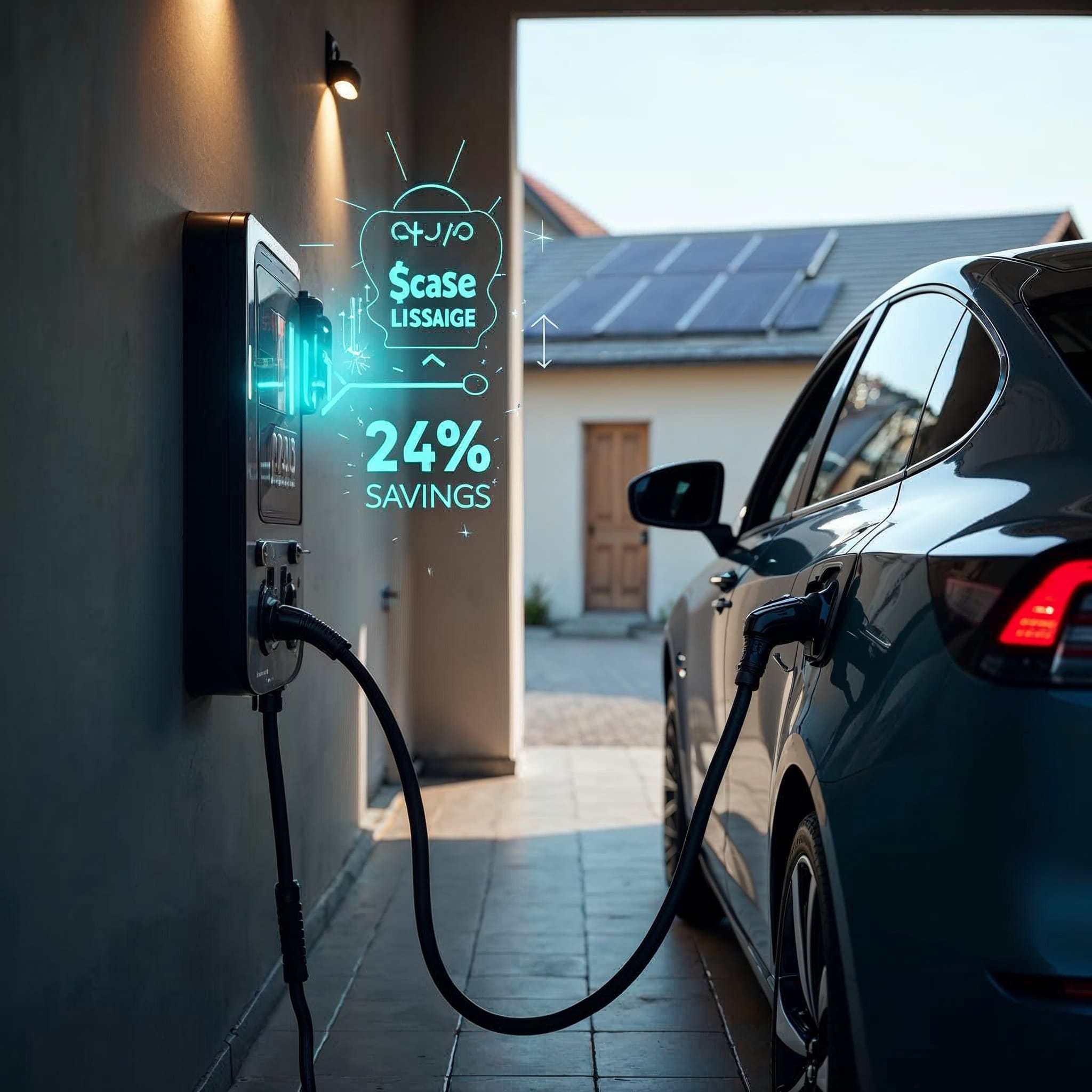
Welcome to The Ultimate Guide to Plug-in Hybrid Electric Vehicle Charging at Home. In an era where fuel prices fluctuate wildly and environmental consciousness is at an all-time high, owning a Plug-in Hybrid Electric Vehicle (PHEV) offers a compelling solution. PHEVs brilliantly bridge the gap between traditional gasoline vehicles and full battery electric vehicles (BEVs), providing the flexibility of a gasoline engine for longer journeys while offering a significant all-electric range for daily driving. However, to truly unlock the full economic and environmental potential of your PHEV, one practice stands paramount: charging it daily at home.
This comprehensive guide will delve deep into the myriad advantages of making daily home charging a routine. We will explore the tangible financial savings, the practicalities of setting up your home charging infrastructure, the environmental benefits, and advanced strategies to maximize your electric miles. Whether you are a new PHEV owner or considering purchasing one, understanding the profound impact of consistent home charging is crucial for optimizing your vehicle’s performance and your personal finances. Prepare to discover how a simple daily habit can lead to substantial savings, a reduced carbon footprint, and a more enjoyable driving experience.
Understanding Your PHEV: The Best of Both Worlds
Before we dive into the economics, let’s briefly clarify what a PHEV is and how it functions. A Plug-in Hybrid Electric Vehicle combines a conventional internal combustion engine (ICE) with an electric motor and a larger battery pack than a standard hybrid. The key differentiator is its ability to be plugged in and charged from an external power source, much like a fully electric vehicle. This allows PHEVs to operate purely on electricity for a significant range, typically between 20 to 50 miles, before the gasoline engine seamlessly takes over.
How PHEVs Differ from Other Hybrids and BEVs
- Hybrid Electric Vehicles (HEVs): These vehicles use a combination of gasoline and electric power but cannot be plugged in. Their electric range is minimal, often just a few miles, and the battery is charged through regenerative braking and the gasoline engine. Examples include the Toyota Prius (non-plug-in models) or Honda Insight. They offer improved fuel economy but not the ability to drive purely on electricity for extended periods.
- Plug-in Hybrid Electric Vehicles (PHEVs): As discussed, these have a larger battery and can be charged externally. They can operate in all-electric mode for a meaningful distance, reducing or eliminating gasoline consumption for short daily trips. Once the electric range is depleted, they function like a traditional hybrid, or the gasoline engine can kick in to provide additional power or range. Examples include the Toyota RAV4 Prime, Ford Escape PHEV, Hyundai Santa Fe PHEV, and BMW 330e.
- Battery Electric Vehicles (BEVs): These vehicles run solely on electricity and have no gasoline engine. They have much larger battery packs, offering hundreds of miles of range, and require consistent charging. Examples include Tesla models, Chevrolet Bolt EV, Ford Mustang Mach-E, and Hyundai Ioniq 5.
The beauty of a PHEV lies in its versatility. For most daily commutes, errands, and short trips, you can operate entirely on electricity, enjoying silent, emission-free driving and significantly lower running costs. For longer journeys or when charging isn’t feasible, the gasoline engine provides the peace of mind of extended range, effectively eliminating “range anxiety.” However, to consistently benefit from the electric mode, daily charging at home is not just a convenience; it is an economic imperative.
The Economics of Daily Home Charging: A Deep Dive into Savings
This is where the rubber meets the road, or rather, where the electrons meet the battery. The primary motivation for daily home charging is the substantial reduction in fuel costs. Let’s break down the financial advantages.
Comparing Cost Per Mile: Gasoline vs. Electricity
The most straightforward way to understand the savings is by comparing the cost of driving a mile on gasoline versus a mile on electricity. Gasoline prices vary significantly by region and market conditions, but let’s consider an average of $3.50 per gallon. If your PHEV gets 35 miles per gallon (MPG) on gasoline, your cost per mile is $3.50 / 35 miles = $0.10 per mile.
Now, let’s look at electricity. Residential electricity rates in the U.S. average around $0.16 per kilowatt-hour (kWh). If your PHEV achieves an efficiency of 3 miles per kWh (a common range for many PHEVs), your cost per mile on electricity is $0.16 / 3 miles = approximately $0.053 per mile. This immediately shows a nearly 50% reduction in fuel cost per mile when driving on electricity.
Consider a typical daily commute of 30 miles.
- Gasoline cost: 30 miles * $0.10/mile = $3.00
- Electricity cost: 30 miles * $0.053/mile = $1.59
This simple example illustrates a daily saving of $1.41. Over a year of 250 commuting days, this amounts to $352.50 in savings, just for commuting. Add in other daily errands, and the annual savings can easily exceed $500, $800, or even $1,000, depending on your driving habits and local utility rates. Maximizing your electric-only miles by charging every night directly translates to significant money staying in your pocket.
Factors Influencing Electricity Cost: Time-of-Use Rates and Utility Providers
The calculation above is a general estimate. Your actual electricity cost can be further optimized. Many utility companies offer “Time-of-Use” (TOU) rates, where electricity is cheaper during off-peak hours (typically overnight) and more expensive during peak demand times (e.g., late afternoon and early evening). By scheduling your PHEV to charge during these off-peak hours, you can dramatically lower your cost per kWh, sometimes by as much as 50-70% compared to peak rates. This means your cost per electric mile could drop even further, enhancing your savings.
Some utilities also offer specific EV charging tariffs or rebate programs designed to encourage electric vehicle adoption. Investigating these options with your local provider can reveal additional opportunities for savings.
Government Incentives and Rebates
Beyond operational savings, purchasing a PHEV and installing home charging equipment can often qualify you for various government incentives.
- Federal Tax Credits: The U.S. federal government offers tax credits for new and, in some cases, used PHEVs that meet specific criteria related to battery capacity and domestic manufacturing. These credits can be substantial, sometimes thousands of dollars, directly reducing the purchase cost of the vehicle.
- State and Local Incentives: Many states, counties, and even cities offer additional rebates, tax credits, or other perks (like HOV lane access) for PHEV owners. These can also extend to charging equipment installation, helping to offset the upfront cost of a Level 2 charger.
- Utility Company Programs: As mentioned, utility companies might offer rebates for the purchase and installation of Level 2 EV Supply Equipment (EVSE) or provide discounted electricity rates for EV charging.
While these are one-time benefits, they significantly reduce the overall cost of ownership, making the economic case for a PHEV even stronger, particularly when coupled with daily charging habits.
Reduced Maintenance Costs for PHEVs
Another often overlooked economic advantage of driving your PHEV predominantly on electricity is reduced maintenance. When the vehicle operates in electric-only mode:
- The internal combustion engine is not running, meaning less wear and tear on components like spark plugs, oil filters, air filters, and engine belts. Oil change intervals can often be extended.
- Brakes experience less wear due to regenerative braking, which uses the electric motor to slow the vehicle and convert kinetic energy back into electricity, reducing the reliance on friction brakes. This means brake pads and rotors last longer.
- There are fewer moving parts in the electric drivetrain compared to a gasoline engine, leading to fewer potential points of failure and generally lower maintenance needs over the long term.
While PHEVs still require some gasoline engine maintenance, maximizing electric driving significantly mitigates these costs compared to a purely gasoline-powered vehicle.
Setting Up Your Home Charging Station: Level 1 vs. Level 2
Daily home charging requires appropriate infrastructure. Fortunately, setting up home charging is usually straightforward, offering two primary levels of charging speed.
Level 1 Charging: Simplicity and Convenience
Level 1 charging utilizes a standard 120-volt household outlet (the same kind you plug your toaster into) and the charging cable that typically comes with your PHEV. It does not require any special installation; you simply plug it in.
- Pros:
- No Installation Required: It uses existing outlets, making it the easiest and cheapest option to start charging immediately.
- Universal Accessibility: A 120V outlet is virtually everywhere.
- Gentle on Battery: Slower charging can sometimes be perceived as better for battery longevity, though modern battery management systems largely negate this concern for typical charging rates.
- Cons:
- Slow Charging Speed: Level 1 typically adds only 2-5 miles of range per hour of charging. For a PHEV with a 30-50 mile electric range, a full charge can take 8-12 hours or even longer.
- Limited for High Mileage Drivers: If you drive more than your PHEV’s electric range daily, Level 1 might not fully replenish your battery overnight, forcing you to use more gasoline.
- Ideal Scenarios: Level 1 charging is perfectly adequate for many PHEV owners, especially those with shorter daily commutes (under 30 miles) or if they have plenty of overnight charging time (e.g., 10-12 hours). It’s also an excellent backup option or for charging at friends’ or relatives’ houses.
Level 2 Charging: Speed and Efficiency
Level 2 charging uses a 240-volt circuit, similar to what powers large appliances like electric dryers or ovens. It requires a dedicated Level 2 EVSE (Electric Vehicle Supply Equipment), often referred to as a “charging station” or “charger.”
- Pros:
- Significantly Faster Charging: Level 2 chargers typically add 12-35 miles of range per hour, meaning most PHEVs can be fully charged in 2-4 hours. This makes daily charging much more practical, even if you drive more or have less time.
- Maximize Electric Miles: Faster charging ensures your battery is almost always full, allowing you to maximize your electric-only driving and thus your fuel savings.
- Convenience: The speed allows for more flexibility, such as topping up during the day if needed.
- Cons:
- Installation Cost: Requires professional installation by a licensed electrician to install a 240-volt circuit and mount the EVSE. Costs can vary widely depending on your home’s electrical panel, wiring distance, and local labor rates, typically ranging from $500 to $2,000, though some complex installations could be more.
- Upfront Equipment Cost: The Level 2 EVSE itself costs between $300 and $1,000.
- Installation Considerations:
- Electrical Panel Capacity: Your home’s electrical panel must have sufficient capacity to handle the additional load. Older homes might require a panel upgrade.
- Permits: Electrical work typically requires permits from your local municipality to ensure safety and compliance with building codes.
- Professional Installation: Always use a qualified, licensed electrician. They can assess your home’s electrical system, recommend the appropriate charger, and ensure safe and compliant installation.
For most PHEV owners looking to maximize their economic benefits, a Level 2 charger at home is a highly recommended investment. The upfront cost is often quickly recouped through accelerated fuel savings and the convenience of always having a fully charged battery.
Maximizing Your Electric Miles: Strategies for Optimal Charging
Owning a PHEV and having a home charging setup is only half the battle. To truly slash your fuel bills, you need to adopt habits and strategies that maximize your electric driving range.
1. Make Daily Charging a Habit
This is the most critical strategy. Treat charging your PHEV like charging your smartphone: plug it in whenever you are home and not actively driving it.
- Every Night: For most people, the longest period of downtime for their vehicle is overnight. Plugging in every evening ensures you start each day with a full battery.
- Whenever Parked: If you are home for a few hours during the day, plug it in. Even a few hours of Level 1 or 2 charging can add significant range, especially for short errands.
- No Need to Wait for Empty: Unlike older battery technologies, modern PHEV batteries benefit from frequent partial charges. There’s no need to run the battery completely empty before recharging. In fact, keeping the charge between 20% and 80% when possible can slightly extend battery longevity, though daily full charges are perfectly fine and often necessary to maximize electric driving.
2. Preconditioning Your Vehicle
Many PHEVs offer a “preconditioning” feature, allowing you to heat or cool the cabin while the vehicle is still plugged in.
- Energy Efficiency: When preconditioning while plugged in, the energy used comes directly from the grid rather than draining the battery. This means you start your drive with a full battery and a comfortable cabin, extending your electric range.
- Comfort: No more getting into a freezing or scorching car!
- How to Use: This feature is usually managed via your vehicle’s infotainment system or a companion smartphone app.
3. Master Regenerative Braking
PHEVs use regenerative braking to convert kinetic energy, typically lost as heat during braking, back into electricity to recharge the battery.
- Smooth Driving: Anticipate stops and allow the car to coast and regenerate energy rather than sudden, hard braking.
- L Mode or B Mode: Many PHEVs have a “B” (Brake) or “L” (Low) gear mode that increases the aggressiveness of regenerative braking, often allowing for “one-pedal driving” in certain conditions. Experiment with this feature to see if it suits your driving style, as it can noticeably extend your electric range.
4. Adopt Efficient Driving Habits
The way you drive profoundly impacts your electric range.
- Smooth Acceleration: Rapid acceleration draws a lot of power from the battery. Accelerate gently to conserve energy.
- Maintain Moderate Speeds: Aerodynamic drag increases significantly at higher speeds, drastically reducing electric range. Stick to speed limits, especially on the highway.
- Minimize Use of Energy-Intensive Accessories: While preconditioning helps, excessive use of climate control, heated seats, or other high-power accessories while driving on battery power will reduce your electric range. Use them judiciously.
Smart Charging and Utility Programs: Boosting Your Savings Further
Beyond simply plugging in, leveraging smart charging technologies and understanding utility programs can significantly enhance your economic advantages.
Time-of-Use (TOU) Rates Explained
As mentioned, TOU rates charge different prices for electricity depending on the time of day.
- Peak Hours: Highest rates, usually during weekday afternoons/evenings when demand is highest.
- Off-Peak Hours: Lowest rates, typically overnight and on weekends when demand is lowest.
- Shoulder Hours: Moderate rates, usually in between peak and off-peak.
By actively charging your PHEV only during off-peak hours, you can access the cheapest electricity available, further reducing your cost per mile on electricity. Some utility companies automatically enroll EV owners in TOU plans or offer specific plans tailored for EV charging.
Smart Chargers and Apps
Many Level 2 EVSEs are “smart chargers” or “networked chargers.” These devices connect to your home Wi-Fi and can be controlled via a smartphone app.
- Scheduled Charging: The most crucial feature is the ability to schedule charging sessions. You can program your smart charger (or your vehicle’s internal settings) to begin charging only during your utility’s off-peak hours, ensuring you always get the lowest rate.
- Remote Monitoring: Monitor your charging status, energy consumption, and even electricity costs from anywhere.
- Integration with Utility Programs: Some smart chargers can directly integrate with utility demand response programs (see below) to automatically optimize charging.
- Usage Reports: Track your electric consumption for your PHEV, which can be useful for budgeting or if you need to differentiate personal and business mileage.
Demand Response Programs
Some utility companies offer demand response programs specifically for EV owners. These programs incentivize you to reduce or shift your electricity consumption during times of high grid demand.
- How it Works: On certain days, typically hot summer afternoons, the utility might send a signal to your smart charger (or directly to your vehicle) to pause charging for a few hours. In return, you receive a bill credit or other incentive.
- Benefits: You get paid or receive discounts for helping the grid manage demand, and it often has minimal impact on your PHEV charging because your car will simply resume charging later during off-peak hours.
- Participation: Check with your local utility provider to see if they offer such programs and if your PHEV or smart charger is compatible.
Environmental and Societal Benefits of Daily PHEV Charging
While the economic advantages are compelling, the broader impact of daily PHEV charging extends to significant environmental and societal benefits.
Reduced Tailpipe Emissions
When your PHEV operates in all-electric mode, it produces zero tailpipe emissions. This means:
- Cleaner Air: Reduced emissions of pollutants like nitrogen oxides (NOx), particulate matter (PM), and volatile organic compounds (VOCs) that contribute to smog and respiratory illnesses, particularly in urban areas.
- Improved Public Health: Healthier air quality directly translates to fewer instances of asthma, bronchitis, and other respiratory issues, especially for vulnerable populations like children and the elderly.
- Local Impact: The benefits are most noticeable in neighborhoods where traffic is heavy, improving the immediate environment for residents.
By maximizing electric driving through daily charging, you are directly contributing to healthier air in your community.
Lower Carbon Footprint
Driving on electricity generally results in a lower carbon footprint compared to gasoline, even when considering the emissions from electricity generation.
- Grid Decarbonization: As electricity grids incorporate more renewable energy sources (solar, wind, hydro), the carbon intensity of charging your PHEV continues to decrease over time. Many utility companies are actively working towards cleaner energy mixes.
- Efficiency: Electric motors are inherently more efficient at converting energy into motion than internal combustion engines, meaning less energy is wasted.
Each electric mile driven reduces the demand for fossil fuels and supports the transition to a more sustainable energy system. For those who can charge their PHEV using home solar panels, the environmental benefits become even more pronounced, approaching true zero-emission driving.
Contribution to Energy Independence
Relying less on gasoline, which is often sourced from volatile international markets, contributes to greater national energy independence. By drawing power from the domestic electricity grid, PHEV owners help to diversify energy sources and reduce susceptibility to global oil price shocks. This shift supports local energy production and infrastructure development, fostering economic stability within the country.
Quieter Communities
Electric vehicles operate almost silently at low speeds. When your PHEV is in electric mode, it glides quietly, contributing to less noise pollution in residential areas, parking lots, and traffic. This creates more peaceful urban environments, reducing stress and enhancing the quality of life for residents.
Overcoming Common Misconceptions and Challenges
Despite the clear advantages, some misconceptions and perceived challenges often deter individuals from fully embracing daily PHEV charging. Let’s address them.
Misconception 1: “Daily Charging is Bad for the Battery.”
Reality: This concern stems from outdated notions about older battery technologies (like nickel-cadmium batteries) that suffered from “memory effect.” Modern lithium-ion batteries used in PHEVs are designed to be charged frequently. Sophisticated Battery Management Systems (BMS) actively monitor and regulate charging and discharging cycles, preventing overcharging and deep discharging, which are the main culprits of battery degradation. Frequent partial charges are actually beneficial for modern EV batteries. PHEV batteries are typically designed to last the lifetime of the vehicle, and daily charging within their operational parameters is entirely normal and expected.
Misconception 2: “Installation of a Home Charger is Too Expensive.”
Reality: While a Level 2 charger installation has an upfront cost (typically $800-$3000 including equipment and labor), it is an investment that quickly pays for itself through fuel savings.
- Long-Term Savings: As demonstrated, the daily savings on fuel add up significantly over months and years, often offsetting the installation cost within 1-3 years, especially for high-mileage drivers or those in areas with high gasoline prices.
- Incentives: Federal, state, and utility incentives can drastically reduce the net installation cost, sometimes covering a large portion of it.
- Level 1 as an Option: If a Level 2 installation is genuinely prohibitive, Level 1 charging is a perfectly viable starting point for many PHEV owners, allowing them to enjoy electric driving without any upfront infrastructure cost.
Misconception 3: “Electricity Isn’t Really Cheaper Than Gasoline.”
Reality: While electricity prices vary, the data consistently shows that driving on electricity is significantly cheaper per mile than gasoline in most regions.
- Efficiency Gap: Electric powertrains are far more efficient than internal combustion engines, meaning a higher percentage of the energy (whether from gasoline or electricity) is converted into motion rather than wasted as heat.
- Variable Costs: Gasoline prices are notoriously volatile. Electricity prices are generally more stable and, critically, can be optimized through smart charging during off-peak hours. You have more control over your fuel cost with electricity.
- Maintenance Savings: Don’t forget the reduced maintenance costs for PHEVs, further widening the economic gap between electric and gasoline driving.
Misconception 4: “PHEVs Still Suffer from Range Anxiety.”
Reality: Range anxiety is almost entirely eliminated with a PHEV. This is precisely the design advantage of a plug-in hybrid.
- Gasoline Backup: If your electric range runs out, the gasoline engine seamlessly takes over, providing hundreds of miles of additional range. You are never stranded.
- Flexibility: You can drive on electricity for daily tasks and switch to gasoline for spontaneous long trips without needing to plan charging stops or worry about charger availability.
- Charging Availability: While public EV charging infrastructure is growing, it’s not always necessary for a PHEV. Daily home charging ensures your primary “fuel” is always available and cheaper.
A PHEV offers the best of both worlds: the cost savings and environmental benefits of electric driving for daily use, combined with the convenience and range of a gasoline vehicle for longer journeys.
Comparison Tables
To further illustrate the economic advantages and charging options, here are two comparison tables.
Table 1: Estimated Annual Fuel Cost Comparison for a PHEV (Based on 12,000 Miles/Year)
This table compares the estimated annual cost of fueling a PHEV, assuming typical driving scenarios and costs. Let’s assume a PHEV with a 30-mile electric range and 35 MPG on gasoline, consuming 3 miles/kWh for electricity. Daily commute of 30 miles (to maximize electric drive). Gasoline at $3.50/gallon, Electricity at $0.16/kWh (average) or $0.08/kWh (off-peak).
| Scenario | Miles Driven Electrically (Annual) | Miles Driven on Gasoline (Annual) | Estimated Annual Electricity Cost | Estimated Annual Gasoline Cost | Total Estimated Annual Fuel Cost | Annual Savings Compared to Gas-Only (approx) |
|---|---|---|---|---|---|---|
| Maximize Electric (Daily Home Charging, 90% Electric) | 10,800 miles | 1,200 miles | ($0.16/kWh) $576 (10,800 miles / 3 miles/kWh * $0.16) | $120 (1,200 miles / 35 MPG * $3.50) | $696 | $504 |
| Maximize Electric (Daily Home Charging, 90% Electric, Off-Peak) | 10,800 miles | 1,200 miles | ($0.08/kWh) $288 (10,800 miles / 3 miles/kWh * $0.08) | $120 (1,200 miles / 35 MPG * $3.50) | $408 | $792 |
| Moderate Electric (Occasional Charging, 50% Electric) | 6,000 miles | 6,000 miles | ($0.16/kWh) $320 (6,000 miles / 3 miles/kWh * $0.16) | $600 (6,000 miles / 35 MPG * $3.50) | $920 | $280 |
| Minimal Electric (Rare Charging, 10% Electric) | 1,200 miles | 10,800 miles | ($0.16/kWh) $64 (1,200 miles / 3 miles/kWh * $0.16) | $1,080 (10,800 miles / 35 MPG * $3.50) | $1,144 | $56 |
| Gas-Only Equivalent (No Electric Driving) | 0 miles | 12,000 miles | $0 | $1,200 (12,000 miles / 35 MPG * $3.50) | $1,200 | $0 (Baseline) |
Note: All figures are estimates and will vary based on actual vehicle efficiency, local fuel/electricity prices, driving habits, and total mileage. This table highlights the significant savings achieved by maximizing electric driving, especially with off-peak charging.
Table 2: Level 1 vs. Level 2 Home Charging for PHEVs
This table compares the two main home charging options for your Plug-in Hybrid Electric Vehicle.
| Feature | Level 1 Charging (120V) | Level 2 Charging (240V) |
|---|---|---|
| Power Output | 1.4 – 1.9 kW | 3.3 – 19.2 kW (commonly 6-11 kW for residential) |
| Miles of Range Added per Hour | 2 – 5 miles | 12 – 35 miles (depending on charger and vehicle) |
| Typical Full Charge Time for a PHEV (e.g., 30-50 mile range) | 8 – 12+ hours | 2 – 4 hours |
| Required Electrical Outlet | Standard 3-prong (NEMA 5-15) | Dedicated 240V outlet (e.g., NEMA 14-50, NEMA 6-50) |
| Equipment Cost (EVSE) | Included with vehicle (portable cord) or < $200 for basic replacement | $300 – $1,000+ |
| Installation Cost | $0 (uses existing outlets) | $500 – $2,000+ (professional electrician, wiring, permits) |
| Ideal Use Case | Low daily mileage, ample overnight charging time, backup charging, renters | High daily mileage, maximizing electric use, faster turnaround, long-term PHEV ownership |
| Convenience & Maximization of EV Range | Moderate (may not fully charge for longer commutes) | High (ensures full charge even with higher daily mileage) |
Practical Examples
Let’s look at a few real-world scenarios to see how daily home charging impacts different PHEV owners.
Case Study 1: The Daily Commuter (35 Miles Round Trip)
Sarah drives a Toyota RAV4 Prime (PHEV electric range: 42 miles) for her 35-mile round-trip commute to work each weekday. She lives in a suburban area where electricity is $0.14/kWh (off-peak rate available for $0.07/kWh overnight) and gasoline is $3.60/gallon. The RAV4 Prime gets about 3 miles/kWh on electricity and 38 MPG on gasoline.
- With Daily Level 2 Home Charging (Off-Peak): Sarah charges her RAV4 Prime every night for 2 hours during off-peak hours using her Level 2 charger. This fully replenishes her 42-mile range.
- Daily Electric Cost: 35 miles / 3 miles/kWh * $0.07/kWh = $0.82
- Weekly Electric Cost (5 days): $0.82 * 5 = $4.10
- Annual Electric Cost (250 commute days): $4.10 * 50 = $205
- Gasoline Used: Zero for her commute. She might use gasoline for longer weekend trips, but her daily commute is fully electric.
- Without Daily Charging (Relies on Gasoline for Commute): If Sarah neglected to charge and drove her commute on gasoline:
- Daily Gasoline Cost: 35 miles / 38 MPG * $3.60/gallon = $3.32
- Weekly Gasoline Cost (5 days): $3.32 * 5 = $16.60
- Annual Gasoline Cost (250 commute days): $16.60 * 50 = $830
- Annual Savings: By consistently charging daily, Sarah saves $830 – $205 = $625 per year on her commute alone, plus reduced engine wear and maintenance.
Case Study 2: The Busy Parent with Errands (Mixed Daily Driving)
Mark drives a Chrysler Pacifica Hybrid (PHEV electric range: 32 miles) primarily for school drop-offs, grocery runs, and local appointments, averaging about 45 miles on weekdays and 20 miles on weekends. He has a Level 1 charger at home. Electricity is $0.18/kWh, and gasoline is $3.40/gallon. The Pacifica Hybrid gets about 2.8 miles/kWh on electricity and 30 MPG on gasoline.
- With Daily Level 1 Home Charging (Overnight): Mark plugs in every night. His Level 1 charger adds about 3.5 miles/hour, so 10 hours of charging adds 35 miles.
- Weekday Driving: He drives 45 miles. The first 35 miles are electric, costing 35 miles / 2.8 miles/kWh * $0.18/kWh = $2.25. The remaining 10 miles use gasoline, costing 10 miles / 30 MPG * $3.40/gallon = $1.13. Total daily cost: $3.38.
- Weekend Driving: He drives 20 miles, fully electric. Cost: 20 miles / 2.8 miles/kWh * $0.18/kWh = $1.29.
- Weekly Fuel Cost: ($3.38 * 5 weekdays) + ($1.29 * 2 weekend days) = $16.90 + $2.58 = $19.48
- Annual Fuel Cost (52 weeks): $19.48 * 52 = $1,012.96
- Without Daily Charging (Relies on Gasoline): If Mark neglected to charge:
- Daily Gasoline Cost (Weekdays): 45 miles / 30 MPG * $3.40/gallon = $5.10
- Daily Gasoline Cost (Weekends): 20 miles / 30 MPG * $3.40/gallon = $2.27
- Weekly Fuel Cost: ($5.10 * 5 weekdays) + ($2.27 * 2 weekend days) = $25.50 + $4.54 = $30.04
- Annual Fuel Cost (52 weeks): $30.04 * 52 = $1,562.08
- Annual Savings: Even with a Level 1 charger, Mark saves $1,562.08 – $1,012.96 = $549.12 per year by consistently charging and maximizing his electric range. Upgrading to Level 2 would likely allow him to cover more of his 45-mile daily driving electrically, further increasing savings.
Case Study 3: The Tech-Savvy Urban Driver (Short Commute + Smart Charging)
Jessica drives a Hyundai IONIQ Plug-in Hybrid (PHEV electric range: 29 miles) for her 20-mile round-trip urban commute. Her utility offers a Time-of-Use plan: $0.25/kWh peak (5 PM – 9 PM) and $0.05/kWh off-peak (9 PM – 5 PM). Gasoline is $4.00/gallon. The IONIQ PHEV gets about 3.5 miles/kWh on electricity and 45 MPG on gasoline. She has a smart Level 2 charger.
- With Smart Level 2 Home Charging (Off-Peak): Jessica’s smart charger is programmed to start charging at 9 PM. Her 29-mile range is fully replenished in less than 2 hours.
- Daily Electric Cost: 20 miles / 3.5 miles/kWh * $0.05/kWh = $0.29
- Annual Electric Cost (250 commute days): $0.29 * 250 = $72.50
- Gasoline Used: Zero for her commute.
- Without Smart Charging (Random Charging or Gasoline): If Jessica charged at random times during peak hours or simply used gasoline:
- Peak Electric Cost: 20 miles / 3.5 miles/kWh * $0.25/kWh = $1.43 (if charged during peak)
- Gasoline Cost: 20 miles / 45 MPG * $4.00/gallon = $1.78
- Annual Cost (if always using peak electricity): $1.43 * 250 = $357.50
- Annual Cost (if always using gasoline): $1.78 * 250 = $445
- Annual Savings: By leveraging smart charging with off-peak rates, Jessica saves $445 – $72.50 = $372.50 per year compared to driving on gasoline, or $357.50 – $72.50 = $285 per year compared to unoptimized electric charging. This example shows the power of smart charging strategies in maximizing savings.
These examples clearly demonstrate that consistent, daily home charging is the cornerstone of unlocking the economic benefits of PHEV ownership, regardless of driving habits or charger type. The more you drive on electricity, the more you save.
Frequently Asked Questions
To help address common queries, here’s a dedicated FAQ section about PHEV home charging.
Q: How long does it typically take to charge a PHEV at home?
A: The charging time for a PHEV at home depends entirely on the type of charger you use and the size of your vehicle’s battery. With a standard Level 1 (120V) outlet, you can expect to add 2-5 miles of range per hour, meaning a full charge for a PHEV with a 30-50 mile electric range could take 8-12 hours or even longer. If you install a Level 2 (240V) charger, charging times drop significantly, adding 12-35 miles of range per hour, allowing most PHEVs to fully charge in 2-4 hours. Many owners find Level 1 sufficient for overnight charging if their daily commute is within their PHEV’s electric range, while Level 2 offers much greater convenience and faster turnaround.
Q: Do I need a special electrical setup for home charging?
A: For Level 1 charging, no special setup is needed. You simply use a standard 120-volt household outlet, which is commonly found everywhere. For Level 2 charging, yes, you will need a special electrical setup. This typically involves installing a dedicated 240-volt circuit, similar to those used for electric clothes dryers or ovens, and a Level 2 EVSE (Electric Vehicle Supply Equipment). This installation should always be performed by a licensed electrician to ensure safety and compliance with local electrical codes. The cost and complexity depend on your home’s existing electrical panel capacity and the distance from the panel to where you want the charger installed.
Q: Is daily charging bad for my PHEV’s battery?
A: No, daily charging is not bad for your PHEV’s battery. Modern PHEV batteries, typically lithium-ion, are designed to be charged frequently. Sophisticated Battery Management Systems (BMS) in the vehicle protect the battery from overcharging, over-discharging, and excessive heat. In fact, many battery experts suggest that keeping lithium-ion batteries within a good charge range (avoiding consistently running them to 0% or leaving them at 100% for extended periods in extreme temperatures) can contribute to longevity. Daily charging, especially overnight, ensures you always have maximum electric range available for your daily driving, which is exactly what PHEVs are designed for.
Q: What is the cost difference between charging at home vs. using public chargers?
A: Charging at home is almost always the most cost-effective option. Residential electricity rates are generally lower than commercial rates for public chargers, especially if you utilize off-peak charging times offered by your utility. Public Level 2 chargers often charge by the kWh or by the minute, with prices usually higher than residential rates. DC Fast Chargers, while very quick, are the most expensive per kWh, as they provide a premium service. For PHEVs, DC fast charging is often not supported or only provides a minimal benefit due to smaller battery sizes. Prioritizing home charging maximizes your fuel savings.
Q: Can I use my home solar panels to charge my PHEV?
A: Absolutely! Charging your PHEV with home solar panels is an excellent way to further reduce your carbon footprint and potentially eliminate your electricity costs for charging. During daylight hours, if your solar system is generating more electricity than your home is consuming, that excess energy can directly charge your PHEV or be sent back to the grid. If you have a battery storage system at home, you can even store solar energy generated during the day and use it to charge your PHEV overnight. This creates a truly sustainable and nearly cost-free charging solution.
Q: Will charging my PHEV significantly increase my home electricity bill?
A: Yes, charging your PHEV will increase your electricity consumption and thus your electricity bill, but this increase is almost always offset by a greater reduction in your gasoline bill. The exact increase depends on how much you drive, your vehicle’s efficiency, and your local electricity rates. For example, if you replace 1,000 miles of gasoline driving with 1,000 miles of electric driving, your electricity bill might go up by $50-$70, but your gasoline bill will drop by $100-$150 (based on typical per-mile costs). Smart charging during off-peak hours can further minimize the impact on your bill.
Q: Do PHEVs qualify for any tax credits or incentives for charging equipment?
A: Yes, in many regions, PHEVs and their charging equipment may qualify for federal, state, or local incentives. The U.S. federal government has offered tax credits for qualifying new (and sometimes used) PHEVs, which can be significant. Additionally, there have been federal tax credits for installing qualified home charging equipment (Level 2 EVSE). Many states and local utility companies also offer rebates or tax credits for both PHEV purchases and charging infrastructure. It is essential to check the latest government and utility programs in your specific area, as these incentives can change and have specific eligibility requirements.
Q: What’s the difference between a “charger” and an “EVSE”?
A: Technically, the “charger” is built into your PHEV (or any EV) and converts the AC electricity from the grid into DC electricity that the battery can store. The device you plug into your car, often referred to as a “home charger,” is actually called an EVSE (Electric Vehicle Supply Equipment). The EVSE is essentially a smart safety device that communicates with your car, ensuring power delivery is safe and efficient, monitoring for faults, and protecting against overcurrent. While colloquially we say “charger,” EVSE is the more accurate term for the external equipment.
Q: Should I install a Level 2 charger even if Level 1 is enough for my daily needs?
A: While Level 1 might be sufficient for your current daily needs, installing a Level 2 charger offers several advantages that can enhance your PHEV ownership experience and future-proof your home. These include significantly faster charging speeds, which means greater convenience for unexpected longer trips, easier vehicle turnover if multiple drivers use the car, and the ability to fully replenish a larger electric range should your driving habits change. A Level 2 charger can also increase your home’s appeal if you decide to sell it in the future, as EV readiness is becoming an increasingly desirable feature for homebuyers. The upfront cost is an investment that often pays off in convenience and increased electric miles.
Q: How can I find out about my utility’s specific EV charging rates or programs?
A: The best way to learn about your utility’s specific EV charging rates, Time-of-Use (TOU) plans, demand response programs, or equipment rebates is to visit their official website or contact their customer service department directly. Many utilities have dedicated sections on their websites for “Electric Vehicles” or “EV Charging” that detail available programs, eligibility requirements, and enrollment procedures. They can also advise you on how to best optimize your charging schedule for maximum savings.
Key Takeaways
Embracing daily home charging for your Plug-in Hybrid Electric Vehicle is a strategic decision that offers multi-faceted benefits. Here are the core takeaways:
- Significant Fuel Savings: Driving on electricity is consistently cheaper per mile than gasoline, often cutting your fuel costs in half or more.
- Maximize Electric Range: Daily charging ensures your PHEV’s battery is always full, allowing you to maximize electric-only driving for most daily trips.
- Reduced Maintenance: Less reliance on the gasoline engine means fewer oil changes and extended brake life, leading to lower overall maintenance costs.
- Environmental Impact: Zero tailpipe emissions during electric operation contribute to cleaner air and a reduced carbon footprint, supporting a healthier planet.
- Home Charging Convenience: Both Level 1 (standard outlet) and Level 2 (faster, installed) options make home charging practical and readily available.
- Smart Charging Optimization: Leveraging Time-of-Use (TOU) rates and smart chargers can further reduce electricity costs by scheduling charging during off-peak hours.
- Financial Incentives: Government and utility rebates for PHEVs and charging equipment can significantly reduce upfront costs.
- Eliminated Range Anxiety: The gasoline engine provides peace of mind for longer journeys, making PHEVs incredibly versatile without range concerns.
- Economic & Environmental Win: Daily PHEV charging is a simple habit that delivers continuous financial savings and tangible environmental benefits.
Conclusion
The journey to slashing your fuel bills and contributing to a greener future with your Plug-in Hybrid Electric Vehicle begins and ends with a simple, consistent habit: daily home charging. We have explored the compelling economic advantages, from the stark contrast in cost per mile between electricity and gasoline to the long-term savings on maintenance. We’ve demystified the home charging setup, detailing the practicality of both Level 1 and Level 2 options, and unveiled strategies to maximize your electric miles through smart driving and charging habits.
Beyond the personal financial gains, the environmental and societal benefits of regular PHEV charging are undeniable. Cleaner air, a reduced carbon footprint, and a step towards energy independence are collective gains that stem from individual choices. Addressing common misconceptions, we’ve reinforced that modern PHEVs are built for daily charging, offering flexibility and range without compromise.
In essence, your PHEV is a powerful tool for economic and environmental stewardship, but its full potential is only realized when its battery is consistently replenished. By integrating daily home charging into your routine, you’re not just saving money; you’re making a conscious choice for a more sustainable and economically sound lifestyle. Embrace the ease, reap the rewards, and enjoy the silent, powerful drive of your electric miles, knowing you are making a smart decision for both your wallet and the planet.