The Mazda RX-7 FC: The 1980s Japanese Sports Car That Deserved More Attention
The 1980s produced some of the most celebrated sports cars in history. Ferrari Testarossas, Lamborghini Countachs, and Porsche 911 Turbos dominated magazine covers, movie screens, and bedroom posters. Their dramatic styling, exotic soundtracks, and high price tags made them symbols of excess and aspiration.
Yet beneath the spotlight, other excellent sports cars built loyal followings without the same level of fame. One Japanese coupe in particular stands out as a perfect example of a car that was quietly brilliant in its era and has only grown in appreciation over time: the Mazda RX-7 FC (1986–1991).
Overshadowed by European Prestige
During the 1980s, European performance brands controlled much of the sports car conversation. Cars like the Porsche 944 and Ferrari models set the tone for what enthusiasts expected from a serious sports car. Japanese manufacturers, by contrast, were still largely associated with reliable economy cars rather than exotic performance machines.
This perception meant several outstanding Japanese sports cars flew under the radar. The RX-7 was one of them. While it never chased raw horsepower numbers like some rivals, it delivered something many drivers found more rewarding: balance, precision, and genuine driver engagement.
Porsche-Inspired Styling That Still Looks Elegant
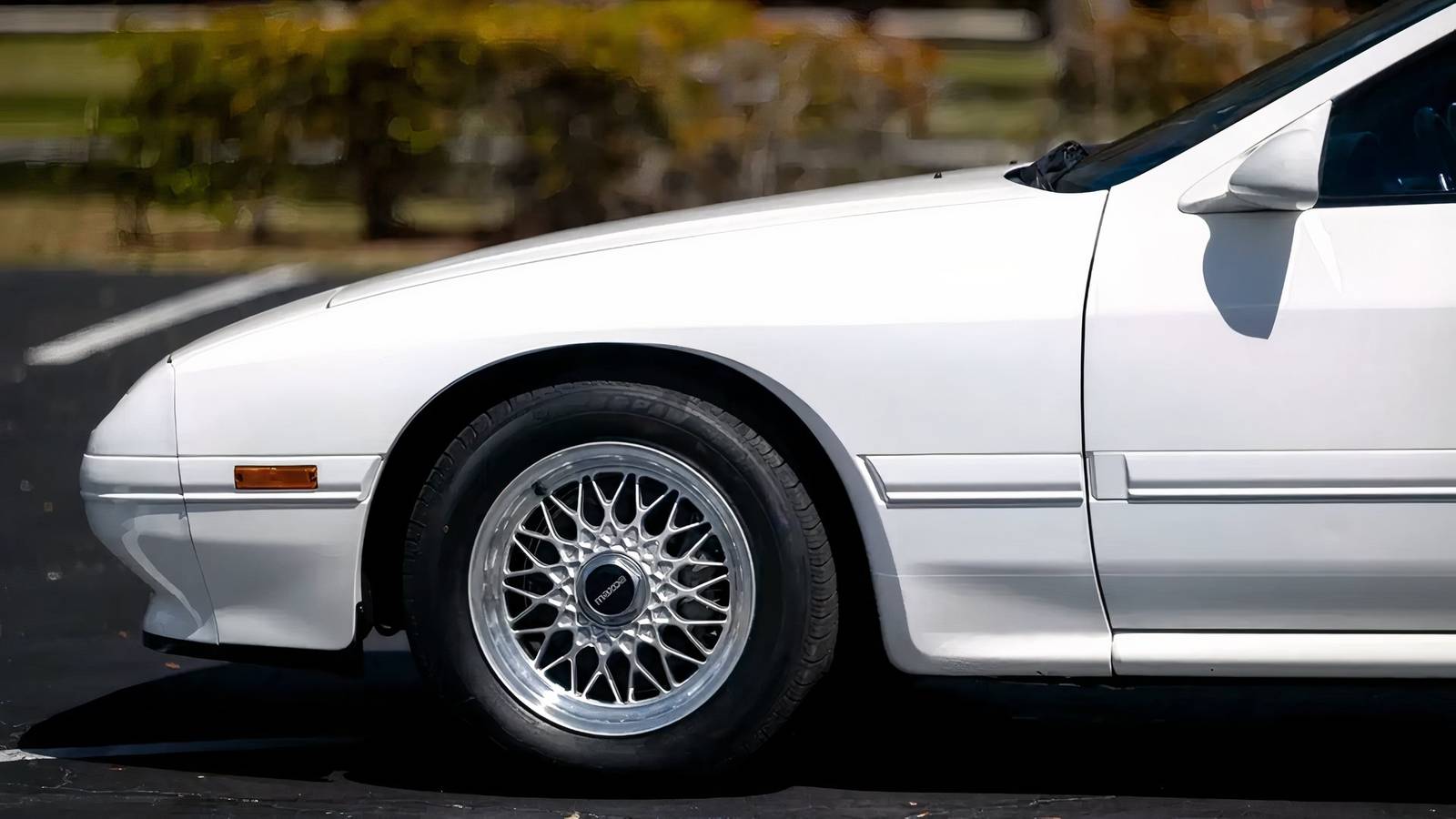
The FC-generation RX-7 arrived for the 1986 model year with smoother, more sophisticated proportions than its predecessor. Mazda clearly drew inspiration from cars like the Porsche 924 and 944, resulting in long-hood proportions, muscular rear haunches, and clean wedge-shaped lines.
The result was a car that looked expensive and timeless. Pop-up headlights, a low stance, and balanced proportions gave it a grand-touring character that has aged remarkably well. Many enthusiasts still note how closely the RX-7’s design echoes the Porsche 944 — and consider that comparison a compliment rather than a criticism.
The Rotary Engine: Smooth, High-Revving, and Unique
What truly set the RX-7 apart was its powerplant. Mazda stuck with its signature rotary engine — the 1.3-liter 13B — instead of adopting a conventional piston engine.
- Naturally aspirated versions produced around 146 horsepower and 138 lb-ft of torque.
- Turbocharged models (Turbo II) raised output to approximately 182 horsepower and 183 lb-ft.
The rotary delivered a smooth, high-revving character unlike anything else in the segment. It sat low and far back in the chassis, contributing to the car’s excellent weight distribution (near 50/50) and low center of gravity. Contemporary reviews from outlets like Car and Driver praised the RX-7’s “excellent steering, great stability,” and noted that “going fast is a snap.”
The car’s curb weight stayed around 2,700–2,800 lbs, keeping it agile and responsive even by today’s standards.
Driving Experience: Pure and Analog
The FC RX-7 rewarded precise inputs and mechanical connection. Its fully independent suspension and balanced chassis tuning delivered predictable handling and strong cornering composure. In turbo form, it offered strong mid-range performance without feeling overly heavy or cumbersome.
Unlike many modern performance cars loaded with digital interfaces and drive modes, the RX-7 was refreshingly analog. Steering was direct and communicative. The chassis felt alive in a way that encouraged smooth, committed driving rather than simply flattering the driver.
That said, the RX-7 was not without drawbacks. Rotary engines require diligent maintenance (particularly oil changes and proper lubrication), and fuel economy was relatively poor compared to many four-cylinder rivals. Turbo models could become demanding when driven hard in poor conditions. These traits added character for enthusiasts but required respect and mechanical sympathy from owners.
Why the RX-7 FC Still Matters Today
Decades later, the FC RX-7 continues to earn affection because it delivered something many modern sports cars have lost: raw character and genuine driver involvement. It wasn’t the fastest or most powerful car of its era, but it offered a pure, engaging experience that felt special.
Enthusiast demand has grown steadily. Clean, well-maintained examples — especially turbocharged versions — now regularly sell in the $20,000–$30,000 range on platforms like Bring a Trailer, with exceptional low-mileage cars attracting even stronger interest.
The RX-7 may never have worn an Italian badge or appeared in as many Hollywood films as its European rivals. But for many drivers who experienced it, it delivered something arguably more meaningful: a sports car that felt balanced, responsive, and genuinely unforgettable.