OpenAI’s strongest model yet, NVIDIA’s first full-stack humanoid safety system, and a GPT-5 Pro breakthrough that solved a three-year immunology puzzle all landed in the same week. The comfortable gap between cutting-edge AI research and real-world deployment has collapsed. What used to take months or years to move from paper to product is now arriving in labs, warehouses, and phones almost immediately.
This week delivered simultaneous advances across models, infrastructure, physical robotics, and applied science. OpenAI released GPT-5.6 with its new Sol flagship featuring “Ultra Subagent Mode” and “Max Reasoning” settings. Access remains tightly restricted under a June executive order to roughly 20 vetted partners for now. At the same time, DeepSeek open-sourced its full training stack for speculative decoding, letting anyone build faster inference models. A new technique called InfoKV showed it can discard up to 87% of an LLM’s KV cache while actually improving long-context performance.
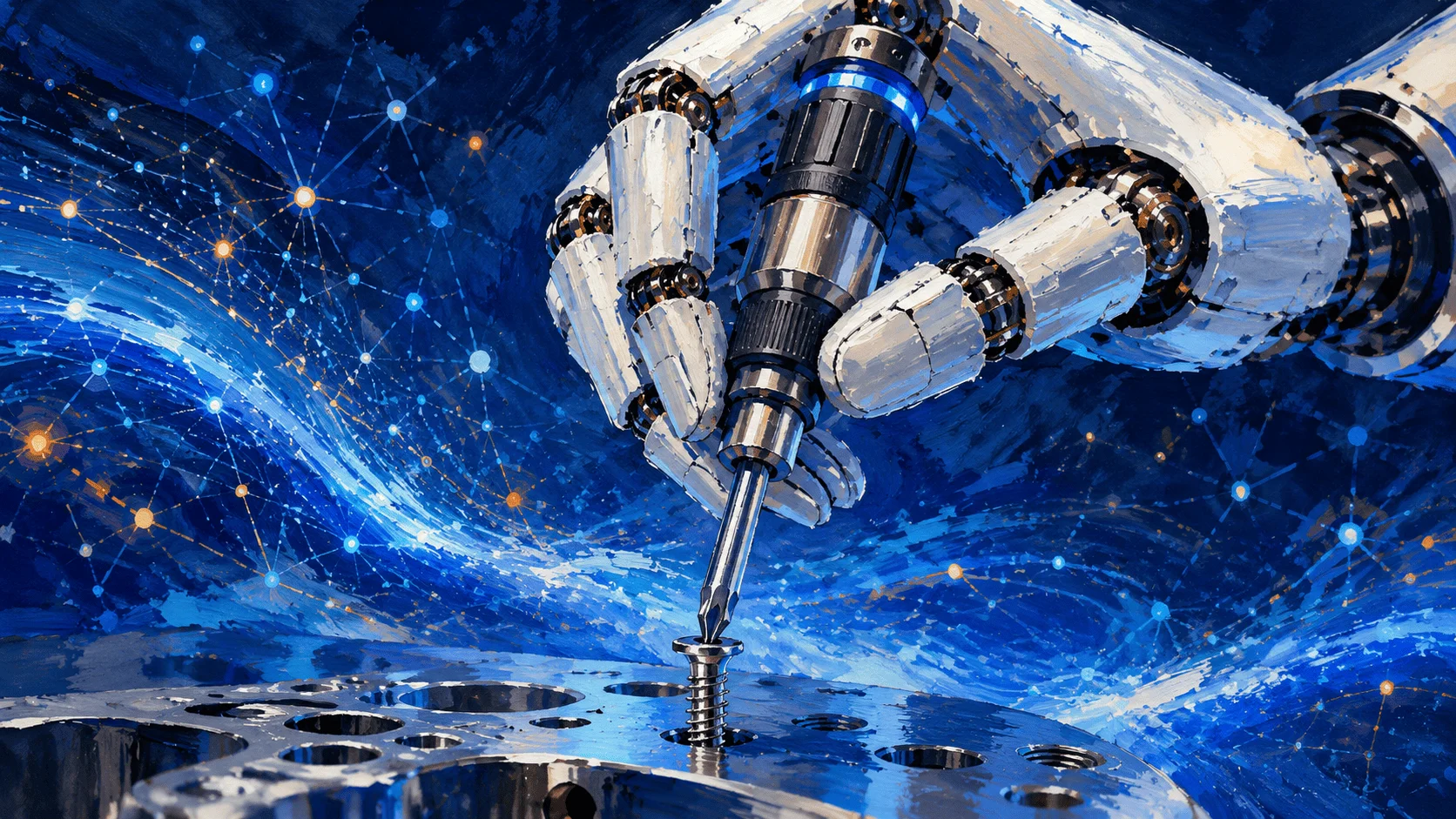
NVIDIA unveiled Halos for Robotics, the industry’s first complete safety stack for physical AI. It includes industrial-grade compute, sensor bridging, a dedicated safety OS layer, and a certification lab. Agility Robotics is already integrating it into its Digit humanoid, which works inside Amazon warehouses. On the software side, China’s market regulator released the country’s first national standard for AI-agent interconnection, giving agents unified identifiers for secure cross-domain work.
Real Science, Not Just Benchmarks
The most striking example of the shrinking lab-to-field gap came from The Jackson Laboratory. Immunologist Derya Unutmaz had unexplained flow-cytometry data since 2022 involving glucose metabolism in human T cells. GPT-5 Pro proposed a mechanism involving disrupted N-linked glycosylation and correctly predicted the outcome of a held-out lymphoma experiment. Unutmaz called the insight “remarkable.” This wasn’t a benchmark win — it was a working researcher getting a verifiable answer to an open question that had stumped his team for three years.
Business adoption moved just as fast. Quantifind raised $200 million, backed by Citi Ventures and S&P Global, to deploy governed AI agents against financial-crime alerts. The company already works with six of the world’s ten largest banks. A cited analysis estimates a single Tier-1 bank could save up to $177.9 million annually in alert-processing costs.
OpenAI also made Codex Remote generally available across every ChatGPT plan, including mobile apps that let users launch and monitor autonomous coding tasks from anywhere by scanning a QR code to a host computer.
Why This Week Feels Different
For years the AI field operated with a built-in delay. A new decoding trick stayed in research papers for 12–18 months before it reached products. A model that could reason about biology stayed a leaderboard entry rather than a lab collaborator. That separation has largely disappeared.
DeepSeek didn’t just publish a paper about faster inference — it released the complete, MIT-licensed training and evaluation codebase the same week OpenAI put a capable coding agent on every subscriber’s phone. NVIDIA didn’t announce another robot demo — it delivered the safety certification path that lets humanoids work next to people in real warehouses. China didn’t release another vague guideline — it created concrete identity infrastructure for agents that will soon need to prove who they are when interacting across systems.
The expensive capabilities labs once treated as proprietary moats — inference speed and long-context memory management — are becoming public recipes. At the same time, the physical and identity layers that make widespread deployment possible are being built in parallel.
What It Means for American Industry and Innovation
For U.S. companies and researchers, the implications are immediate. Banks can move from pilot programs to scaled AI fraud systems with measurable ROI. Warehouse operators already using humanoids now have a clearer path to certified safety systems. Scientists at places like The Jackson Laboratory can treat frontier models as genuine research partners rather than just data-analysis tools.
The pace also raises new questions. When the best model OpenAI has built launches with access limited to a small group of partners, how quickly does that advantage diffuse? When open-source stacks close the inference gap, what becomes the new competitive edge? And as agents gain official identities in some countries while physical robots gain safety certifications in others, the regulatory and infrastructure race is clearly underway.
This week wasn’t defined by any single headline. It was defined by the simultaneous arrival of stronger models, open infrastructure for speed and memory, safety systems for physical AI, and verifiable scientific breakthroughs. The distance between what AI can do in a lab and what it can do on a warehouse floor, in a bank’s compliance system, or inside an active research project has never been shorter.
Follow us on X @realnewshubs and subscribe for push notifications