
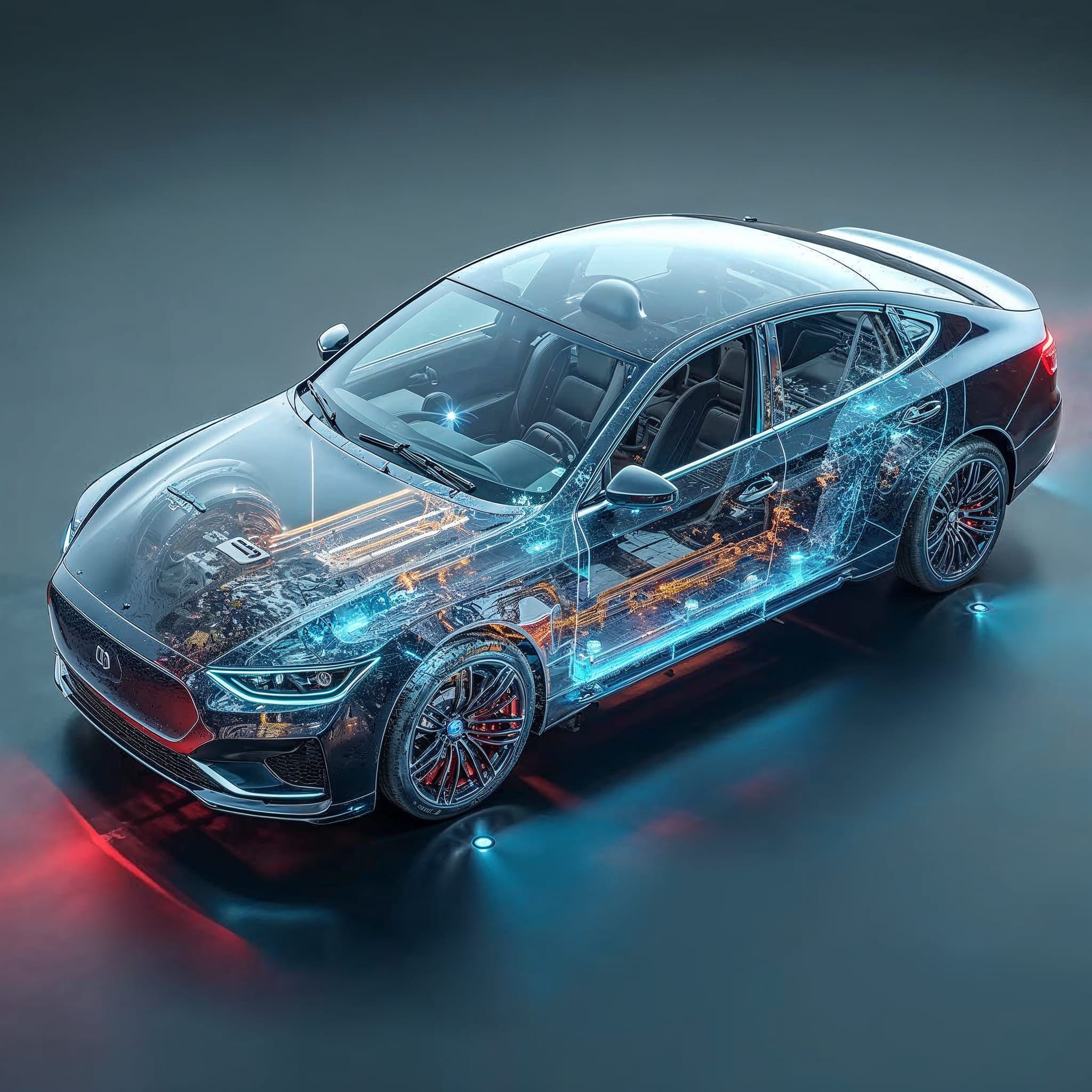
In the evolving landscape of automotive engineering, hybrid vehicles stand as a testament to innovation, blending the best of internal combustion engines with electric power. A cornerstone of their efficiency and a significant differentiator from traditional gasoline cars is a technology often discussed but perhaps not fully understood: regenerative braking. This ingenious system plays a crucial role in transforming what would otherwise be wasted energy into usable electricity, significantly boosting fuel economy and reducing environmental impact. Under the broader topic of ‘Understanding the Different Types of Hybrid Vehicle Technology’, this comprehensive guide delves deep into the fascinating science behind regenerative braking, exploring its mechanisms, benefits, challenges, and future implications across all forms of hybrid and electric vehicles.
Imagine a scenario where every time you slow down or stop, your vehicle isn’t just generating heat and dust from its brakes, but actively harvesting that kinetic energy to power itself. This isn’t science fiction; it’s the everyday reality for millions of hybrid and electric vehicle owners. Regenerative braking is a sophisticated dance between mechanics, electronics, and software, all orchestrated to capture energy that would traditionally be dissipated as heat through friction. This process not only extends the range of electric power but also significantly reduces wear and tear on conventional braking components, leading to lower maintenance costs and a greener footprint. Join us as we unpack the intricate details of this pivotal technology, from its fundamental principles to its cutting-edge advancements, providing practical insights and real-world examples to demystify one of the most impactful innovations in modern automotive design.
What is Regenerative Braking? An Overview of Energy Recovery
At its heart, regenerative braking is a system designed to recover kinetic energy when a vehicle slows down or coasts. In conventional vehicles, when a driver applies the brakes, friction between the brake pads and rotors converts the vehicle’s kinetic energy into heat, which then dissipates into the atmosphere. This is pure energy loss. Regenerative braking, however, intercepts this energy conversion process. Instead of solely relying on friction, it utilizes the vehicle’s electric motor in reverse. When the driver lifts their foot off the accelerator or presses the brake pedal, the electric motor transitions from propelling the vehicle to acting as a generator. As the wheels continue to spin, they turn the motor, which in turn generates electricity. This newly generated electricity is then routed back to the vehicle’s battery pack, effectively recharging it and making it available for future acceleration or electric-only driving.
The concept of regenerative braking is not entirely new; it has been utilized in electric trains and trams for over a century. However, its widespread adoption in passenger vehicles is a relatively recent phenomenon, coinciding with the rise of hybrid and electric vehicle technologies. The beauty of this system lies in its dual functionality: the electric motor serves both as a propulsion unit and as an energy recovery device. This seamless transition is controlled by sophisticated electronic systems that constantly monitor driving conditions, battery state of charge, and driver input to optimize energy recapture. The result is a vehicle that is not only more fuel-efficient but also often provides a smoother, more controlled deceleration experience. Understanding this fundamental principle is key to appreciating the profound impact regenerative braking has on the overall performance and environmental credentials of modern electrified transport.
The Core Components of a Regenerative Braking System
While the concept of regenerative braking seems straightforward, its implementation involves several sophisticated components working in harmony. Each part plays a critical role in the efficient conversion, storage, and management of energy. Understanding these core components is essential to grasping the full complexity and effectiveness of the system.
The Electric Motor/Generator: The Heart of the System
The most crucial component in a regenerative braking system is the electric motor, which also doubles as a generator. In a hybrid or electric vehicle, this unit is responsible for providing propulsion by converting electrical energy from the battery into mechanical energy that turns the wheels. However, during deceleration or braking, the roles reverse. The kinetic energy of the moving vehicle forces the wheels to continue turning the motor. Instead of consuming electricity, the motor now acts as a generator, converting this mechanical energy back into electrical energy. This electrical energy is then sent to the battery for storage. The efficiency of this conversion process is a major factor in how much energy can be recovered. Modern permanent magnet synchronous motors (PMSM) or induction motors are highly efficient and can seamlessly switch between motor and generator modes, making them ideal for regenerative braking applications. Their robust design allows them to handle varying loads and speeds while maintaining high energy conversion rates.
Power Electronics: Inverters and Converters
Between the electric motor/generator and the high-voltage battery pack lies a critical interface of power electronics, primarily consisting of an inverter and often a DC-DC converter. The inverter is responsible for converting the alternating current (AC) produced by the motor/generator into direct current (DC) that the battery can store. Conversely, when the vehicle needs to accelerate, the inverter converts the battery’s DC power back into AC to drive the motor. This component is incredibly fast and precise, constantly adjusting the voltage and frequency to optimize power flow. The efficiency and speed of these power electronics are paramount, as any losses during conversion diminish the overall energy recovery. Modern inverters use advanced semiconductor materials like silicon carbide (SiC) to improve efficiency, reduce heat generation, and allow for more compact designs, pushing the boundaries of what’s possible in energy management.
The High-Voltage Battery Pack: The Energy Reservoir
The high-voltage battery pack serves as the primary storage unit for the electrical energy recovered during regenerative braking. When the motor acts as a generator, the electricity it produces is channeled directly to this battery, replenishing its charge. The type, size, and chemistry of the battery significantly influence the effectiveness of the regenerative braking system. Lithium-ion batteries are predominantly used in modern hybrids and EVs due to their high energy density, power output, and ability to handle rapid charging and discharging cycles. The battery management system (BMS) within the pack continuously monitors the state of charge, temperature, and health of individual cells, ensuring safe and efficient energy storage. A larger battery pack can absorb more regenerated energy, leading to greater efficiency gains, especially in plug-in hybrids and pure electric vehicles where the battery plays a more central role in propulsion.
The Vehicle Control Unit (VCU) or Electronic Control Unit (ECU): The Brain
Orchestrating the entire regenerative braking process is the vehicle’s central control unit, often referred to as the Vehicle Control Unit (VCU) or an advanced Electronic Control Unit (ECU). This sophisticated computer system acts as the “brain” of the vehicle, continuously monitoring a multitude of sensors and inputs. It receives signals from the brake pedal, accelerator pedal, wheel speed sensors, battery management system, and other vehicle systems. Based on these inputs, the VCU determines how much regenerative braking force to apply, how much frictional braking is needed (in a blended braking scenario), and where to route the recovered energy. It ensures a seamless and safe transition between regenerative and friction braking, providing a consistent and predictable pedal feel for the driver. Advanced algorithms in the VCU can even learn driving patterns and anticipate braking needs, further optimizing energy recovery and overall vehicle efficiency.
How Regenerative Braking Works: A Step-by-Step Process
Understanding the individual components sets the stage for comprehending how they interact in a real-world scenario. The process of regenerative braking is a marvel of engineering, seamlessly integrated into the driving experience. It’s not a sudden, jarring event but rather a smooth, continuous operation that adapts to driving conditions and driver input.
1. Driver Initiates Deceleration
The process begins when the driver decides to slow down. This can happen in one of two primary ways: either by lifting their foot off the accelerator pedal (coasting) or by pressing the brake pedal. In modern hybrid and electric vehicles, merely lifting off the accelerator can trigger significant regenerative braking, mimicking the engine braking effect in a traditional gasoline car, but with the added benefit of energy recovery. When the brake pedal is pressed, the control unit interprets the pedal position and rate of application to determine the desired deceleration force.
2. Electric Motor Switches to Generator Mode
Upon sensing deceleration, the vehicle’s control unit (VCU) immediately instructs the electric motor to switch its operational mode from a motor (consuming electricity to provide propulsion) to a generator (producing electricity). The magnetic fields within the motor are altered, causing it to resist the rotation forced upon it by the wheels. This resistance is the regenerative braking force that helps slow the vehicle down. The greater the desired deceleration, the more the motor’s resistance is increased, leading to higher electricity generation.
3. Kinetic Energy Converted to Electricity
As the motor acts as a generator, the rotational motion of the vehicle’s wheels, driven by the vehicle’s momentum (kinetic energy), is converted into electrical energy. This is a fundamental principle of electromagnetism: moving a conductor through a magnetic field (or vice-versa) induces an electric current. The power electronics, specifically the inverter, then convert this raw alternating current (AC) from the motor into direct current (DC) that is compatible with the vehicle’s high-voltage battery.
4. Electricity Charges the Battery
The DC electricity generated is then directed to the high-voltage battery pack. The battery management system (BMS) carefully controls the charging process, ensuring that the battery is charged safely and efficiently without overcharging or stressing the cells. This replenishment of the battery’s charge means that the energy recovered during braking is now available to be used again for acceleration, powering accessories, or extending the electric-only driving range. This continuous cycle of energy recovery and reuse is what makes hybrid and electric vehicles so efficient.
5. Blended Braking: Seamless Transition to Friction Brakes
While regenerative braking is highly effective, it cannot provide all the braking force needed in every situation. For instance, at very low speeds (often below 5-10 mph), the motor’s ability to generate significant electricity diminishes. Also, during hard braking or emergency stops, the vehicle requires maximum deceleration beyond what regenerative braking alone can provide. This is where “blended braking” comes into play. The VCU intelligently combines regenerative braking with traditional friction braking. It calculates the necessary braking force and applies as much regenerative braking as possible, supplementing it with the conventional hydraulic brakes only when additional stopping power is required. This seamless integration ensures consistent and predictable braking performance for the driver, who typically won’t feel the transition between the two braking methods. The result is optimized energy recovery without compromising safety or braking effectiveness.
Different Implementations Across Hybrid Types
The effectiveness and prominence of regenerative braking vary significantly across different types of hybrid and electric vehicles, largely depending on their powertrain architecture and battery capacity. Each type utilizes the technology in a way best suited to its design philosophy and operational goals.
Mild Hybrids (MHEV): Limited Regeneration for Ancillary Support
Mild hybrids represent the entry point into electrified vehicles. They typically use a smaller electric motor, often integrated with the engine or transmission (e.g., a Belt Starter Generator or ISG), and a relatively small battery pack (e.g., 48-volt systems). In MHEVs, regenerative braking is primarily used to recover energy for ancillary purposes. This recovered energy is then used to assist the internal combustion engine during acceleration (torque assist), power vehicle accessories, and, most importantly, enable a smooth and extended engine start/stop function. While MHEVs do not offer electric-only driving, their regenerative braking capability contributes to a noticeable improvement in fuel economy (typically 10-15%) and a reduction in emissions compared to conventional gasoline vehicles. The regenerative braking force is generally less pronounced than in full hybrids, often feeling more like subtle engine braking.
Full Hybrids (FHEV): Significant Regeneration for Electric Driving
Full hybrids, such as the ubiquitous Toyota Prius, take regenerative braking to a much higher level. They feature more powerful electric motors and larger battery packs (typically 200V+), allowing them to drive solely on electric power for short distances and at low to moderate speeds. Regenerative braking is a cornerstone of their efficiency. When slowing down, FHEVs can recover substantial amounts of kinetic energy, which is then stored in the battery. This stored energy directly fuels the electric motor for subsequent electric-only driving or provides significant assistance to the engine, especially during initial acceleration. The VCU in FHEVs is highly sophisticated, constantly optimizing the blend between regenerative and friction braking to maximize energy recovery. This system is what allows full hybrids to achieve their impressive city fuel economy ratings.
Plug-in Hybrids (PHEV): Maximizing Regeneration for Extended Electric Range
Plug-in hybrids bridge the gap between full hybrids and pure electric vehicles. They come equipped with even larger battery packs (typically 8-25 kWh) that can be charged from an external power source, providing a significant all-electric driving range (e.g., 20-50 miles). For PHEVs, regenerative braking is paramount to maximizing their electric-only range. By recovering a high percentage of braking energy, PHEVs can extend how far they can travel on battery power before the gasoline engine needs to activate. Many PHEVs offer driver-selectable modes that can increase the aggressiveness of regenerative braking, sometimes enabling “one-pedal driving” where lifting off the accelerator provides enough deceleration to bring the vehicle to a near-stop without touching the brake pedal. This aggressive regeneration allows drivers to maximize their electric miles and reduce fuel consumption considerably.
Battery Electric Vehicles (BEV): Full Regeneration Capability for Range Extension
In pure Battery Electric Vehicles (BEVs), regenerative braking is not just a feature; it’s an indispensable part of their operation and range management. Without an internal combustion engine, the electric motor is the sole source of propulsion, and thus, regenerative braking is the only “engine braking” mechanism available. BEVs are designed to maximize energy recovery, often having the most powerful regenerative braking systems among all electrified vehicles. The regenerated energy is crucial for extending the vehicle’s driving range, as it directly recharges the large battery pack. Many BEVs allow drivers to adjust the level of regenerative braking, from a mild coasting feel to very aggressive “one-pedal driving” where the car slows down dramatically simply by lifting off the accelerator. This not only enhances efficiency but also provides a unique driving experience, allowing for precise speed control without frequently moving the foot between accelerator and brake pedals. The efficiency of regenerative braking is a key factor in a BEV’s real-world range performance.
Advantages of Regenerative Braking
The integration of regenerative braking offers a multitude of benefits that extend beyond mere fuel efficiency, impacting vehicle performance, maintenance, and environmental sustainability.
1. Increased Fuel Efficiency or Electric Range
This is arguably the most significant advantage. By recovering kinetic energy that would otherwise be lost as heat, regenerative braking effectively recycles energy back into the vehicle’s propulsion system. For hybrids, this means consuming less gasoline for a given distance, leading to fewer trips to the pump and substantial cost savings. For electric vehicles, it directly translates into an extended driving range, reducing range anxiety and the frequency of charging. In stop-and-go city traffic, where braking is frequent, the gains from regenerative braking are particularly pronounced, making electrified vehicles exceptionally efficient in urban environments.
2. Reduced Brake Wear and Maintenance Costs
Traditional friction brakes wear down over time due to the constant grinding of brake pads against rotors. Regenerative braking dramatically reduces the reliance on these mechanical components during routine deceleration. Since the electric motor handles most of the everyday braking, the friction brakes are engaged less frequently and with less intensity. This significantly extends the lifespan of brake pads, rotors, and other braking components, leading to lower maintenance costs and less frequent replacements. Owners of hybrid and electric vehicles often report their original brake pads lasting well over 100,000 miles, a stark contrast to the 30,000-60,000 miles typical for conventional cars.
3. Lower Emissions
By improving fuel efficiency in hybrids, regenerative braking directly contributes to a reduction in greenhouse gas emissions and other pollutants released from the tailpipe. Less fuel burned means fewer harmful gases entering the atmosphere. For electric vehicles, while they produce no tailpipe emissions themselves, the extended range provided by regenerative braking means fewer instances of charging, potentially reducing the overall demand on the electricity grid, and thus indirectly contributing to lower emissions if the grid relies on fossil fuels. This makes all forms of electrified vehicles more environmentally friendly.
4. Enhanced Driving Experience: “One-Pedal Driving”
Many electric vehicles and some plug-in hybrids offer aggressive regenerative braking levels that allow for what’s known as “one-pedal driving.” In this mode, lifting off the accelerator pedal provides enough deceleration to bring the vehicle to a near-complete stop without needing to touch the brake pedal in most situations. This creates a smoother, more relaxed driving experience, especially in traffic, as the driver can modulate speed primarily with a single pedal. It also provides a unique, connected feel to the vehicle, allowing for precise control and responsiveness.
5. Improved Vehicle Stability and Control
By distributing braking forces across the drivetrain (motor) and wheel brakes, sophisticated regenerative braking systems can potentially offer better vehicle stability, especially during turns or on slippery surfaces. The electronic control unit can precisely manage the amount of regenerative force applied to individual wheels, which can complement stability control systems. While the primary benefit isn’t usually seen as a safety feature over ABS, the enhanced control and smooth deceleration contribute to a more predictable and confident driving experience.
Challenges and Limitations
Despite its numerous advantages, regenerative braking is not without its limitations and challenges, which engineers constantly strive to overcome. Understanding these aspects provides a balanced view of the technology.
1. Effectiveness at High Speeds vs. Low Speeds
Regenerative braking is most effective at higher speeds and during moderate deceleration. When a vehicle is moving quickly, it possesses a significant amount of kinetic energy, which can be efficiently converted into electricity. However, as the vehicle slows down, particularly below 10-15 mph, the kinetic energy diminishes rapidly. At very low speeds, the electric motor’s ability to generate useful electricity becomes minimal, meaning that friction brakes must take over for the final stop. This transition needs to be seamless to avoid a jarring experience for the driver, which requires sophisticated control algorithms.
2. Cold Weather Impact on Battery Charging
Battery chemistry, particularly for lithium-ion packs, is sensitive to temperature. In extremely cold weather, the internal resistance of the battery increases, making it less efficient at accepting a charge, especially a rapid one from regenerative braking. To protect the battery and ensure its longevity, the battery management system (BMS) may limit the amount of regenerative braking energy that can be recovered and stored. This means that in cold conditions, hybrid and EV drivers might experience reduced regenerative braking force and, consequently, slightly lower efficiency and range, at least until the battery warms up to its optimal operating temperature.
3. Cost and Complexity of the System
Implementing regenerative braking adds complexity and cost to vehicle manufacturing. It requires a robust electric motor capable of acting as a generator, sophisticated power electronics (inverters/converters), a high-voltage battery pack, and an advanced vehicle control unit to manage the intricate interplay between all these components and the traditional friction braking system. These specialized components are generally more expensive than their conventional counterparts, contributing to the higher sticker price of many hybrid and electric vehicles. While these costs are often offset by fuel savings and reduced maintenance, they remain an initial hurdle for widespread adoption.
4. Driver Feel and Adaptation
The sensation of regenerative braking can be different from traditional braking, which relies purely on friction. Some drivers initially find the feeling of the vehicle slowing down when lifting off the accelerator to be unfamiliar or even slightly unsettling. While many systems are designed to mimic engine braking, the intensity can vary. Adjusting to “one-pedal driving” also requires some adaptation, although many drivers quickly come to prefer it for its smoothness and convenience. Ensuring a consistent and predictable pedal feel, especially during the blended braking transition, is a continuous engineering challenge to satisfy diverse driver preferences.
5. Limited by Battery Capacity and State of Charge
The amount of energy that can be recovered through regenerative braking is ultimately limited by the capacity of the vehicle’s battery pack and its current state of charge (SOC). If the battery is already fully charged or near full, it cannot accept additional electricity from regeneration. In such scenarios, the vehicle’s control system will reduce or even disable regenerative braking, relying solely on friction brakes. This is particularly noticeable in PHEVs or BEVs that have just been fully charged. While this protects the battery, it means that energy recovery is not always maximized, especially at the beginning of a trip after charging.
Recent Developments and Future of Regenerative Braking
The science behind regenerative braking is continuously evolving, with engineers and researchers pushing the boundaries to enhance its efficiency, intelligence, and integration. Recent developments point towards even more sophisticated systems that will further optimize energy recovery and driver experience.
Advanced Control Algorithms and Predictive Braking
Modern vehicles are increasingly equipped with advanced control algorithms that go beyond simple reactive braking. These systems incorporate predictive capabilities, utilizing data from navigation systems, radar, lidar, and cameras to anticipate braking needs. For example, if the vehicle detects a slower vehicle ahead, an upcoming turn, or a downhill slope, it can proactively initiate or increase regenerative braking well before the driver even lifts their foot off the accelerator. This “predictive regenerative braking” maximizes energy recovery by applying it smoothly over a longer duration, rather than in sudden bursts, further enhancing efficiency and passenger comfort. This also ties into adaptive cruise control systems, where the vehicle automatically manages speed and distance using primarily regenerative braking.
Integration with Navigation Systems and Topography
The integration of regenerative braking with the vehicle’s navigation system is becoming a key area of innovation. By knowing the route ahead, including elevation changes, curves, and speed limits, the vehicle can intelligently manage its energy recovery. For instance, before a long downhill stretch, the system might slightly discharge the battery (if there’s a good reason, like pre-conditioning for rapid charge, or if there’s an upcoming long flat section where EV mode is preferred) or simply prepare to accept a large influx of regenerated energy. When approaching a known intersection or roundabout, the system can suggest or automatically engage regenerative braking to slow the vehicle down efficiently. This “geofencing” of regenerative braking optimizes energy use based on real-time and predicted road conditions, transforming the vehicle into an even smarter energy management system.
More Efficient Motors, Batteries, and Power Electronics
Advances in material science and engineering are continually leading to more efficient components for electrified powertrains. Newer electric motors are being designed with higher power density and better thermal management, allowing them to operate more efficiently as generators. Battery technology is seeing improvements in energy density, power acceptance, and cold-weather performance, enabling them to absorb regenerated energy more effectively and reliably. Furthermore, the next generation of power electronics, utilizing materials like gallium nitride (GaN) alongside silicon carbide (SiC), promises even lower energy losses during the AC-DC conversion process, leading to a higher percentage of recovered kinetic energy actually reaching the battery. These incremental improvements across all components collectively contribute to significant gains in overall system efficiency.
Vehicle-to-Grid (V2G) and Vehicle-to-Home (V2H) Integration
While not directly about regenerative braking’s operation, the increasing capabilities of EV batteries, partly fueled by efficient regeneration, pave the way for Vehicle-to-Grid (V2G) and Vehicle-to-Home (V2H) technologies. Regenerative braking allows the battery to act as a dynamic energy buffer within the vehicle. In the future, this buffer, when connected to the grid or home, could help stabilize local power grids or even power a home during outages. The ability to efficiently charge the battery through regenerative braking contributes to the overall flexibility and utility of these vehicles as distributed energy resources, turning cars into active participants in the energy ecosystem.
Beyond Cars: Regenerative Braking in Other Transportation Modes
The principles of regenerative braking are not confined to passenger cars. Its application is expanding to other forms of transportation, demonstrating its versatility and effectiveness. Electric bicycles are now incorporating regenerative braking, extending their range. Heavy-duty trucks and buses, which have enormous kinetic energy due to their mass, stand to gain significant efficiency improvements from robust regenerative braking systems, reducing fuel consumption and brake wear in demanding stop-and-go routes. Even high-speed trains are utilizing advanced regenerative braking to recover vast amounts of energy, feeding it back into the power grid or onboard storage. The future of regenerative braking extends across the entire spectrum of mobility, promising a more energy-efficient and sustainable transportation future.
Comparison Tables
Table 1: Regenerative Braking Capability Across Hybrid and Electric Vehicle Types
| Vehicle Type | Electric Motor Size | Battery Capacity | Regenerative Braking Capability | Primary Benefit |
|---|---|---|---|---|
| Mild Hybrid (MHEV) | Small (e.g., 10-20 hp) | Very Small (e.g., 0.1-1 kWh, 48V) | Limited; primarily for engine start/stop, torque assist, accessory power. | Modest fuel economy improvement (5-15%), smoother engine operation. |
| Full Hybrid (FHEV) | Medium (e.g., 20-100 hp) | Small (e.g., 1-2 kWh, 200V+) | Significant; enables short-distance electric-only driving. | Substantial fuel economy gains (25-50%), especially in city driving. |
| Plug-in Hybrid (PHEV) | Medium-Large (e.g., 50-150 hp) | Medium (e.g., 8-25 kWh, 300V+) | High; extends all-electric driving range significantly. | Long electric-only range (20-50+ miles), maximized energy recapture. |
| Battery Electric Vehicle (BEV) | Large (e.g., 100-500+ hp) | Large (e.g., 30-100+ kWh, 400V+) | Maximized; essential for range extension and ‘one-pedal driving’. | Directly extends electric range, virtually no brake wear, unique driving feel. |
Table 2: Traditional Friction Braking vs. Regenerative Braking
| Feature | Traditional Friction Braking | Regenerative Braking |
|---|---|---|
| Energy Conversion | Kinetic energy converted to heat (dissipated). | Kinetic energy converted to electrical energy (stored). |
| Efficiency | Inefficient (energy lost). | Highly efficient (energy recovered). |
| Component Wear | High wear on brake pads and rotors. | Minimal wear on friction components during normal operation. |
| Fuel/Range Impact | No positive impact; consumes fuel to regain speed. | Increases fuel efficiency in hybrids, extends range in EVs. |
| Primary Mechanism | Friction between pads and rotors. | Electric motor acting as a generator. |
| Braking Feel | Direct, mechanical feel; consistent across speeds. | Can vary; often smoother; allows for ‘one-pedal driving’. |
| Environmental Impact | Generates brake dust particles; contributes to non-exhaust emissions. | Reduces brake dust; lowers overall emissions through efficiency gains. |
| Cost Implications | Regular replacement of wear parts (pads, rotors, fluid). | Higher initial vehicle cost; significantly reduced brake maintenance. |
Practical Examples and Real-World Scenarios
To truly appreciate the impact of regenerative braking, it’s helpful to consider its effects in various driving situations and across different vehicle models. This technology isn’t just a theoretical concept; it’s a tangible advantage experienced daily by millions of drivers.
City Driving and Stop-and-Go Traffic
This is where regenerative braking truly shines. In an urban environment, drivers frequently accelerate and decelerate, coming to a stop at traffic lights, yield signs, or in congested conditions. A traditional car would convert all that kinetic energy into wasted heat with every brake application. A hybrid or electric vehicle, however, continuously recharges its battery. Imagine driving a Toyota Prius through downtown traffic: every time you lift your foot off the accelerator or lightly touch the brake, the system is actively sending energy back to the battery. This allows the Prius to drive in electric-only mode for longer durations at low speeds, significantly boosting its city fuel economy to impressive levels, often much higher than its highway rating. For electric vehicles like a Tesla Model 3 or a Nissan Leaf, aggressive regenerative braking can mean rarely using the physical brake pedal in city driving, relying solely on the motor’s resistance to slow down, enhancing both comfort and range.
Driving Downhill and Mountainous Terrain
Long downhill stretches are another prime opportunity for regenerative braking. Instead of relying on friction brakes that can overheat and wear out, a hybrid or EV can harness the vehicle’s gravitational potential energy. As the vehicle descends, the motor acts as a generator, converting the energy of motion into electricity. This not only recharges the battery but also provides a degree of “engine braking” that helps control the vehicle’s speed, reducing the workload on the conventional brakes. For instance, a Chevrolet Bolt EV descending a mountain pass might regain several miles of range that were used during the ascent, effectively making the round trip more efficient. This scenario highlights how regenerative braking can make driving in varied topography not only more efficient but also safer by preventing brake fade.
Highway Driving with Fluctuating Speeds
While often associated with city driving, regenerative braking still plays a role on highways, particularly in situations with fluctuating speeds. If you’re on a busy highway with traffic that frequently slows down and speeds up, or if you’re using adaptive cruise control, your hybrid or EV will continuously engage and disengage regenerative braking. Even small decelerations at highway speeds can recover a decent amount of energy. When a driver in a Honda CR-V Hybrid slightly reduces speed to maintain distance or navigate a gentle curve, the recovered energy contributes to overall highway efficiency, albeit less dramatically than in stop-and-go conditions. The system ensures that whenever there’s an opportunity to recapture energy, it’s utilized, optimizing the vehicle’s performance across various driving styles.
Emergency Braking and Blended Braking Examples
It’s crucial to remember that regenerative braking is always complemented by traditional friction brakes, especially in emergencies. During a sudden, hard brake application, the vehicle’s control unit will engage both regenerative braking (to the maximum extent possible) and the full force of the friction brakes simultaneously. The driver might feel the initial resistance from regenerative braking, followed seamlessly by the hydraulic brakes engaging. This blended braking strategy ensures maximum stopping power for safety while still capturing any available energy. Vehicles like the Hyundai Ioniq 5 intelligently manage this blend, ensuring consistent pedal feel and optimal stopping distances, demonstrating that safety is never compromised for efficiency. The integration is so refined that most drivers are unaware of which braking system is predominantly active during a given deceleration.
Frequently Asked Questions
Q: What is the primary purpose of regenerative braking?
A: The primary purpose of regenerative braking is to recover kinetic energy that would otherwise be lost as heat during deceleration or braking in a traditional vehicle. Instead of dissipating this energy, it converts it into electrical energy, which is then stored in the vehicle’s battery pack. This recovered energy can then be used to power the electric motor for propulsion, extend the electric driving range, or assist the internal combustion engine, ultimately leading to improved fuel efficiency and reduced emissions.
Q: How does regenerative braking feel different from conventional braking?
A: Regenerative braking often feels smoother and more gradual than conventional friction braking, especially at lighter pedal pressures. When you lift your foot off the accelerator, the car might start to slow down noticeably, similar to engine braking, but without the engine noise. In some electric vehicles, this “one-pedal driving” can be quite strong, allowing you to slow down significantly or even come to a complete stop without touching the brake pedal. When the physical brake pedal is pressed, the transition between regenerative and friction braking is designed to be seamless, providing a consistent and predictable feel for the driver.
Q: Does regenerative braking completely replace traditional friction brakes?
A: No, regenerative braking does not completely replace traditional friction brakes. It significantly reduces their usage during normal driving conditions, extending their lifespan, but friction brakes are still essential for several reasons. They are needed for emergency stops, at very low speeds where regenerative braking is inefficient, and when the battery is full and cannot accept more charge. The vehicle’s control system intelligently “blends” regenerative and friction braking to ensure optimal stopping power and safety in all scenarios.
Q: Is regenerative braking effective at all speeds?
A: Regenerative braking is most effective at higher speeds and during moderate to heavy deceleration when there is ample kinetic energy to convert. Its efficiency decreases as the vehicle’s speed drops. Below a certain speed (typically 5-10 mph, depending on the vehicle), the amount of kinetic energy is too low for the motor to generate a meaningful amount of electricity, and the friction brakes take over to bring the vehicle to a complete stop.
Q: Can I control the intensity of regenerative braking?
A: In many modern electric vehicles and some plug-in hybrids, yes, drivers can control the intensity of regenerative braking. This is often done through selectable drive modes, paddle shifters on the steering wheel, or settings within the infotainment system. Options might range from a low setting (mimicking coasting more closely) to a high setting (enabling strong “one-pedal driving”). Full hybrids often have less direct driver control over regen intensity, as the system automatically optimizes it.
Q: Does regenerative braking work if the battery is fully charged?
A: If the battery is fully charged or very close to being full, its ability to accept additional electrical energy from regenerative braking is severely limited. To protect the battery from overcharging and damage, the battery management system (BMS) will reduce or temporarily disable regenerative braking. In such cases, the vehicle will rely primarily on its traditional friction brakes for deceleration until the battery’s state of charge drops enough to accept regenerated energy again.
Q: How much does regenerative braking improve fuel economy or range?
A: The improvement varies significantly depending on the vehicle type and driving conditions. In full hybrids, regenerative braking can improve city fuel economy by 25-50% compared to a conventional car. For plug-in hybrids and electric vehicles, it can extend the all-electric driving range by typically 10-20%, and sometimes even more in very hilly terrain or stop-and-go traffic. Its impact is greatest in situations requiring frequent slowing down and stopping.
Q: Does regenerative braking affect the longevity of the electric motor?
A: No, regenerative braking does not negatively affect the longevity of the electric motor. Electric motors are designed to operate efficiently and reliably in both motor (propulsion) and generator (regenerative braking) modes. In fact, by reducing the reliance on traditional friction brakes, regenerative braking can be seen as extending the lifespan of other vehicle components, contributing to overall lower maintenance and potentially longer vehicle life.
Q: Are all hybrid vehicles equipped with regenerative braking?
A: Yes, virtually all hybrid vehicles, from mild hybrids to full hybrids and plug-in hybrids, as well as all battery electric vehicles, incorporate some form of regenerative braking. The extent and effectiveness of the system vary greatly depending on the vehicle type, battery size, and motor power, but the fundamental principle of energy recovery is a core feature across the entire spectrum of electrified personal transportation.
Q: Can regenerative braking be added to a conventional gasoline car?
A: No, regenerative braking cannot be easily or practically added to a conventional gasoline-powered car. It requires an integrated electric motor/generator, a high-voltage battery pack, power electronics (inverters/converters), and a sophisticated vehicle control unit, none of which are present in a standard gasoline vehicle. Retrofitting such a complex system would be prohibitively expensive and technically challenging, essentially requiring a complete powertrain overhaul.
Key Takeaways
- Energy Recovery: Regenerative braking converts kinetic energy, normally lost as heat during braking, into usable electrical energy stored in the battery.
- Dual-Purpose Motor: The electric motor in hybrid and electric vehicles acts as both a propulsion unit and a generator for energy recovery.
- Core Components: Key elements include the electric motor/generator, power electronics (inverter/converter), high-voltage battery pack, and the vehicle control unit (VCU).
- Seamless Operation: The VCU orchestrates a seamless transition between regenerative braking and traditional friction braking (blended braking) for optimal efficiency and safety.
- Variable Effectiveness: Its effectiveness varies across different hybrid types, from limited recovery in mild hybrids to maximized recovery in battery electric vehicles, significantly impacting their respective efficiencies.
- Major Benefits: Key advantages include increased fuel efficiency/electric range, reduced wear on friction brake components, lower emissions, and an enhanced driving experience (e.g., ‘one-pedal driving’).
- Current Limitations: Challenges include reduced effectiveness at very low speeds, cold weather impact on battery acceptance, system cost and complexity, and the need for driver adaptation.
- Future Advancements: Future developments focus on predictive braking, integration with navigation and topography data, more efficient components, and broader application across different transport modes.
- Essential Technology: Regenerative braking is a fundamental and indispensable technology for the efficiency and sustainability of all modern hybrid and electric vehicles.
Conclusion
Regenerative braking is far more than just a clever engineering trick; it is a foundational technology that underpins the very concept of efficiency in modern hybrid and electric vehicles. By transforming wasted kinetic energy into usable electricity, it directly addresses one of the most significant energy losses inherent in traditional internal combustion engine vehicles. Its seamless operation, orchestrated by sophisticated electronic brains, not only boosts fuel economy and extends electric range but also contributes to a cleaner environment by reducing emissions and prolonging the life of braking components. From the subtle assistance in mild hybrids to the powerful ‘one-pedal driving’ experience in battery electric vehicles, regenerative braking consistently demonstrates its value across the entire spectrum of electrified transport.
As automotive technology continues to advance, we can anticipate even more intelligent and efficient regenerative braking systems. Predictive algorithms, enhanced integration with navigation, and improvements in battery and motor technology will further refine its capabilities, making our vehicles even more energy-conscious and responsive. The science behind regenerative braking is a powerful example of how innovative thinking can lead to sustainable solutions, propelling us towards a future where every stop, every slowdown, and every downhill stretch contributes positively to our journey. Embracing and understanding this technology is key to appreciating the profound shift occurring in how we power and perceive personal mobility, paving the way for a greener, more efficient, and more sustainable world on wheels.