
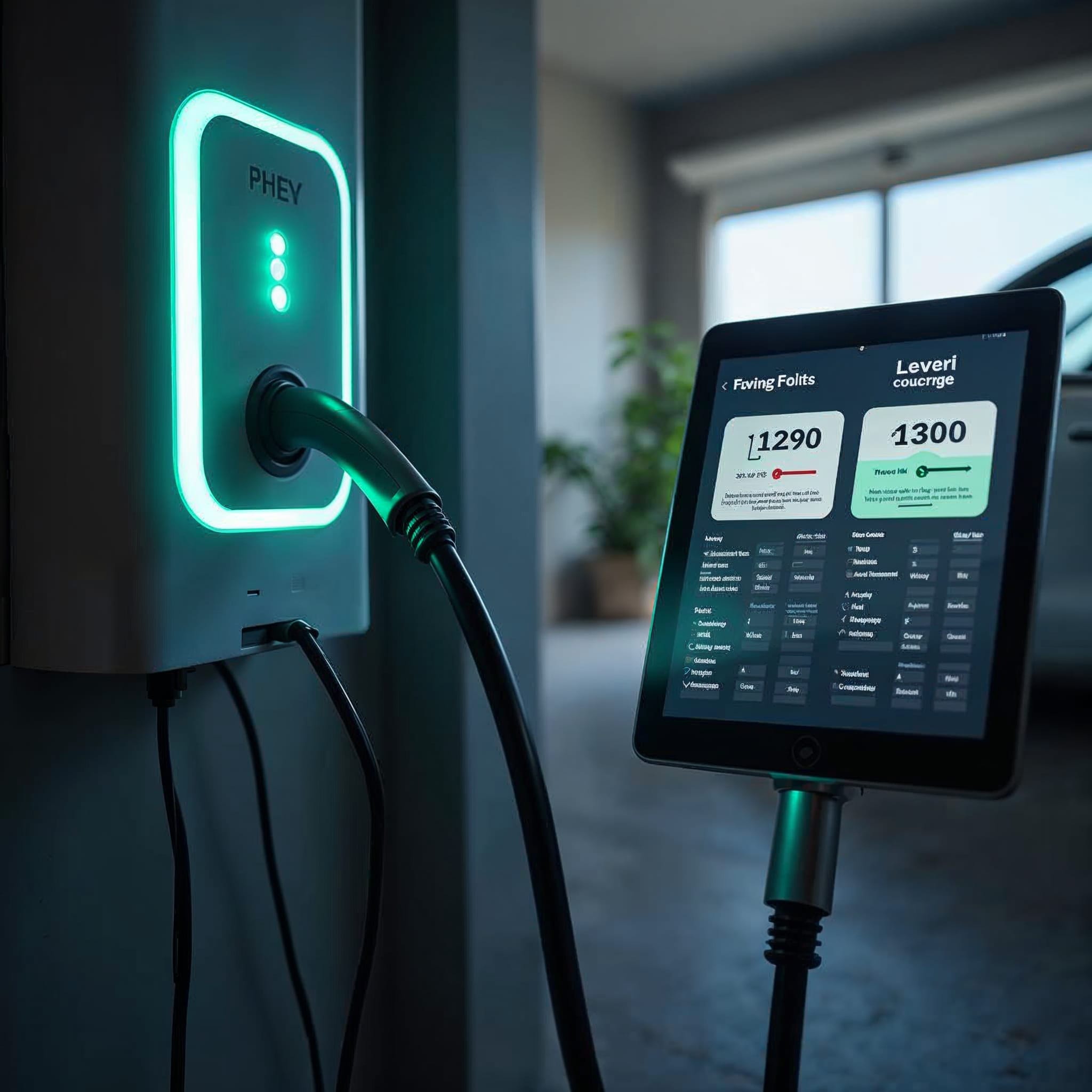
Welcome to the era of sustainable driving! Plug-in Hybrid Electric Vehicles (PHEVs) offer a fantastic bridge between traditional gasoline cars and fully electric vehicles, combining the best of both worlds. They provide the flexibility of a gasoline engine for long trips with the efficiency and reduced emissions of electric power for daily commutes. However, to truly maximize the benefits of your PHEV, convenient and reliable home charging is essential. While the idea of charging your car at home might seem straightforward, it involves a crucial step that many overlook or underestimate: the professional installation of your charging equipment, known as Electric Vehicle Supply Equipment (EVSE), by a qualified electrician.
This comprehensive guide will walk you through everything you need to know about setting up home charging for your PHEV, with a particular focus on the indispensable role of a skilled electrician. We will delve into the technical aspects of charging, the safety considerations, the installation process, and, most importantly, how to identify and hire the right professional to ensure your home charging setup is safe, efficient, compliant, and ready for the road ahead. Whether you are a new PHEV owner or considering purchasing one, this article will equip you with the knowledge to make informed decisions and enjoy a seamless home charging experience.
Why Home Charging is a Game Changer for PHEV Owners
Owning a PHEV is about striking a balance. You get the range assurance of a gasoline engine, but the real magic happens when you consistently utilize the electric powertrain. This means regular charging, and there is no place more convenient for regular charging than your own home. Imagine waking up every morning to a fully charged battery, ready to tackle your daily commute emissions-free. This daily routine transforms the PHEV experience, making it far more economical and environmentally friendly.
Home charging eliminates the need for frequent trips to public charging stations, which can be time-consuming, expensive, and sometimes unreliable. For most PHEV owners, daily driving ranges are well within the electric-only capacity of their vehicle. By charging at home overnight, you ensure that you are always maximizing your electric miles, reducing fuel consumption, and enjoying a quieter, smoother ride. It also means you can take advantage of off-peak electricity rates, further lowering your running costs. Without dedicated home charging, the convenience and cost-saving potential of a PHEV are significantly diminished, often leading owners to rely more heavily on their gasoline engine than intended.
The installation of a proper home charging system is not just about convenience; it is an investment in your vehicle and your property. A correctly installed system enhances the value of your home, ensures safety, and provides peace of mind. It also sets you up for potential future upgrades, such as smart charging features or even full EV ownership. Understanding the benefits underscores why the initial effort of a professional installation is so worthwhile.
Understanding PHEV Charging Levels: Level 1 vs. Level 2
When it comes to charging your PHEV at home, there are generally two main levels of charging to consider: Level 1 and Level 2. Each has distinct characteristics regarding speed, electrical requirements, and suitability for different lifestyles.
Level 1 Charging: The Standard Household Outlet
Level 1 charging utilizes a standard 120-volt AC outlet, the same kind you use for everyday household appliances. Most PHEVs come with a portable Level 1 charging cable that plugs directly into a standard wall socket. This is the simplest and most accessible form of home charging, requiring no special installation.
- Speed: Level 1 charging is the slowest option. It typically adds about 2-5 miles of electric range per hour. For PHEVs with relatively small battery packs (e.g., 10-25 kWh), a full charge might take anywhere from 8 to 20 hours.
- Electrical Requirements: No special electrical work is needed, provided your outlet is in good condition and not overloaded by other appliances. It is recommended to use a dedicated circuit if possible, especially if you plan to charge overnight regularly.
- Convenience: Extremely convenient for occasional top-ups or for vehicles with smaller batteries that can fully charge overnight. It is also great for renters or those who cannot install dedicated charging equipment.
- Limitations: Its slow speed can be a drawback for daily commuters who drive long distances on electric power and need a full charge every night. It may not fully replenish a larger PHEV battery pack within a typical overnight period.
Level 2 Charging: Faster and More Efficient
Level 2 charging uses a 240-volt AC outlet, similar to what electric clothes dryers or ovens use. This significantly increases the charging speed and is the preferred method for most PHEV owners who want to maximize their electric driving. Installing a Level 2 charger (EVSE) typically requires professional electrical work.
- Speed: Level 2 chargers typically deliver 20-60 miles of electric range per hour, depending on the charger’s power output and the vehicle’s onboard charger capacity. Most PHEVs can be fully charged in 2-4 hours, sometimes even less.
- Electrical Requirements: Requires a dedicated 240-volt circuit, usually 40 to 60 amps, installed by a licensed electrician. This often involves running new wiring from your electrical panel to the charging location.
- Convenience: Provides rapid charging, allowing you to fully replenish your PHEV battery overnight or even during a short afternoon break. This ensures you always have maximum electric range available.
- Benefits: Maximizes the electric range utilization of your PHEV, reduces reliance on gasoline, and is generally more efficient than Level 1 charging over time. It is also future-proofed for potential full EV ownership.
Choosing between Level 1 and Level 2 depends on your driving habits, your PHEV’s battery size, and your budget. For most PHEV owners, particularly those with daily commutes that exceed a few electric miles, investing in a Level 2 charger provides the best balance of speed, convenience, and efficiency.
The Electrical Assessment: What Your Home Needs for EVSE Installation
Before any wires are run or equipment is installed, a thorough electrical assessment of your home is paramount. This is where a qualified electrician earns their keep. They will need to evaluate your home’s existing electrical infrastructure to determine if it can safely support the additional load of a Level 2 EVSE. This assessment is not just a formality; it is a critical step to prevent potential hazards such as tripped breakers, overloaded circuits, or even electrical fires.
Key Areas an Electrician Will Assess:
- Electrical Panel Capacity:
Your main electrical panel, often called the breaker box, is the heart of your home’s electrical system. It distributes power to all circuits. A Level 2 EVSE typically requires a dedicated 240-volt circuit, usually rated at 40 to 60 amps. Your electrician will check the available amperage in your panel. Many older homes, or even newer homes with numerous high-demand appliances, might have a panel that is already near its maximum capacity. If this is the case, a panel upgrade might be necessary, which is a significant undertaking that only a licensed electrician can perform safely and legally.
- Available Breaker Slots:
Even if your panel has sufficient overall capacity, you need an open double-pole breaker slot to accommodate the new 240-volt circuit. If there are no available slots, the electrician may need to reconfigure existing circuits or, in some cases, add a sub-panel, which is a smaller electrical panel fed by the main panel.
- Wiring Path and Length:
The electrician will determine the most efficient and safest route for the new wiring from your electrical panel to the desired EVSE location (e.g., garage, driveway). This involves considering distances, wall materials, and whether conduit will be needed. Longer wiring runs can sometimes require heavier gauge wire to prevent voltage drop and ensure proper power delivery, which impacts material costs.
- Service Entrance Capacity:
Beyond the internal panel, the electrician will also look at your home’s service entrance, which is where power enters your house from the utility grid. If your home has an older, smaller service (e.g., 100 amps), adding a high-demand EVSE might push it beyond its limits, necessitating an upgrade to a 200-amp or higher service. This is a more extensive and costly upgrade, often involving coordination with your utility company.
- Grounding System:
A proper grounding system is crucial for safety. The electrician will verify that your home’s electrical system is correctly grounded, as this protects against electrical shock and equipment damage in the event of a fault.
- Local Electrical Codes:
Electrical installations must comply with local building and electrical codes. A professional electrician will be familiar with these codes and ensure that your EVSE installation meets all requirements for safety and legality. This often includes obtaining necessary permits before starting work.
This initial assessment is fundamental. It informs the scope of work, potential costs, and any necessary upgrades. Without it, you are essentially guessing, which can lead to unsafe installations or unexpected expenses down the line. A reputable electrician will always start with a thorough assessment and provide a detailed explanation of their findings.
Level 2 Charger Installation: A Job for Professionals
The installation of a Level 2 EVSE is not a DIY project for most homeowners. It involves working with high voltage, complex wiring, and ensuring compliance with stringent electrical codes. Attempting a self-installation without proper knowledge and licensing can lead to severe safety hazards, including electrical fires, electrocution, damage to your vehicle, and voiding insurance policies. This is unequivocally a job for a qualified, licensed electrician.
The Professional Installation Process:
- Permit Acquisition:
Before any physical work begins, a licensed electrician will typically handle the process of obtaining the necessary permits from your local building department. This ensures that the installation will be inspected and verified by municipal authorities, confirming it meets all safety and code standards. Skipping permits can lead to fines, difficulties with insurance claims, and problems when selling your home.
- Wiring and Circuit Installation:
Based on the electrical assessment, the electrician will install a dedicated 240-volt circuit from your main electrical panel to the chosen location of your EVSE. This involves:
- Mounting a new breaker: A double-pole breaker of the appropriate amperage (e.g., 40A, 50A, 60A) will be installed in your electrical panel.
- Running new wiring: Heavy-gauge wire will be pulled through walls, conduits, or across ceilings/floors to the EVSE location. The specific type and gauge of wire will be selected to safely carry the required current over the determined distance.
- Installing conduit (if necessary): If the wiring needs to be exposed or run outdoors, it will be protected by appropriate electrical conduit.
- EVSE Mounting and Connection:
Once the wiring is in place, the electrician will physically mount the EVSE unit to a wall or pedestal at a convenient height and location. They will then connect the newly run 240-volt wiring to the charger according to manufacturer specifications and electrical codes. This includes ensuring proper grounding and secure connections.
- Testing and Configuration:
After the physical installation, the electrician will meticulously test the entire circuit and the EVSE unit to ensure it is functioning correctly and safely. This includes verifying voltage, amperage, and proper grounding. Many smart chargers also require initial setup and configuration, which a knowledgeable electrician can assist with or advise on.
- Inspection:
Following the installation, a municipal electrical inspector will examine the work to ensure it complies with all local codes and standards. This final inspection is a crucial step that validates the safety and legality of your home charging station. Your electrician should be present or available for this inspection.
Throughout this process, a professional electrician will prioritize safety, efficiency, and compliance. They possess the specialized tools, knowledge, and experience to handle high-voltage electrical work, identify potential issues, and ensure your home charging station operates flawlessly for years to come.
What to Look for in a Qualified EVSE Electrician
Finding the right electrician for your EVSE installation is perhaps the most critical step in the entire process. Not all electricians are equally versed in EV charging technology, and specialized knowledge can make a significant difference in the quality, safety, and efficiency of your installation. Here is a checklist of what to look for when vetting potential candidates:
Essential Qualifications and Traits:
- Licensing and Certification:
Ensure the electrician is fully licensed in your state or municipality. This is non-negotiable. A license signifies they have met specific educational, experience, and examination requirements. Beyond basic licensing, inquire if they have any specific certifications or training related to Electric Vehicle Supply Equipment (EVSE) installation or renewable energy systems. Some organizations offer specialized training programs for EV charging installation.
- Experience with EVSE Installations:
Ask specifically about their experience with EV charger installations. An electrician who has installed multiple Level 2 chargers will be familiar with the nuances, common challenges, and best practices. They will know about different charger brands, vehicle requirements, and smart charging technologies. Experience with panel upgrades and service entrance upgrades is also valuable.
- Insurance:
Verify that the electrician carries comprehensive liability insurance and workers’ compensation insurance. This protects you from financial responsibility in case of accidents, property damage, or injury that occurs during the installation process. Always ask for proof of insurance.
- References and Reviews:
Request references from previous EVSE installation clients. Check online reviews on platforms like Google, Yelp, or trade-specific sites. Look for consistent positive feedback regarding professionalism, punctuality, communication, and the quality of their work.
- Knowledge of Local Codes and Permits:
The electrician must be thoroughly familiar with your local electrical codes, building regulations, and the permit application process. A good electrician will take care of securing all necessary permits and scheduling inspections. This saves you headaches and ensures your installation is legal and safe.
- Transparent Quoting and Communication:
A reputable electrician will provide a detailed, itemized quote that clearly outlines all costs, including labor, materials, permits, and any potential additional work (like panel upgrades). They should be able to explain the scope of work in plain English and communicate clearly and promptly throughout the process.
- Warranty on Work:
Inquire about a warranty or guarantee on their labor. A confident electrician will stand behind their work for a reasonable period (e.g., 1-5 years), offering peace of mind that if any issues arise due to their installation, they will rectify them.
- Product Agnostic Advice:
While some electricians might have preferred brands, they should be able to install any reputable EVSE unit and offer unbiased advice on charger selection based on your vehicle’s needs, charging habits, and budget, rather than pushing a specific product.
Taking the time to thoroughly vet potential electricians will pay dividends in the long run, ensuring a safe, compliant, and efficient home charging setup for your PHEV.
The Hiring Process: From Quote to Completion
Once you have a list of potential qualified electricians, the hiring process involves several key steps to ensure you choose the best professional for your EVSE installation. This structured approach helps manage expectations, clarify costs, and secure a smooth project execution.
Steps to a Successful Hiring Experience:
- Gather Multiple Quotes:
It is highly recommended to obtain at least three detailed quotes from different electricians. This allows you to compare pricing, assess the proposed scope of work, and gauge the professionalism and communication style of each contractor. Do not simply choose the cheapest option; focus on value, expertise, and a clear understanding of what is included.
- On-Site Consultation and Assessment:
A good electrician will insist on an on-site visit to conduct a thorough electrical assessment of your home. During this consultation, they should inspect your electrical panel, identify the best location for the charger, and discuss the wiring path. Use this opportunity to ask specific questions:
- What is the estimated total cost, including parts, labor, and permits?
- What is the estimated timeline for completion?
- Are there any potential challenges or additional costs identified during the assessment (e.g., panel upgrade)?
- Who will obtain the permits, and when?
- How will they protect your home during installation (e.g., dust, debris)?
- What is their warranty on labor?
- Review Proposals and Contracts:
Each quote should be detailed and itemized, clearly breaking down costs for labor, materials (wire, conduit, breaker, etc.), and permit fees. Ensure that the proposal specifies the exact scope of work, including any necessary upgrades (like a panel upgrade). Before agreeing to anything, carefully read the contract. It should include:
- The total cost and payment schedule.
- A clear description of the work to be performed.
- Project timeline.
- Warranty information for labor.
- Proof of licensing and insurance details.
- A clause about obtaining necessary permits.
Do not hesitate to ask for clarification on any unclear terms.
- Schedule Installation:
Once you have selected your electrician and signed the contract, schedule a convenient installation date. Be prepared to be present during the installation or have someone available who can provide access and answer any questions that may arise.
- Installation and Post-Installation Checks:
During the installation, observe the professionalism of the crew. After the work is complete, the electrician should test the charging station thoroughly and demonstrate its functionality. Before making final payment, ensure the work area is clean, all debris is removed, and you receive any necessary documentation, such as warranty information and copies of permits or inspection approvals. A final walk-through to confirm everything works as expected is a good practice.
- Final Inspection:
Remember that the final step for a fully compliant and safe installation is the municipal electrical inspection. Your electrician should arrange this, and the inspector will verify that the work meets all local codes. Only once the inspection is passed can you be fully confident in your new home charging setup.
Following these steps will help you navigate the process confidently, resulting in a professionally installed, safe, and efficient home charging station for your PHEV.
Common Challenges and How a Good Electrician Solves Them
While the goal is always a smooth installation, real-world scenarios often present unique challenges. A truly skilled and experienced EVSE electrician is defined by their ability to anticipate, diagnose, and effectively resolve these issues, ensuring a safe and compliant installation regardless of the obstacles.
Typical Challenges and Expert Solutions:
- Insufficient Electrical Panel Capacity:
Challenge: Your home’s existing electrical panel may not have enough spare capacity to handle the additional load of a Level 2 charger, leading to tripped breakers or an overloaded system.
Electrician’s Solution: A good electrician will identify this during the initial assessment. They will recommend either upgrading your main electrical panel to a higher amperage (e.g., from 100A to 200A) or installing a sub-panel dedicated to the EVSE and other new circuits. They will manage the entire process, including coordination with your utility company if a service entrance upgrade is required, ensuring all work meets code.
- Lack of Available Breaker Slots:
Challenge: Even with sufficient capacity, your panel might not have an open double-pole slot for the new 240-volt breaker.
Electrician’s Solution: The electrician might be able to consolidate two smaller 120-volt circuits into a single breaker (if code allows and load permits) to free up space. Alternatively, they may suggest installing a tandem breaker if compatible with your panel, or as mentioned, installing a sub-panel to add more slots.
- Long or Difficult Wiring Runs:
Challenge: The ideal location for your EVSE (e.g., a detached garage or far side of the driveway) might be a significant distance from your electrical panel, requiring complex routing of heavy-gauge wiring through walls, ceilings, or underground.
Electrician’s Solution: An experienced electrician will plan the most efficient and least intrusive wiring path. For long runs, they will calculate the necessary wire gauge to prevent voltage drop, which can impact charging speed. For outdoor or underground runs, they will ensure proper conduit installation, trenching (if required), and weatherproofing, adhering to strict outdoor electrical codes.
- Aesthetic Concerns:
Challenge: Homeowners often want the charging equipment and wiring to be as discreet as possible, blending seamlessly with their home’s aesthetics.
Electrician’s Solution: A thoughtful electrician will discuss placement options to minimize visual impact. They can often conceal wiring within walls or use paintable surface-mounted conduits that match your home’s exterior, making the installation look tidy and professional.
- Old or Outdated Electrical Systems:
Challenge: Older homes may have outdated wiring, fuse boxes instead of circuit breakers, or insufficient grounding, making it unsafe or impossible to install a modern EVSE without significant upgrades.
Electrician’s Solution: The electrician will identify these deficiencies during the initial assessment. They will propose comprehensive solutions, such as full home rewiring, main panel replacement, or grounding system upgrades, explaining the necessity and benefits of each. While this adds to the cost, it ensures the overall safety and reliability of your entire home’s electrical system.
- Permit and Code Compliance Issues:
Challenge: Navigating local building codes and obtaining permits can be confusing and time-consuming for homeowners.
Electrician’s Solution: A professional electrician will be well-versed in local regulations. They will handle the entire permit application process, ensuring all documentation is correct. They will also perform the installation to meet or exceed code requirements, facilitating a smooth inspection process and preventing future legal or safety issues.
By hiring a seasoned EVSE electrician, you are not just paying for an installation; you are investing in their problem-solving expertise and assurance that your home charging system will be robust, safe, and fully compliant.
Cost Considerations and Return on Investment (ROI)
Understanding the costs associated with installing a home Level 2 charging station is crucial for budgeting. While there is an initial outlay, it is important to view this as an investment that offers significant long-term savings and convenience. The total cost can vary widely depending on several factors.
Breakdown of Potential Costs:
- The EVSE Unit (Charger Itself):
Costs for Level 2 charging stations typically range from $300 to $800, with some advanced smart chargers or those with higher power outputs reaching $1,000 or more. Factors influencing this price include brand, charging speed (amperage), smart features (Wi-Fi connectivity, scheduling, energy monitoring), cable length, and weatherproofing for outdoor installation. It is worth researching chargers compatible with your PHEV and that offer features beneficial to your lifestyle.
- Installation Labor:
This is often the largest variable cost. Standard installations (where the electrical panel is nearby, has available capacity, and no major upgrades are needed) can range from $500 to $1,500. More complex installations, involving long wiring runs, trenching, or significant electrical panel upgrades, can push labor costs to $2,000 or even upwards of $4,000 to $5,000 for a full service upgrade. Labor costs are also influenced by regional rates and the electrician’s experience.
- Materials:
This includes the dedicated circuit breaker, heavy-gauge wiring, conduit (if needed), junction boxes, and mounting hardware. Material costs are typically bundled into the labor quote but can add a few hundred dollars, especially for longer runs or specialized outdoor-rated components.
- Permits and Inspections:
Local building departments charge fees for electrical permits and inspections. These typically range from $50 to $250, depending on your municipality. A reputable electrician will include this in their quote and handle the process.
- Electrical Panel Upgrades (If Needed):
If your home’s electrical panel needs an upgrade (e.g., from 100A to 200A) to accommodate the EVSE, this can add a substantial cost, typically ranging from $1,500 to $4,000 or more, depending on the scope of work and if a service entrance upgrade is also required from the utility.
Potential Rebates and Incentives:
To offset these costs, be sure to research available rebates and incentives:
- Federal Tax Credits: The US federal government has historically offered tax credits for EVSE purchases and installations. Check the latest IRS guidelines for current eligibility.
- State and Local Incentives: Many states, counties, and cities offer their own rebates for EVSE installations. These can be significant and are worth investigating.
- Utility Company Programs: Electric utility companies often have programs to encourage EV adoption, including rebates for charging stations, off-peak charging incentives, or specialized EV electricity rates.
Return on Investment (ROI):
While the initial cost might seem high, the ROI for a home charging station, especially for a PHEV, is substantial over the vehicle’s lifetime:
- Fuel Savings: The most direct saving comes from reducing gasoline consumption. By charging at home and maximizing your electric miles, you significantly cut down on your fuel bill. For instance, if electricity costs $0.15/kWh and gasoline is $3.50/gallon, driving on electricity is often equivalent to paying $1.00-$1.50 per gallon of gas.
- Convenience and Time Savings: No more detours to gas stations or public chargers. The time saved and the convenience of always having a charged vehicle are invaluable.
- Increased Property Value: A professionally installed EV charging station can be an attractive feature for future homebuyers, potentially increasing your home’s resale value.
- Environmental Benefits: While harder to quantify financially, contributing to reduced emissions and a cleaner environment is a significant return for many PHEV owners.
- Future-Proofing: A Level 2 installation prepares your home for potential future full EV ownership, making the transition even smoother.
By diligently researching costs, seeking out rebates, and understanding the long-term benefits, the investment in a home charging station for your PHEV becomes a clear winner for both your wallet and your lifestyle.
Comparison Tables
Table 1: Level 1 vs. Level 2 PHEV Home Charging
| Feature | Level 1 Charging | Level 2 Charging |
|---|---|---|
| Voltage | 120V AC (Standard Household Outlet) | 240V AC (Appliance Outlet) |
| Power Output | 1.4 – 1.9 kW | 3.3 – 19.2 kW (Commonly 7-11 kW for homes) |
| Charging Speed (Miles of Range/Hour) | 2 – 5 miles/hour | 20 – 60 miles/hour |
| Typical Full Charge Time (for a 15 kWh PHEV battery) | 8 – 15 hours | 1.5 – 3 hours |
| Electrical Installation Required | None (plugs into existing outlet) | Professional electrician installation of dedicated 240V circuit |
| Equipment Cost (EVSE) | Included with vehicle (portable cord) or < $200 for basic charger | $300 – $1,000+ |
| Installation Cost | $0 | $500 – $2,500+ (depending on complexity and panel upgrades) |
| Ideal For | PHEVs with small batteries, occasional charging, renters, supplementary charging | Most PHEVs, daily commuters, maximizing electric range, future-proofing for EVs |
Table 2: Key Considerations When Hiring an EVSE Electrician
| Consideration Category | Specific Question to Ask / Action to Take | Why it Matters for PHEV Charging |
|---|---|---|
| Credentials & Experience | “Are you licensed and insured in my state/municipality? Can I see proof?” “How many EV charger installations have you completed?” | Ensures legal compliance, safety, and expertise specific to EVSE (which differs from general electrical work). Protects you from liability. |
| EV Specific Knowledge | “Are you familiar with various EVSE brands and features?” “Do you understand local utility rebate programs for EV charging?” | An electrician well-versed in EV technology can provide better advice on charger selection, smart features, and help you access cost-saving incentives. |
| Assessment & Quote | “Will you conduct an on-site electrical panel assessment before quoting?” “Is the quote detailed, itemized, and all-inclusive (labor, materials, permits)?” | Prevents unexpected costs and ensures your home’s electrical system can safely support the EVSE. Transparency builds trust. |
| Permits & Codes | “Will you handle all necessary permits and inspections with the local authorities?” “Are you up-to-date with current NEC and local electrical codes for EVSE?” | Crucial for safety, legality, and ensuring your installation passes inspection. Avoiding permits can lead to fines and safety hazards. |
| Warranty & Support | “What kind of warranty do you offer on your labor and installation?” “What is your typical response time if an issue arises post-installation?” | Provides peace of mind and protection against potential installation defects. Indicates the electrician’s confidence in their work. |
| References & Reviews | “Can you provide references from recent EV charger installation clients?” “Where can I find online reviews of your services?” | Gives insight into past client experiences, quality of work, professionalism, and reliability. |
| Communication & Professionalism | Observe their responsiveness, clarity in explanations, and overall demeanor during initial contact and assessment. | A good working relationship and clear communication are vital for a smooth project, especially if unexpected issues arise. |
Practical Examples and Real-World Scenarios
Let us consider a few real-life examples to illustrate the importance of a qualified electrician in various home charging scenarios for PHEVs:
Scenario 1: The Modern Suburban Home with Ample Panel Capacity
The Situation: Sarah lives in a relatively new suburban home (built 2010) with a 200-amp electrical panel. She just bought a new PHEV with a 14 kWh battery and wants to install a Level 2 charger in her garage. Her electrical panel is conveniently located in the garage.
The Electrician’s Role: A qualified electrician performs an assessment. They find plenty of available capacity in the 200-amp panel and an open double-pole breaker slot. The wiring run to the desired charger location on the garage wall is short and straightforward. The electrician provides a quote for a standard installation, including the breaker, wiring, conduit, and labor, plus permit fees. The job is completed within a day, passes inspection, and Sarah enjoys fast, reliable charging.
Key Takeaway: Even with ideal conditions, a professional is crucial for safe wiring, proper breaker sizing, and permit compliance, ensuring the system integrates seamlessly and safely with the home’s electrical system.
Scenario 2: The Older Home with an Overloaded Panel
The Situation: Mark lives in a charming 1970s home with a 100-amp electrical panel that is already heavily loaded with appliances like an electric oven, clothes dryer, and central air conditioning. He wants to install a Level 2 charger for his new PHEV but is worried about his older electrical system.
The Electrician’s Role: During the assessment, the electrician quickly identifies that the 100-amp panel does not have enough reserve capacity for a Level 2 EVSE without risking overloading. They recommend a full electrical panel upgrade to 200 amps, which involves replacing the main panel, upgrading the service entrance cables from the utility, and installing new breakers. While this is a more expensive and time-consuming project, the electrician clearly explains the safety necessity and long-term benefits. They handle all permits, coordinate with the utility company for the service disconnect, and complete the upgrade and EVSE installation over a few days. Mark now has a safe, future-proof electrical system capable of supporting his EVSE and any future electrical needs.
Key Takeaway: A good electrician not only installs the charger but also identifies and solves underlying electrical system deficiencies, ensuring overall home safety and capacity for current and future needs.
Scenario 3: Detached Garage and Outdoor Charging
The Situation: Lisa wants to charge her PHEV in her detached garage, which is about 50 feet from her main house and electrical panel. The garage only has basic lighting and outlets.
The Electrician’s Role: The electrician assesses the situation. They determine that a new dedicated 240-volt circuit needs to be run underground from the main panel to the detached garage. This involves trenching, installing weatherproof conduit, and potentially adding a sub-panel in the garage for the EVSE and other future electrical needs. The electrician ensures proper wire gauge for the long run to prevent voltage drop and installs a robust, outdoor-rated EVSE. They meticulously follow codes for outdoor wiring and grounding, and once finished, the underground trench is restored, and the system is fully tested and inspected. Lisa has reliable charging in her detached garage, thanks to the electrician’s expertise in outdoor and long-distance wiring.
Key Takeaway: Complex installations, such as those involving detached structures or outdoor elements, require specialized knowledge of trenching, conduit, weatherproofing, and specific outdoor electrical codes, which only a professional electrician possesses.
These examples highlight that while the core task is installing a charger, the real value of a qualified electrician lies in their ability to adapt to unique home conditions, identify potential problems, propose safe and compliant solutions, and execute the work with precision and adherence to code. This expertise ensures not only that your PHEV charges effectively but also that your home’s entire electrical system remains safe and robust.
Frequently Asked Questions
Q: Do I really need an electrician to install a Level 2 PHEV charger? Can I do it myself?
A: Yes, you absolutely need a licensed electrician for a Level 2 charger. Level 2 charging uses 240 volts, which is high voltage and can be extremely dangerous if not handled correctly. Improper installation can lead to electrical fires, electrocution, damage to your vehicle, and could void your home insurance. An electrician ensures the installation is safe, compliant with local electrical codes, and properly permitted.
Q: What is the average cost to install a Level 2 charger for a PHEV?
A: The cost varies significantly. A basic installation where your electrical panel is easily accessible, has sufficient capacity, and the charger is mounted nearby can range from $500 to $1,500. However, if your home requires an electrical panel upgrade, a service entrance upgrade, extensive wiring runs, or trenching for a detached garage, the total cost could range from $2,000 to $5,000 or more. This usually includes the EVSE unit, labor, materials, and permit fees.
Q: How long does a typical Level 2 charger installation take?
A: For a straightforward installation, the physical work can often be completed in a single day (4-8 hours). However, the entire process, including initial assessment, obtaining permits, scheduling, installation, and final inspection, can take anywhere from a few days to several weeks, depending on the complexity of the project and local permitting timelines.
Q: Will installing a Level 2 charger increase my electricity bill?
A: Yes, regularly charging your PHEV will increase your electricity consumption and, consequently, your electricity bill. However, this increase is typically offset by a significant reduction in gasoline expenses. Many utility companies offer special time-of-use (TOU) rates for EV owners, allowing you to charge during off-peak hours (often overnight) at a lower cost, maximizing your savings.
Q: Do I need a permit for a home EV charger installation?
A: Yes, in almost all jurisdictions, a permit is required for Level 2 EVSE installations. This is because it involves significant electrical work and alterations to your home’s electrical system. A licensed electrician will handle the permit application process and ensure the installation passes local inspections, confirming it meets safety and code standards.
Q: How can I find a reputable electrician for EVSE installation?
A: Look for electricians who are licensed, insured, and have specific experience with EV charger installations. Check online reviews, ask for references, and ensure they are knowledgeable about local codes and permit requirements. Obtain at least three detailed quotes, and prioritize transparency in pricing and communication. You can also check with your local utility company or EV owner groups for recommendations.
Q: What is the difference between a hardwired EVSE and a plug-in EVSE? Which is better for a PHEV?
A: A hardwired EVSE is permanently connected to your home’s electrical system, while a plug-in EVSE uses a NEMA 14-50 or 6-50 outlet. For PHEVs, either can be suitable. Plug-in units offer more flexibility if you ever move and want to take your charger with you, or if you want to use the outlet for other high-demand appliances. Hardwired units can sometimes offer higher amperage (and thus faster charging) if your vehicle supports it and if the circuit is rated for it, and some local codes may prefer hardwired installations for safety or aesthetic reasons. Your electrician can advise on the best option for your specific situation.
Q: Will my home’s electrical system be safe after installing a Level 2 charger?
A: Absolutely, if installed by a qualified, licensed electrician. A professional will ensure your home’s electrical panel has sufficient capacity, install a dedicated circuit with appropriate overcurrent protection, use correct wiring and grounding, and ensure the entire setup complies with all national and local electrical codes. The final inspection by a municipal authority further guarantees safety.
Q: What if my electrical panel is too old or too small?
A: If your electrician determines that your electrical panel is too old, too small, or lacks the necessary capacity or space for a new Level 2 circuit, they will recommend an upgrade. This typically involves replacing your main electrical panel with a larger one (e.g., from 100 amps to 200 amps) or installing a sub-panel. While this adds to the overall cost, it is a necessary upgrade for safety and to ensure your home can support the additional electrical load.
Q: Should I future-proof my EVSE installation for a full EV?
A: Yes, it is a wise consideration. While PHEVs have smaller batteries, many homeowners eventually transition to a full EV. If possible and within budget, consider installing an EVSE that offers a higher power output (e.g., 40-60 amps) than your current PHEV might strictly need. Also, ensure your electrical panel has sufficient capacity for a larger EV load. Discussing this with your electrician during the initial assessment can help you plan for the future without needing another costly upgrade later.
Key Takeaways
- Home charging is crucial for maximizing PHEV benefits: It ensures daily electric miles, reduces fuel costs, and offers unparalleled convenience.
- Level 2 charging is ideal for most PHEVs: It provides significantly faster charging than Level 1, fully replenishing batteries in a few hours and maximizing electric range usage.
- Professional electrician installation is mandatory for Level 2 EVSE: High voltage, complex wiring, and safety considerations make this a non-DIY project.
- A thorough electrical assessment is the first step: A qualified electrician will evaluate your home’s panel capacity, wiring, and service entrance to determine requirements and potential upgrades.
- Look for specific qualifications in an electrician: Licensing, insurance, EVSE installation experience, knowledge of local codes, and strong references are essential.
- Permits and inspections ensure safety and compliance: Your electrician should handle obtaining all necessary permits and facilitating the final municipal inspection.
- Be prepared for potential costs and upgrades: While installation has upfront costs, consider rebates and the long-term ROI from fuel savings and convenience.
- A good electrician solves challenges: They can expertly address issues like insufficient panel capacity, difficult wiring runs, and aesthetic concerns.
- Future-proofing is a smart move: Consider installing an EVSE and electrical infrastructure that can support a full EV in the future, even if you currently own a PHEV.
Conclusion
The journey to embracing your Plug-in Hybrid Electric Vehicle to its fullest potential begins with a reliable and safe home charging setup. While the allure of effortless electric driving is strong, the foundation of that experience lies firmly in the hands of a qualified, experienced electrician. They are not merely installing a piece of equipment; they are integrating a sophisticated electrical system into your home, ensuring its safety, efficiency, and compliance with all relevant codes.
Investing the time and resources into finding the right professional for your Level 2 EVSE installation is an investment in your peace of mind, the longevity of your vehicle, and the overall electrical integrity of your home. From initial electrical panel assessments and navigating permit requirements to executing complex wiring solutions and ensuring post-installation safety, a top-tier electrician will guide you through every step, transforming a potentially daunting task into a smooth and successful project. By choosing wisely, you empower yourself to fully enjoy the economic and environmental benefits of your PHEV, confidently knowing that your home charging station is built to last, safely and efficiently, for all your electric miles ahead.