
Trump’s $2,000 Tariff Dividend Checks: A Bold Promise or Pure Fiscal Fantasy?
President Trump’s plan to distribute $2,000 checks to middle- and low-income Americans from tariff revenue sounds like a populist win, but economists label it “pure fiscal fantasy.” With $195B in 2025 tariffs falling short of the $300B+ needed, the proposal risks inflation spikes and debt ballooning—details on feasibility, expert critiques, and political angles.
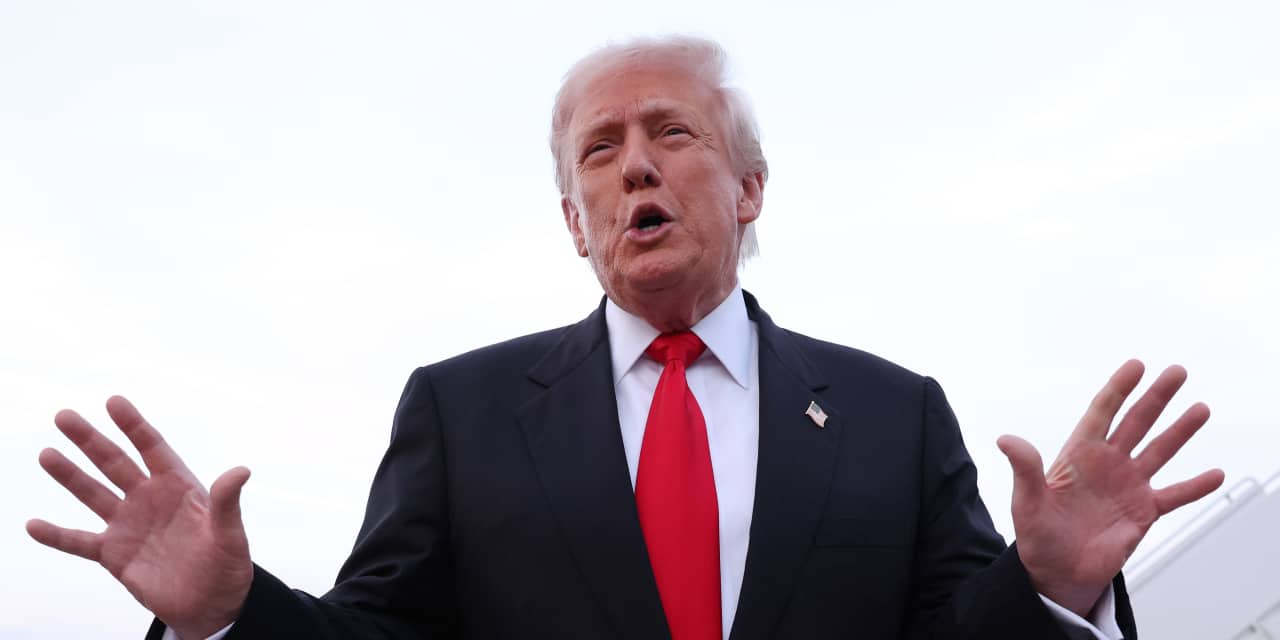
In a Truth Social post on November 9, 2025, President Donald Trump promised a windfall for working Americans: “A dividend of at least $2000 a person (not including high income people!) will be paid to everyone.” Touting tariffs as a revenue bonanza fueling “record investment” and debt reduction, Trump framed the checks as a direct rebate from his trade policies—echoing pandemic stimulus but tied to his signature protectionism. It’s a politically savvy pitch amid economic jitters, but experts across the spectrum are calling it “pure fiscal fantasy,” warning of shortfalls, inflation risks, and congressional roadblocks that could leave families empty-handed.
The idea taps into Trump’s tariff playbook, which generated $195 billion in fiscal 2025—up 153% from 2024’s $77 billion. Yet, as the White House doubles down, the math doesn’t add up, exposing tensions in Trump’s economic vision.
The Pitch: Tariffs as a People’s Dividend
Trump’s proposal positions tariffs not just as a shield for U.S. manufacturing but as a cash cow for citizens. “We’re taking in Trillions of Dollars and will soon begin paying down our ENORMOUS DEBT,” he wrote, before dangling the $2,000 checks for “middle income” earners—potentially excluding those above $100,000. Delivery could mimic COVID-era stimulus: IRS-processed payments via direct deposit or mail, arriving mid-2026 if legislated.
White House officials like NEC Director Kevin Hassett insist the funds exist, citing a “surplus” from tariffs. Treasury Secretary Scott Bessent, appearing on ABC’s This Week, suggested flexibility: “The $2,000 dividend could come in lots of forms,” possibly as tax cuts rather than checks. Trump reiterated the commitment on November 11, telling reporters: “We’re going to issue a dividend… of about $2,000” to lower- and middle-income folks.
Politically, it’s red meat: A rebate offsets tariff-driven price hikes on imports, appealing to Trump’s base weary of inflation (hovering at 2.5% post-2024 cuts). Polls show 62% of Republicans favor such payouts, per a November YouGov survey, viewing tariffs as “America First” wins.
The Reality Check: Revenue Shortfalls and Ballooning Costs
Economists aren’t buying it. Erica York of the Tax Foundation crunched numbers: For 150 million adults under $100,000, $2,000 each totals $300 billion—far exceeding 2025’s $195 billion haul. Including kids? Closer to $500 billion. Even optimistic projections of $3 trillion over a decade fall short annually, and that assumes no trade wars slashing imports.
PBS fact-checkers labeled it a “stretch,” noting tariffs are regressive—hitting low-income households hardest via higher consumer goods prices. CNN’s analysis called it a “huge economic gamble”: Rebates could spike spending, adding 1-3 percentage points to inflation, per Moody’s estimates—undoing Fed gains. And debt paydown? Negated if checks borrow from future revenue.
| Aspect | Trump’s Claim | Expert Reality Check |
|---|---|---|
| Annual Revenue | “Trillions” from tariffs | $195B in 2025; $3T over 10 years |
| Check Cost | $2,000/person for middle/low-income | $300B+ for 150M adults; more w/kids |
| Inflation Impact | “Almost No Inflation” | +1-3% from stimulus spending |
| Debt Effect | “Substantially pay down $37T debt” | Likely adds to deficit if unfunded |
| Eligibility | “Not including high income people!” | Undefined threshold; IRS processing needed |
Sources: Tax Foundation, Moody’s, Treasury Dept. (2025 estimates).
Political Hurdles: Congress Holds the Purse
Even with GOP majorities, passage isn’t guaranteed. Stimulus-like checks require new legislation—absent from the 2025 tax overhaul that nixed tips/overtime taxes but skipped rebates. Bessent’s tax-cut pivot hints at internal wobbles; fiscal hawks like Sen. Rand Paul balk at “deficit fireworks.”
Legal snags loom: Importers (not consumers) pay tariffs, and Supreme Court challenges could force refunds, per AP. Democrats decry it as “election-season sleight-of-hand,” tying it to Trump’s DOGE (Department of Government Efficiency) fantasies.
Expert Verdict: Fantasy Over Feasibility
Budget wonks from the Committee for a Responsible Federal Budget call it “unrealistic”—tariffs fund 2% of the $6.5 trillion budget, dwarfed by entitlements and defense. Maya MacGuineas of CRFB: “It’s stimulus dressed as savings—great politics, terrible policy.” Even allies like Hassett hedge: “If the money keeps coming in… then I’m sure he’ll be looking into that.”
NPR’s Uri Berliner summed it up: “Less a thought-out policy… more ‘A $2,000 check sounds good.’”
Trump’s tariff dividends dangle a $2,000 carrot amid trade wars, but the stick of fiscal math—short revenues, inflation risks, and legislative lifts—makes it feel like fantasy. Politically, it rallies the base; economically, it’s a high-wire act. If checks materialize, they’ll thrill recipients but strain the books. Absent that, it’s vaporware—another Trumpian promise testing reality’s limits. As 2026 looms, watch Congress: The real dividend might be political theater. (Word count: 612)