
Trump’s Tariffs Head Back to Court: What to Know
WASHINGTON, D.C., July 29, 2025 — President Donald Trump’s sweeping tariff agenda faces a critical legal showdown as the U.S. Court of Appeals for the Federal Circuit prepares to hear oral arguments on July 31 in a high-profile case, V.O.S. Selections v. Trump. The case challenges Trump’s use of the International Emergency Economic Powers Act (IEEPA) to impose broad tariffs, including the so-called “Liberation Day” tariffs announced on April 2, 2025. Here’s a breakdown of the key points surrounding this legal battle and its implications.
Background of the Tariff Dispute
Trump’s tariffs, aimed at reshaping global trade to favor the United States, include a 10% universal tariff on imports from most U.S. trading partners, with additional 25% levies on goods from Canada, Mexico, and China, citing issues like fentanyl trafficking and trade imbalances. These measures, enacted via executive orders under IEEPA, a 1977 law granting presidents broad economic powers during national emergencies, have sparked significant controversy. The tariffs were temporarily paused for 90 days after market turmoil, with some modifications, such as reducing China’s tariff from 145% to 30% as part of ongoing trade talks.
On May 28, 2025, the U.S. Court of International Trade (CIT) ruled that Trump exceeded his authority under IEEPA, declaring the tariffs unconstitutional. The CIT argued that Congress holds exclusive power to regulate commerce under Article 1, Section 8 of the U.S. Constitution, and IEEPA does not grant the president “unbounded” authority to impose tariffs. The ruling, issued by a bipartisan panel of judges appointed by Presidents Reagan, Obama, and Trump, blocked the tariffs and issued a permanent injunction. However, the Federal Circuit granted a stay the next day, allowing the tariffs to remain in effect pending appeal.
The Legal Battle
The upcoming July 31 hearing will focus on whether Trump’s use of IEEPA to impose tariffs is lawful. The Trump administration argues that IEEPA’s language, which allows the president to “regulate … importation” during a national emergency, encompasses tariffs. They cite a precedent from the Nixon era, where similar tariffs under a related law were upheld. The administration also claims that trade deficits and drug trafficking constitute national emergencies justifying the tariffs.
Opponents, including small businesses and a coalition of 12 states led by Oregon, argue that IEEPA does not explicitly authorize tariffs, and Trump’s actions bypass Congress’s constitutional authority. They contend that the tariffs, particularly those targeting fentanyl, do not directly address the cited emergencies but instead serve as economic leverage, which exceeds IEEPA’s scope. The Liberty Justice Center, representing small businesses, and state attorneys general, like California’s Rob Bonta, have called the tariffs “unlawful” and economically damaging.
The CIT’s ruling also raised concerns about the “major questions doctrine,” which limits executive actions on significant issues unless explicitly authorized by Congress. This could pose a hurdle for the administration if the case reaches the Supreme Court, which is widely expected.
Current Status and Next Steps
The Federal Circuit’s stay ensures that tariffs remain in place for now, with oral arguments set to clarify the legal boundaries of presidential power. The court’s full panel of judges will decide the case due to its “exceptional importance.” If the Federal Circuit upholds the CIT’s ruling, the tariffs could be permanently blocked unless the Supreme Court intervenes. The administration has signaled its intent to appeal to the Supreme Court if necessary, with White House spokesperson Kush Desai emphasizing that Trump will use “every lever of executive power” to maintain the tariffs.
Meanwhile, at least 10 lawsuits challenging the IEEPA tariffs are pending across federal courts, though the V.O.S. Selections case is the furthest along. Other legal avenues, such as Section 232 of the Trade Expansion Act or Section 338 of the Trade Act, could allow Trump to impose tariffs if IEEPA is deemed invalid, though these have narrower applications.
Economic and Political Implications
The tariffs have disrupted global trade, raised consumer prices, and sparked market volatility. Small businesses, like Learning Resources, a toy company, face “paralyzing uncertainty” and rising costs, with CEO Rick Woldenberg noting a “sense of dread” among manufacturers. The CIT’s ruling has weakened Trump’s leverage in trade negotiations, with countries like Japan potentially delaying deals until legal clarity emerges. However, a recent U.S.-UK trade agreement and a temporary U.S.-China trade truce remain unaffected, as some tariffs rely on separate legal authorities like Section 232 for steel and aluminum.
Financial markets have reacted with cautious optimism to the possibility of tariff rollbacks, though the ongoing legal uncertainty tempers gains. Analysts warn that prolonged litigation could disrupt supply chains and investor confidence further.
Politically, the tariffs have drawn bipartisan criticism. Democrats like Senator Ron Wyden argue they inflate prices and disrupt supply chains, while some Republicans support Trump’s aim to address trade imbalances. Public sentiment on X reflects polarized views, with some users decrying the tariffs as unconstitutional and others criticizing courts for obstructing Trump’s agenda.
What to Watch For
- July 31 Hearing: The Federal Circuit’s oral arguments will signal whether the court leans toward upholding or overturning the CIT’s ruling. A decision could come soon after, though appeals to the Supreme Court are likely.
- Supreme Court Involvement: The Supreme Court declined to fast-track the case in June but may hear it later, potentially shaping the scope of executive power.
- Alternative Tariff Strategies: If IEEPA is ruled out, the administration may pivot to other legal authorities or seek congressional approval, though the latter is unlikely given political gridlock.
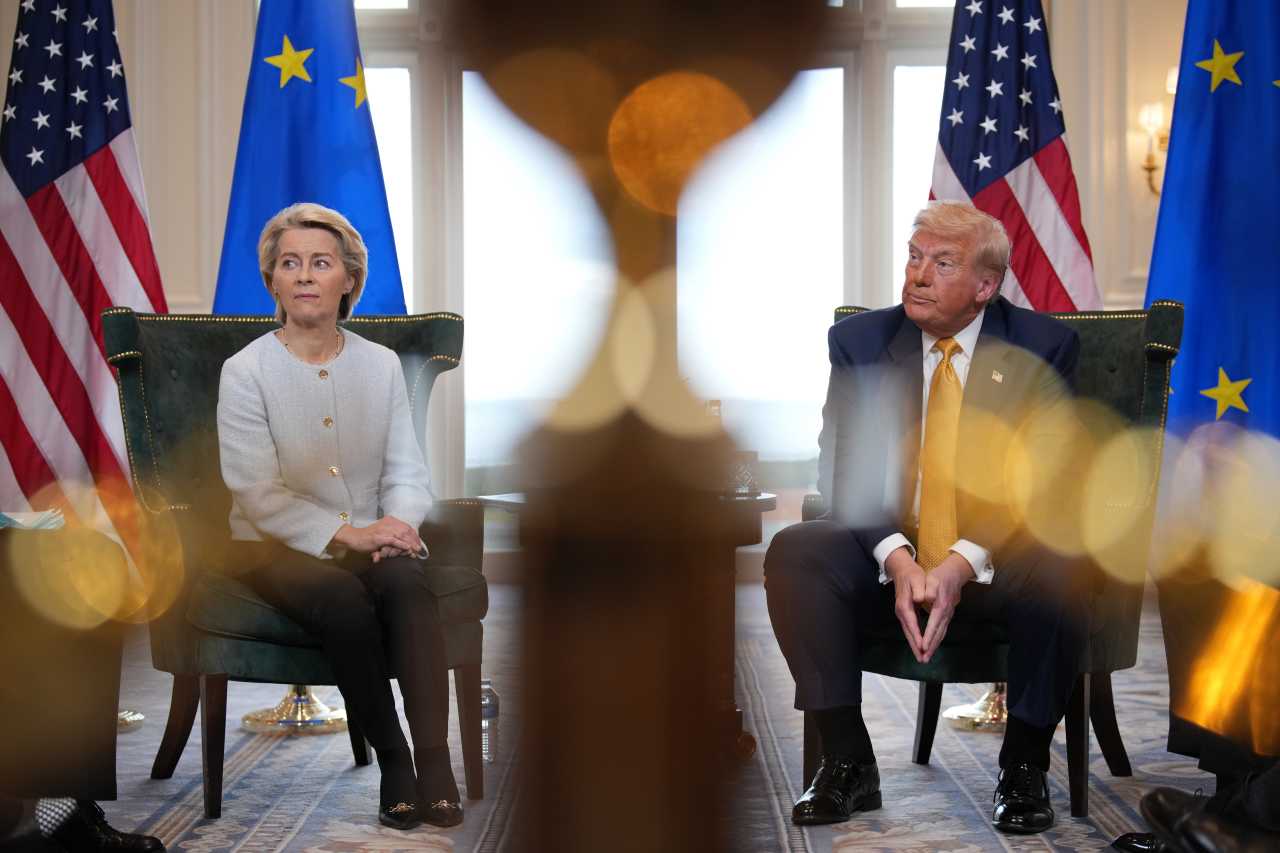
- Trade Negotiations: The outcome will affect ongoing talks with the EU, China, and others. A weakened tariff threat could slow progress, as countries may “wait and see” how the courts rule.
The legal battle over Trump’s tariffs is a pivotal test of presidential authority and could redefine U.S. trade policy for years to come. As the Federal Circuit prepares to weigh in, businesses, markets, and trading partners await clarity on whether Trump’s aggressive trade agenda will stand.
Disclaimer: This article is for informational purposes only and does not constitute legal or investment advice. Readers should consult professionals for decision-making.