What Happened
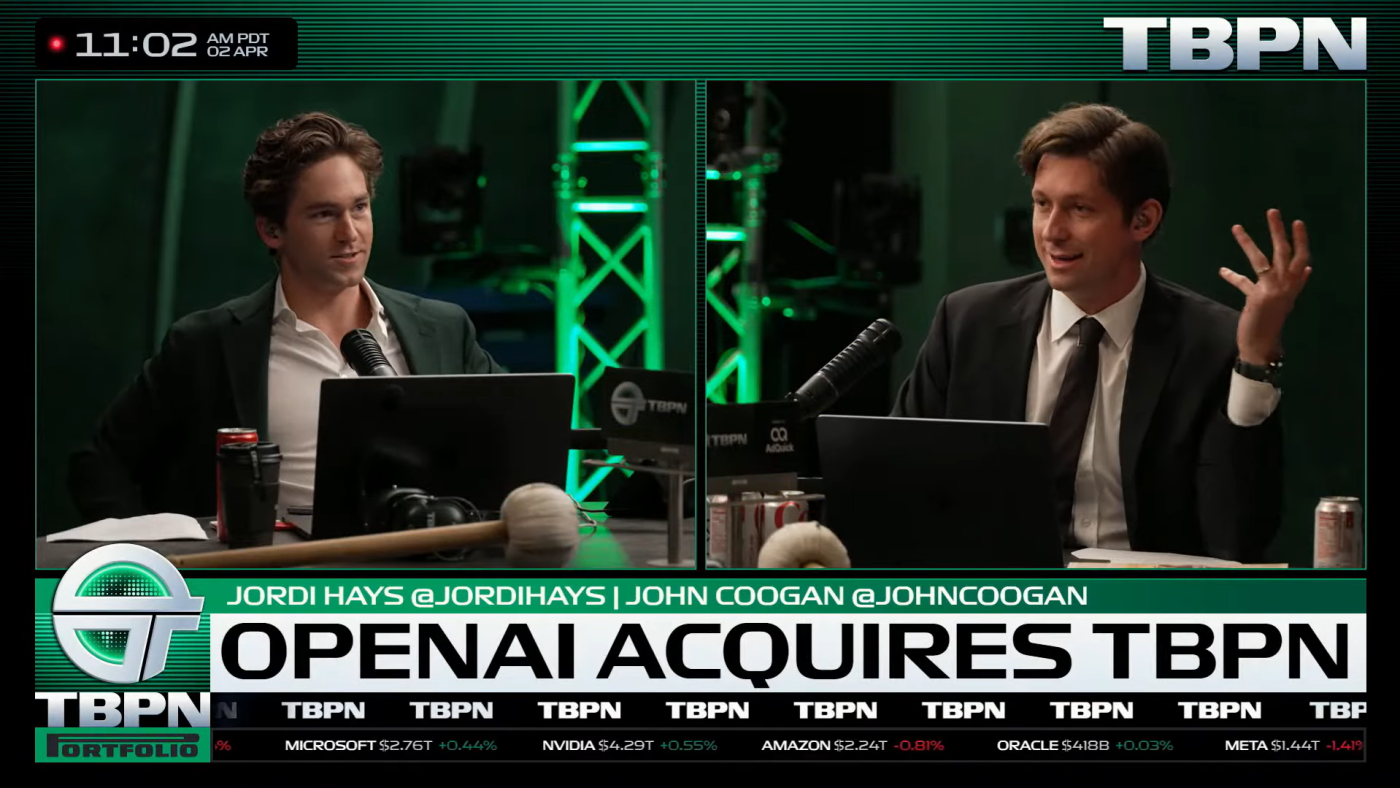
On April 2, 2026, OpenAI announced its acquisition of TBPN (Technology Business Programming Network), a daily live-streaming tech talk show hosted by John Coogan and Jordi Hays. The show, which launched as the Technology Brothers Podcast in late 2024 and rebranded in 2025, airs for about three hours weekdays on YouTube and X. It features high-energy interviews with tech leaders (including Sam Altman, Mark Zuckerberg, Satya Nadella, and Mark Cuban), industry gossip, funding round celebrations (complete with a gong), and a strongly techno-optimistic vibe.
It’s often described as “SportsCenter for Silicon Valley” — enthusiastic, insider-focused coverage aimed at founders, investors, and executives rather than the general public. TBPN has a loyal but niche audience (hundreds of thousands of followers across platforms) and was reportedly on track for significant ad revenue.
OpenAI framed the deal as a way to “accelerate the global conversation about AI” and foster “constructive” dialogue with builders and users of the technology. The show is supposed to retain editorial independence. However, the TBPN team will also contribute to OpenAI’s broader communications and marketing efforts. The hosts announced the news on their own show, joking that it wasn’t an April Fools’ prank (one day after April 1).
Why OpenAI Did This (According to the Article and Reporting)
- Narrative control amid scrutiny: Public opinion on AI has grown more skeptical. An NBC poll cited in the piece showed many Americans believe AI risks outweigh benefits, with concerns over energy use, data centers, and job losses. OpenAI (and the broader industry) faces criticism from former employees, safety researchers, and regulators.
- Insider influence: TBPN reaches a tight-knit, influential Silicon Valley crowd where Altman himself is a fan and longtime acquaintance of Coogan (Altman invested in Coogan’s earlier company, Soylent). Buying it helps OpenAI shape conversations in the very community building and funding AI.
- Beyond traditional PR: OpenAI executive Fidji Simo noted that standard communications playbooks don’t fit their situation. They want to leverage the hosts’ talent and audience understanding to make AI’s impacts more relatable and positive.
- Historical parallel: The article compares it to past corporate media plays (GE Theater, MSNBC, Bezos owning The Washington Post, etc.) — companies using media to advance their worldview when facing public or political pushback.
Experts quoted (historians and media scholars like Margaret O’Mara and Sara M. Watson) see it as an attempt to push back against growing anxiety and “narrative change” around AI. Some worry it risks making the show look like a company mouthpiece, potentially undermining its credibility with the audience.
Broader Context
This fits a pattern: Tech/AI companies are increasingly investing in media or direct audience channels as trust in traditional outlets (and big tech) erodes. OpenAI has been tightening its focus on core AI products for businesses recently (e.g., pausing some consumer experiments). Yet, this media move shows they’re willing to spend on narrative infrastructure.
The hosts have emphasized they’ll stay critical where warranted, and Altman reportedly said he’d give them reasons to be hard on OpenAI. Time will tell how “independent” it remains now that it sits inside OpenAI’s strategy organization.
Overall, the NPR piece is balanced — it reports the facts, the optimistic framing from OpenAI/TBPN, and the skeptical lens from observers who see it as a strategic play to buy influence in a skeptical climate. It’s a quirky story that highlights how AI labs are evolving beyond just building models into shaping the cultural conversation around them.