Venezuela’s Twin Earthquakes Kill at Least 164, Delivering Stark Warning to California
By CNN Staff
June 25, 2026
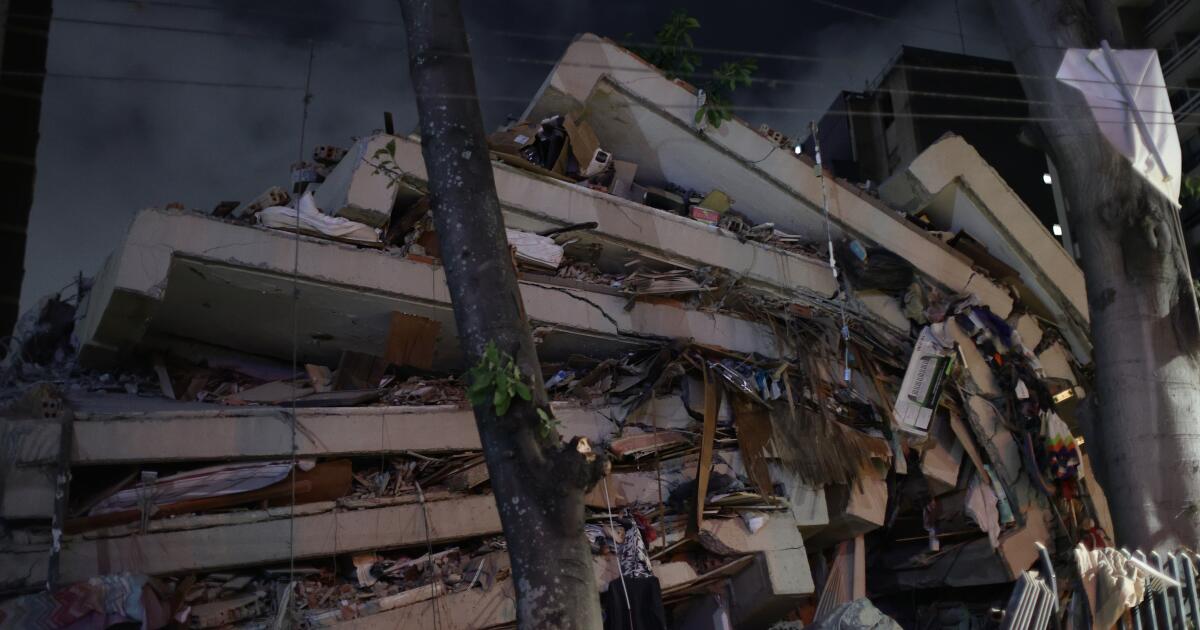
A pair of powerful earthquakes that struck northern Venezuela on Wednesday evening killed at least 164 people, injured nearly 1,000 others and left widespread destruction in their wake — a disaster that experts say carries urgent lessons for California and other seismically active regions in the United States.
The back-to-back quakes, measuring 7.2 and 7.5 in magnitude, hit less than a minute apart near the Caribbean coast, collapsing buildings, damaging infrastructure and triggering a brief tsunami advisory for parts of the Caribbean. The second quake was the strongest to strike Venezuela in more than a century.
“High casualties and damage are probable”
The U.S. Geological Survey issued a rare red alert for the event, warning that “high casualties and damage are probable, and that the disaster is likely widespread.” Rescue teams are still searching through rubble in affected areas, including parts of Caracas and coastal states such as La Guaira, Yaracuy and Falcón.
Acting President Delcy Rodríguez declared a state of emergency and said search-and-rescue operations were underway across multiple states. The death toll is expected to rise as crews reach more collapsed structures.
Videos from the scene showed panicked residents running into the streets as buildings shook violently. In one dramatic clip, people fled a collapsing structure near the capital. The country’s main international airport in Maiquetía sustained damage and was closed.
A rare “doublet” sequence
According to the USGS, the first quake struck at approximately 6:04 p.m. local time near San Felipe. Just 39 seconds later, the larger 7.5-magnitude event hit nearby. Seismologists described it as a “doublet” sequence, in which the initial rupture transferred stress to a nearby fault segment that then failed.
The quakes occurred along the boundary between the Caribbean and South American tectonic plates in a region known for strike-slip faulting — the same type of horizontal sliding motion that characterizes California’s San Andreas Fault.
Why the destruction was so severe
Much of the damage appears tied to older buildings that were not built to modern seismic standards. In Caracas and surrounding areas, multiple structures “pancaked,” with floors collapsing onto one another. The capital sits in a deep sedimentary basin, which can amplify shaking during earthquakes.
Vashan Wright, a geophysicist at the University of California, San Diego, noted that Venezuela lies in a massive strike-slip fault zone similar to those in California. The combination of strong ground motion and vulnerable construction turned what might have been a serious event into a major humanitarian crisis.
A warning for California
Seismologists and earthquake engineers say the Venezuela disaster serves as a sobering reminder for California, where millions live along or near active faults.
“The images coming out of Venezuela are hard to watch,” one expert told CNN. “Buildings pancaked. Entire blocks flattened. This is exactly the kind of scenario that keeps preparedness officials in California awake at night.”
California has made significant progress in retrofitting older buildings and enforcing strict seismic codes in new construction. However, experts warn that many older structures — particularly unreinforced masonry buildings and soft-story apartments — remain vulnerable. A major quake on the San Andreas or other regional faults could produce similar scenes of collapse if preparedness efforts lag.
The timing adds urgency: Northern California experienced a magnitude 5.6 earthquake earlier this week, and scientists have noted that the southern San Andreas Fault is under elevated stress.
“Events like this in Venezuela show us what happens when strong shaking meets buildings that weren’t designed for it,” said one structural engineer familiar with both regions. “California has done a lot of good work, but we can’t become complacent.”
International response
The United States has offered assistance, with President Donald Trump stating the country “stands ready, willing, and able to help.” U.S. disaster response teams and humanitarian supplies are being mobilized. El Salvador has also offered search-and-rescue personnel and equipment.
Aftershocks continue to rattle the region, and authorities have urged residents to remain cautious. A tsunami advisory for Puerto Rico, the U.S. Virgin Islands and other Caribbean areas was quickly lifted.
What comes next
As rescue operations continue in Venezuela, the human and economic toll is still being assessed. For Californians, the images of flattened buildings and desperate searches serve as a powerful call to action.
Earthquake preparedness — from individual emergency kits to continued investment in building retrofits and early-warning systems — remains the most effective defense against nature’s most unpredictable force.
CNN will continue to follow developments in Venezuela and any implications for seismic safety in the United States.