This is a major paradigm shift for last-mile logistics and urban transport.
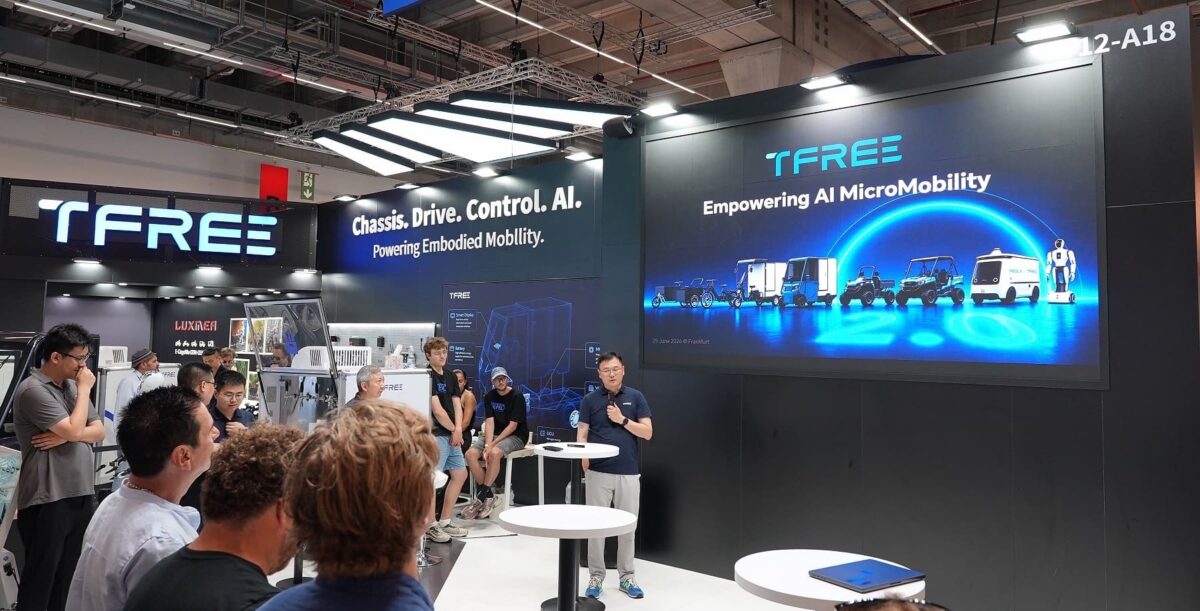
Unveiled at EUROBIKE 2026 in Frankfurt, the launch of TFREE (backed by parent company LUXMEA) signals a transition away from standard, isolated fleet management toward what they are calling “AI Micro Mobility 2.0.” Instead of just manufacturing smart bikes or cargo trikes, TFREE is effectively trying to position itself as the unified Android-like operating system for all low-speed electric transport.
The rollout focuses on a few critical layers shifting the industry toward a Software-Defined Vehicle (SDV) model:
The Three Core Pillars of TFREE
- Universal Chassis Platform: Standardized modular architectures capable of scaling across 2-wheel, 3-wheel, and 4-wheel light commercial configurations (such as their T650 cargo trike or Q650 e-quad).
- Intelligent Vehicle Control: Hardware-software synergy featuring built-in 4G IoT connectivity, chainless power systems, embedded control networks, and AI-enhanced safety features.
- Software & Ecosystem Services: A cloud-native infrastructure utilizing full-stack Over-The-Air (OTA) updates, open APIs, and AI predictive maintenance to keep commercial fleets running with minimal downtime.
Why It Matters: Ecosystem Orchestration
Up until now, micromobility operators have struggled with fragmented hardware and proprietary, siloed software. TFREE’s angle is total openness. By offering a standardized digital infrastructure, they are bridging the gap between hardware, cloud intelligence, and advanced robotics.
They have already plugged their platform into major ecosystems, collaborating with autonomous delivery heavyweights like Neolix and embodied AI/robotics developers like Galbot to test unmanned urban delivery networks.
Current Footprint: TFREE isn’t starting from scratch. The underlying infrastructure already integrates over 400,000 electric bicycles and 150,000 commercial cargo vehicles.
European Deployment & Compliance
Because the platform was engineered directly alongside stringent EU regulations, it launches natively compliant with GDPR, CE, the EU Battery Passport, and DIN EN 17860 standards. Real-world pilot programs are already live on the ground in Europe, partnering with commercial logistics operators like VEMO in Germany and Stalem in Belgium to validate digital energy replenishment and multi-scenario urban delivery.
By targeting the unglamorous but highly lucrative last-mile commercial sector first, TFREE is setting the foundation for how smart cities will orchestrate low-speed autonomous and human-driven transit moving forward.